مدينة ليلاً: كل ضوء يضيء شخص يعمل أو يبني أو يبيع. رف من الطعام: كل بطاقة سعر تغيرت هذا العام. الاقتصاد كبير جداً لنرى كل جزئه، لذا نحن…
English narration · English + 中文 subtitles burned in · سرد باللغة الإنجليزية · ترجمة مدمجة بالإنجليزية + الصينية
English
Macroeconomics 宏观经济学 looks at the whole economy at once: its total output, its jobs, and its prices. This handout covers how we measure the economy and the main problems it can face.
العربية
اقتصاد كلي ينظر إلى الاقتصاد بأكمله في آنٍ واحد: إجمالي إنتاجه، فرص العمل، وأسعاره. يغطي هذا الملف كيفية قياس الاقتصاد والمشاكل الرئيسية التي قد يواجهها.
4.1
National income statistics · إحصاءات الدخل القومي
Syllabus · المنهج
English
define GDP, GNI and national income and distinguish nominal and real, and total and per capita values
explain the uses and limitations of national income statistics for measuring living standards and making comparisons
العربية
عرّف الناتج المحلي الإجمالي، إجمالي الدخل القومي والدخل القومي وفرّق بين الاسمي والحقيقي، والقيم الكلية والقيمة للفرد
اشرح استخدامات وإحصائيات الدخل القومي للقياس بمعايير المعيشة وإجراء المقارنات
Source: Cambridge International syllabus · المصدر: منهج كامبريدج الدولي
English
To judge how an economy is doing, we measure its national income 国民收入 — the total value of everything it produces in a year.
gross domestic product 国内生产总值 (GDP) is the value of all goods and services made inside a country in a year.
gross national income 国民总收入 (GNI) is GDP plus the income a country's people and firms earn abroad, minus income foreigners earn inside it.
Two important differences:
nominal 名义 values are measured at current prices. real 实际 values are adjusted to remove the effect of rising prices, so they show the true change in output. Always compare real values over time.
total values cover the whole country. per capita 人均 values are divided by the population, so they show the average per person.
Uses and limitations
National income is used to measure the standard of living 生活水平 and to compare countries. But it has limits:
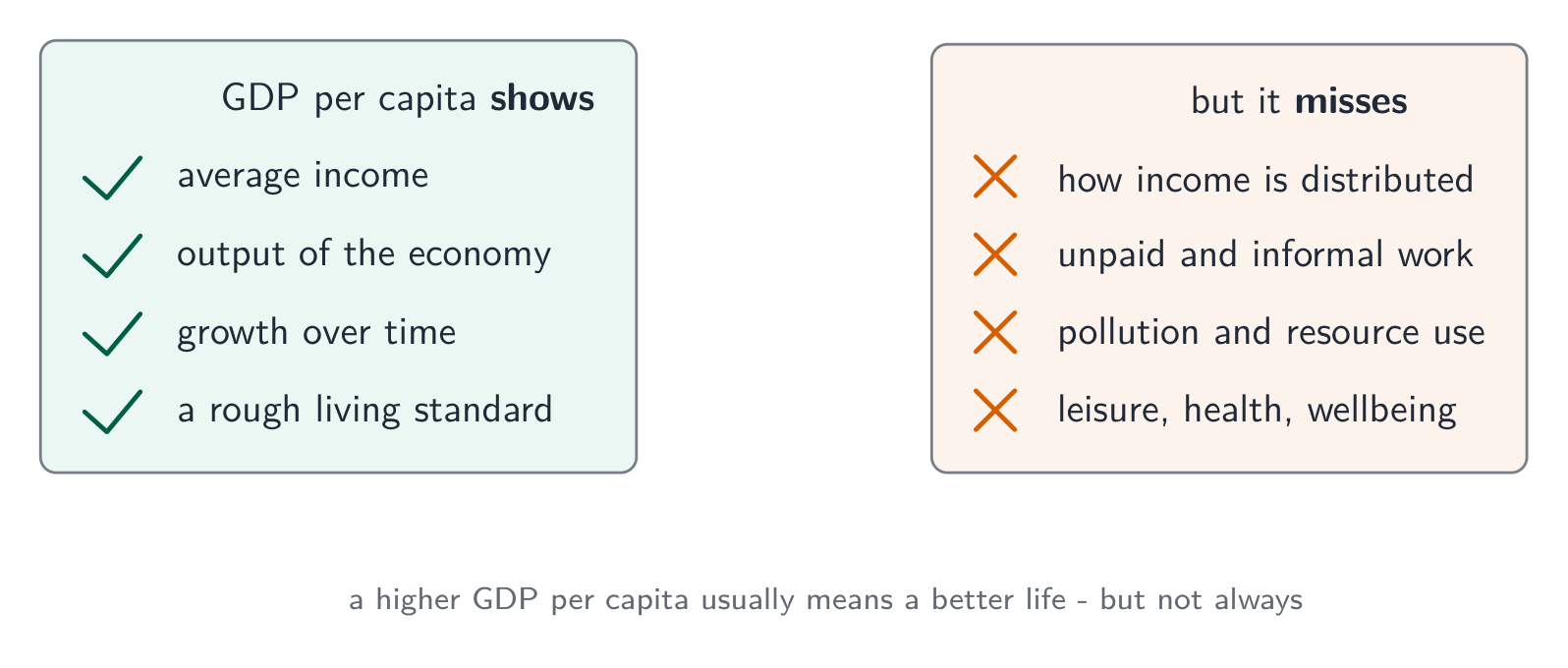
it ignores the distribution 分配 of income — a high average can hide great inequality.
it leaves out unpaid work (housework) and the informal economy 非正规经济 (hidden, untaxed activity).
it says nothing about pollution, leisure time, or health.
So a higher GDP per capita usually means a better life, but not always.
العربية
لتقييم أداء اقتصاد ما، نقيس دخله القومي — القيمة الإجمالية لكل ما ينتجه في سنة.
الدخل القومي (الناتج المحلي الإجمالي) هو قيمة جميع السلع والخدمات التي ينتجها بلد في سنة.
الناتج المحلي الإجمالي (GDP) هو قيمة جميع السلع والخدمات المنتجة داخل بلد ما في سنة.
إجمالي الدخل القومي (GNI) هو الناتج المحلي الإجمالي زائد الدخل الذي يكسبه مواطنو البلاد وشركاتهم في الخارج، ناقصاً الدخل الذي يكسبه الأجانب داخل البلاد.
فرقانان مهمان:
القيم الاسمية تُقاس بالأسعار الجارية. أما القيم الحقيقية فتُعدّل لاستبعاد تأثير ارتفاع الأسعار، لتُظهر التغيير الحقيقي في الإنتاج. قارن دائماً القيم الحقيقية عبر الزمن.
القيم الإجمالية تشمل البلد بأكمله. أما القيم للشخص الواحد فتُقسم على عدد السكان، لتُظهر المتوسط للشخص.
الاستخدامات والقيود
يُستخدم الدخل القومي لقياس مستوى المعيشة ومقارنة الدول. لكن له قيوداً:
يتجاهل توزيع الدخل — حيث يمكن أن يخفي المتوسط المرتفع تفاوتاً كبيراً.
يستثني العمل غير المدفوع الأجر (الأعمال المنزلية) والاقتصاد غير الرسمي (النشاط المخفي وغير taxed).
لا يقول شيئاً عن التلوث، وقت الراحة، أو الصحة.
لذا فإن ارتفاع الناتج المحلي الإجمالي للشخص عادةً يعني حياة أفضل، ولكن ليس دائماً.
الناتج المحلي الإجمالي للشخص يُظهر متوسط الدخل والإنتاج، لكنه يفوت التوزيع، والعمل غير المدفوع، والتلوث
Explore · استكشف
National income flow · تدفق الدخل القومي
Watch spending become income, output and expenditure in the circular flow. · راقب تحول الإنفاق إلى دخل وإنتاج وإنفاق في التدفق الدائري.
4.2
The circular flow of income · التدفق الدائري للدخل
Syllabus · المنهج
English
explain the circular flow of income with injections (investment, government spending, exports) and leakages (saving, taxation, imports)
explain equilibrium in the circular flow and the distinction between a closed and open economy
العربية
اشرح تدفق الدخل الدائري مع الحقن (الاستثمار، الإنفاق الحكومي، الصادرات) والتسربات (الادخار، الضرائب، الواردات)
اشرح التوازن في تدفق الدخل والتمييز بين الاقتصاد المغلق والاقتصاد المفتوح
Source: Cambridge International syllabus · المصدر: منهج كامبريدج الدولي
English
The circular flow of income
The circular flow of income 收入循环流 shows money moving around the economy. Households 家庭 supply factors of production to firms 企业 and receive income (wages, rent, interest, profit). They spend that income on goods and services, and the money flows back to firms.
Money also leaves and enters this flow:
leakages 漏出 take money out of the flow: saving 储蓄, taxation 税收, and spending on imports 进口.
injections 注入 put money into the flow: investment 投资, government spending 政府支出, and exports 出口.
The flow is in equilibrium 均衡 when total injections equal total leakages. If injections are greater, the economy grows; if leakages are greater, it shrinks.
A closed economy 封闭经济 has no trade with other countries. An open economy 开放经济 trades, so it has exports and imports.
العربية
التدفق الدائري للدخل
يُظهر التدفق الدائري للدخل حركة الأموال في الاقتصاد. تزوّد الأسرالشركات بعوامل الإنتاج وت مقابل ذلك دخلاً (أجوراً، إيجارات، فوائد، أرباحاً). تنفق الأسر هذا الدخل على سلع وخدمات، وتعود الأموال إلى الشركات.
المال يغادر ويدخل هذا التدفق أيضاً:
التسربات تأخذ المال خارج التدفق: الادخار، الفرض الضريبي، والإنفاق على الاستيراد.
الحقن تضع مالاً داخل التدفق: الاستثمار، الإنفاق الحكومي، والتصدير.
يكون التدفق في توازن عندما تتساوى الحقن الكلية مع التسربات الكلية. إذا كانت الحقن أكبر، ينمو الاقتصاد؛ وإذا كانت التسربات أكبر، ينكمش.
المال يدور بين الأسر والشركات؛ تسرباته (الادخار، الفرض الضريبي، الاستيراد) تُضعفه، بينما حقنه (الاستثمار، الإنفاق الحكومي، التصدير) تزيد منه.
الـاقتصاد المغلق ليس لديه تجارة مع دول أخرى. أما الـاقتصاد المفتوح فهو يتاجر، لذا يحتوي على تصديرات واستيرادات.
Explore · استكشف
Injections & leakages · الإدخالات والتسريبات
Money loops between households and firms. Injections grow national income, leakages shrink it; they are equal at equilibrium. · يدور المال بين الأسر والشركات. الإدخالات تزيد من الدخل القومي، والتسريبات تقلله؛ وهما متساويان عند نقطة التوازن.
Explore · استكشف
The circular flow of income · التدفق الدائري للدخل
Money flows in a loop: households earn income from firms, then spend it back on the firms' goods. Step round the cycle. · يتدفق المال في حلقة: تكسب الأسر دخلاً من الشركات، ثم تنفقه مرة أخرى على سلع الشركات. مشِ حول الدورة.
4.3
Aggregate demand and aggregate supply · الطلب الكلي والعرض الكلي
Syllabus · المنهج
English
define the components of aggregate demand (C + I + G + (X−M)) and explain the shape of the AD curve
explain short-run and long-run aggregate supply and the determinants of AD and AS
use AD/AS analysis to determine macroeconomic equilibrium and the price level and real output
العربية
عرّف مكونات الطلب الكلي (C + I + G + (X−M)) واشرح شكل منحنى الطلب الكلي
استخدم تحليل AD/AS لتحديد التوازن الكلي ومستوى الأسعار والإنتاج الحقيقي
Source: Cambridge International syllabus · المصدر: منهج كامبريدج الدولي
English
Aggregate demand and supply
Aggregate demand
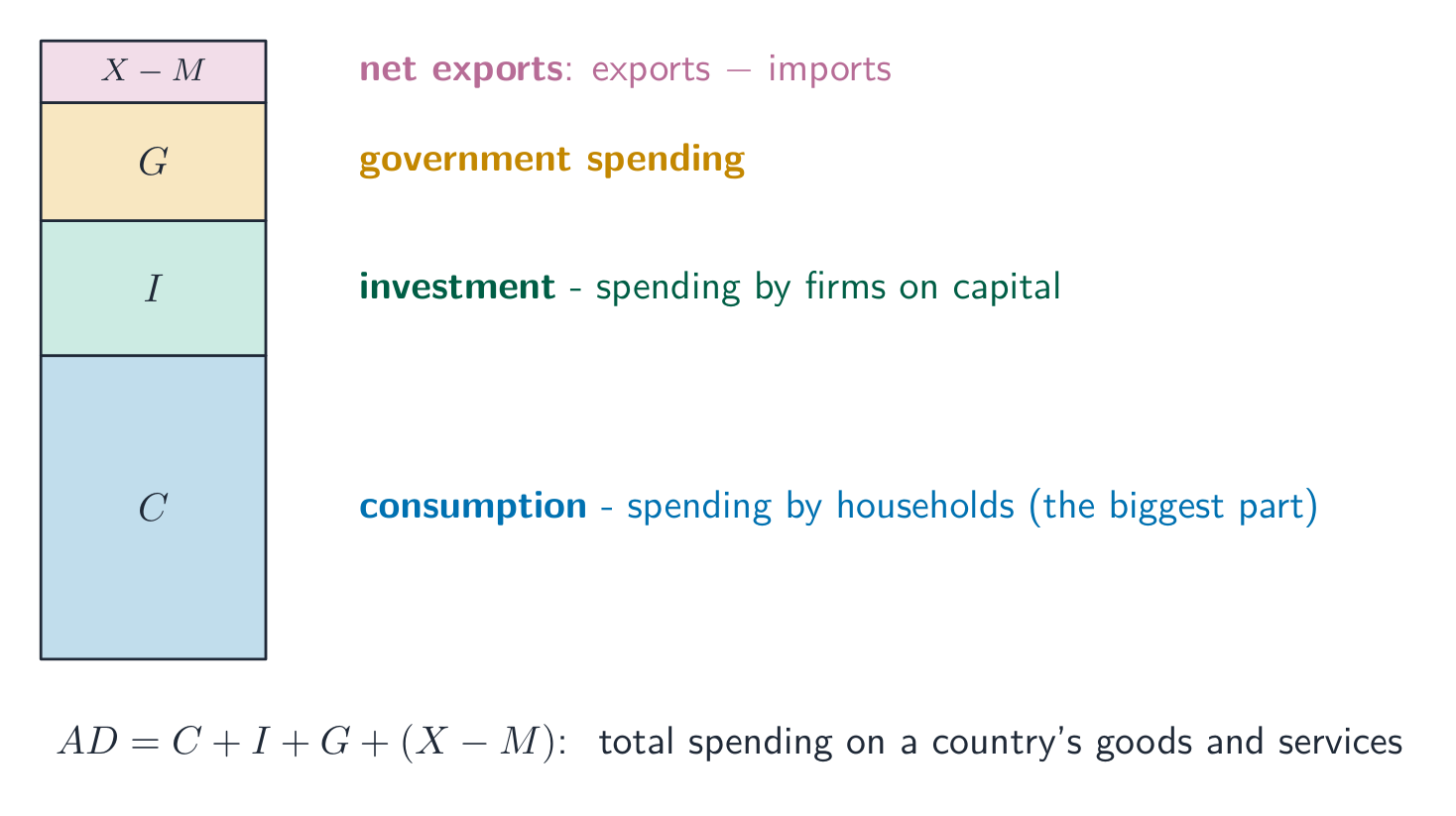
aggregate demand 总需求 (AD) is the total spending on a country's goods and services at each price level. It has four parts:
$$AD = C + I + G + (X - M)$$
C is consumption 消费 — spending by households.
I is investment — spending by firms on capital.
G is government spending.
(X − M) is net exports 净出口 — exports minus imports.
The AD curve slopes downward: a lower price level means higher real spending, so a greater real output is demanded. AD shifts when any of its four parts changes (for example, a tax cut raises C).
Aggregate supply
aggregate supply 总供给 (AS) is the total output firms are willing to make at each price level.
short-run aggregate supply 短期总供给 (SRAS) slopes upward. In the short run, higher prices make production more profitable, so firms supply more. SRAS shifts when costs change (wages, raw materials, taxes).
long-run aggregate supply 长期总供给 (LRAS) shows the economy's full productive capacity 生产能力. It shifts only when the quantity or quality of factors changes.
Macroeconomic equilibrium
macroeconomic equilibrium 宏观经济均衡 is where AD crosses AS. It sets the price level 价格水平 and the real output 实际产出 of the economy. A shift in AD or AS changes both.
العربية
الطلب الكلي والعرض الكلي
الطلب الكلي
الطلب الكلي (AD) هو الإنفاق الإجمالي على سلع وخدمات بلد ما عند كل مستوى أسعار. يتكون من أربعة أجزاء:
$$AD = C + I + G + (X - M)$$
C هي الاستهلاك — إنفاق الأسر.
I هي الاستثمار — إنفاق الشركات على رأس المال.
G هو الإنفاق الحكومي.
(X − M) هي التصدير الصافي — التصدير ناقص الاستيراد.
منحنى AD ينحدر لأسفل: انخفاض مستوى الأسعار يعني زيادة الإنفاق الحقيقي، مما يؤدي إلى طلب على إنتاج حقيقي أكبر. يتحرك AD عندما يتغير أي من أجزائه الأربعة (مثلاً، تخفيض الضرائب يزيد C).
العرض الكلي
العرض الكلي (AS) هو الإنتاج الإجمالي الذي تستعد الشركات لإنتاجه عند كل مستوى أسعار.
عرض Aggregate Supply القصير الأجل (SRAS) ينحدر لأعلى. في المدى القصير، تجعل الأسعار الأعلى الإنتاج أكثر ربحية، فتزيد الشركات عرضها. يتحرك SRAS عندما تتغير التكاليف (الأجور، المواد الخام، الضرائب).
عرض Aggregate Supply الطويل الأجل (LRAS) يُظهر القدرة الإنتاجية الكاملة للاقتصاد. يتحرك فقط عندما تتغير كمية أو جودة عوامل الإنتاج.
التوازن الكلي
التوازن الكلي هو نقطة تقاطع AD مع AS. يحدد مستوى الأسعار والإنتاج الحقيقي للاقتصاد. أي تحرك في AD أو AS يغير كليهما.
يُحدد التوازن مستوى الأسعار $P$ والإنتاج الحقيقي $Y$ حيث يلتقي AD مع العرض الكلي القصير الأجل؛ ويُمثل LRAS الرأسي القدرة الكاملة.
distinguish actual and potential growth and explain the causes of economic growth
explain the costs and benefits of economic growth and the business (trade) cycle
العربية
اميز بين النمو الفعلي والنمو المحتمل واشرح أسباب النمو الاقتصادي
اشرح تكاليف وفوائد النمو الاقتصادي والدورة الاقتصادية (التجارية)
Source: Cambridge International syllabus · المصدر: منهج كامبريدج الدولي
English
economic growth 经济增长 is a rise in a country's real output (real GDP) over time.
actual growth 实际增长 is the rise in output that really happens (a movement to a point further out, or from inside the LRAS towards it).
potential growth 潜在增长 is the rise in the economy's capacity (the LRAS shifting outward).
Growth is caused by more or better factors of production: a bigger or more skilled workforce, more investment in capital, new technology, and higher productivity 生产率 (output per worker).
The business cycle
Real output does not grow smoothly. The business cycle 经济周期 (also called the trade cycle) is the up-and-down pattern of output over the years. It has four phases: boom 繁荣 (fast growth), recession 衰退 (falling output), slump 萧条 (the low point), and recovery 复苏.
Costs and benefits of growth
Benefits
Costs
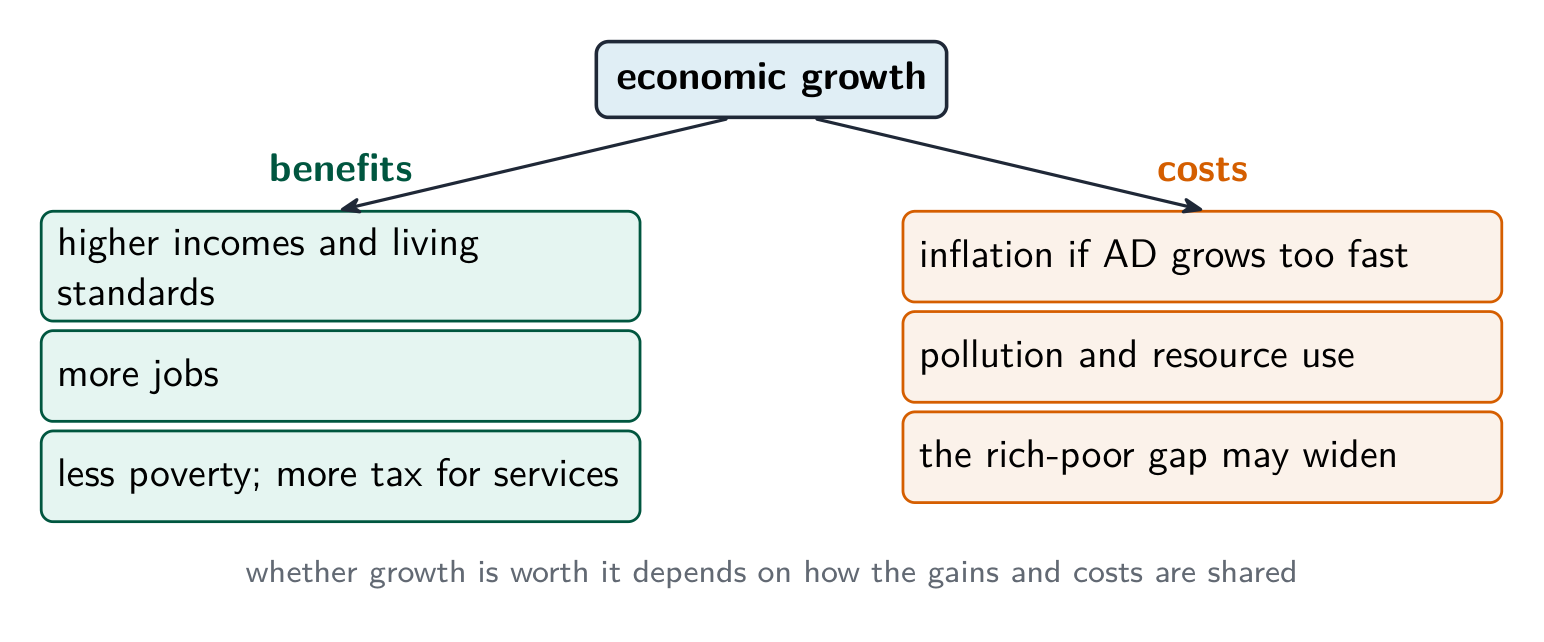
higher incomes and living standards
can cause inflation if AD grows too fast
more jobs
pollution and use of resources
less poverty; more tax for public services
the gap between rich and poor may widen
العربية
النمو الاقتصادي هو ارتفاع الإنتاج الحقيقي لبلد ما (الناتج المحلي الإجمالي الحقيقي) عبر الزمن.
النمو الفعلي هو ارتفاع الإنتاج الذي يحدث فعلياً (حركة لنقطة أبعد، أو من داخل LRAS نحوه).
النمو المحتمل هو ارتفاع قدرة الاقتصاد (تحرك LRAS للخارج).
النمو ناتج عن زيادة أو تحسين عوامل الإنتاج: قوة عاملة أكبر أو أكثر مهارة، واستثمارات أكثر في رأس المال، وتكنولوجيا جديدة، وإنتاجية أعلى (الإنتاج لكل عامل).
دورة الأعمال
لا ينمو الناتج الحقيقي بسلاسة. دورة الأعمال (المعروفة أيضًا بدورة التجارة) هي نمط التذبذب الصاعد والهابط للإنتاج على مدى السنوات. وتتكون من أربع مراحل: الازدهار (نمو سريع)، الكساد (انخفاض الإنتاج)، التراجع (الذروة المنخفضة)، والانتعاش.
يتأرجح الناتج المحلي الإجمالي الحقيقي بين الازدهار والكساد والتراجع والانتعاش حول اتجاهه الطويل الأجل المتصاعد.
تكاليف وفوائد النمو
الفوائد
التكاليف
دخل أعلى ومستوى معيشي أفضل
قد يسبب تضخمًا إذا نما الطلب الكلي بسرعة كبيرة
وظائف أكثر
تلوث واستهلاك الموارد
فقر أقل؛ ضرائب أكثر للخدمات العامة
قد يتسع الفجوة بين الأغنياء والفقراء
يجلب النمو الاقتصادي دخلًا أعلى ووظائف، ولكنه قد يسبب التضخم والتلوث وعدم المساواة
Explore · استكشف
Economic growth shifts the frontier out · ينزاح النموذج البياني للأعلى الإنتاجية نحو الخارج
Growth means the economy can produce more of BOTH goods — the whole frontier moves outward as resources or technology improve. · يعني النمو أن الاقتصاد يمكنه إنتاج المزيد من كلا السلعتين — فيتحرك النموذج البياني بالكامل نحو الخارج مع تحسن الموارد أو التكنولوجيا.
define and measure unemployment (claimant count and labour force survey)
explain the types and causes of unemployment (frictional, structural, cyclical, seasonal) and its consequences
العربية
عرّف وقيس البطالة (عدد المتقدمين بالمساعدات ومسح القوى العاملة)،
اشرح أنواع وأسباب البطالة (احتراقية، هيكلية، دورية، موسمية) وعواقبها
Source: Cambridge International syllabus · المصدر: منهج كامبريدج الدولي
English
unemployment 失业 means people who are able and willing to work, and are looking for a job, but cannot find one.
Measuring unemployment
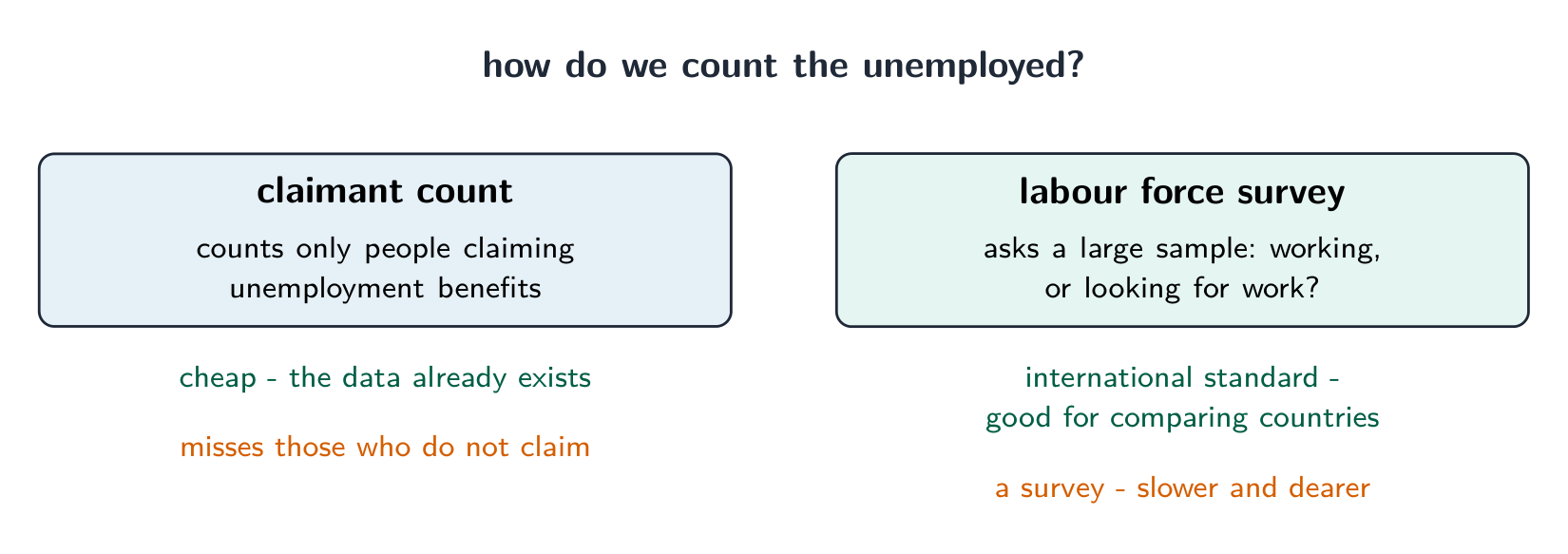
the claimant count 申领救济人数 counts only people claiming unemployment benefits. It is cheap but misses those who do not claim.
the labour force survey 劳动力调查 asks a large sample whether they are working or seeking work. It follows an international standard, so it is better for comparing countries. The labour force 劳动力 is everyone working or looking for work.
Types and causes
frictional unemployment 摩擦性失业 — short-term, while people move between jobs.
structural unemployment 结构性失业 — when an industry declines and workers' skills no longer match the jobs available.
cyclical unemployment 周期性失业 — caused by low AD in a recession. This is usually the largest type.
seasonal unemployment 季节性失业 — when work is only available at certain times of the year (such as farming or tourism).
Consequences
Unemployment wastes output (the economy produces inside its PPC), lowers incomes, and costs the government (more benefits, less tax). It also harms families and can raise crime and ill health.
العربية
البطالة تعني الأشخاص القادرين والمؤهلين للعمل والمتاحين للبحث عن وظيفة، لكنهم لا يجدونها.
قياس البطالة
عددة المطالبين تحسب فقط الأشخاص الذين يتلقون إعانات بطالة. وهي رخيصة لكنها تفوت أولئك الذين لا يطالبون بها.
مسح القوى العاملة يسأل عينة كبيرة عما إذا كانوا يعملون أو يبحثون عن عمل. يتبع معيارًا دوليًا، لذا فهو أفضل لمقارنة الدول. القوة العاملة تشمل كل من يعملون أو يبحثون عن عمل.
طريقتان لعدّ العاطلين - وما يفوته كل منهما
الأنواع والأسباب
البطالة الاحتكائية — قصيرة المدى، بينما ينتقل الناس بين الوظائف.
البطالة الهيكلية — عندما يندفع قطاع ما ولا تطابق مهارات العمال الوظائف المتاحة.
البطالة الدورية — ناتجة عن انخفاض الطلب الكلي في الكساد. وعادةً ما تكون هذا النوع هو الأكبر.
البطالة الموسمية — عندما يكون العمل متاحًا فقط في أوقات معينة من السنة (مثل الزراعة أو السياحة).
ثلاثة أنواع من البطالة: الاحتكاكية، الهيكلية، والدورية
العواقب
تهدر البطالة الإنتاج (تنتج الاقتصادات داخل منحنى إمكانياتها الإنتاجية)، وتخفض الدخل، وتكلف الحكومة (مزيد من الإعانات، أقل من الضرائب). كما تضر بالعائلات وقد ترفع معدلات الجريمة والأمراض.
Explore · استكشف
Unemployment in the labour market · البطالة في سوق العمل
If the wage is stuck ABOVE the equilibrium, more workers want jobs than firms will hire — that gap is unemployment. · إذا بقيت الأجور مرتفعة فوق نقطة التوازن، رغب عدد أكبر من العمال في العمل مما ستوظفه الشركات — هذا الفارق هو البطالة.
define inflation, deflation and disinflation and explain how the price level is measured
explain the causes (demand-pull and cost-push) and consequences of inflation and deflation
العربية
عرّف التضخم، التراجع وانخفاض معدل التضخم واشرح كيفية قياس مستوى الأسعار
اشرح أسباب (السحب من الطلب والدفع من التكلفة) وعواقب التضخم والتراجع
Source: Cambridge International syllabus · المصدر: منهج كامبريدج الدولي
English
Inflation, deflation and disinflation
inflation 通货膨胀 is a sustained rise in the general price level. Money then buys less, so its purchasing power 购买力 falls.
deflation 通货紧缩 is a sustained fall in the general price level.
disinflation 反通货膨胀 is when inflation is still positive but is slowing down (prices rise, but more slowly).
The price level is measured with the consumer price index 消费者价格指数 (CPI). A typical household's spending is used to build a "basket" of goods. Each good is given a weight 权重 for how much is spent on it, and the change in the basket's cost from year to year is the inflation rate:
$$\text{inflation rate} = \frac{\text{change in index}}{\text{starting index}} \times 100\%.$$
Worked example. A country's CPI rises from $100$ to $104$ over one year, then to $107$ the year after. Find the inflation rate in each year.
Year 1: $\dfrac{104 - 100}{100} \times 100\% = 4\%$. Year 2: $\dfrac{107 - 104}{104} \times 100\% = 2.9\%$.
Notice that prices are still rising in year 2, just more slowly — this fall in the inflation rate (from $4\%$ to $2.9\%$) is disinflation, not deflation.
Worked example. A worker's wage rises from $\text{\pounds} 500$ to $\text{\pounds} 520$ a week (a $4\%$ rise) while the CPI rises by $4\%$. What happens to the real wage?
Money (nominal) pay is up $4\%$, but prices are also up $4\%$, so the real wage — what the pay can actually buy — is unchanged. A pay rise only raises living standards if it beats inflation.
Causes of inflation
demand-pull inflation 需求拉动型通货膨胀 — AD rises faster than AS, so "too much money chases too few goods".
cost-push inflation 成本推动型通货膨胀 — firms' costs rise (wages or raw materials), so they raise prices, shifting SRAS to the left.
Consequences
Inflation lowers purchasing power, especially for people on fixed incomes. It creates uncertainty, can make a country's exports dearer, and helps borrowers but harms savers. Deflation sounds good but can be harmful: people delay buying (waiting for lower prices), so AD falls, firms cut output, and unemployment rises.
العربية
التضخم، الانكماش، والتخفيف التضخمي
التضخم هو ارتفاع مستمر في المستوى العام للأسعار. وبالتالي يشتري المال كميات أقل، فتقل القوة الشرائية له.
الانكماش هو انخفاض مستمر في المستوى العام للأسعار.
التخفيف التضخمي هو عندما يبقى التضخم إيجابيًا لكنه يتباطأ (ترتفع الأسعار، ولكن بوتيرة أبطأ).
يُقاس التضخم من سعر سلة من البضائع اليومية مثل هذه.
يُقاس المستوى السعري باستخدام مؤشر أسعار المستهلكين (CPI). تُستخدم نفقات الأسرة النموذجية لتكوين "سلة" من البضائع. يُعطى كل سلعة وزنًا بناءً على مقدار الإنفاق عليها، والتغير في تكلفة السلة من سنة لأخرى هو معدل التضخم:
$$\text{inflation rate} = \frac{\text{change in index}}{\text{starting index}} \times 100\%.$$
مثال محلول. ارتفع مؤشر أسعار المستهلكين لدولة من $100$ إلى $104$ خلال عام واحد، ثم إلى $107$ في العام التالي. أوجد معدل التضخم في كل عام.
السنة 1: $\dfrac{104 - 100}{100} \times 100\% = 4\%$. السنة 2: $\dfrac{107 - 104}{104} \times 100\% = 2.9\%$.
لاحظ أن الأسعار لا تزال ترتفع في السنة 2، ولكن بوتيرة أبطأ — إن انخفاض معدل التضخم (من $4\%$ إلى $2.9\%$) هو تخفيف تضخمي، وليس انكماشًا.
مثال محلول. ارتفع أجر العامل من $\text{\pounds} 500$ إلى $\text{\pounds} 520$ أسبوعياً (أي بزيادة $4\%$) بينما ارتفع مؤشر أسعار المستهلكين بنسبة $4\%$. ماذا يحدث للأجر الحقيقي؟
الراتب النقدي (الاسمي) زاد $4\%$، لكن الأسعار زادت أيضًا $4\%$، لذا فإن الأجر الحقيقي — ما يمكن للشراء منه فعليًا — بقي دون تغيير. لا يرفع الراتب المعيشة إلا إذا تجاوز التضخم.
أسباب التضخم
التضخم المسحوب بالطلب — يرتفع الطلب الكلي أسرع من العرض الكلي، فـ "يلاحق الكثير من المال بضائع قليلة جدًا".
التضخم المدفوع بالتكلفة — ترتفع تكاليف الشركات (الأجور أو المواد الخام)، فترفع أسعارها، مما يحرك عرض السلع والخدمات القصير الأمد إلى اليسار.
يأتي التضخم المسحوب بالطلب من انتقال الطلب الكلي لليمين؛ والتضخم المدفوع بالتكلفة من انتقال عرض السلع والخدمات القصير الأمد لليسار. وكلاهما يرفع المستوى السعري.
العواقب
يقلل التضخم القوة الشرائية، خاصة للأشخاص ذوي الدخول الثابتة. ويخلق عدم اليقين، وقد يجعل الصادرات أغلى، ويساعد المقترضين لكن يضر المودعين. يبدو الانكماش جيدًا لكنه قد يكون ضارًا: يؤجل الناس الشراء (انتظارًا لأسعار أقل)، فيقل الطلب الكلي، وتقطع الشركات الإنتاج، وترتفع البطالة.
Explore · استكشف
Aggregate demand and supply · الطلب الكلي والعرض الكلي
The overall price level sits where aggregate demand meets aggregate supply — a shock to either moves prices and output. · يتمثل المستوى العام للأسعار عند تقاطع الطلب الكلي والعرض الكلي — وأي صدمة لأحدهما تحرك الأسعار والإنتاج.
Pick one and the site follows you — notes, papers, videos and practice all open on it. · اختر واحدًا وسيتبعك الموقع — الملاحظات، الأوراق، الفيديوهات والتدريب جميعها تفتح عليه.
Type to search notes, lessons, code, vocabulary and past-paper questions across every subject. · اكتب للبحث عن ملاحظات، دروس، أكواد، مفردات وأسئلة امتحانات سابقة عبر جميع المواد.