محطة توليد هذه تولد الكهرباء، وتدفع أنت ثمنها. لكن الناس الذين يعيشون بجانبها يتنفسون الدخان، ولم يوافقوا على أي شيء.…
English narration · English + 中文 subtitles burned in · سرد باللغة الإنجليزية · ترجمة مدمجة بالإنجليزية + الصينية
3.1
Why markets fail · أسباب فشل السوق
Syllabus · المنهج
English
explain market failure as the failure to achieve an efficient allocation of resources
explain the reasons for intervention: externalities, public goods, merit/demerit goods, monopoly power, inequality, asymmetric information
العربية
اشرح فشل السوق باعتباره الفشل في تحقيق توزيع فعال للموارد
اشرح أسباب التدخل: الآثار الخارجية، السلع العامة، السلع الصالحة/غير الصالحة، قوة الاحتكار، التفاوت، معلومات غير متماثلة
Source: Cambridge International syllabus · المصدر: منهج كامبريدج الدولي
English
A free market often gives a good result, but not always. market failure 市场失灵 is when the market does not allocate 配置 (share out) resources efficiently — too much or too little of a good is made. Then the government may step in.
There are several reasons for market failure.
Externalities
An externality 外部性 is a cost or a benefit that falls on a third party 第三方 — someone who is not the buyer or the seller.
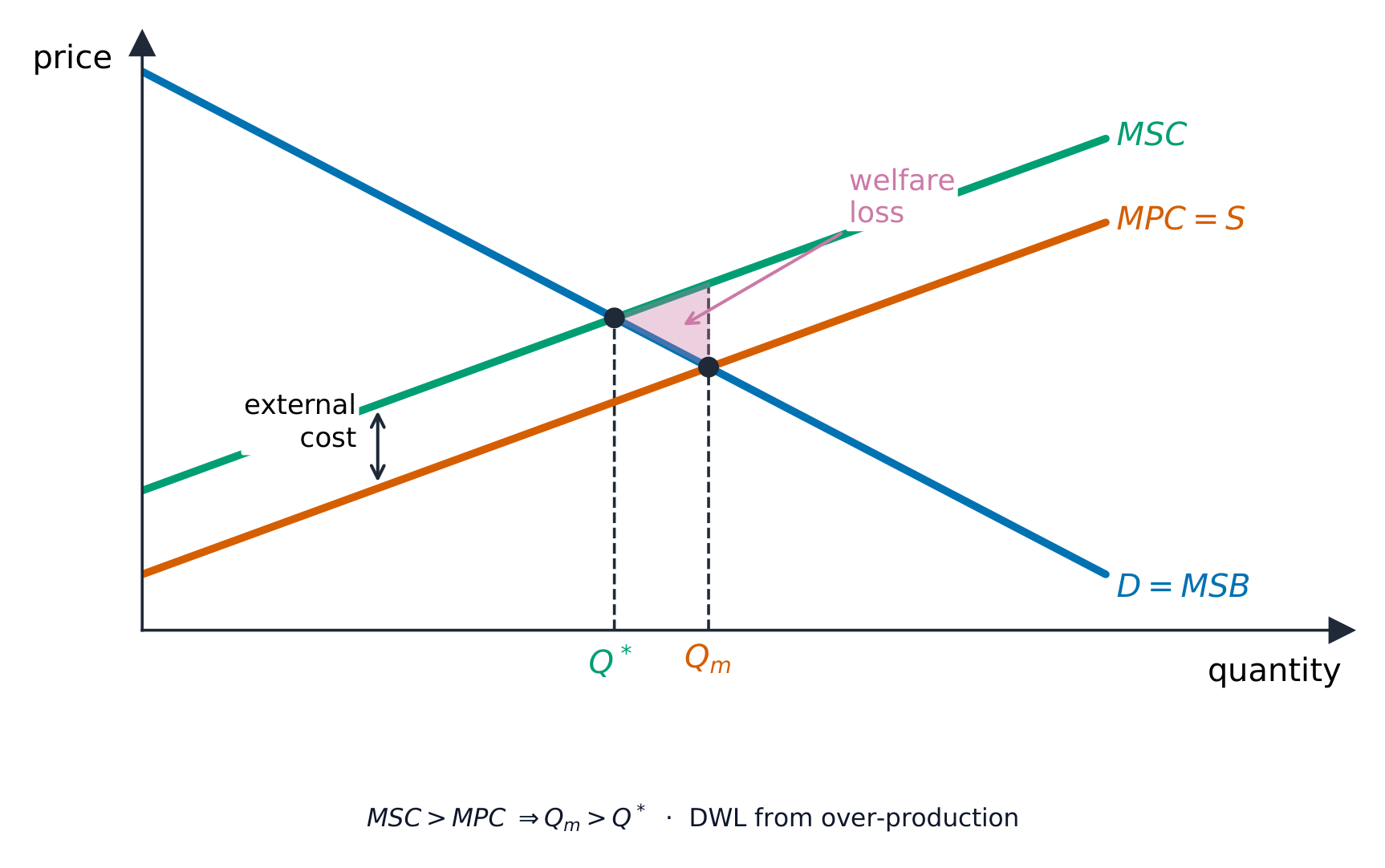
a negative externality 负外部性 is an external cost 外部成本 paid by others, like the pollution from a factory. The social cost 社会成本 (the cost to all of society) is bigger than the private cost 私人成本 (the cost to the producer). When people ignore the external cost, the market makes too much of the good.
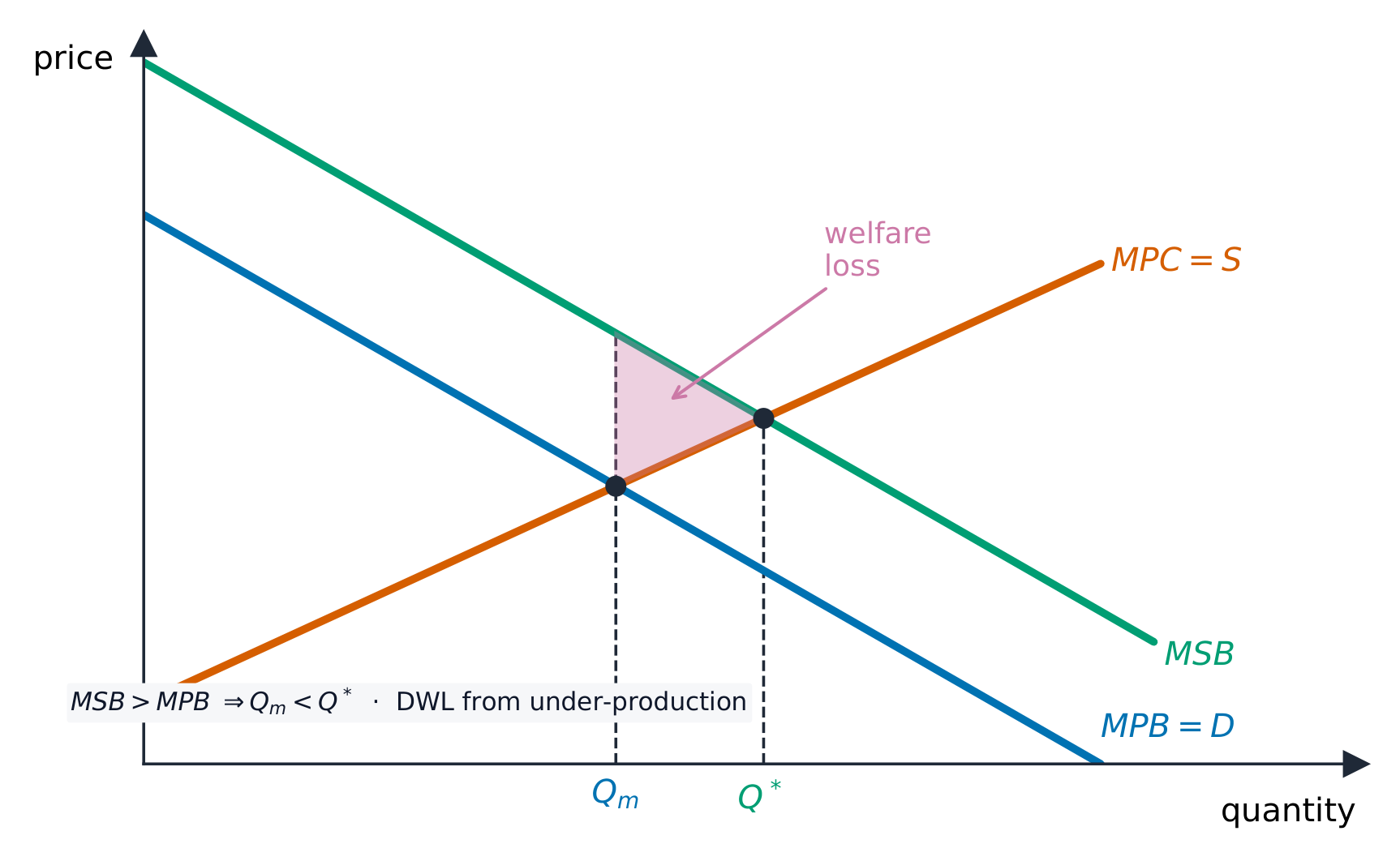
a positive externality 正外部性 is an external benefit 外部收益 enjoyed by others, like the protection that vaccination gives to everyone. Here the market makes too little, because buyers ignore the benefit to others.
Public goods
A public good 公共物品 (like street lighting or national defence) has non-rivalry 非竞争性 and non-excludability 非排他性. Because non-payers cannot be shut out, there is a free-rider problem 搭便车问题, so private firms make no profit and supply none. The market fails completely.
Merit and demerit goods
A merit good 优值品 (like education) is under-consumed; a demerit good 劣值品 (like cigarettes) is over-consumed. People misjudge them because of information failure 信息失灵 — they do not know, or do not use, the true benefit or harm.
Monopoly power
monopoly 垄断 means one firm dominates a market. A firm with monopoly power 垄断势力 can cut output and raise the price above the competitive level. This wastes resources and harms consumers.
Inequality and asymmetric information
the market rewards people who own resources, so it can produce great inequality 不平等 — some people are left with too little to live on.
asymmetric information 信息不对称 is when one side of a deal knows more than the other (a used-car seller knows the faults; the buyer does not). This leads to poor decisions and unfair deals.
العربية
السوق الحر يعطي غالبًا نتائج جيدة، لكن ليس دائمًا. فشل السوق يحدث عندما لا يقوم السوق بـ تخصيص (توزيع) الموارد بكفاءة — حيث يتم إنتاج الكثير أو القليل جدًا من سلعة ما. حينها قد تتدخل الحكومة.
هناك عدة أسباب لفشل السوق.
محطة توليد كهرباء بالفحم: إنتاج الكهرباء قد يفرض سلبية خارجية مثل التلوث على أشخاص ليسوا طرفًا في الصفقة.
السلبية الإيجابية الخارجية
السلبية الإيجابية الخارجية هي تكلفة أو منفعة تقع على طرف ثالث — شخص ليس هو المشتري ولا البائع.
السلبية الخارجية هي تكلفة خارجية يتحملها آخرون، مثل تلوث المصنع. التكلفة الاجتماعية (تكلفة الجميع) أكبر من التكلفة الخاصة (تكلفة المنتج). عندما يتجاهل الناس التكلفة الخارجية، ينتج السوق الكثير من السلعة.
الإيجابية الخارجية هي منفعة خارجية يستفيد منها آخرون، مثل الحماية التي يوفرها اللقاح للجميع. هنا ينتج السوق القليل، لأن المشترين يتجاهلون المنفعة التي تطر على الآخرين.
مع وجود سلبية خارجية، تكون التكلفة الاجتماعية (MSC) فوق التكلفة الخاصة (MPC)، لذا ينتج السوق أكثر من اللازم عند $Q_m$ بدلاً من الأمثل اجتماعيًا $Q^*$؛ المثلث المظلل يمثل خسارة الرفاهية.مع وجود إيجابية خارجية، تكون المنفعة الاجتماعية (MSB) فوق المنفعة الخاصة (MPB)، لذا ينتج السوق أقل من اللازم عند $Q_m$ بدلاً من الأمثل اجتماعيًا $Q^*$.
السلع العامة
السلعة العامة (مثل إنارة الشوارع أو الدفاع الوطني) تتميز بـ عدم التنافسية وعدم الاستبعاد. وبما أنه لا يمكن استبعاد غير الدافعين، يوجد مشكلة ركوب الأمتعة، لذلك لا تحقق الشركات الخاصة أرباحًا ولا توفر أي شيء. يفشل السوق تمامًا.
السلع المفضلة وغير المفضلة
السلعة المفضلة (مثل التعليم) تُستهلك بشكل ناقص؛ والسلعة المذمومة (مثل السجائر) تُستهلك بكثرة. يُقيّم الناس هذه السلع بشكل خاطئ بسبب فشل المعلومات — فهم لا يعرفون، أو لا يستخدمون، الفائدة الحقيقية أو الضرر.
قوة الاحتكار
الاحتكار يعني هيمنة شركة واحدة في السوق. الشركة ذات قوة الاحتكار يمكنها خفض الإنتاج ورفع السعر فوق المستوى التنافسي. هذا يهدر الموارد ويضر بالمستهلكين.
عدم المساواة والمعلومات غير المتماثلة
تكافئ السوق أولئك الذين يمتلكون الموارد، لذا قد تنتج عدم مساواة كبيرة — يتبقى البعض بقليل جدًا للعيش.
المعلومات غير المتماثلة تحدث عندما يكون أحد طرفي الصفقة على دراية أكثر من الآخر (بائع سيارة مستعمرة يعرف العيوب؛ المشتري لا يعرف). هذا يؤدي إلى قرارات سيئة وصفقات غير عادلة.
Explore · استكشف
The market and where it fails · السوق وأين يفشل
Supply and demand set the market price and quantity at their intersection. Market failure is when this free-market outcome is not the best one for society. · يحدد العرض والطلب سعر السوق وكميته عند نقطة تقاطعهما. فشل السوق هو عندما لا يكون هذا الناتج لسوق حرة هو الأفضل للمجتمع.
Methods of government intervention · طرق تدخل الحكومة
Syllabus · المنهج
English
explain methods of intervention: indirect taxes, subsidies, maximum and minimum prices, buffer stocks, regulation, provision, tradable permits
analyse the effects of intervention, including the incidence of indirect taxes and the concept of government failure
العربية
اشرح أساليب التدخل: الضرائب غير المباشرة، الإعانات، الحد الأقصى والأدنى للأسعار، المخزون الاحتياطي، التنظيم، التقديم، الأذون القابلة للتداول
حلل تأثيرات التدخل، بما في ذلك توزيع عبء الضرائب غير المباشرة ومفهوم فشل الحكومة
Source: Cambridge International syllabus · المصدر: منهج كامبريدج الدولي
English
A maximum price creates a shortage
Indirect taxes
An indirect tax 间接税 is a tax on spending. It raises a firm's costs, shifts the supply curve to the left, and so raises the price and cuts the quantity. Governments tax demerit goods (like tobacco) and goods with negative externalities to make people use less.
The incidence of a tax 税收归宿 is who really pays it. This depends on elasticity:
if demand is inelastic 缺乏弹性, consumers pay most of the tax (the price rises by nearly the full tax).
if demand is elastic 富有弹性, producers pay most of the tax (they cannot pass it on).
Subsidies
A subsidy 补贴 is a government payment to producers. It lowers their costs, shifts the supply curve to the right, and so lowers the price and raises the quantity. Subsidies are used for merit goods and goods with positive externalities.
Maximum and minimum prices
a maximum price 最高限价 is a legal top price, set below equilibrium (for example, rent control). Because the price is held down, quantity demanded is greater than quantity supplied, so there is a shortage 短缺.
a minimum price 最低限价 is a legal bottom price, set above equilibrium (for example, a minimum wage, or a floor for farm prices). Because the price is held up, quantity supplied is greater than quantity demanded, so there is excess supply 超额供给.
Buffer stocks
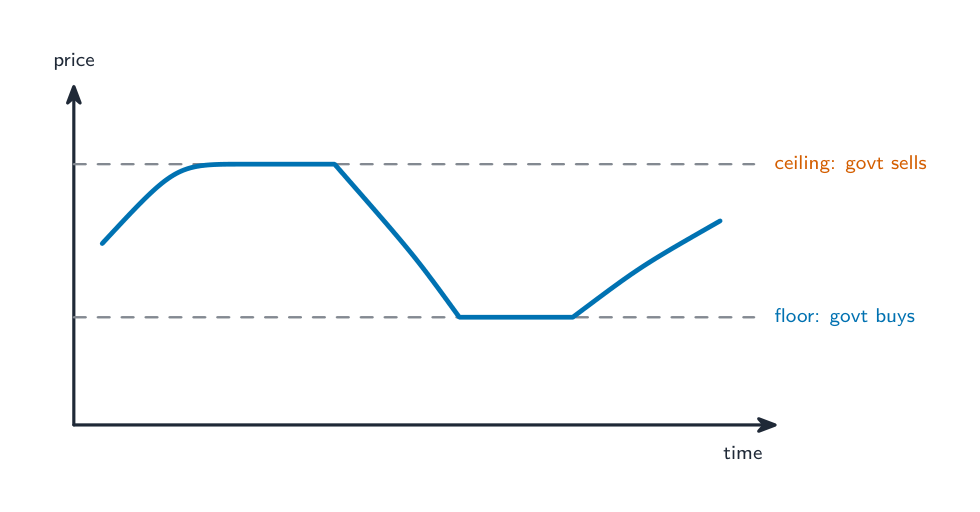
A buffer stock 缓冲库存 is used to steady the price of farm goods. The government buys and stores the good when the price is low, and sells from the store when the price is high. This keeps the price inside a target band.
Regulation, provision and permits
regulation 管制 means rules and laws — bans, age limits, safety standards, or pollution limits.
state provision 政府提供 means the government 政府 supplies a good directly, often free at the point of use (public goods and merit goods like schools and hospitals).
tradable permits 可交易许可证 set a total cap on pollution and give firms permits to pollute. Firms that pollute less can sell spare permits to firms that pollute more. This caps total pollution at the lowest cost.
Government failure
Intervention does not always help. government failure 政府失灵 is when the government's action makes the use of resources worse, not better. Common causes:
poor information, so the government sets the wrong tax or subsidy.
high cost of running the policy.
unintended results — for example, a maximum price can create an illegal black market 黑市.
decisions made for political reasons rather than for efficiency.
Worked example. A government puts a £2 per-packet tax on cigarettes, whose demand is very price-inelastic. Who really pays it, and what does that mean for the policy's two aims? The incidence falls mainly on whichever side is less able to respond - the more inelastic one. Because smokers keep buying almost the same quantity as the price rises, producers can pass most of the tax on, so consumers bear most of the incidence: the price might rise by about £1.80, with producers absorbing only about £0.20. That creates the tension the question is really testing. As a revenue raiser the tax succeeds: quantity barely falls, so revenue is large and steady. As a way of cutting consumption it largely fails - for exactly the same reason. And because poorer smokers spend a larger share of their income on it, the tax is regressive. Argue from elasticity to incidence, then judge each aim separately.
العربية
السعر الأقصى يسبب نقصًا
الضرائب غير المباشرة
الضريبة غير المباشرة هي ضريبة على الإنفاق. ترفع تكاليف الشركة، وتحرك منحنى العرض لليسار، وبالتالي ترفع السعر وتقلل الكمية. تفرض الحكومات ضرائب على السلع المذمومة (مثل التبغ) والسلع ذات السلبية الخارجية لجعل الناس يستخدمونها أقل.
السجائر سلعة مذمومة — تُستهلك بكثرة لأن الناس يقيسون الضرر بشكل خاطئ — لذا تفرض عليها الحكومات ضرائب عالية.
تأثير الضريبة هو من يدفعها حقًا. ويعتمد ذلك على المرونة:
إذا كان الطلب غير مرن، فإن المستهلكين يتحملون معظم الضريبة (يرتفع السعر بحوالي مقدار الضريبة الكامل).
إذا كان الطلب مرنًا، فإن المنتجين يتحملون معظم الضريبة (لا يستطيعون تحويلها).
تُزاح ضريبة غير مباشرة العرض إلى $S+\text{tax}$، مما يرفع السعر ويقلل الكمية؛ وتُقسم العبء بين المستهلكين والمنتجين.
الإعانات
الإعانة هي دفع حكومي للمنتجين. فهي تُخفض تكاليفهم، وتحرك منحنى العرض لليمين، وبالتالي تُخفض السعر وتزيد الكمية. تُستخدم الإعانات للسلع ذات القيمة المعرفية والسلع ذات الآثار الإيجابية الخارجية.
تُزاح الإعانة العرض إلى $S+\text{subsidy}$، مما يُخفض السعر ويزيد الكمية المتداولة.
الحد الأقصى والأدنى للأسعار
الحد الأقصى للسعر هو حد قانوني أعلى للسعر، يُحدد أسفل نقطة التوازن (مثل التحكم في الإيجار). نظرًا لأن السعر يُثبّت عند مستوى منخفض، تكون الكمية المطلوبة أكبر من الكمية المعروضة، لذلك يحدث نقص.
الحد الأدنى للسعر هو حد قانوني أدنى للسعر، يُحدد أعلى نقطة التوازن (مثل الحد الأدنى للأجور، أو السقف لأسعار المحاصيل الزراعية). نظرًا لأن السعر يُثبّت عند مستوى مرتفع، تكون الكمية المعروضة أكبر من الكمية المطلوبة، لذلك يوجد فائض عرض.
يُترك الحد الأقصى للسعر المُحدد أسفل نقطة التوازن بنقص؛ ويُترك الحد الأدنى للسعر المُحدد أعلى نقطة التوازن بفائض عرض.
المخزون الاحتياطي
المخزون الاحتياطي يُستخدم لتثبيت سعر السلع الزراعية. تشتري الحكومة وتخزن السلعة عندما يكون السعر منخفضًا، وتبيع من المخزن عندما يكون السعر مرتفعًا. وهذا يحافظ على السعر ضمن نطاق مستهدف.
يحافظ المخزون الاحتياطي على السعر ضمن نطاق: تشتري الحكومة عندما يصل إلى الأرضية وتبيع عندما يصل إلى السقف.
التنظيم والتقديم والإجازات
التنظيم يعني القواعد والقوانين — الحواجز، حدود العمر، معايير السلامة، أو حدود التلوث.
التقديم الحكومي يعني أن الحكومة تزود سلعةً مباشرة، غالبًا مجانًا عند نقطة الاستخدام (السلع العامة والسلع ذات القيمة المعرفية كالمدارس والمستشفيات).
إجازات التلوث القابلة للتداول تحدد حدًا إجماليًا للتلوت وتمنح الشركات إجازات للتلوث. الشركات التي تلوث أقل يمكنها بيع الإجازات الزائدة للشركات التي تلوث أكثر. هذا يحدّ من إجمالي التلوث بأقل تكلفة.
فشل الحكومة
التدخل لا يساعد دائمًا. فشل الحكومة يحدث عندما تجعل إجراء الحكومة استخدام الموارد أسوأ، وليس أفضل. الأسباب الشائعة:
معلومات سيئة، بحيث تضع الحكومة ضريبة أو إعانة خاطئة.
تكلفة عالية لتشغيل السياسة.
نتائج غير مقصودة — على سبيل المثال، قد يؤدي الحد الأقصى للسعر إلى إنشاء سوق سوداء غير قانونية.
قرارات تتخذ لأسباب سياسية بدلاً من الكفاءة.
مثال محلول. تفرض الحكومة ضريبة قدرها £2 على كل عبوة من السجائر، وهي ذات مرونة سعرية منخفضة جداً. من يتحمل العبء الحقيقي، وماذا يعني ذلك لأهداف السياسة المزدوجة؟ يقع التحمل الضريبي بشكل رئيسي على الجانب الذي يكون أقل قدرة على الاستجابة - وهو الجانب الأقل مرونة. وبما أن المدخنين يستمرون في الشراء بنفس الكمية تقريباً مع ارتفاع السعر، يمكن للمنتجين تحويل معظم الضريبة إلى المستهلكين، لذا يتحمل المستهلكون معظم التحمل: قد يرتفع السعر بحوالي £1.80، بينما يمتص المنتجون فقط حوالي £0.20. هذا يخلق التوتر الذي تختبره السؤال حقاً. كـ مولد للإيرادات، تنجح الضريبة: حيث لا ينخفض الإنتاج بشكل كبير، فتكون الإيرادات كبيرة ومستقرة. أما كوسيلة لـ تقليل الاستهلاك، فهي تفشل إلى حد كبير - لنفس السبب بالضبط. ولأن المدخنين الأقل ثراءً يخصصون جزءاً أكبر من دخلهم لذلك، تكون الضريبة غير عادلة (تنقص من الدخل). جادل بناءً على المرونة نحو التحمل الضريبي، ثم قيّم كل هدف على حدة.
Explore · استكشف
Reasons for intervention · أسباب التدخل
Governments step into markets when the free-market equilibrium isn't the best outcome for society. · تتدخل الحكومات في الأسواق عندما لا يكون توازن السوق الحر هو أفضل نتيجة للمجتمع.
Income and wealth inequality · عدم المساواة في الدخل والثروة
Syllabus · المنهج
English
distinguish income and wealth and explain the causes of inequality
explain policies to redistribute income and wealth (progressive taxation, benefits, provision of services) and their effects
العربية
اميز بين الدخل والثروة واشرح أسباب التفاوت
اشرح السياسات لإعادة توزيع الدخل والثروة (الضرائب التدريجية، المزايا الاجتماعية، تقديم الخدمات) وتأثيراتها
Source: Cambridge International syllabus · المصدر: منهج كامبريدج الدولي
English
It helps to separate two ideas:
income 收入 is a flow 流量 — money received over a period, such as wages, rent and interest.
wealth 财富 is a stock 存量 — the value of assets owned at a point in time, such as houses, shares and savings.
Wealth produces income (savings earn interest), and income can be saved to build wealth, so the two are linked. Inequality has many causes: differences in skills and wages, the ownership of wealth, inheritance, and unemployment.
Policies to reduce inequality
a progressive tax 累进税 takes a larger percentage 百分比 from higher incomes than from lower incomes. This narrows the gap after tax.
benefits 福利金 (also called transfer payments 转移支付) are money paid by the government to the poor, the old, and the unemployed.
state provision of free services, like education and health care, raises the real living standards of poorer people.
Together these policies bring about redistribution 再分配 — moving income and wealth from richer to poorer people. But there is a trade-off 取舍: very high taxes and large benefits may weaken the incentive 激励 to work and to invest.
العربية
من المفيد الفصل بين مفهومين:
الدخل هو تدفق — الأموال المستلمة خلال فترة زمنية، مثل الأجور والإيجارات والفوائد.
الثروة هي مخزون — قيمة الأصول المملوكة في نقطة زمنية معينة، مثل المنازل والأسهم والادخارات.
تنتج الثروة دخلاً (تدر الأرباح المدخونات)، ويمكن ادخار الدخل لبناء الثروة، لذا فهما مرتبطان. ولعدم المساواة أسباب عديدة: اختلافات المهارات والأجور، امتلاك الثروة، الوصايا، والبطالة.
سياسات تقليل عدم المساواة
**الضريبة+'. Progressive' takes a larger percentage from higher incomes than from lower incomes. This narrows the gap after tax.
المزايا (تسمى أيضًا المدفوعات الانتقالية) هي أموال تدفعها الحكومة للفقراء وكبار السن والعمال العاطلين.
التقديم الحكومي للخدمات المجانية، كتعليم ورعاية صحية، يرفع مستويات المعيشة الفعلية للأشخاص الأكثر فقرًا.
معًا هذه السياسات تحقق إعادة التوزيع — نقل الدخل والثروة من الأغنياء إلى الفقراء. ولكن هناك مفاضلة: الضرائب المرتفعة جدًا والمزايا الكبيرة قد تُضعف الحافز للعمل والاستثمار.
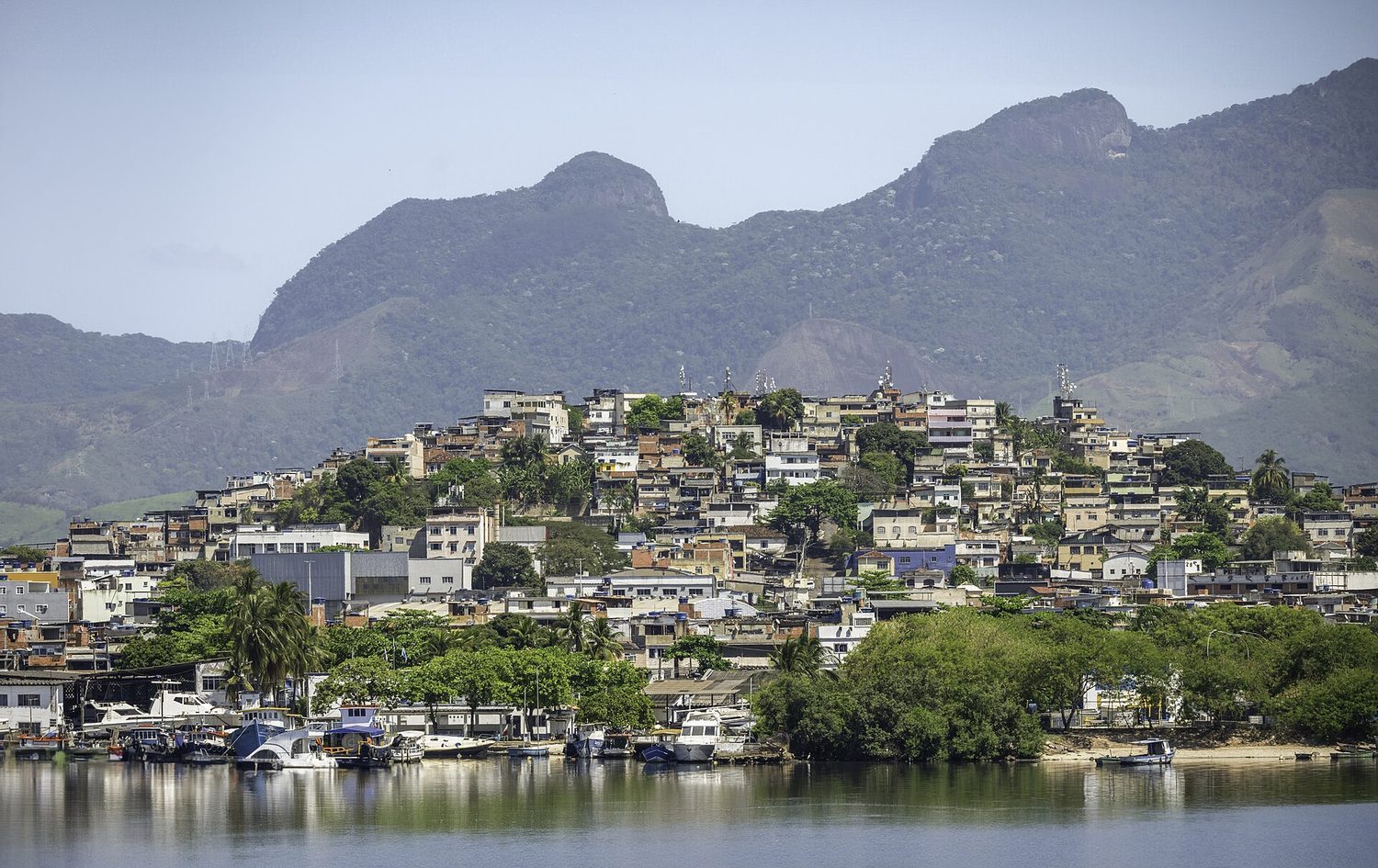
الثروة والفقر جنبًا إلى جنب: الأسواق وحدها قد تترك عدم مساواة كبيرة في الدخل دون معالجة
Explore · استكشف
Inequality policy route · مسار سياسة عدم المساواة
Follow how policy can change disposable income and opportunity. · تابع كيف يمكن للسياسة تغيير الدخل القابل للإنفاق والفرص.
Pick one and the site follows you — notes, papers, videos and practice all open on it. · اختر واحدًا وسيتبعك الموقع — الملاحظات، الأوراق، الفيديوهات والتدريب جميعها تفتح عليه.
Type to search notes, lessons, code, vocabulary and past-paper questions across every subject. · اكتب للبحث عن ملاحظات، دروس، أكواد، مفردات وأسئلة امتحانات سابقة عبر جميع المواد.