Poverty · 贫困
| English | 中文 | Pinyin · 拼音 |
|---|---|---|
| poverty/ˈpɒvəti/ | 贫困 | pín kùn |
| inequality/ɪniːˈkwɒlɪti/ | 不平等 | bù píng děng |
| absolute poverty/ˈæbsəluːt ˈpɒvəti/ | 绝对贫困 | jué duì pín kùn |
| relative poverty/ˈrelətɪv ˈpɒvəti/ | 相对贫困 | xiāng duì pín kùn |
| Lorenz curve/ˈlɒrənts kɜːv/ | 洛伦兹曲线 | luò lún zī qū xiàn |
| progressive taxes/prəˈɡresɪv ˈtæksɪz/ | 累进税 | lèi jìn shuì |
| minimum wage/ˈmɪnɪməm weɪdʒ/ | 最低工资 | zuì dī gōng zī |
The gap between rich and poor
- In every country, some people have far more than others. In some, the gap is enormous.
- Economics studies both poverty 贫困 (having too little) and inequality 不平等 (the gap itself).
贫富之间的差距
- 在每个国家,一些人比其他人拥有多得多。在一些国家,差距是巨大的。
- 经济学研究贫困(poverty,拥有太少)和不平等(inequality,差距本身)两者。
Economics case lab · 经济学案例实验室
Classify real examples by the economic idea they show. · 根据所展示的经济学概念对真实案例进行分类。
Absolute poverty means: · 绝对贫困意味着:
Absolute poverty is a lack of basic necessities. · 绝对贫困是指缺乏基本必需品。
A family that can meet its basic needs but has far less than the national average is in: · 一个能满足基本需求但远低于全国平均水平的家庭处于:
Relative poverty is defined against the average in society. · 相对贫困是相对于社会平均水平定义的。
Poverty measured against the average income in society is ______ poverty. · 相对于社会平均收入衡量的贫困是______贫困。
Relative poverty compares to the societal average. · 相对贫困是与社会平均水平进行比较的。
Two kinds of poverty
- Absolute poverty 绝对贫困: not having enough for basic needs — food, shelter, clean water.
- Relative poverty 相对贫困: having much less than the average in your society, even if basic needs are met.
Two types of poverty: absolute (cannot afford basic needs) and relative (poor compared with others in the same country)
两种贫困
- 绝对贫困(absolute poverty):没有足够的基本需要——食物、住所、清洁水。
- 相对贫困(relative poverty):比你社会中的平均拥有少得多,即使基本需要被满足。
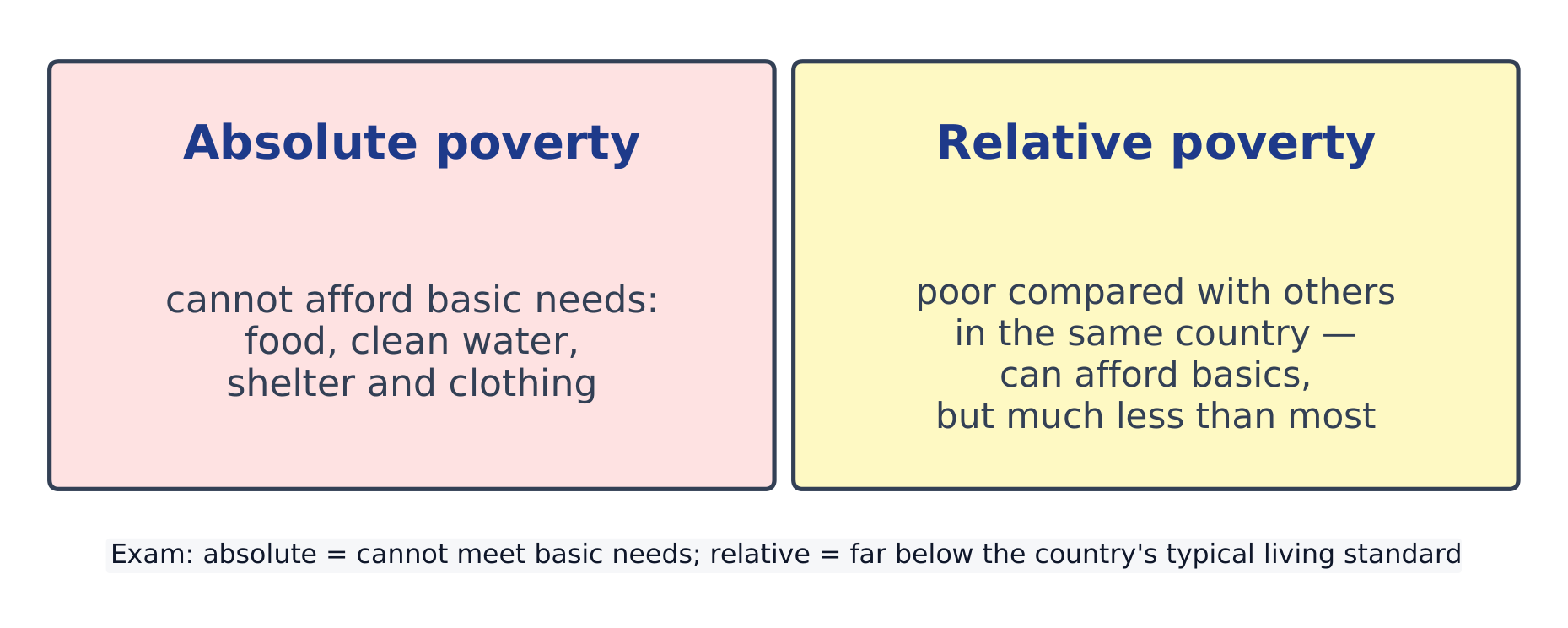
两种类型的贫困:绝对(买不起基本需要)和相对(与同一国家中的他人相比贫穷)
On a Lorenz curve, greater inequality is shown by a curve that: · 在洛伦兹曲线上,更大的不平等表现为曲线:
The more it bows away from the diagonal, the more unequal the distribution. · 它偏离对角线越远,分配越不平等。
Picturing inequality
- A Lorenz curve 洛伦兹曲线 plots the share of income against the share of population.
- The further it bows from the diagonal line of equality, the more unequal the country.
The further the Lorenz curve bows from the diagonal, the greater the inequality.
描绘不平等
- 一条洛伦兹曲线(Lorenz curve)把收入的份额对照人口的份额绘制。
- 它从对角的平等线弯曲得越远,这个国家越不平等。
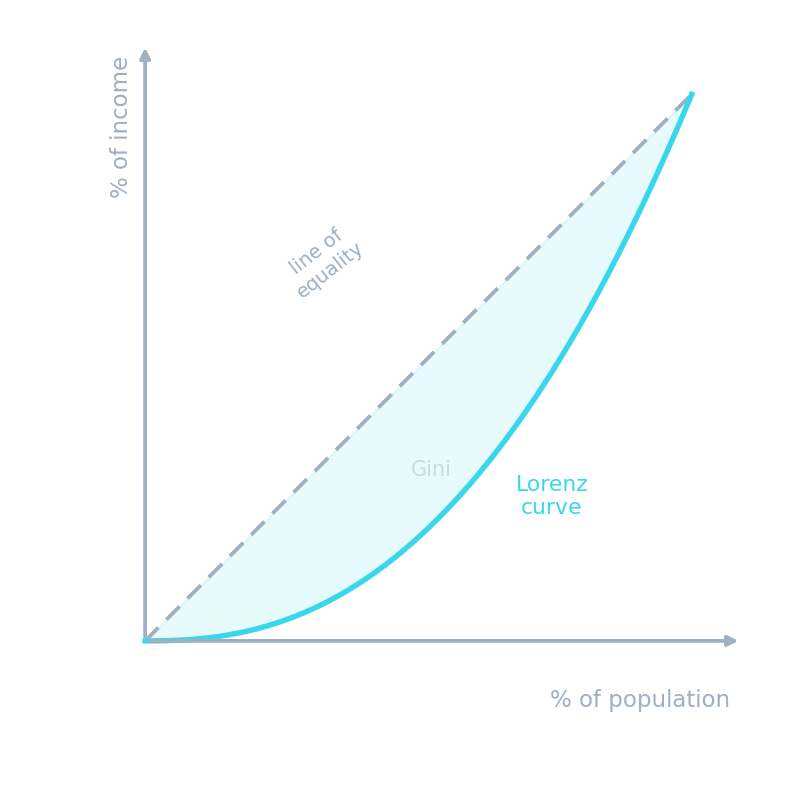
洛伦兹曲线从对角弯曲得越远,不平等越大。
Bend the Lorenz curve · 弯曲洛伦兹曲线
Drag the top-20% income share of each economy. The more the curve bows away from the diagonal, the more unequal the country. · 拖动每个经济体前20%的收入份额。曲线偏离对角线越远,表明该国越不平等。
Which policies help reduce poverty? (Select all that apply.) · 哪些政策有助于减少贫困?(多选)
Cutting the minimum wage would worsen poverty. · 削减最低工资会加剧贫困。
Causes and cures
- Causes: unemployment, low wages, poor education, illness, old age.
- Policies: progressive taxes 累进税, benefits, a minimum wage 最低工资, free education and healthcare.
Poverty and inequality aren't the same. A rich country can have low absolute poverty but high inequality. Reducing one doesn't automatically reduce the other.
A poverty cycle
原因和治疗
- 原因:失业、低工资、差的教育、疾病、老年。
- 政策:累进税(progressive taxes)、福利、一个最低工资、免费教育和医疗。
贫困和不平等不一样。 一个富裕的国家能有低绝对贫困但高不平等。减少一个不自动减少另一个。
You've got it
- absolute poverty = can't meet basic needs; relative poverty = far below the average
- a Lorenz curve shows inequality — the more it bows, the more unequal
- cures: progressive taxes, benefits, minimum wage, free education/healthcare
你掌握了
- 绝对贫困 = 无法满足基本需要;相对贫困 = 远低于平均
- 一条洛伦兹曲线显示不平等——它弯曲得越多,越不平等
- 治疗:累进税、福利、最低工资、免费教育/医疗