Population · 人口
| English | 中文 | Pinyin · 拼音 |
|---|---|---|
| population/ˌpɒpjʊˈleɪʃn/ | 人口 | rén kǒu |
| immigration/ˌɪmɪˈɡreɪʃn/ | 迁入 | qiān rù |
| emigration/ˌemɪˈɡreɪʃn/ | 迁出 | qiān chū |
| birth rate/bɜːθ reɪt/ | 出生率 | chū shēng lǜ |
| death rate/deθ reɪt/ | 死亡率 | sǐ wáng lǜ |
| ageing population/ˈeɪdʒɪŋ ˌpɒpjʊˈleɪʃn/ | 人口老龄化 | rén kǒu lǎo líng huà |
| optimum population/ˈɒptɪməm ˌpɒpjʊˈleɪʃn/ | 适度人口 | shì dù rén kǒu |
More mouths, more hands
- The number of people in a country — and their ages — shapes everything from schools to pensions.
- Economists study how and why a population 人口 changes.
更多的嘴,更多的手
- 一个国家中的人数——以及他们的年龄——塑造从学校到养老金的一切。
- 经济学家研究一个人口(population)如何以及为什么变化。
Development chain lab · 发展链条实验室
Follow how policy and resources can change living standards. · 了解政策和资源如何改变生活水平。
A country's population rises when: · 当一个国家出现以下情况时,人口会增加:
Natural increase plus net migration drives growth. · 自然增长加上净移民驱动人口增长。
The number of births per 1000 people per year is the birth . · 每年每1000人的出生数是出生。
Birth and death rates are measured per 1000 per year. · 出生率和死亡率按每年每1000人计算。
Why population changes
- Population rises when births + immigration 迁入 exceed deaths + emigration 迁出.
- The birth rate 出生率 and death rate 死亡率 are measured per 1000 people per year.
Worked example. In one year a country has 800,000 births, 500,000 deaths, 300,000 immigrants and 100,000 emigrants. Natural change = 800,000 − 500,000 = 300,000; net migration = 300,000 − 100,000 = 200,000. Total population change = 300,000 + 200,000 = +500,000.
Population pyramids of a developing and a developed country
Population grows when births exceed deaths
为什么人口变化
- 人口在出生 + 移入(immigration)超过死亡 + 移出(emigration)时上升。
- 出生率(birth rate)和死亡率(death rate)按每年每 1000 人衡量。
例题。 某国一年有 80 万出生、50 万死亡、30 万移入、10 万移出。自然变化 = 80 − 50 = 30 万;净移民 = 30 − 10 = 20 万。人口总变化 = 30 + 20 = +50 万。
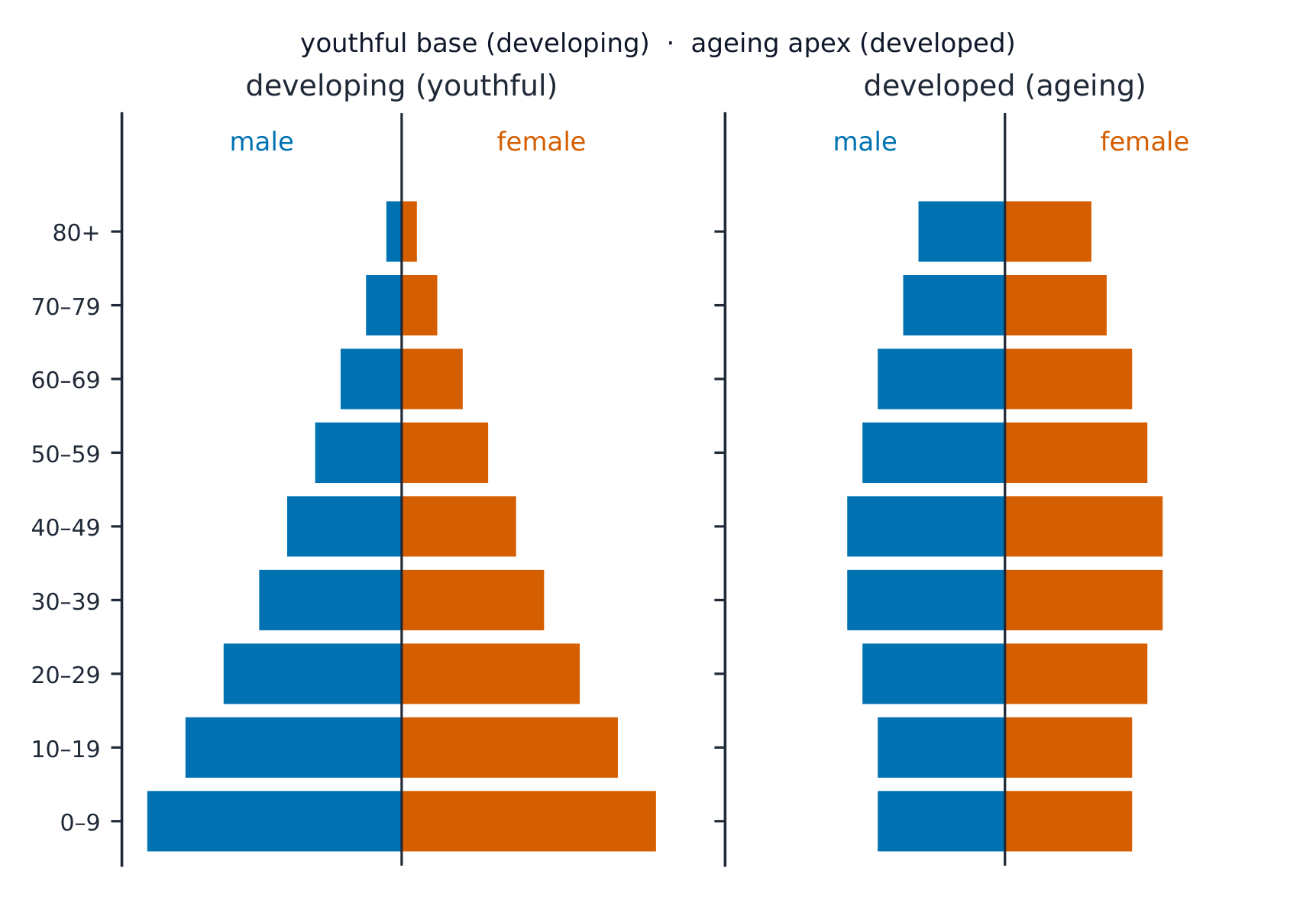
一个发展中国家和一个发达国家的人口金字塔
An ageing population is likely to increase the cost of: · 人口老龄化可能会增加以下哪方面的成本:
More elderly people raise pension and healthcare spending. · 老年人增多会增加养老金和医疗支出。
Age structure
- A young population (high birth rate) needs many schools and creates a future workforce.
- An ageing population 人口老龄化 (longer lives, fewer births) raises the cost of pensions and healthcare.
A country's population grows when births plus immigration are greater than deaths plus emigration
年龄结构
- 一个年轻的人口(高出生率)需要许多学校并创造一个未来的劳动力。
- 一个老龄化(ageing)的人口(更长的寿命、更少的出生)提高养老金和医疗的成本。
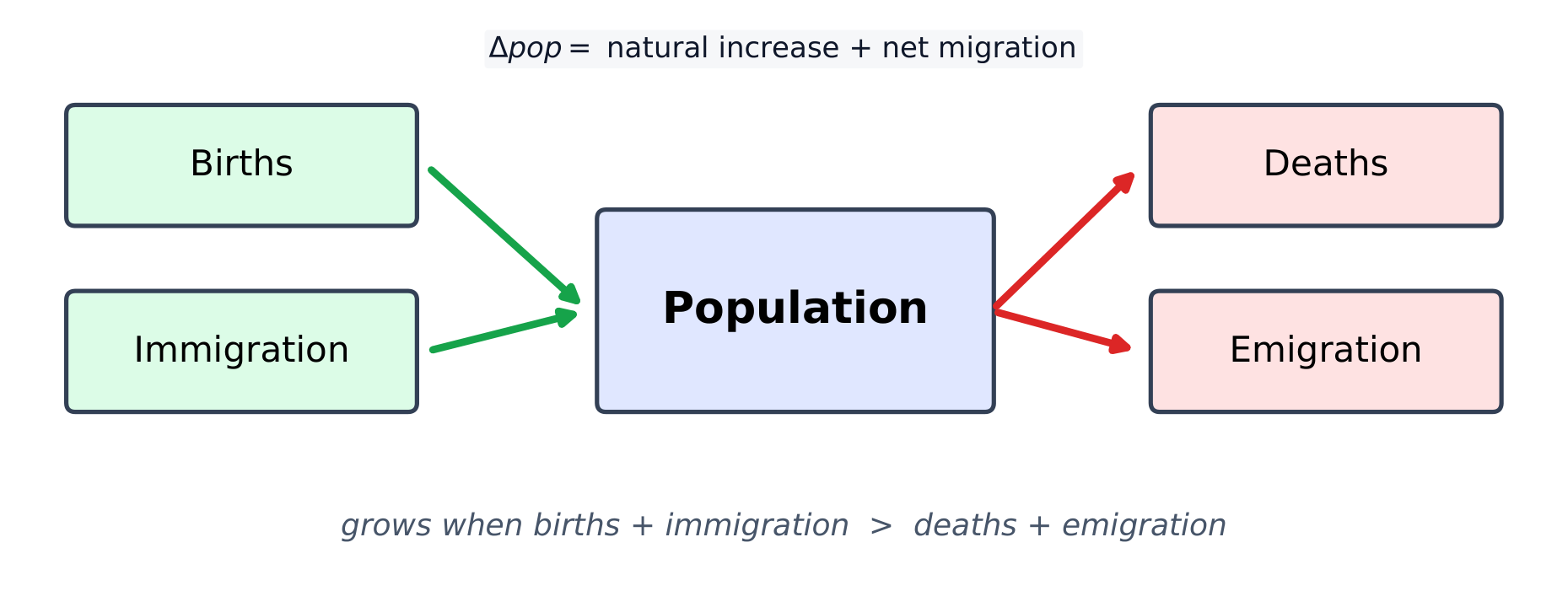
一个国家的人口在出生加移入大于死亡加移出时增长
The optimum population is the one that: · 最适人口是指:
It makes the best use of resources — highest output per head. · 它能最有效地利用资源——实现最高人均产出。
Over-population means too many people relative to available resources. · 人口过剩是指相对于可用资源而言人口过多。
It is about the people-to-resources ratio, not absolute numbers. · 它关注的是人与资源的比率,而非绝对数量。
Optimum population 适度人口
- The optimum population makes the best use of resources — the highest output per head.
- Too few people (under-populated) or too many (over-populated) both lower output per head.
Over-population isn't just "too many people". It means too many relative to resources. A small country can be over-populated and a huge one under-populated — it depends on resources, not size alone.
An ageing population means fewer workers per retired person, more spending on pensions and healthcare, and pressure for higher taxes or migration
最优人口
- 最优人口(optimum population)最好地利用资源——最高的人均产出。
- 太少的人(人口不足)或太多的人(人口过剩)都降低人均产出。
人口过剩不只是"太多人"。 它意味着相对于资源太多。一个小国能人口过剩,一个巨大的国能人口不足——它取决于资源,不只是规模。
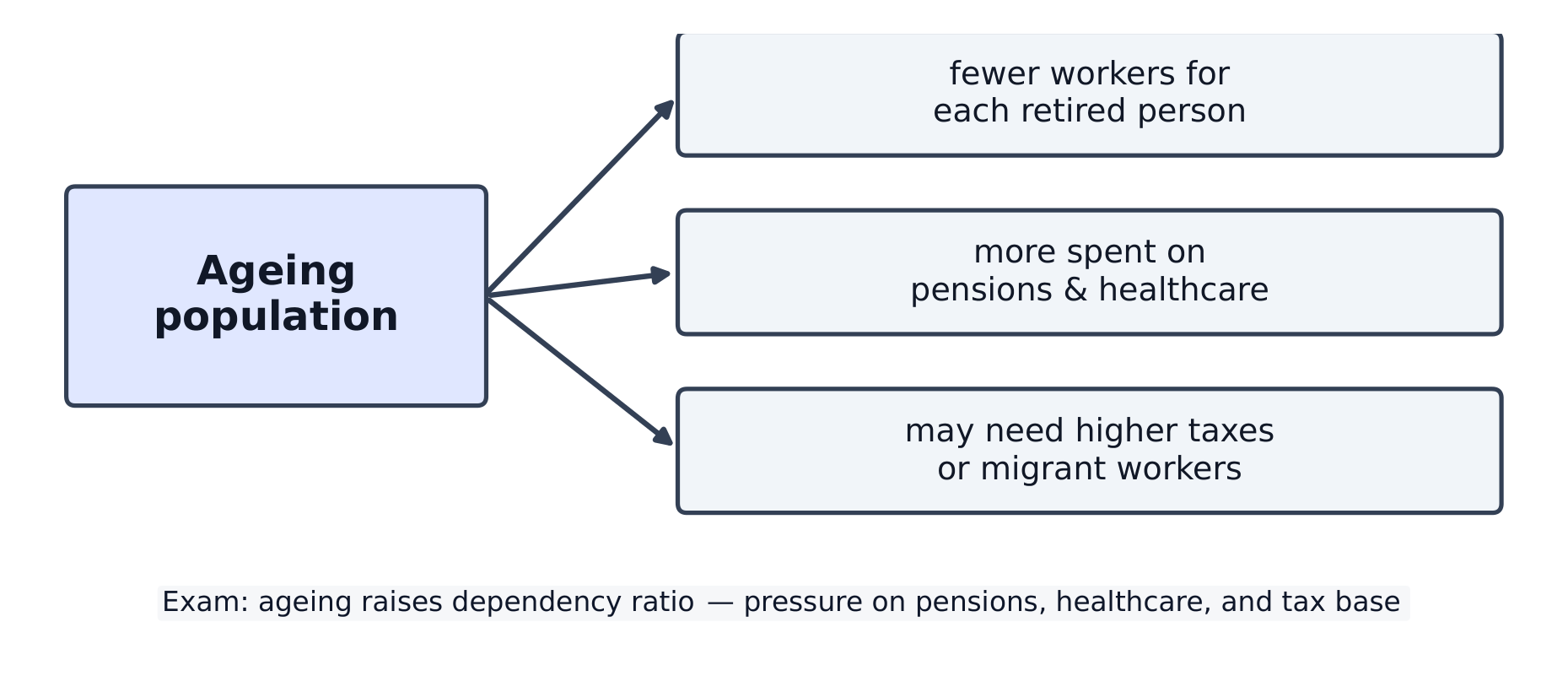
一个老龄化的人口意味着每个退休者更少的工人、更多的养老金和医疗支出,以及更高税收或移民的压力
You've got it
- population rises when births + immigration exceed deaths + emigration
- a young population strains schools; an ageing one strains pensions/healthcare
- the optimum population maximises output per head for given resources
你掌握了
- 人口在出生 + 移入超过死亡 + 移出时上升
- 一个年轻的人口给学校带来压力;一个老龄化的给养老金/医疗带来压力
- 最优人口为给定的资源最大化人均产出