Price changes · 价格变化
| English | 中文 | Pinyin · 拼音 |
|---|---|---|
| shifts/ʃɪfts/ | 移动 | yí dòng |
| demand/dɪˈmænd/ | 需求 | xū qiú |
| supply/səˈplaɪ/ | 供给 | gōng jǐ |
| equilibrium/ˌiːkwɪˈlɪbrɪəm/ | 均衡 | jūn héng |
| shortage/ˈʃɔːtɪdʒ/ | 短缺 | duǎn quē |
When the whole market moves
- A heatwave empties the shops of ice cream; a health scare empties them of a food. Prices jump or slump.
- These are shifts 移动 in demand 需求 or supply 供给 — and they move the equilibrium 均衡 to a new place.
当整个市场移动时
- 一次热浪让商店的冰淇淋空了;一次健康恐慌让它们的一种食物空了。价格跳升或暴跌。
- 这些是需求或供给的移动(shifts)——它们把均衡移到一个新的地方。
A rise in demand (the demand curve shifts right) leads to: · 需求的一次上升(需求曲线右移)导致:
More demand raises both equilibrium price and quantity. · 更多需求同时提高均衡价格和数量。
A heatwave raises demand for ice cream. In that market: · 一次热浪提高对冰淇淋的需求。在那个市场:
Demand shifts right → higher price and quantity. · 需求右移 → 更高的价格和数量。
A demand shift
- More demand (right shift) → at the old price there's a shortage 短缺 → price rises, quantity rises.
- Less demand (left shift) → price falls, quantity falls.
A rise in demand shifts the curve right: the new equilibrium has a higher price and quantity.
一次需求移动
- 更多需求(右移)→ 在旧价格有一个短缺 → 价格上升,数量上升。
- 更少需求(左移)→ 价格下降,数量下降。
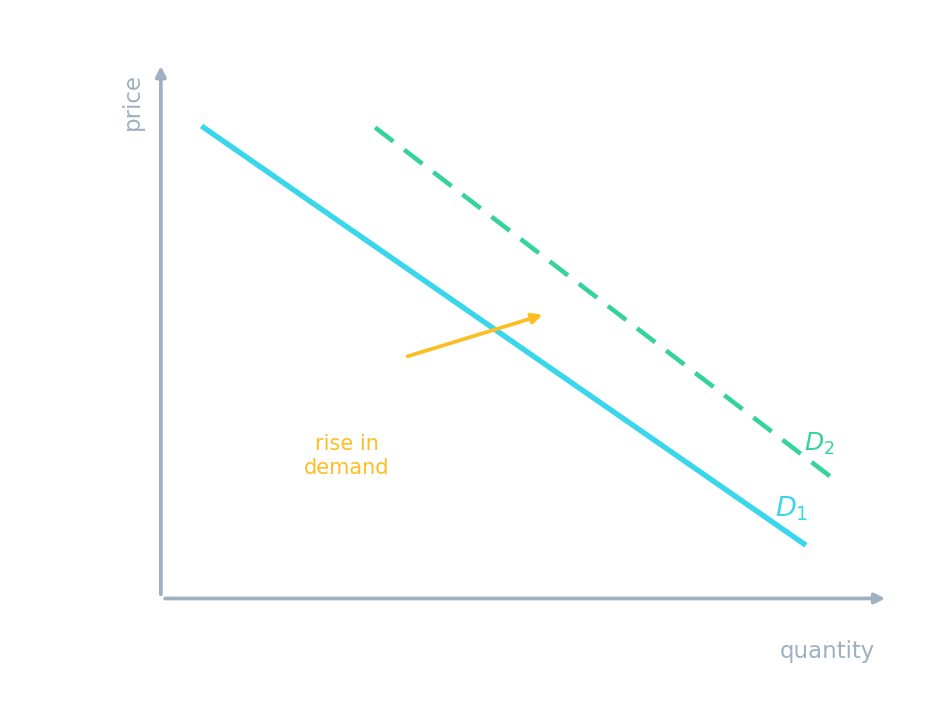
需求的一次上升使曲线右移:新均衡有一个更高的价格和数量。
Demand & supply · 需求与供给
A shift · 平移 in demand or supply moves the equilibrium. · 需求或供给的一次移动使均衡移动。
A rise in supply (the supply curve shifts right) leads to: · 供给的一次上升(供给曲线右移)导致:
More supply lowers the price and raises the quantity traded. · 更多供给降低价格并提高交易的数量。
A fall in supply causes the equilibrium price to . · 供给的一次下降使均衡价格。
Less supply → higher price, lower quantity. · 更少供给 → 更高的价格,更低的数量。
A supply shift
- More supply (right shift) → price falls, quantity rises.
- Less supply (left shift) → price rises, quantity falls.
A rightward shift of supply lowers the price and raises the quantity; a leftward shift does the reverse
一次供给移动
- 更多供给(右移)→ 价格下降,数量上升。
- 更少供给(左移)→ 价格上升,数量下降。
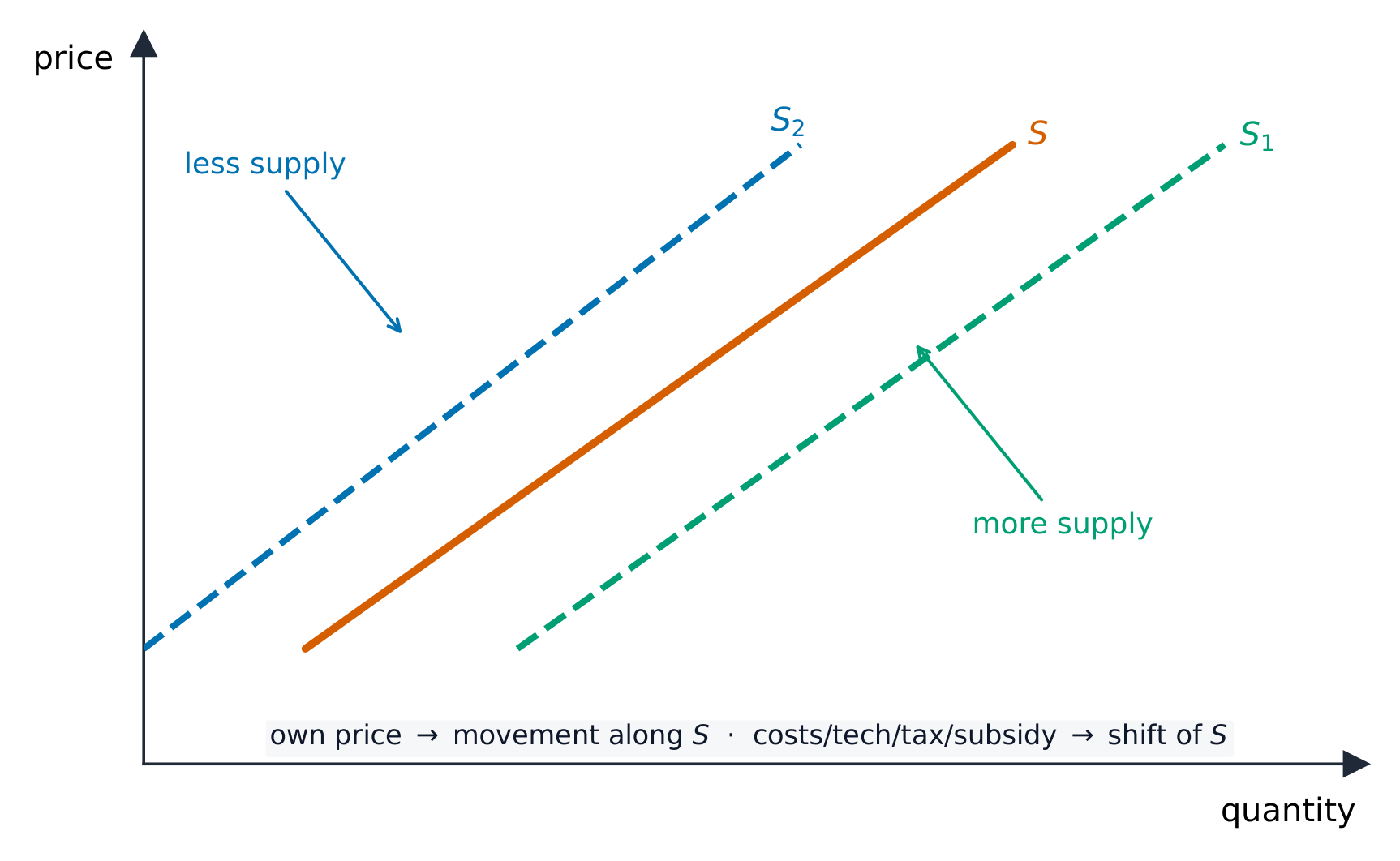
供给的向右移动降低价格、提高数量;向左移动则相反
A shift in one curve changes both the equilibrium price and quantity. · 一条曲线的一次移动同时改变均衡价格和数量。
Both move — always state the change in each. · 两者都动——总是陈述每个的变化。
A method that always works
-
- Decide which curve moves and which way.
-
- Mark the new crossing point.
-
- Read off the new price and quantity.
Two things move, not one. A shift changes both the equilibrium price and the quantity. Always state what happens to each.
一个总是有效的方法
-
- 决定哪条曲线移动以及朝哪个方向。
-
- 标记新的相交点。
-
- 读出新的价格和数量。
两样东西移动,不是一样。 一次移动同时改变均衡价格和数量。总是陈述每个发生什么。
You've got it
- a demand rise → price up, quantity up; a demand fall → both down
- a supply rise → price down, quantity up; a supply fall → price up, quantity down
- always report the change in both price and quantity
你掌握了
- 一次需求上升 → 价格上升,数量上升;一次需求下降 → 两者都下降
- 一次供给上升 → 价格下降,数量上升;一次供给下降 → 价格上升,数量下降
- 总是报告价格和数量两者的变化