Group I properties · 第 I 族性质
| English | 中文 | Pinyin · 拼音 |
|---|---|---|
| Group I/ɡruːp aɪ/ | 第一族 | dì yī zú |
| alkali metals/ˈælkəlaɪ ˈmetlz/ | 碱金属 | jiǎn jīn shǔ |
| reactivity/rɪəkˈtɪvɪti/ | 活泼性 | huó pō xìng |
| hydroxide/haɪˈdrɒksaɪd/ | 氢氧化物 | qīng yǎng huà wù |
The reactive Group I 第一族 metals
- Drop a small piece of sodium in water and it fizzes across the surface.
- The Group I metals (the alkali metals 碱金属) are soft, light and very reactive.
活泼的第 I 族金属
- 把一小块钠丢进水中,它在表面起泡乱窜。
- 第 I 族(Group I)金属(碱金属)软、轻且非常活泼。
Group I trend lab · 第 I 族趋势实验
Follow Group I metals down the group and watch reactivity increase. · 沿第 I 族向下观察,反应性增强。
How many electrons are in the outer shell of a Group I element? · 第 I 族元素最外层有多少个电子?
Group I elements have one outer electron. · 第 I 族元素有一个最外层电子。
Group I metals are soft enough to cut with a knife. · 第 I 族金属质地柔软,可以用刀切割。
They are soft and have low densities. · 它们质地柔软且密度低。
Group I metals lose one electron to form ions with a charge of +. · 第 I 族金属失去一个电子形成带 + 电荷的离子。
Losing one electron gives a +1 ion. · 失去一个电子形成 +1 价离子。
Properties of Group I
- They are soft (can be cut with a knife) and have low densities.
- They have one outer electron, which they readily lose to form +1 ions.
Every Group I atom has one electron in its outer shell, which is why they react in similar ways
Groups are columns and periods are rows; metals sit on the left, non-metals on the right
第 I 族的性质
- 它们软(能用一把刀切割)且有低密度。
- 它们有一个外层电子,它们容易失去以形成 +1 离子。

每个第 I 族原子的外层都有一个电子,这就是为什么它们以相似的方式反应

族是列而周期是行;金属坐在左边,非金属在右边
Going down Group I, reactivity: · 沿第 I 族向下,反应性:
The outer electron is lost more easily down the group. · 越往下,最外层电子越容易失去。
Reactivity 活泼性 down the group
- Reactivity increases down Group I (lithium → sodium → potassium...).
- The outer electron is further from the nucleus, so it is lost more easily.
沿族向下的活泼性
- 活泼性沿第 I 族向下增加(锂 → 钠 → 钾……)。
- 外层电子离原子核更远,所以它被更容易地失去。
Group I metals react with water to form a hydroxide and: · 第 I 族金属与水反应生成氢氧化物和:
Metal + water → metal hydroxide + hydrogen. · 金属 + 水 → 金属氢氧化物 + 氢气。
Reaction with water
- Group I metals react with water to form a hydroxide 氢氧化物 + hydrogen gas.
- The reaction gets more vigorous down the group.
Worked example. Lithium fizzes gently on water; sodium darts about; potassium reacts so fast it bursts into lilac flame. Reactivity clearly increases down the group.
Potassium reacts so vigorously with water that the hydrogen given off burns with a lilac flame — reactivity increases down Group I
与水的反应
- 第 I 族金属与水反应形成一种氢氧化物 + 氢气。
- 反应沿族向下变得更剧烈。
例题。 锂在水上温和地起泡;钠四处飞窜;钾反应如此快以致它爆发成淡紫色火焰。活泼性明显沿族向下增加。
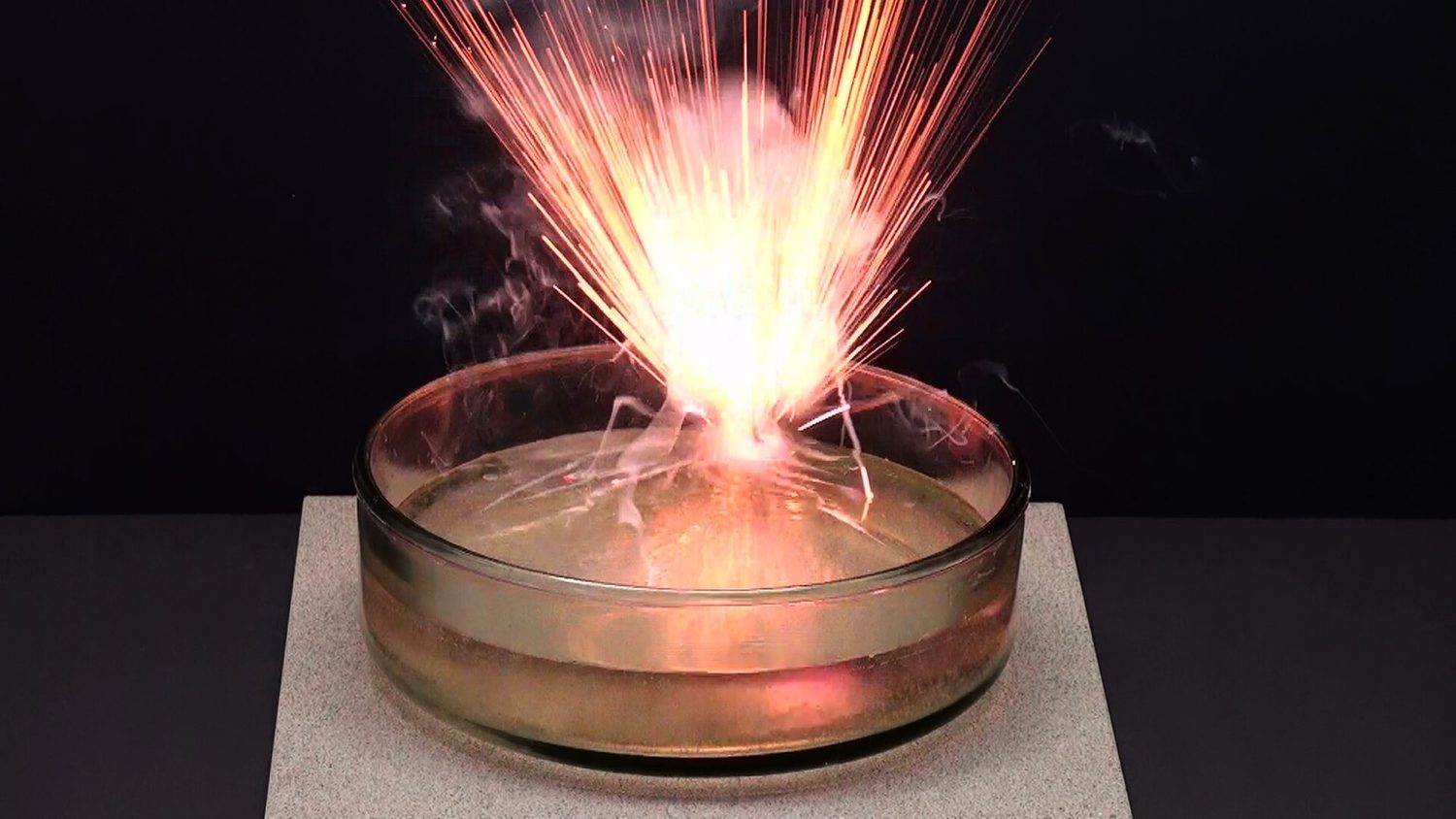
钾与水反应如此剧烈,以致放出的氢以淡紫色火焰燃烧——活泼性沿第 I 族向下增加
You've got it
- Group I (alkali metals) are soft, low-density, with one outer electron (+1 ions)
- reactivity increases down the group (outer electron lost more easily)
- they react with water → metal hydroxide + hydrogen, more vigorously down the group
你掌握了
- 第 I 族(碱金属)软、低密度,有一个外层电子(+1 离子)
- 活泼性沿族向下增加(外层电子更容易失去)
- 它们与水反应 → 金属氢氧化物 + 氢,沿族向下更剧烈