Oxides · 氧化物
| English | 中文 | Pinyin · 拼音 |
|---|---|---|
| oxide/ˈɒksaɪd/ | 氧化物 | yǎng huà wù |
| metal oxides/ˈmetl ˈɒksaɪdz/ | 金属氧化物 | jīn shǔ yǎng huà wù |
| basic oxide/ˈbeɪsɪk ˈɒksaɪd/ | 碱性氧化物 | jiǎn xìng yǎng huà wù |
| acidic oxide/əˈsɪdɪk ˈɒksaɪd/ | 酸性氧化物 | suān xìng yǎng huà wù |
| amphoteric/ˌæmfəʊˈterɪk/ | 两性 | liǎng xìng |
Acidic, basic or neither
- When an element reacts with oxygen it forms an oxide 氧化物 — and oxides behave very differently.
- Whether an oxide is acidic or basic depends on the element.
酸性、碱性还是都不是
- 当一个元素与氧反应时它形成一个氧化物(oxide)——而氧化物表现得非常不同。
- 一个氧化物是酸性还是碱性取决于元素。
Oxide type lab · 氧化物类型实验
Classify oxides by how they behave with acids and bases. · 根据氧化物与酸和碱的反应行为对其进行分类。
Metal oxides are usually: · 金属氧化物通常是:
Metal oxides tend to be basic. · 金属氧化物通常呈碱性。
Non-metal oxides are usually: · 非金属氧化物通常是:
Non-metal oxides tend to be acidic. · 非金属氧化物通常呈酸性。
Metal and non-metal oxides 金属氧化物
- Metal oxides are usually basic (many dissolve to form alkalis).
- Non-metal oxides are usually acidic (many dissolve to form acids).
The pH scale: below 7 is acidic, 7 is neutral, above 7 is alkaline
金属和非金属氧化物
- 金属氧化物通常是碱性的(许多溶解形成碱液)。
- 非金属氧化物通常是酸性的(许多溶解形成酸)。
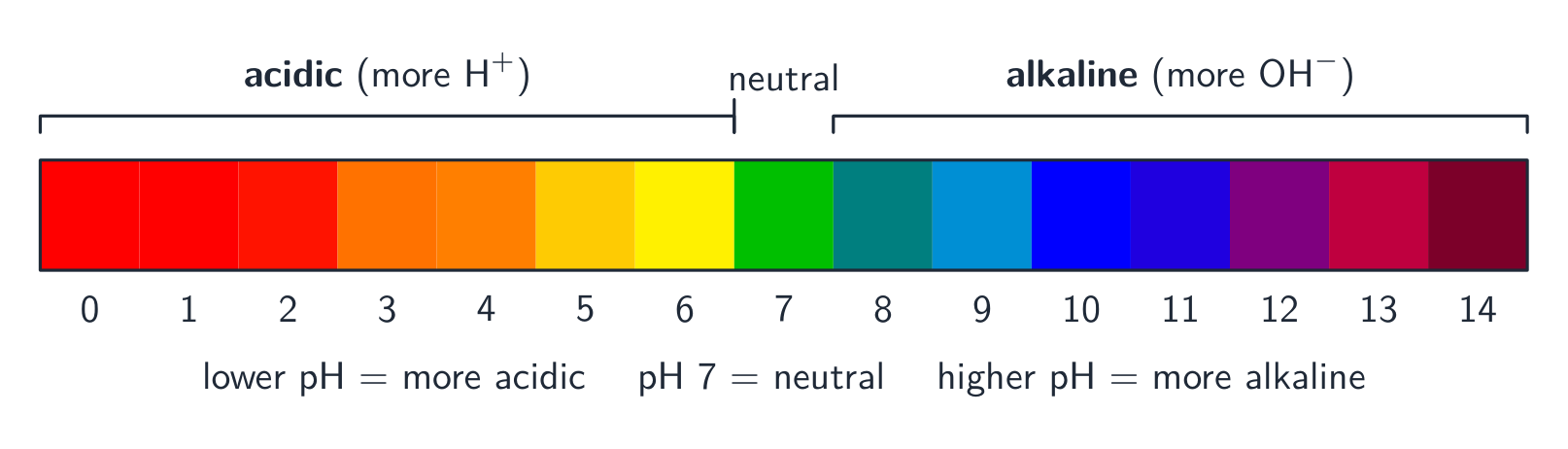
pH 标度:低于 7 是酸性,7 是中性,高于 7 是碱性
A basic oxide reacts with an acid to form a salt and water. · 碱性氧化物与酸反应生成盐和水。
Basic oxides neutralise acids. · 碱性氧化物中和酸。
Carbon dioxide is a non-metal oxide, so it is ______. · 二氧化碳是非金属氧化物,因此它是 ______。
Non-metal oxides are acidic. · 非金属氧化物呈酸性。
Acidic and basic oxides 碱性氧化物
- A basic oxide (e.g. magnesium oxide) reacts with acids to form a salt and water.
- An acidic oxide 酸性氧化物 (e.g. carbon dioxide, sulfur dioxide) reacts with alkalis.
酸性和碱性氧化物
- 一个碱性氧化物(例如氧化镁)与酸反应形成一种盐和水。
- 一个酸性氧化物(例如二氧化碳、二氧化硫)与碱液反应。
An amphoteric oxide reacts with: · 两性氧化物能与:
Amphoteric oxides react with both. · 两性氧化物能与酸和碱都反应。
Amphoteric 两性 oxides
- A few oxides are amphoteric — they react with both acids and alkalis.
- Examples include aluminium oxide and zinc oxide.
Worked example. Magnesium (a metal) burns to form magnesium oxide, a basic oxide. Carbon (a non-metal) burns to form carbon dioxide, an acidic oxide. Metal vs non-metal predicts the oxide's nature.
两性氧化物
- 少数氧化物是两性的(amphoteric)——它们与酸和碱液两者反应。
- 例子包括氧化铝和氧化锌。
例题。 镁(一种金属)燃烧形成氧化镁,一个碱性氧化物。碳(一种非金属)燃烧形成二氧化碳,一个酸性氧化物。金属对非金属预测氧化物的性质。
You've got it
- metal oxides are usually basic; non-metal oxides are usually acidic
- a basic oxide reacts with acids; an acidic oxide reacts with alkalis
- amphoteric oxides (e.g. aluminium oxide) react with both
你掌握了
- 金属氧化物通常是碱性的;非金属氧化物通常是酸性的
- 一个碱性氧化物与酸反应;一个酸性氧化物与碱液反应
- 两性氧化物(例如氧化铝)与两者反应