Bases, alkalis and the pH scale · 碱、碱液与 pH 标度
| English | 中文 | Pinyin · 拼音 |
|---|---|---|
| base/beɪs/ | 碱 | jiǎn |
| alkali/ˈælkəlaɪ/ | 可溶性碱 | kě róng xìng jiǎn |
| pH scale/piː eɪtʃ skeɪl/ | pH值 | pH zhí |
| hydroxide ions/haɪˈdrɒksaɪd ˈaɪɒnz/ | 氢氧根离子 | qīng yǎng gēn lí zi |
| neutral/ˈnjuːtrəl/ | 中性 | zhōng xìng |
| neutralisation/ˌnjuːtrəlaɪˈzeɪʃn/ | 中和 | zhōng hé |
The opposite of acids
- If acids are one extreme, bases 碱 and alkalis 可溶性碱 are the other.
- The pH scale pH值 measures where a substance sits between them.
酸的对立面
- 如果酸是一个极端,碱和碱液(bases and alkalis)是另一个。
- pH 标度(pH scale)测量一种物质在它们之间坐落在哪里。
An alkali is a base that: · 一个碱液是一个以下的碱:
An alkali is a soluble base, giving OH⁻ ions. · 一个碱液是一个可溶的碱,给出 OH⁻ 离子。
Alkalis form ______ ions (OH⁻) in water. · 碱液在水中形成______离子(OH⁻)。
OH⁻ is the hydroxide ion. · OH⁻ 是氢氧根离子。
Bases and alkalis
- A base neutralises an acid; an alkali is a base that dissolves in water.
- Alkalis form hydroxide ions 氢氧根离子 (OH⁻) in water (e.g. sodium hydroxide).
Acids react with metals, bases and carbonates to give different products
碱和碱液
- 一个碱(base)中和一种酸;一个碱液(alkali)是一个在水中溶解的碱。
- 碱液在水中形成氢氧根离子(OH⁻)(例如氢氧化钠)。
A solution with pH 2 is: · 一个 pH 2 的溶液是:
pH below 7 is acidic. · pH 低于 7 是酸性。
What is the pH of a neutral solution? · 一个中性溶液的 pH 是多少?
pH 7 is neutral. · pH 7 是中性。
The pH scale
- The pH scale runs from 0 to 14: below 7 is acidic, 7 is neutral 中性, above 7 is alkaline.
- The lower the pH, the more acidic; the higher, the more alkaline.
pH below 7 is acidic, 7 is neutral, and above 7 is alkaline.
pH 标度
- pH 标度从 0 到 14:低于 7 是酸性,7 是中性,高于 7 是碱性。
- pH 越低,越酸;越高,越碱。
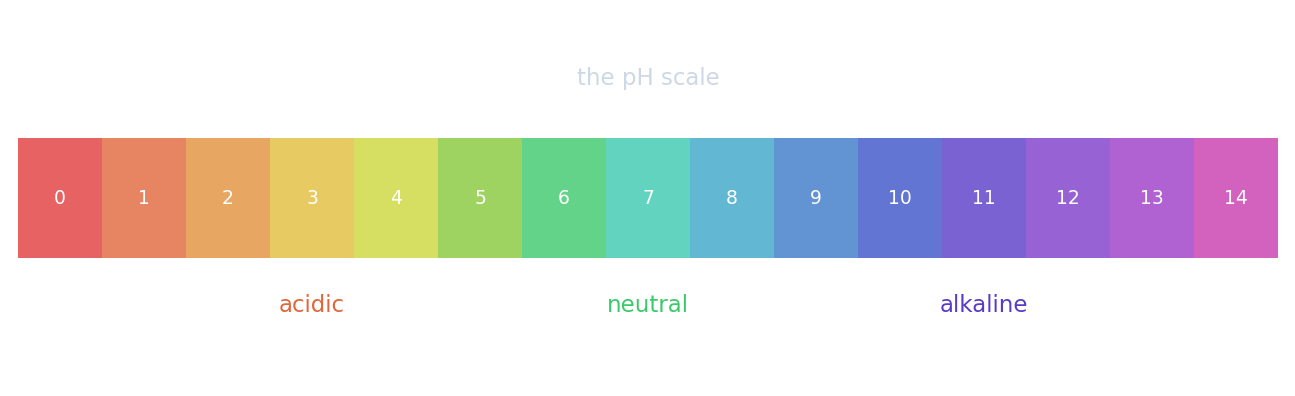
pH 低于 7 是酸性,7 是中性,高于 7 是碱性。
Acid + alkali produces a salt and: · 酸 + 碱液产生一种盐和:
Neutralisation: acid + alkali → salt + water. · 中和:酸 + 碱液 → 盐 + 水。
Neutralisation 中和
- Acid + alkali → salt + water — this is neutralisation.
- The H⁺ from the acid and OH⁻ from the alkali combine to make water.
A base and an alkali are not quite the same. All alkalis are bases, but only soluble bases are alkalis. An insoluble base (like copper oxide) still neutralises acid but isn't called an alkali.
中和
- 酸 + 碱液 → 盐 + 水——这是中和(neutralisation)。
- 来自酸的 H⁺ 和来自碱液的 OH⁻ 结合形成水。
一个碱和一个碱液不完全相同。 所有碱液都是碱,但只有可溶的碱是碱液。一个不可溶的碱(像氧化铜)仍中和酸但不被叫做碱液。
Watch the pH during neutralisation · 观察中和期间的 pH
Adding alkali to acid raises the pH. Near the end point the pH leaps up sharply — that steep jump is where the acid has just been neutralised. · 把碱液加到酸中提高 pH。在终点附近 pH 急剧跳升——那个陡的跳跃是酸刚刚被中和之处。
You've got it
- a base neutralises acid; an alkali is a soluble base (gives OH⁻ ions)
- the pH scale (0–14): <7 acidic, 7 neutral, >7 alkaline
- neutralisation: acid + alkali → salt + water
你掌握了
- 一个碱中和酸;一个碱液是一个可溶的碱(给出 OH⁻ 离子)
- pH 标度(0–14):<7 酸性,7 中性,>7 碱性
- 中和:酸 + 碱液 → 盐 + 水