Activation energy and reaction pathways · 活化能与反应路径
| English | 中文 | Pinyin · 拼音 |
|---|---|---|
| activation energy/ˌæktɪˈveɪʃn ˈenədʒi/ | 活化能 | huó huà néng |
| reaction pathway diagram/rɪˈækʃn ˈpæθweɪ ˈdaɪəɡræm/ | 反应进程图 | fǎn yìng jìn chéng tú |
The energy hill
- Even reactions that release energy need a little push to get started.
- That initial push is the activation energy 活化能, shown on a reaction pathway diagram 反应进程图.
能量山
- 即使释放能量的反应也需要一点推动来开始。
- 那个最初的推动是活化能(activation energy),显示在一个反应路径(reaction pathway)图上。
The activation energy is the: · 活化能是:
Ea is the minimum energy to start reacting. · Ea 是开始反应的最小能量。
Particles must collide with at least the activation energy to react. · 粒子必须以至少活化能碰撞才能反应。
Less energetic collisions do not react. · 能量更少的碰撞不反应。
The minimum energy needed to start a reaction is the ______ energy. · 开始一个反应所需的最小能量是______能。
Ea is the energy hill that must be climbed. · Ea 是必须爬上的能量山。
Activation energy
- The activation energy (Ea) is the minimum energy needed for a reaction to start.
- Particles must collide with at least this much energy to react.
Exothermic reactions end lower than they start; endothermic reactions end higher
活化能
- 活化能(activation energy,Ea)是一个反应开始所需的最小能量。
- 粒子必须以至少这么多能量碰撞才能反应。
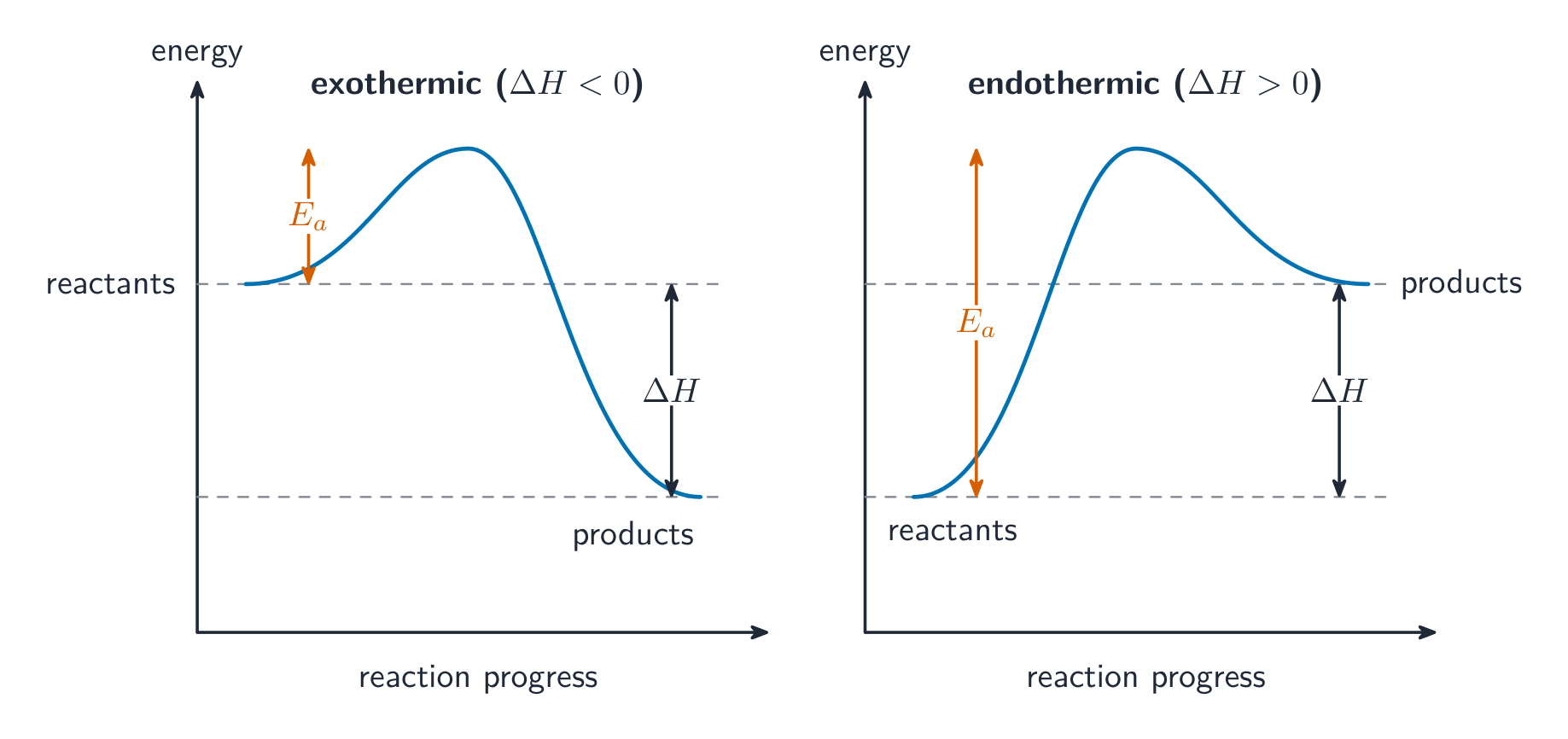
放热反应结束时比开始时更低;吸热反应结束时更高
Activation energy · 活化能
Ea = the energy barrier · Ea = 能量壁垒
Every reaction must climb the activation-energy barrier before products can form. · 每个反应在产物能形成之前必须爬上活化能壁垒。
A reaction pathway diagram plots energy against: · 一个反应路径图把能量对以下作图:
The x-axis is reaction progress. · x 轴是反应进展。
Reaction pathway diagrams
- A reaction pathway diagram plots energy against the progress of the reaction.
- It shows the reactant level, an "energy hill" (the peak = activation energy), and the product level.
反应路径图
- 一个反应路径图把能量对反应的进展作图。
- 它显示反应物水平、一座"能量山"(峰值 = 活化能)和产物水平。
In an endothermic pathway, the products are: · 在一个吸热路径中,产物:
Energy is absorbed, so products are higher. · 能量被吸收,所以产物更高。
Exothermic vs endothermic pathways
- Exothermic: products below reactants (energy released).
- Endothermic: products above reactants (energy absorbed). Both have an activation-energy hill.
Worked example. Petrol is stable in air at room temperature because the activation energy is high. A spark provides that energy, the particles get over the hill, and the exothermic reaction then races ahead.
放热对吸热路径
- 放热:产物在反应物之下(能量释放)。
- 吸热:产物在反应物之上(能量吸收)。两者都有一座活化能山。
例题。 汽油在室温下的空气中稳定,因为活化能高。一个火花提供那个能量,粒子越过山,然后放热反应飞速进行。
You've got it
- activation energy (Ea) = the minimum energy needed to start a reaction
- a reaction pathway diagram shows reactants, the Ea "hill", and products
- both exo- and endothermic reactions must climb the activation-energy hill first
你掌握了
- 活化能(Ea)= 开始一个反应所需的最小能量
- 一个反应路径图显示反应物、Ea"山"和产物
- 放热和吸热反应都必须先爬上活化能山