Bond energy calculations · 键能计算
| English | 中文 | Pinyin · 拼音 |
|---|---|---|
| chemical bonds/ˈkemɪkl bɒndz/ | 化学键 | huà xué jiàn |
| bond energies/bɒnd ˈenədʒiz/ | 键能 | jiàn néng |
| endothermic/ˌendəʊˈθɜːmɪk/ | 吸热反应 | xī rè fǎn yìng |
| exothermic/eɡzəˈðɜːmɪk/ | 放热反应 | fàng rè fǎn yìng |
Energy in the bonds
- Where does a reaction's energy actually come from? From breaking and making chemical bonds 化学键.
- We can calculate the overall energy change from bond energies 键能.
键中的能量
- 一个反应的能量实际从哪里来?从打破和形成化学键。
- 我们能从键能(bond energies)计算总的能量变化。
Breaking chemical bonds: · 打破化学键:
Breaking bonds takes energy in. · 打破键吸入能量。
Making chemical bonds releases energy. · 形成化学键释放能量。
Bond formation is exothermic. · 键的形成是放热的。
Breaking and making bonds
- Breaking bonds absorbs energy (endothermic 吸热反应).
- Making bonds releases energy (exothermic 放热反应).
Breaking bonds takes energy in; making bonds gives energy out; the difference is the enthalpy change
打破和形成键
- 打破键吸收能量(吸热)。
- 形成键释放能量(放热)。
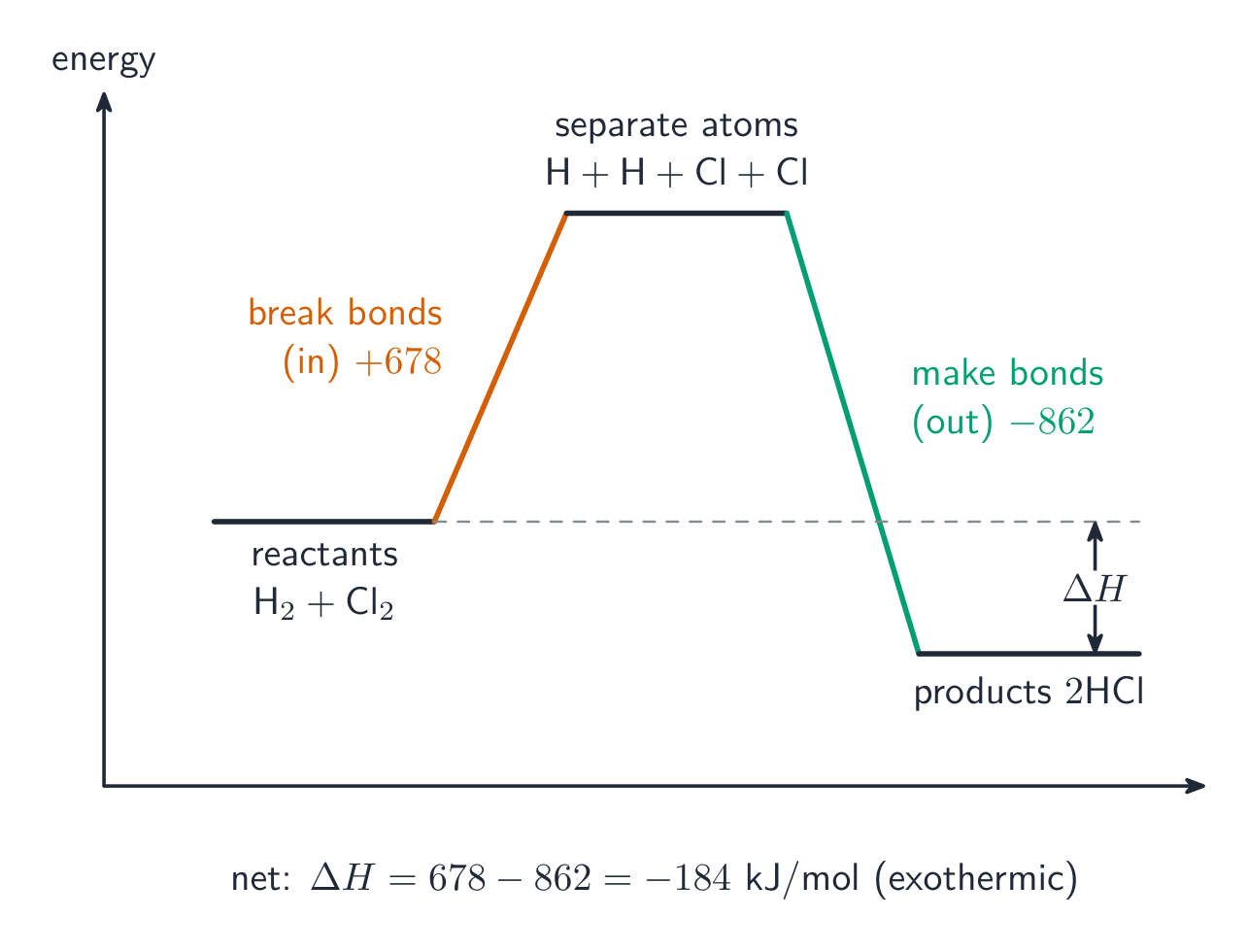
打破键吸入能量;形成键放出能量;差是焓变
Bonds broken need 500 kJ; bonds made release 700 kJ. What is the energy change (kJ)? · 打破的键需要 500 kJ;形成的键释放 700 kJ。能量变化(kJ)是多少?
500 − 700 = −200 kJ. · 500 − 700 = −200 kJ。
Energy change = energy to break bonds − energy released ______ bonds. · 能量变化 = 打破键的能量 − ______键释放的能量。
Broken minus made gives the overall change. · 打破减去形成给出总的变化。
The energy change
- Energy change = energy to break bonds − energy released making bonds.
- A negative answer means the reaction is exothermic; positive means endothermic.
Worked example. Bonds broken need 600 kJ; bonds made release 800 kJ. Energy change = 600 − 800 = −200 kJ. Negative, so the reaction is exothermic.
Breaking and making bonds transfers energy; the flame supplies it here
能量变化
- 能量变化 = 打破键的能量 − 形成键释放的能量。
- 一个负的答案意味着反应是放热的;正的意味着吸热的。
例题。 打破的键需要 600 kJ;形成的键释放 800 kJ。能量变化 = 600 − 800 = −200 kJ。负的,所以反应是放热的。
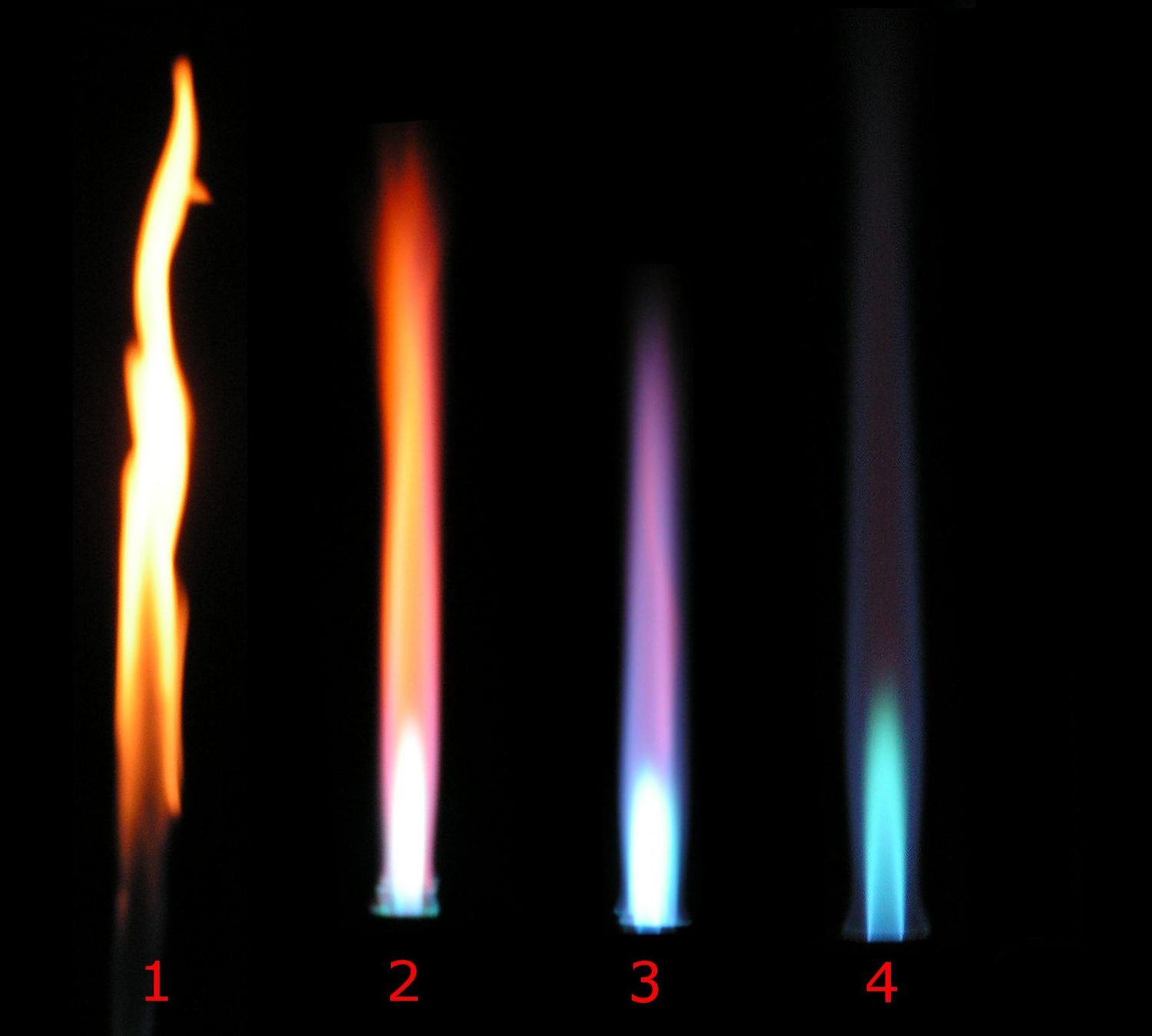
打破和形成键转移能量;火焰在这里提供它
Read the energy profile · 读能量曲线
Breaking bonds takes energy IN; making bonds gives energy OUT. If more is released than absorbed the reaction is exothermic and ΔH is negative — products sit below reactants. · 打破键吸入能量;形成键放出能量。如果释放的比吸收的更多,反应是放热的而 ΔH 是负的——产物坐在反应物之下。
A negative energy change means the reaction is: · 一个负的能量变化意味着反应是:
Negative = energy released = exothermic. · 负 = 能量释放 = 放热。
Why the sign matters
- A negative energy change = energy released = exothermic.
- A positive energy change = energy absorbed = endothermic.
Breaking bonds takes energy in; making bonds gives energy out. Students often get this backwards. If more energy is released (making) than used (breaking), the reaction is exothermic overall.
为什么符号重要
- 一个负的能量变化 = 能量释放 = 放热。
- 一个正的能量变化 = 能量吸收 = 吸热。
打破键吸入能量;形成键放出能量。 学生常常把这弄反。如果释放的(形成)能量比使用的(打破)更多,反应总体是放热的。
You've got it
- breaking bonds absorbs energy; making bonds releases energy
- energy change = bonds broken − bonds made
- negative = exothermic; positive = endothermic
你掌握了
- 打破键吸收能量;形成键释放能量
- 能量变化 = 打破的键 − 形成的键
- 负 = 放热;正 = 吸热