Analysis of accounts · 财务报表分析
| English | 中文 | Pinyin · 拼音 |
|---|---|---|
| profitability/ˌprɒfɪtəˈbɪlɪti/ | 盈利能力 | yíng lì néng lì |
| liquidity/lɪˈkwɪdɪti/ | 流动性 | liú dòng xìng |
| gross profit margin/ɡrəʊs ˈprɒfɪt ˈmɑːdʒɪn/ | 毛利率 | máo lì lǜ |
| net profit margin/net ˈprɒfɪt ˈmɑːdʒɪn/ | 净利率 | jìng lì lǜ |
| current ratio/ˈkʌrənt ˈreɪʃɪəʊ/ | 流动比率 | liú dòng bǐ lǜ |
Reading the accounts
- Raw profit figures don't show whether a business is doing well for its size. Ratios do.
- Two families matter: profitability 盈利能力 and liquidity 流动性.
解读账目
- 原始的利润数字不显示一个企业相对于它的规模是否做得好。比率(ratios)显示。
- 两个族很重要:盈利能力(profitability)和流动性(liquidity)。
Accounts ratio diagnosis · 账户比率诊断
Classify ratios by the question they answer about a business. · 根据比率回答的企业问题对其进行分类。
Gross profit is 80 and revenue is 200. What is the gross profit margin (%)? · 毛利润为80,收入为200。毛利率(%)是多少?
80 ÷ 200 × 100 = 40%.
The net profit margin is calculated as: · 净利率的计算公式为:
Net margin = net profit ÷ revenue × 100. · 净利率 = 净利润 ÷ 收入 × 100。
Profitability ratios
- Gross profit margin 毛利率 = gross profit ÷ revenue × 100.
- Net profit margin 净利率 = net profit ÷ revenue × 100.
- Higher margins mean more profit kept from each sale.
Worked example. Gross profit 60, revenue 150 → gross margin = 60 ÷ 150 × 100 = 40%. Net profit 25 → net margin = 25 ÷ 150 × 100 ≈ 17%.
An income statement runs from revenue down to net profit — the basis for the profitability ratios
盈利能力比率
- 毛利率(gross profit margin)= 毛利 ÷ 收入 × 100。
- 净利率(net profit margin)= 净利 ÷ 收入 × 100。
- 更高的利润率意味着从每笔销售中保留更多利润。
例题。 毛利 60,收入 150 → 毛利率 = 60 ÷ 150 × 100 = 40%。净利 25 → 净利率 = 25 ÷ 150 × 100 ≈ 17%。
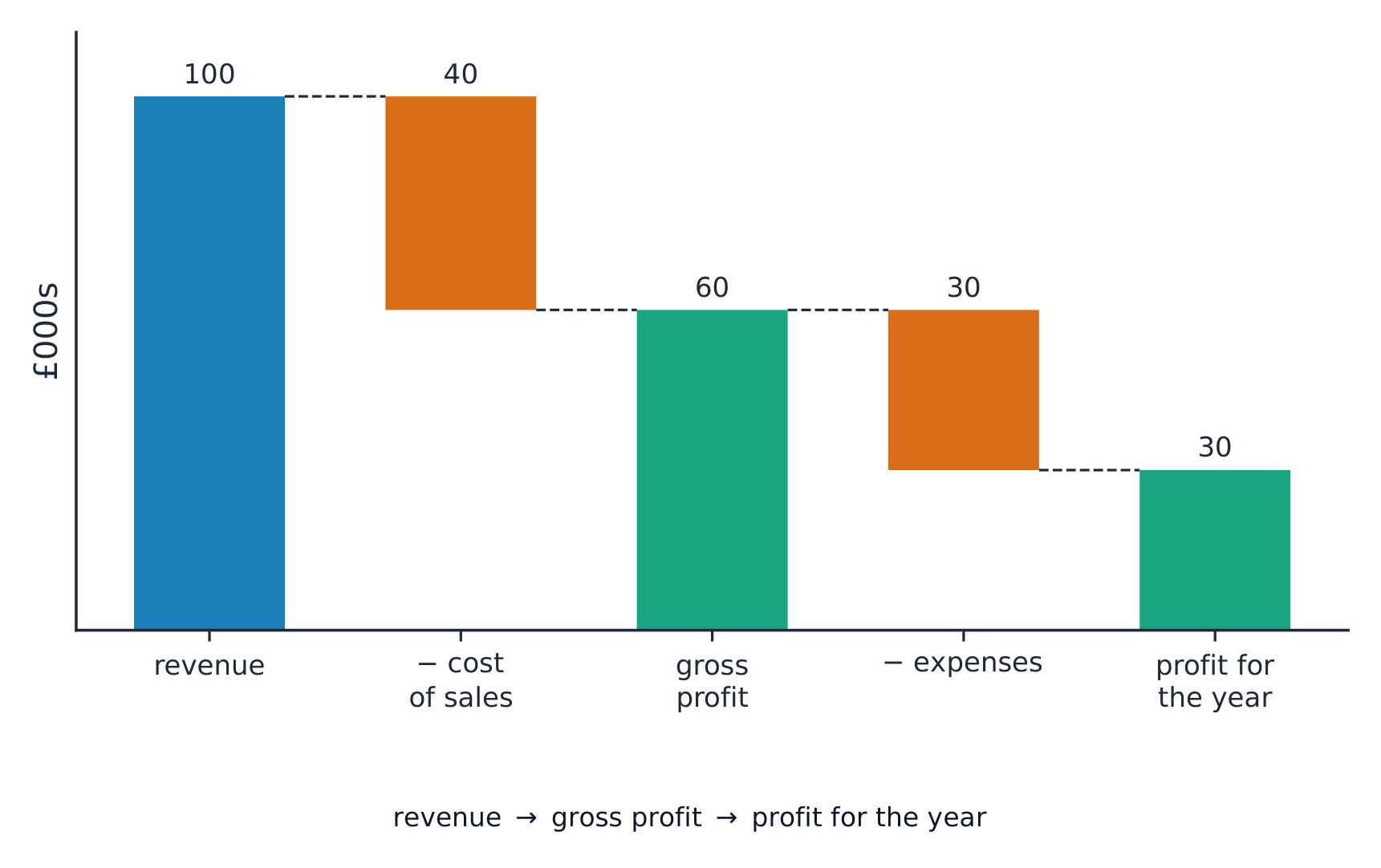
利润表从收入一直算到净利润——是盈利能力比率的基础
Current assets are 90 and current liabilities are 45. What is the current ratio? · 流动资产为90,流动负债为45。流动比率是多少?
90 ÷ 45 = 2 (i.e. 2:1).
The current ratio is a measure of a business's ______ (ability to pay short-term debts). · 流动比率衡量企业的______(偿还短期债务的能力)。
Liquidity measures short-term ability to pay debts. · 流动性衡量偿还短期债务的能力。
Liquidity
- Current ratio 流动比率 = current assets ÷ current liabilities.
- Around 1.5 to 2 is usually healthy — enough to pay short-term debts.
流动性
- 流动比率(current ratio)= 流动资产 ÷ 流动负债。
- 大约 1.5 到 2 通常是健康的——足以偿付短期债务。
A ratio is most useful when compared with past years, rivals or targets. · 当与往年、竞争对手或目标进行比较时,比率最有意义。
Ratios mean little in isolation. · 孤立地看比率意义不大。
Who uses ratios, and their limits
- Owners, lenders and managers compare ratios over time and against rivals.
- Ratios use past data and miss quality factors — they are only useful compared.
A ratio means nothing on its own. A current ratio of 1.5 is only "good" compared with last year, a rival, or a target. Always interpret ratios in context.
谁使用比率,以及它们的局限
- 所有者、贷方和经理比较跨时间的比率以及对照竞争对手的比率。
- 比率使用过去的数据并遗漏质量因素——它们只在比较时有用。
一个比率本身没有意义。 一个 1.5 的流动比率只在与去年、一个竞争对手或一个目标比较时才"好"。总是在语境中解读比率。
You've got it
- profitability: gross margin and net margin (profit ÷ revenue × 100)
- liquidity: the current ratio (current assets ÷ current liabilities)
- ratios use past data and only mean something when compared
你掌握了
- 盈利能力:毛利率和净利率(利润 ÷ 收入 × 100)
- 流动性:流动比率(流动资产 ÷ 流动负债)
- 比率使用过去的数据,只在比较时才有意义