Economic issues · 经济问题
| English | 中文 | Pinyin · 拼音 |
|---|---|---|
| recession/rɪˈseʃn/ | 衰退 | shuāi tuì |
| business cycle/ˈbɪznəs ˈsaɪkl/ | 经济周期 | jīng jì zhōu qī |
| boom/buːm/ | 繁荣 | fán róng |
| inflation/ɪnˈfleɪʃn/ | 通货膨胀 | tōng huò péng zhàng |
| unemployment/ʌnemˈplɔɪmənt/ | 失业 | shī yè |
| interest rates/ˈɪntrest reɪts/ | 利率 | lì lǜ |
| currency/ˈkʌrənsi/ | 货币 | huò bì |
| imports/ɪmˈpɔːts/ | 进口 | jìn kǒu |
| exports/ˈekspɔːts/ | 出口 | chū kǒu |
| exchange rates/eksˈtʃeɪndʒ reɪts/ | 汇率 | huì lǜ |
The economy a business can't control
- A business can run itself well and still be hit by a recession 衰退, rising prices, or a rate change.
- These economic issues affect every business but lie outside its control.
企业无法控制的经济
- 一个企业能把自己经营得很好,却仍然被一场衰退、上涨的价格或一次利率变化击中。
- 这些经济问题(economic issues)影响每个企业,但在它的控制之外。
External influences lab · 外部影响实验
Classify outside changes by the channel that hits the business. · 根据冲击企业的渠道对外部变化进行分类。
During a recession, most businesses experience: · 在经济衰退期间,大多数企业会经历:
A recession cuts demand and sales. · 经济衰退会削减需求和销售。
The phase of the business cycle with falling output and rising unemployment is a . · 产出下降且失业率上升的商业周期阶段是。
A recession is the downturn phase. · 衰退是下行阶段。
The business cycle 经济周期
- The economy moves through boom 繁荣 → slowdown → recession → recovery.
- In a boom, demand and profits rise; in a recession, sales fall and firms may cut jobs.
Demand for most businesses rises in a boom and falls in a recession.
经济周期
- 经济经历繁荣 → 放缓 → 衰退 → 复苏。
- 在繁荣(boom)中,需求和利润上升;在衰退(recession)中,销售下降,公司可能裁员。
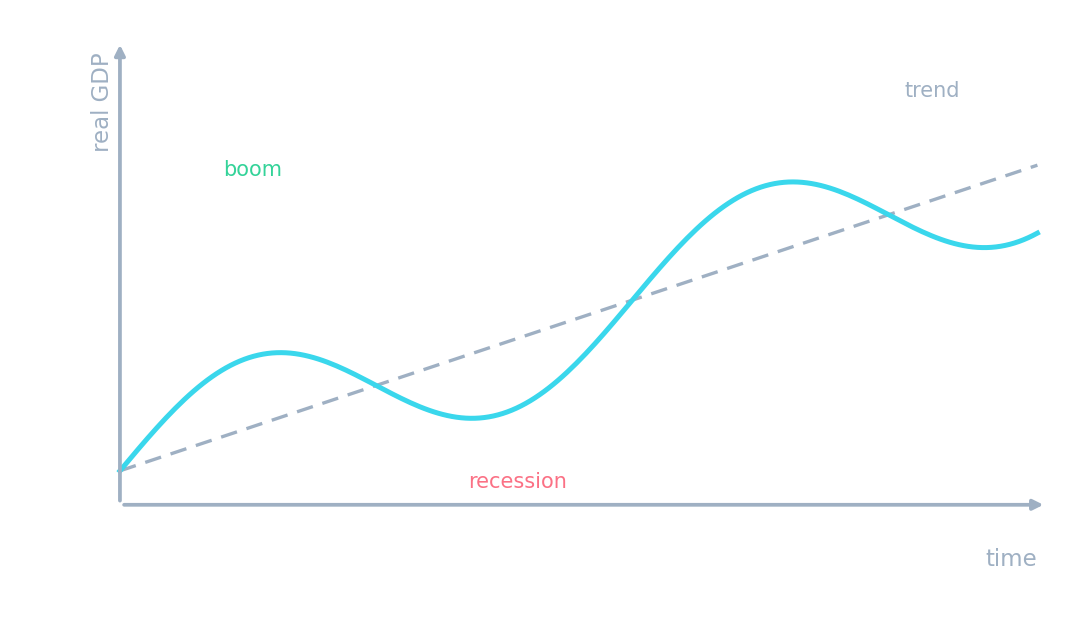
大多数企业的需求在繁荣中上升,在衰退中下降。
Inflation is most likely to: · 通货膨胀最可能导致:
Inflation pushes up costs and erodes spending power. · 通货膨胀推高成本并侵蚀购买力。
Higher interest rates tend to reduce consumer spending and borrowing. · 高利率通常会减少消费和借贷。
Dearer borrowing cuts spending and demand. · 更昂贵的借贷会削减支出和需求。
Inflation 通货膨胀, unemployment 失业 and interest rates 利率
- Inflation (rising prices) raises a firm's costs and reduces customers' spending power.
- High unemployment means weaker demand but cheaper, easier hiring.
- Higher interest rates raise borrowing costs and cut spending.
How a stronger or weaker currency 货币 changes imports 进口 and exports 出口
通货膨胀、失业和利率
- 通货膨胀(inflation,上涨的价格)提高一个公司的成本并降低顾客的购买力。
- 高失业(unemployment)意味着更弱的需求,但更便宜、更容易的招聘。
- 更高的利率(interest rates)提高借贷成本并削减支出。
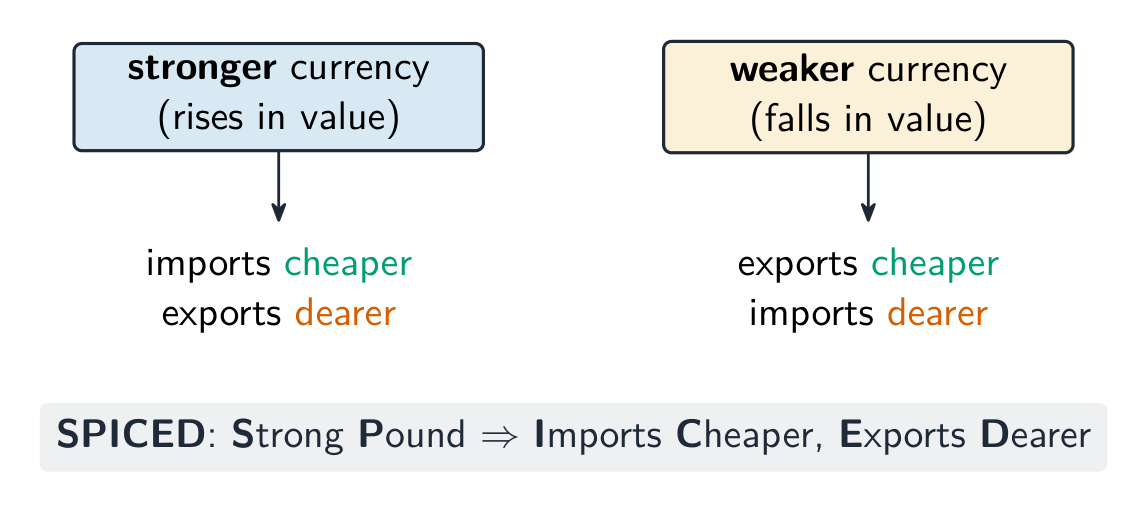
一种更强或更弱的货币如何改变进口和出口
A weaker domestic currency makes a firm's exports: · 本币贬值使企业的出口产品:
A weaker currency lowers the foreign price of exports. · 货币贬值降低了出口的国外价格。
Exchange rates 汇率
- A stronger currency makes exports dearer abroad and imports cheaper at home.
- A weaker currency makes exports cheaper (more competitive) and imports dearer.
The same change affects firms differently. A recession hurts a luxury shop but may help a discount store. Always link an economic change to the specific business.
汇率
- 一种更强的货币使出口在国外更贵,使进口在国内更便宜。
- 一种更弱的货币使出口更便宜(更有竞争力),使进口更贵。
同样的变化对公司有不同的影响。 一场衰退伤害一家奢侈品商店,但可能帮助一家折扣店。总是把一个经济变化与具体的企业联系起来。
You've got it
- the business cycle: boom → slowdown → recession → recovery
- inflation raises costs; higher interest rates cut spending; unemployment weakens demand
- a stronger currency hurts exporters; a weaker one helps them
你掌握了
- 经济周期:繁荣 → 放缓 → 衰退 → 复苏
- 通货膨胀提高成本;更高的利率削减支出;失业削弱需求
- 一种更强的货币伤害出口商;一种更弱的帮助他们