Biotechnology and genetic modification · 生物技术与基因改造
| English | 中文 | Pinyin · 拼音 |
|---|---|---|
| biotechnology/ˌbaɪəʊtekˈnɒlədʒi/ | 生物技术 | shēng wù jì shù |
| genetic modification/dʒɪˈnetɪk ˌmɒdɪfɪˈkeɪʃn/ | 基因改造 | jī yīn gǎi zào |
| GM organism/ˌdʒiː ˈem ˈɔːɡənɪzəm/ | 转基因生物 | zhuǎn jī yīn shēng wù |
Putting living things to work
- Humans have long used living organisms — especially microbes — to make useful products.
- This is biotechnology 生物技术, and modern versions can even rewrite an organism's genes.
让活的东西工作
- 人类长期以来使用活的生物——尤其是微生物——来制造有用的产品。
- 这是生物技术(biotechnology),而现代版本甚至能改写一个生物的基因。
Genetic modification route · 基因改造途径
Follow the main steps from useful gene to modified organism. · 遵循从有用基因到改造生物的主要步骤。
Microbes are useful in biotechnology because they: · 微生物在生物技术中有用,因为它们:
Fast reproduction and easy growth make microbes ideal. · 快速繁殖和易于培养使微生物成为理想选择。
Why microbes are useful
- Bacteria and fungi reproduce very fast, are easy to grow, and make useful substances.
- They can be grown in large tanks to make food, medicines and fuels.
A human gene is joined into a plasmid, then bacteria make the human protein
为什么微生物有用
- 细菌和真菌繁殖非常快,容易培养,并制造有用的物质。
- 它们能在大罐中培养,以制造食物、药物和燃料。
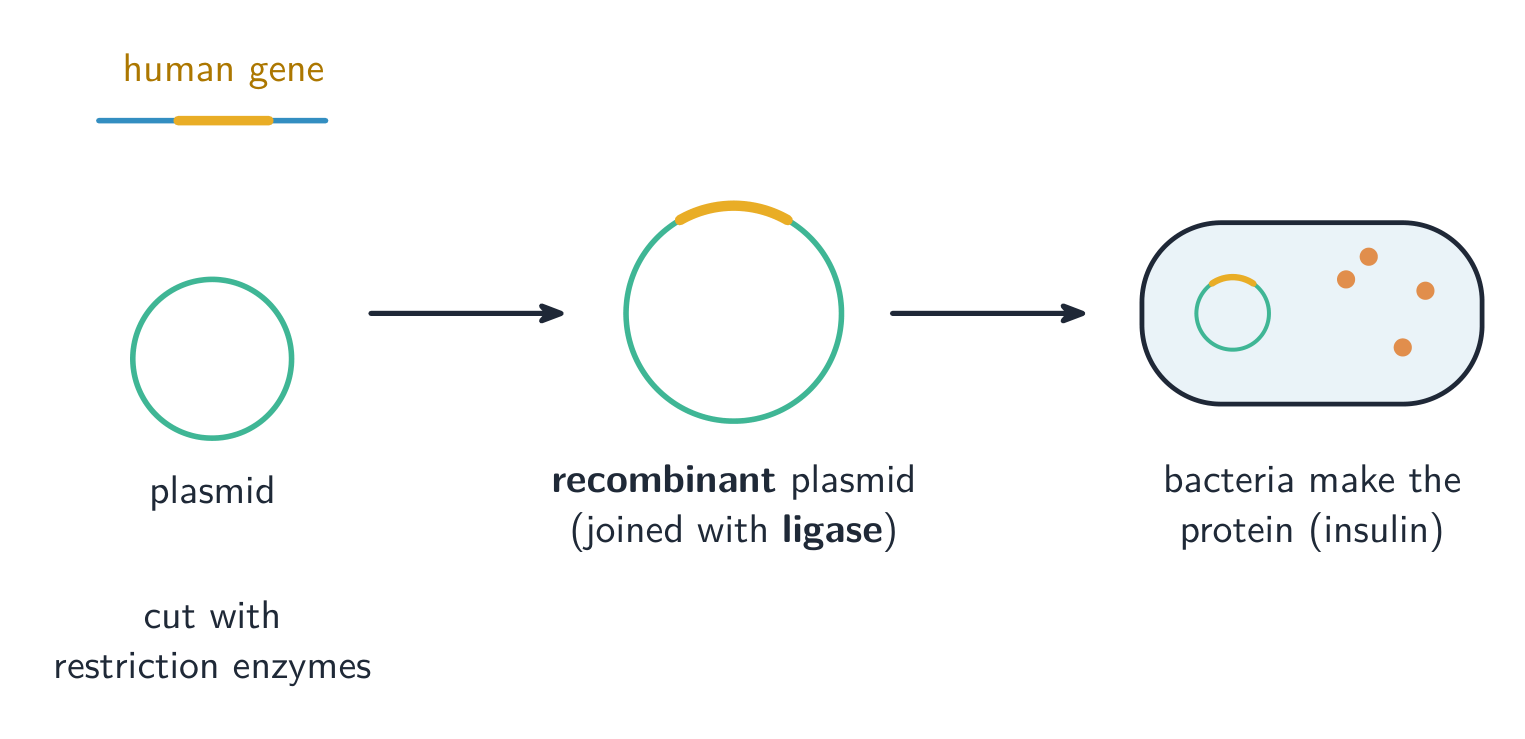
一个人类基因被连接进一个质粒,然后细菌制造人类蛋白质
Genetic modification involves: · 基因改造涉及:
GM transfers a gene between organisms. · 基因改造(GM)在生物体之间转移基因。
Bacteria can be genetically modified to make: · 细菌可以被基因改造以生产:
GM bacteria produce human insulin for diabetics. · 转基因细菌为糖尿病患者生产人胰岛素。
Changing an organism's genes by inserting a gene from another is genetic . · 通过将另一个生物的基因插入来改变生物的基因,这称为基因。
GM creates organisms with new, useful products. · 基因改造创造了具有新、有用产物的生物。
Genetic modification 基因改造
- Genetic modification (GM) changes an organism's genes by inserting a gene from another organism.
- A GM organism 转基因生物 then makes a new, useful product (e.g. bacteria making human insulin).
DNA fragments separated by gel electrophoresis appear as glowing bands
基因改造
- 基因改造(GM)(genetic modification)通过插入来自另一个生物的一个基因来改变一个生物的基因。
- 一个 GM 生物然后制造一个新的、有用的产品(例如细菌制造人类胰岛素)。

由凝胶电泳分离的 DNA 片段显示为发光的条带
Genetic modification raises ethical and environmental concerns as well as offering benefits. · 基因改造既带来益处,也引发了伦理和环境方面的担忧。
Both benefits and concerns must be weighed. · 必须权衡利弊。
Benefits and concerns
- Benefits: medicines, higher crop yields, pest-resistant plants.
- Concerns: effects on wild species, ethics, and unknown long-term impacts.
GM transfers a gene between organisms. A useful gene (e.g. for human insulin) is inserted into bacteria, which then make that product. The organism's own DNA is deliberately changed — unlike selective breeding.
好处和担忧
- 好处:药物、更高的作物产量、抗虫的植物。
- 担忧:对野生物种的影响、伦理,以及未知的长期影响。
GM 在生物之间转移一个基因。 一个有用的基因(例如用于人类胰岛素的)被插入细菌,然后它们制造那个产品。生物自己的 DNA 被有意地改变——不像选择育种。
You've got it
- biotechnology uses living organisms (often microbes) to make useful products
- microbes are useful because they reproduce fast and are easy to grow
- genetic modification inserts a gene from one organism into another (e.g. insulin-making bacteria)
你掌握了
- 生物技术使用活的生物(常常是微生物)来制造有用的产品
- 微生物有用,因为它们繁殖快且容易培养
- 基因改造把来自一个生物的一个基因插入另一个(例如制造胰岛素的细菌)