Hormones · 激素
| English | 中文 | Pinyin · 拼音 |
|---|---|---|
| hormones/ˈhɔːməʊnz/ | 激素 | jī sù |
| gland/ɡlænd/ | 腺体 | xiàn tǐ |
| endocrine system/ˈendəʊkraɪn ˈsɪstəm/ | 内分泌系统 | nèi fēn mì xì tǒng |
| target organs/ˈtɑːɡɪt ˈɔːɡənz/ | 靶器官 | bǎ qì guān |
| insulin/ˈɪnsjuːlɪn/ | 胰岛素 | yí dǎo sù |
| adrenaline/əˈdrenəlɪn/ | 肾上腺素 | shèn shàng xiàn sù |
Chemical messengers
- Not all the body's messages are electrical. Some are chemicals carried in the blood.
- These are hormones 激素, made by glands 腺体 of the endocrine system 内分泌系统.
化学信使
- 不是身体所有的信息都是电的。有些是血液中携带的化学物质。
- 这些是激素(hormones),由内分泌系统(endocrine system)的腺体制造。
A hormone is a chemical messenger carried in the: · 一个激素是在以下哪种中携带的化学信使:
Hormones travel in the blood to target organs. · 激素在血液中行进到靶器官。
Hormones are produced by organs called ______. · 激素由叫做______的器官产生。
Endocrine glands secrete hormones into the blood. · 内分泌腺把激素分泌进血液。
What hormones are
- A hormone is a chemical messenger made by a gland and carried in the blood.
- It affects specific target organs 靶器官.
Insulin 胰岛素 lowers blood glucose and glucagon raises it, keeping it near a normal level
激素是什么
- 一个激素是由一个腺体(gland)制造并在血液中携带的化学信使。
- 它影响特定的靶器官(target organs)。
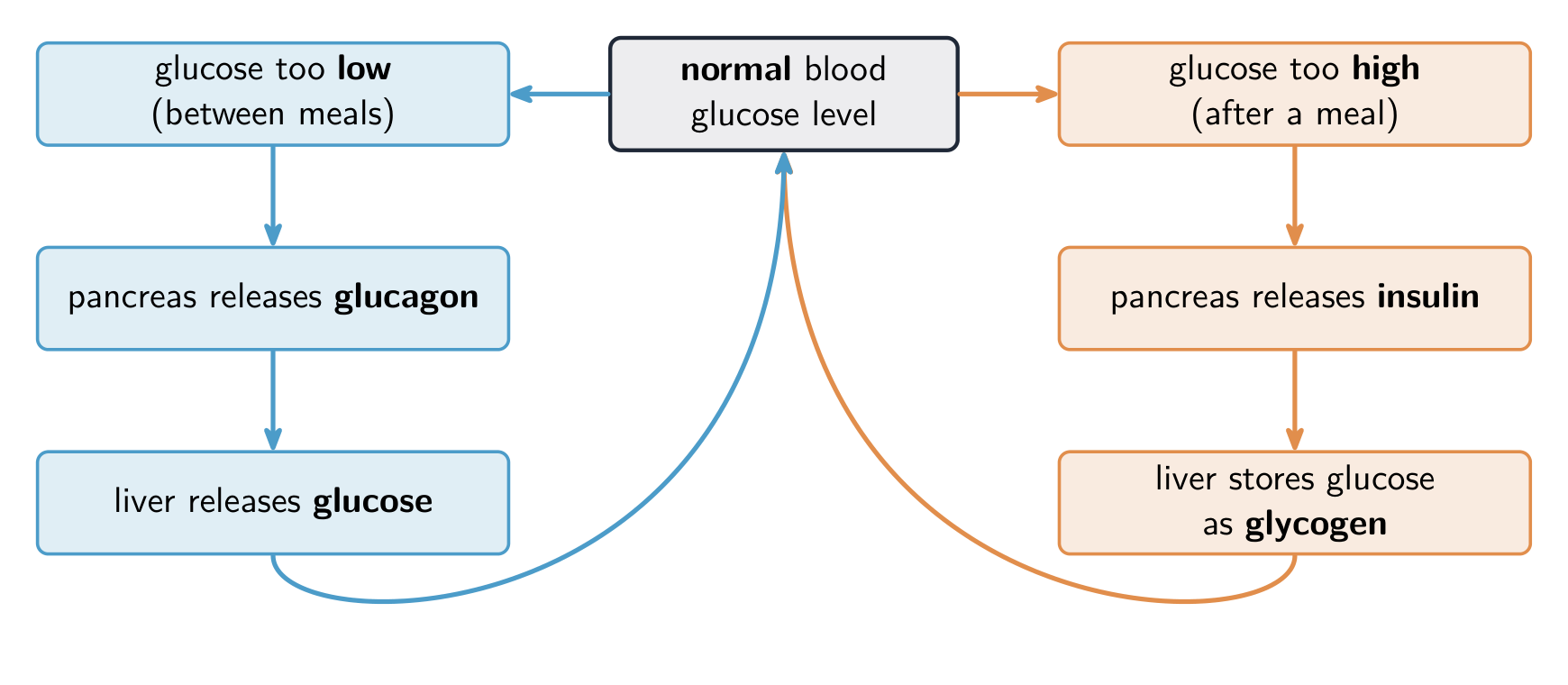
胰岛素降低血糖,胰高血糖素提高它,保持它接近一个正常水平
How hormones work · 激素如何工作
Hormones are chemical messengers carried in the blood — slower than nerves, but longer-lasting. · 激素是血液中携带的化学信使——比神经慢,但持续更久。
Adrenaline prepares the body for: · 肾上腺素为身体准备:
Adrenaline is the fight-or-flight hormone. · 肾上腺素是战或逃激素。
Insulin, made by the pancreas, acts to: · 由胰腺制造的胰岛素的作用是:
Insulin lowers blood glucose. · 胰岛素降低血糖。
Some key hormones
- Adrenaline 肾上腺素 (adrenal glands): prepares the body for action ("fight or flight").
- Insulin (pancreas): lowers blood glucose.
- Testosterone / oestrogen: control development and reproduction.
一些关键激素
- 肾上腺素(adrenaline,肾上腺):为行动准备身体("战或逃")。
- 胰岛素(insulin,胰腺):降低血糖。
- 睾酮/雌激素(testosterone/oestrogen):控制发育和生殖。
Hormonal responses are usually slower but longer-lasting than nervous responses. · 激素反应通常比神经反应更慢但持续更久。
Nerves are fast and brief; hormones are slower and widespread. · 神经快速而短暂;激素更慢且广泛。
Nerves vs hormones
- Nervous signals are fast and short-lived, sent to a precise place.
- Hormonal signals are slower but longer-lasting, spread through the blood.
Worked example. Facing danger, your adrenal glands release adrenaline into the blood. It reaches the heart (faster beat), muscles and liver — preparing your whole body to fight or flee within seconds.
神经对比激素
- 神经信号快速且短暂,被发送到一个精确的地方。
- 激素信号更慢但持续更久,通过血液传播。
例题。 面对危险,你的肾上腺把肾上腺素释放进血液。它到达心脏(更快的跳动)、肌肉和肝——在几秒内准备你的整个身体战斗或逃跑。
You've got it
- a hormone is a chemical messenger made by a gland, carried in the blood
- examples: adrenaline (fight or flight), insulin (lowers glucose), sex hormones
- nerves = fast, brief, precise; hormones = slower, longer-lasting, widespread
你掌握了
- 一个激素是由一个腺体制造、在血液中携带的化学信使
- 例子:肾上腺素(战或逃)、胰岛素(降低血糖)、性激素
- 神经 = 快速、短暂、精确;激素 = 更慢、持续更久、广泛