Immunity and vaccination · 免疫和接种疫苗
| English | 中文 | Pinyin · 拼音 |
|---|---|---|
| immune system/ɪˈmjuːn ˈsɪstəm/ | 免疫系统 | miǎn yì xì tǒng |
| vaccine/vækˈsiːn/ | 疫苗 | yì miáo |
| phagocytes/ˈfæɡəsaɪts/ | 吞噬细胞 | tūn shì xì bāo |
| lymphocytes/ˈlɪmfəsaɪts/ | 淋巴细胞 | lín bā xì bāo |
| antibodies/ˈæntɪbɒdiz/ | 抗体 | kàng tǐ |
| memory cells/ˈmeməri selz/ | 记忆细胞 | jì yì xì bāo |
| antigens/ˈæntɪdʒenz/ | 抗原 | kàng yuán |
| immunity/ɪˈmjuːnɪti/ | 免疫 | miǎn yì |
The body fights back
- If pathogens get past the barriers, the body's immune system 免疫系统 takes over.
- White blood cells are the soldiers — and vaccines 疫苗 train them in advance.
身体反击
- 如果病原体越过了屏障,身体的免疫系统(immune system)接管。
- 白细胞是士兵——而疫苗(vaccines)提前训练它们。
Phagocytes defend the body by: · 吞噬细胞通过以下哪种防御身体:
Phagocytes engulf pathogens; lymphocytes make antibodies. · 吞噬细胞吞噬病原体;淋巴细胞制造抗体。
Two kinds of white blood cell
- Phagocytes 吞噬细胞 engulf and digest pathogens.
- Lymphocytes 淋巴细胞 make antibodies 抗体 — proteins that lock onto a specific pathogen.
After vaccination, memory cells 记忆细胞 give a fast, large response if the real pathogen arrives
两种白细胞
- 吞噬细胞(phagocytes)吞噬并消化病原体。
- 淋巴细胞(lymphocytes)制造抗体(antibodies)——锁定一个特定病原体的蛋白质。
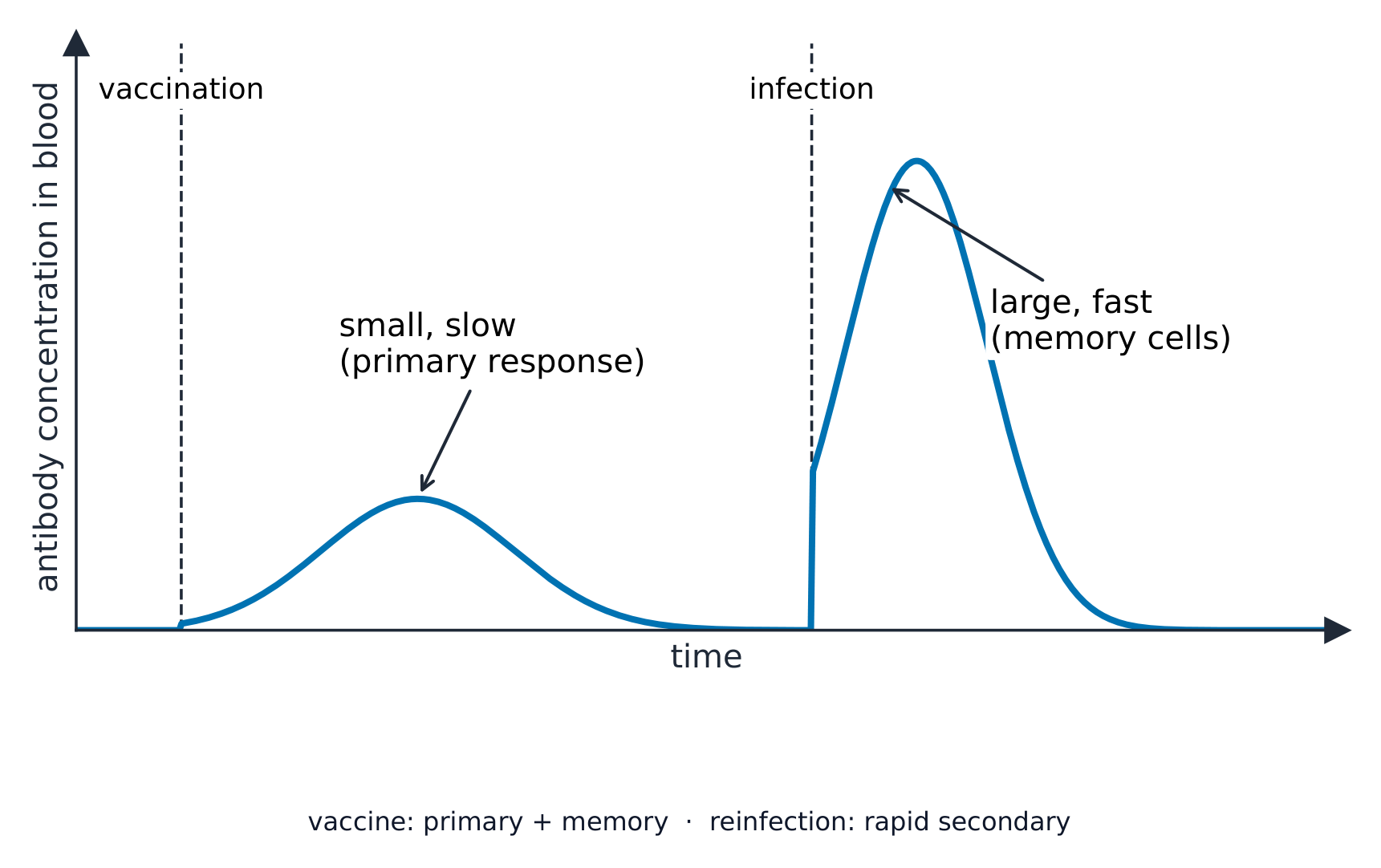
接种疫苗后,如果真正的病原体到来,记忆细胞给出一个快速、大的反应
The immune response · 免疫反应
White blood cells recognise and destroy pathogens, and remember them so you are immune next time. · 白细胞识别并销毁病原体,并记住它们,这样你下次就免疫了。
Antibodies are made by: · 抗体由以下哪种制造:
Lymphocytes produce antibodies. · 淋巴细胞产生抗体。
Memory cells let the body respond faster to a pathogen it has met before. · 记忆细胞让身体对它以前遇到过的病原体反应得更快。
This is the basis of immunity. · 这是免疫的基础。
Antibodies recognise the markers on a pathogen called ______. · 抗体识别一个病原体上叫做______的标记。
Each antibody fits a specific antigen. · 每个抗体适合一个特定的抗原。
Antibodies and memory
- Each antibody fits one pathogen's antigens 抗原, marking it for destruction.
- After an infection, memory cells remain — so a second attack is defeated faster. This is immunity 免疫.
Cholera toxin pulls water into the gut by osmosis, causing diarrhoea and dehydration
抗体和记忆
- 每个抗体适合一个病原体的抗原(antigens),标记它以待销毁。
- 一次感染后,记忆细胞(memory cells)留下——所以第二次攻击被更快地击败。这是免疫(immunity)。

霍乱毒素通过渗透把水拉进肠道,引起腹泻和脱水
A vaccine protects you by: · 一个疫苗通过以下哪种保护你:
It safely primes the immune system. · 它安全地启动免疫系统。
Vaccination
- A vaccine contains a harmless form of a pathogen (or its antigens).
- It triggers antibody production and memory cells without causing the disease — so you're protected.
Worked example. A measles vaccine introduces harmless measles antigens. Lymphocytes make antibodies and memory cells. If real measles arrives later, memory cells respond so fast that you never get ill.
Pathogens spread by direct contact or indirectly
接种疫苗
- 一个疫苗含有一个病原体(或它的抗原)的无害形式。
- 它触发抗体产生和记忆细胞,而不引起疾病——所以你受到保护。
例题。 一个麻疹疫苗引入无害的麻疹抗原。淋巴细胞制造抗体和记忆细胞。如果真正的麻疹之后到来,记忆细胞反应得如此快,以至于你从不生病。
You've got it
- phagocytes engulf pathogens; lymphocytes make antibodies
- antibodies fit a pathogen's antigens; memory cells give long-term immunity
- a vaccine triggers immunity safely, without causing the disease
你掌握了
- 吞噬细胞吞噬病原体;淋巴细胞制造抗体
- 抗体适合一个病原体的抗原;记忆细胞给出长期的免疫
- 一个疫苗安全地触发免疫,而不引起疾病