Gas exchange surfaces · 气体交换表面
| English | 中文 | Pinyin · 拼音 |
|---|---|---|
| gas exchange/ɡæs eksˈtʃeɪndʒ/ | 气体交换 | qì tǐ jiāo huàn |
| alveoli/ˈælvɪɒli/ | 肺泡 | fèi pào |
Trading gases with the air
- Every cell needs oxygen and must get rid of carbon dioxide.
- This swap happens at a gas exchange 气体交换 surface — and good ones share key features.
与空气交换气体
- 每个细胞都需要氧并且必须摆脱二氧化碳。
- 这种交换发生在一个气体交换表面(gas exchange surface)——好的表面共享关键特征。
Which are features of a good gas exchange surface? (Select all that apply.) · 哪些是一个好的气体交换表面的特征?(选择所有适用项。)
A thick, dry surface would slow diffusion. · 一个厚而干的表面会减慢扩散。
A large ______ area speeds up the diffusion of gases. · 一个大的______积加快气体的扩散。
More surface area means faster gas exchange. · 更多的表面积意味着更快的气体交换。
Features of a good surface
- Large surface area, thin (short diffusion distance), moist, and a good blood supply.
- These features make diffusion of gases fast.
Gas exchange happens across the huge surface of the lungs
一个好表面的特征
- 大表面积、薄(短扩散距离)、湿润,以及一个良好的血液供应。
- 这些特征使气体的扩散快速。

气体交换发生在肺的巨大表面上
A good gas-exchange surface · 一个好的气体交换表面
Tap the alveolus to see the four features that make it ideal for exchange: a huge surface area, a thin wall, a moist lining and a good blood supply. · 点击肺泡,看看使它对交换理想的四个特征:一个巨大的表面积、一个薄壁、一个湿润的内衬和一个良好的血液供应。
Gas exchange in the lungs happens in the: · 肺中的气体交换发生在:
Alveoli are the tiny air sacs where gases exchange. · 肺泡是气体交换的微小气囊。
The alveoli 肺泡
- In the lungs, gas exchange happens in millions of tiny air sacs called alveoli.
- Their huge combined surface area and thin walls make them ideal.
At an alveolus, oxygen diffuses into the blood and carbon dioxide diffuses out
肺泡
- 在肺中,气体交换发生在数百万个叫做肺泡(alveoli)的微小气囊中。
- 它们巨大的合并表面积和薄壁使它们理想。
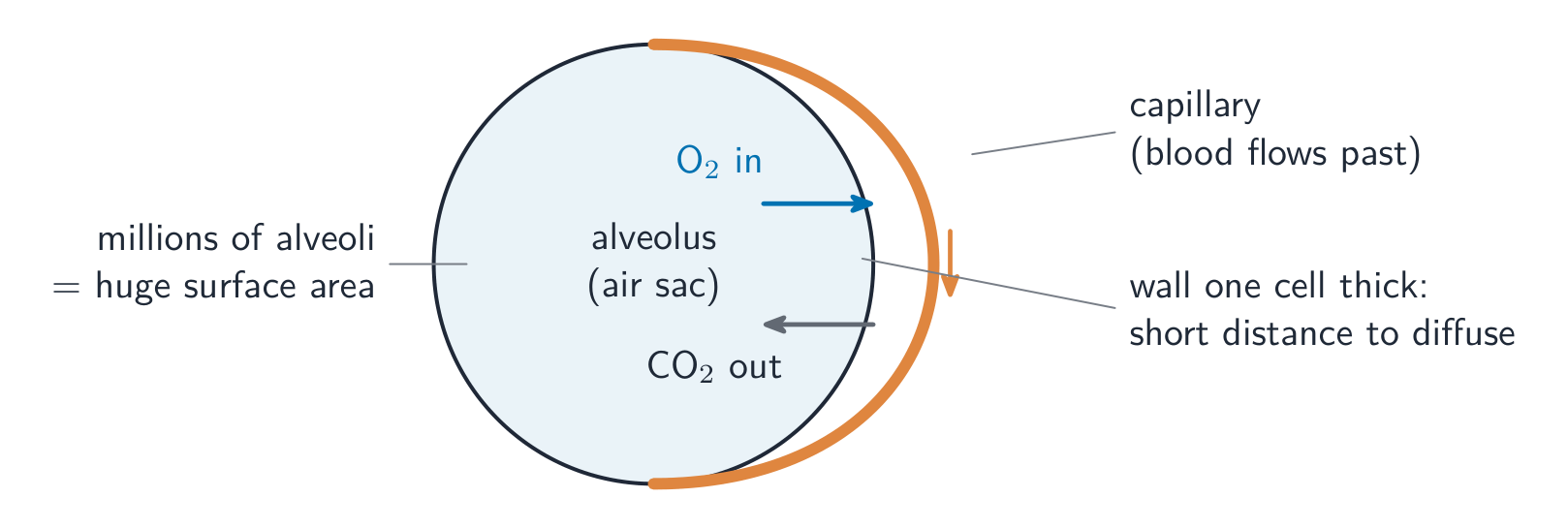
在一个肺泡处,氧扩散进血液,二氧化碳扩散出来
At the alveoli, oxygen diffuses: · 在肺泡处,氧扩散:
Oxygen moves down its gradient into the blood. · 氧沿它的梯度向下移入血液。
Gas exchange occurs by diffusion, which is different from breathing. · 气体交换通过扩散发生,这与呼吸不同。
Breathing ventilates; gas exchange is diffusion across the surface. · 呼吸通气;气体交换是跨表面的扩散。
How gases move
- Oxygen diffuses from the alveoli into the blood; carbon dioxide diffuses the other way.
- A steep concentration gradient (kept by breathing and blood flow) speeds this up.
Gas exchange is diffusion, not breathing. Breathing moves air in and out; gas exchange is the diffusion of O₂ and CO₂ across the alveolar surface. They work together but are different processes.
Expired air has less oxygen and much more carbon dioxide than inspired air
气体如何移动
- 氧从肺泡扩散进血液;二氧化碳朝相反方向扩散。
- 一个陡峭的浓度梯度(由呼吸和血流保持)加快这个。
气体交换是扩散,不是呼吸。 呼吸把空气移入移出;气体交换是 O₂ 和 CO₂ 跨肺泡表面的扩散。它们一起工作但是不同的过程。

呼出的空气比吸入的空气有更少的氧和多得多的二氧化碳
You've got it
- a good gas exchange surface is large, thin, moist with a good blood supply
- the alveoli provide a huge surface area and thin walls
- oxygen diffuses in, carbon dioxide diffuses out — driven by a concentration gradient
你掌握了
- 一个好的气体交换表面是大、薄、湿润,有一个良好的血液供应
- 肺泡提供一个巨大的表面积和薄壁
- 氧扩散进,二氧化碳扩散出——由一个浓度梯度驱动