What enzymes are · 酶是什么
| English | 中文 | Pinyin · 拼音 |
|---|---|---|
| enzymes/ˈenzaɪmz/ | 酶 | méi |
| catalysts/ˈkætəlɪsts/ | 催化剂 | cuī huà jì |
| substrate/ˈsʌbstreɪt/ | 底物 | dǐ wù |
| active site/ˈæktɪv saɪt/ | 活性位点 | huó xìng wèi diǎn |
| specific/spəˈsɪfɪk/ | 专一 | zhuān yī |
| products/ˈprɒdʌkts/ | 产物 | chǎn wù |
The body's tiny machines
- Your body runs thousands of chemical reactions every second — far faster than they'd happen on their own.
- The secret is enzymes 酶: biological catalysts 催化剂 that speed reactions up.
身体的微小机器
- 你的身体每秒运行数千个化学反应——远快于它们自己会发生的速度。
- 秘密是酶(enzymes):加快反应的生物催化剂(catalysts)。
An enzyme is a biological catalyst, which means it: · 一个酶是一个生物催化剂,这意味着它:
Catalysts speed up reactions and are reusable. · 催化剂加快反应并可重复使用。
Enzymes are made of: · 酶由以下哪种构成:
Enzymes are proteins. · 酶是蛋白质。
What enzymes are
- An enzyme is a protein that speeds up a reaction without being used up.
- It is a biological catalyst — it can be used again and again.
Enzyme activity peaks at the optimum temperature, then falls as the enzyme denatures
Each enzyme has one optimum pH; far from it the enzyme is denatured
酶是什么
- 一个酶是一种加快反应而不被用掉的蛋白质。
- 它是一个生物催化剂——它能被一次又一次地使用。
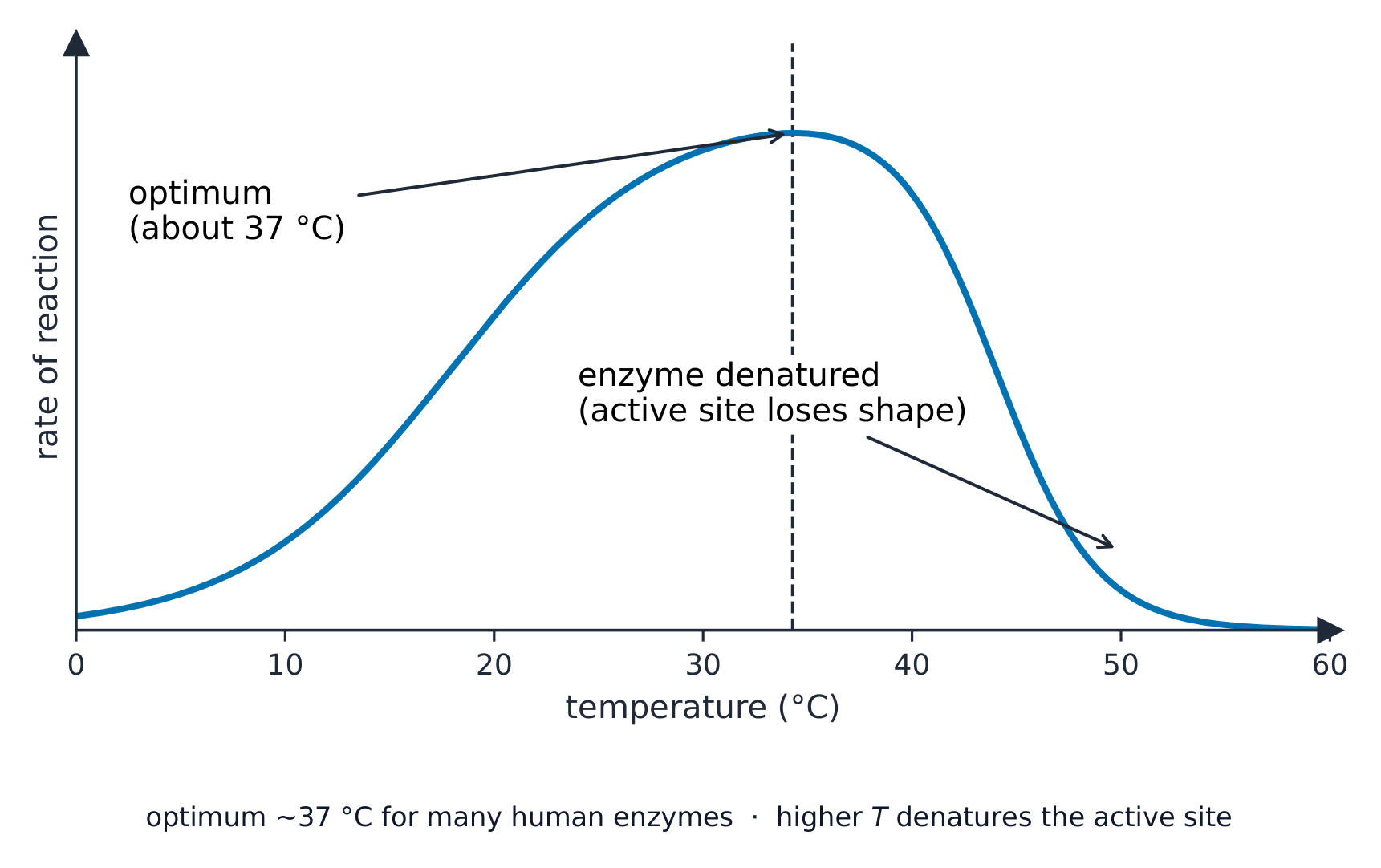
酶活性在最适温度达到顶峰,然后随着酶变性而下降
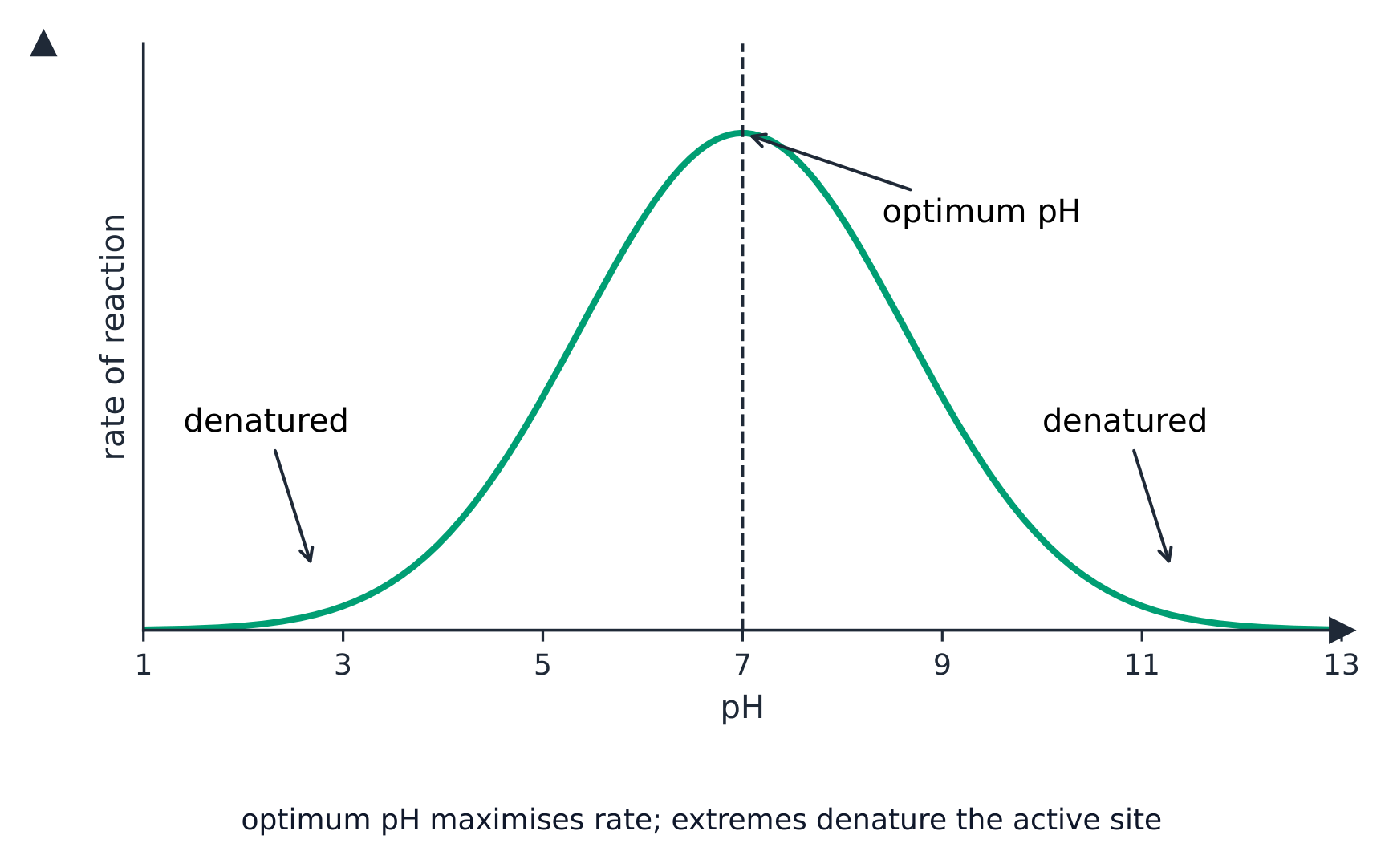
每个酶有一个最适 pH;远离它酶就变性
What enzymes do · 酶做什么
rate rises then plateaus · 速率上升后趋于平稳
More substrate means a faster reaction — until the enzymes can't keep up. · 更多的底物意味着更快的反应——直到酶跟不上。
The part of an enzyme where the substrate binds is the: · 酶上底物结合的部分是:
The substrate fits into the active site. · 底物适合进活性位点。
The model where only a matching substrate fits an enzyme is the ______-and-key model. · 只有一个匹配的底物适合一个酶的模型是______钥模型。
Lock-and-key explains enzyme specificity. · 锁钥解释了酶的特异性。
The lock and key
- Each enzyme has a specific 专一 shape with an active site 活性位点.
- Only a matching substrate 底物 fits the active site — like a key in a lock. This makes enzymes specific.
Biological washing powders contain enzymes that break down stains
锁和钥匙
- 每个酶有一个带活性位点(active site)的特定形状。
- 只有一个匹配的底物(substrate)适合活性位点——像一把锁中的钥匙。这使酶特异(specific)。
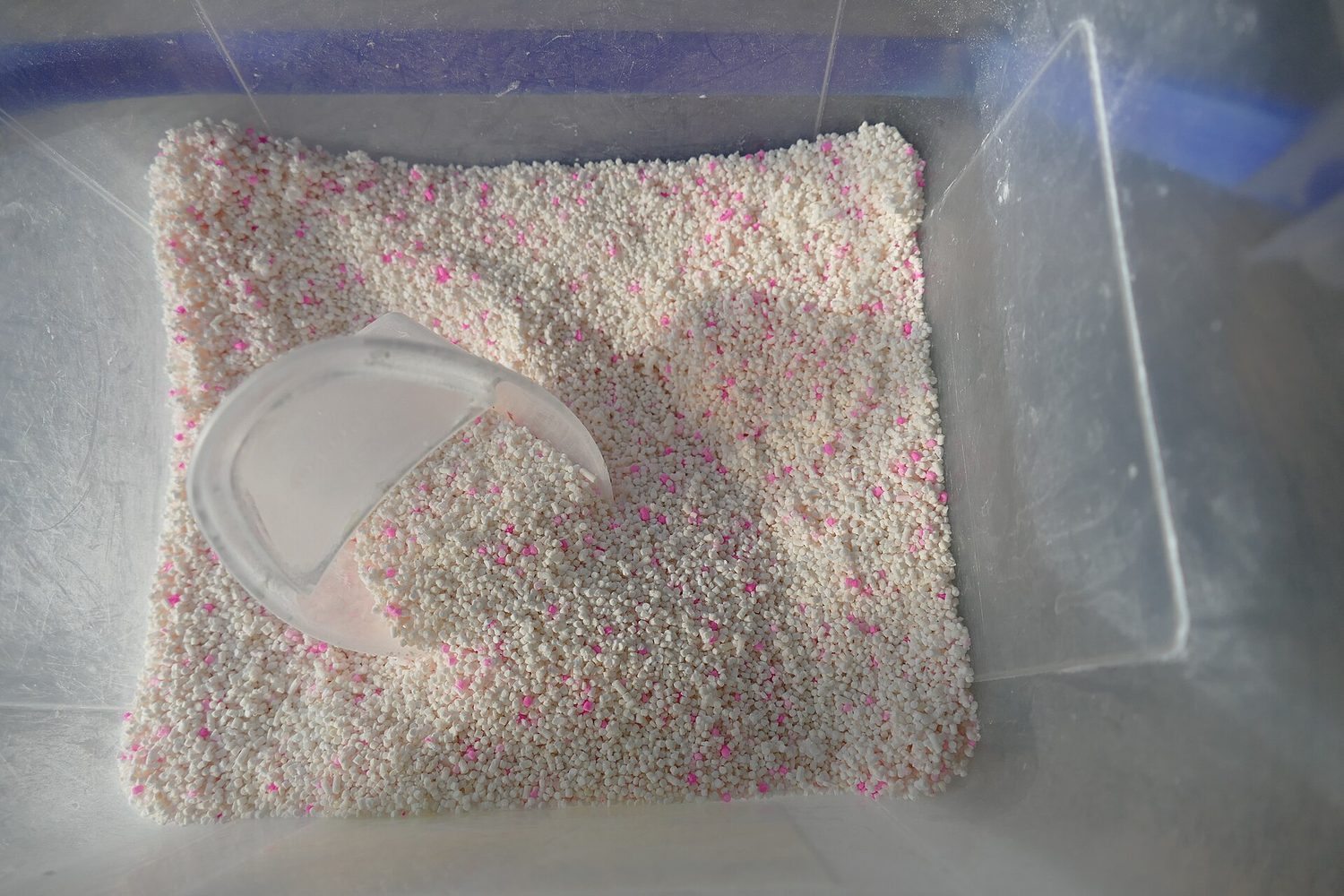
生物洗衣粉含有分解污渍的酶
Each enzyme is specific to one type of substrate. · 每个酶对一种类型的底物是特异的。
Only a matching substrate fits the active site. · 只有一个匹配的底物适合活性位点。
How they work
- The substrate binds to the active site, the reaction happens, and the products 产物 are released.
- The enzyme is unchanged and ready for the next substrate.
Enzymes are specific. One enzyme works on one type of substrate, because only that substrate fits its active site. The wrong substrate simply won't fit.
Kiwi fruit contains a protease enzyme that breaks down protein
它们如何工作
- 底物结合到活性位点,反应发生,产物(products)被释放。
- 酶不变,准备好用于下一个底物。
酶是特异的。 一个酶作用于一种底物,因为只有那个底物适合它的活性位点。错误的底物就是不会适合。

猕猴桃含有一种分解蛋白质的蛋白酶
You've got it
- an enzyme is a protein that acts as a biological catalyst (not used up)
- each has an active site that fits one substrate — the lock-and-key model
- this makes enzymes specific to their substrate
你掌握了
- 一个酶是一种作为生物催化剂的蛋白质(不被用掉)
- 每个有一个适合一种底物的活性位点——锁钥模型
- 这使酶对它们的底物特异