Temperature and pH · 温度和 pH
| English | 中文 | Pinyin · 拼音 |
|---|---|---|
| optimum/ˈɒptɪməm/ | 最适 | zuì shì |
| denatured/ˈdenətʃəd/ | 变性 | biàn xìng |
| denaturing/ˈdenətʃərɪŋ/ | 变性 | biàn xìng |
Too hot, too cold, just right
- Enzymes are fussy. Change the temperature or pH and they can speed up, slow down — or stop working forever.
- Understanding this is key to how living things stay alive.
太热、太冷、刚刚好
- 酶很挑剔。改变温度或 pH,它们能加快、减慢——或永远停止工作。
- 理解这一点是活的东西如何保持存活的关键。
The temperature at which an enzyme works fastest is its: · 一个酶工作得最快的温度是它的:
The optimum is where the rate is highest. · 最适值是速率最高的地方。
If an enzyme gets too hot, it: · 如果一个酶变得太热,它:
High temperature denatures the enzyme, destroying its active site. · 高温使酶变性,破坏它的活性位点。
The optimum temperature of most human enzymes is about how many °C? · 大多数人体酶的最适温度大约是多少 °C?
Human body temperature is about 37 °C. · 人体温度大约是 37 °C。
Temperature
- As temperature rises, the reaction speeds up — to an optimum 最适 (often around 37 °C in humans).
- Too hot, and the enzyme's shape is destroyed: it is denatured 变性 and stops working.
Rate peaks at the optimum temperature, then crashes as the enzyme denatures.
Only the matching substrate fits the active site
温度
- 随着温度上升,反应加快——到一个最适值(optimum,在人体中常常约 37 °C)。
- 太热,酶的形状被破坏:它变性(denatured)并停止工作。

速率在最适温度达到顶峰,然后随着酶变性而骤降。
Temperature and pH · 温度和 pH
rate peaks at the optimum · 速率在最适点达到峰值
There's an optimum · 最适值 temperature; too hot and the enzyme is denatured and stops working. · 有一个最适温度;太热,酶就变性并停止工作。
Moving the pH far from an enzyme's optimum will: · 把 pH 移到远离一个酶的最适值将:
The wrong pH changes the active site shape. · 错误的 pH 改变活性位点的形状。
pH
- Each enzyme has an optimum pH where it works best.
- Too far from it (too acidic or too alkaline) changes the active site's shape and slows or stops the enzyme.
Each enzyme has an optimum pH; rate falls on either side.
pH
- 每个酶有一个它工作得最好的最适 pH。
- 离它太远(太酸或太碱)会改变活性位点的形状,减慢或停止酶。

每个酶有一个最适 pH;速率在两侧下降。
A denatured enzyme can recover its shape once it cools down. · 一个变性的酶一旦冷却下来就能恢复它的形状。
Denaturing is permanent; cooling does not restore the active site. · 变性是永久的;冷却不恢复活性位点。
Denaturing 变性 is permanent
- Denaturing permanently changes the active site — the substrate no longer fits.
- Unlike cooling a too-cold enzyme, a denatured enzyme cannot recover.
Cold slows an enzyme; heat can destroy it. A cold enzyme just works slowly and speeds up again when warmed. A denatured (overheated) enzyme is wrecked for good.
The substrate fits the active site like a key in a lock, then leaves as products
变性是永久的
- 变性永久地改变活性位点——底物不再适合。
- 不像冷却一个太冷的酶,一个变性的酶不能恢复。
冷减慢一个酶;热能破坏它。 一个冷的酶只是工作得慢,变暖时再次加快。一个变性的(过热的)酶被永久毁坏。
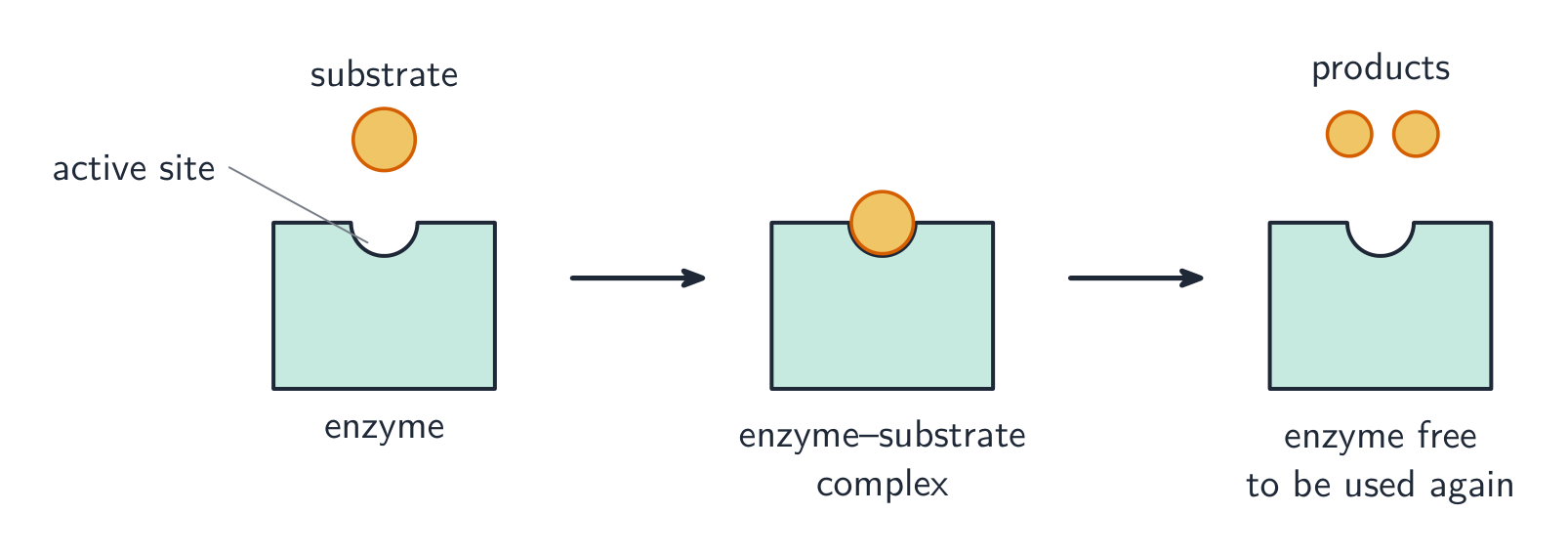
底物像锁中的钥匙一样适合活性位点,然后作为产物离开
You've got it
- rate rises to an optimum temperature (≈37 °C), then falls as the enzyme denatures
- each enzyme has an optimum pH; rate falls on either side
- denaturing permanently destroys the active site — cold is reversible, denaturing is not
你掌握了
- 速率上升到一个最适温度(≈37 °C),然后随着酶变性而下降
- 每个酶有一个最适 pH;速率在两侧下降
- 变性永久地破坏活性位点——冷是可逆的,变性不是