Public and Private Goods · 公共物品与私人物品
| English | 中文 | Pinyin · 拼音 |
|---|---|---|
| rivalry/ˈraɪvəlri/ | 竞争性 | jìng zhēng xìng |
| excludability/eksˌkluːdəˈbɪlɪti/ | 排他性 | pái tā xìng |
| private good/ˈpraɪvət ɡʊd/ | 私人物品 | sī rén wù pǐn |
| public good/ˈpʌblɪk ɡʊd/ | 公共物品 | gōng gòng wù pǐn |
| common resource/ˈkɒmən rɪˈzɔːs/ | 公共资源 | gōng gòng zī yuán |
| club good/klʌb ɡʊd/ | 俱乐部物品 | jù lè bù wù pǐn |
| free-rider problem/friː ˈraɪdə ˈprɒbləm/ | 搭便车问题 | dā biàn chē wèn tí |
| government/ˈɡʌvənmənt/ | 政府 | zhèng fǔ |
| tragedy of the commons/ˈtrædʒədi ɒvðə ˈkɒmənz/ | 公地悲剧 | gōng dì bēi jù |
Two questions sort every good
- A sandwich, national defence, ocean fish, a streaming service — all "goods", yet wildly different.
- Two simple yes/no questions sort them all.
- The answers decide whether a market can supply the good well, or fails to.
- Get this grid, and market failure suddenly makes sense.
两个问题给每种商品归类
- 一个三明治、国防、海里的鱼、一个流媒体服务——都是"商品",却天差地别。
- 两个简单的"是/否"问题,就能把它们全部归类。
- 答案决定市场能否很好地供给这种商品,还是会失灵。
- 弄懂这张网格,市场失灵就一下子讲得通了。
Rivalry and excludability
- Rivalry 竞争性: does one person's use use it up for others?
- Excludability 排他性: can non-payers be kept out?
- Crossing them gives four types: a private good 私人物品 (rival + excludable), a public good 公共物品 (neither), a common resource 公共资源 (rival, not excludable), and a club good 俱乐部物品 (excludable, not rival).
竞争性与排他性
- 竞争性(rivalry):一个人的使用会不会把它用掉、让别人没得用?
- 排他性(excludability):能不能把不付钱的人挡在外面?
- 两者相交给出四种类型:私人物品(private good,有竞争+可排他)、公共物品(public good,两者都无)、公共资源(common resource,有竞争、不可排他)、俱乐部物品(club good,可排他、无竞争)。
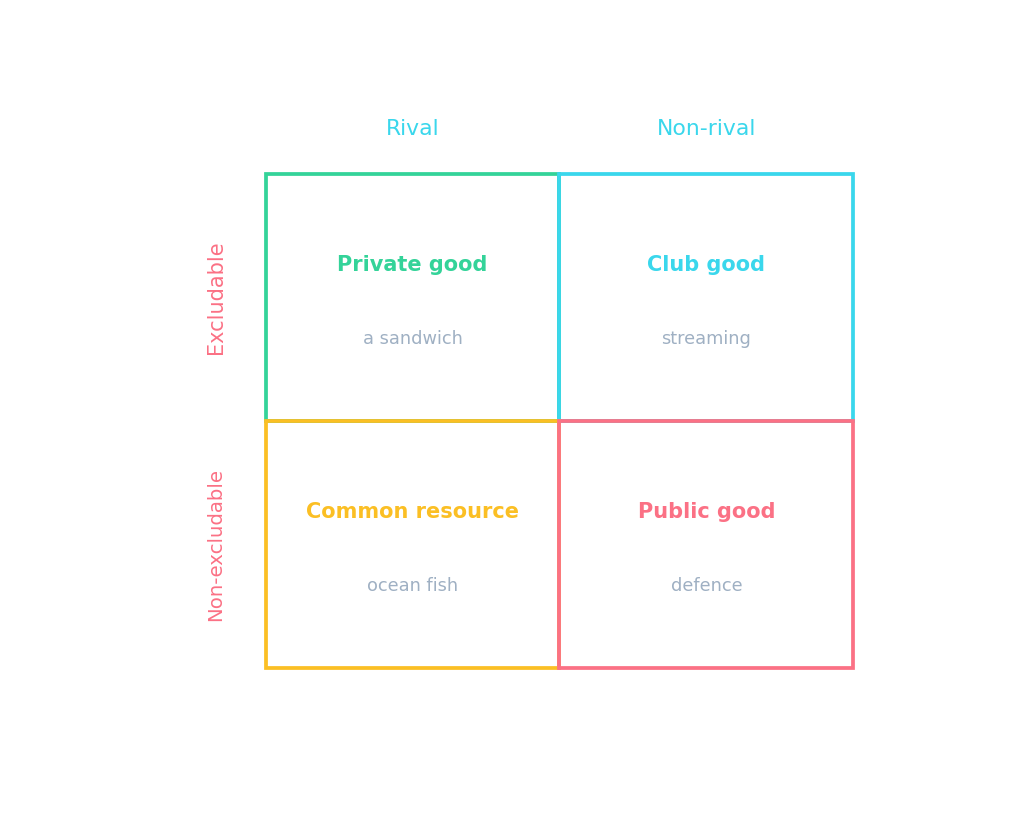
Which type of good? · 哪一类商品?
Rivalry (does use it up?) and excludability (can non-payers be kept out?) sort goods into private, public, common resource, and club goods. · 竞争性(会不会用掉?)和排他性(能否挡住不付钱的人?)把商品分成私人、公共、公共资源和俱乐部物品。
A good is "rival" when: · 一种商品"有竞争性",是指:
Rivalry is about using it up; excludability is about keeping non-payers out. · 竞争性关乎"用掉";排他性关乎"挡住不付钱的人"。
A public good, like national defence, is: · 公共物品(如国防)是:
Everyone can use it at once (non-rival) and no one can be shut out (non-excludable). · 每个人都能同时使用(无竞争性),谁都无法被排除(不可排他)。
Match each good to its type. · 把每种商品与它的类型配对。
Rivalry and excludability place each good in one of the four boxes. · 竞争性和排他性把每种商品放进四个格子之一。
The free-rider problem
- Because non-payers can't be excluded from a public good, everyone waits for someone else to pay.
- This is the free-rider problem 搭便车问题, and it makes the market underproduce public goods.
- It is why the government 政府 provides things like defence, funded by taxes.
搭便车问题
- 因为无法把不付钱的人挡在公共物品之外,每个人都等别人先付钱。
- 这就是搭便车问题(free-rider problem),它使市场对公共物品生产不足。
- 这正是为什么由政府(government)提供国防这类东西,并用税收来买单。
When everyone waits for someone else to pay for a public good, it is the ______-rider problem. · 当每个人都等别人为公共物品付钱时,这就是______车问题。
The free-rider problem leaves public goods underprovided, so the government steps in. · 搭便车问题使公共物品供给不足,于是政府出手。
The tragedy of the commons
- A common resource is rival but open to all, so each user grabs as much as they can before others do.
- The result is the tragedy of the commons 公地悲剧: the resource is overused and depleted.
- Fixing it means adding excludability (fencing, licences) or setting a quota.
公地悲剧
- 公共资源有竞争性却对所有人开放,于是每个使用者都趁别人下手前尽量多拿。
- 结果就是公地悲剧(tragedy of the commons):资源被过度使用、耗尽。
- 解决办法是加上排他性(围栏、许可证)或设定配额。
The tragedy of the commons happens because a common resource is rival but open to all. · 公地悲剧的发生,是因为公共资源有竞争性却对所有人开放。
Each user grabs as much as they can, so the resource is overused and depleted. · 每个使用者尽量多拿,所以资源被过度使用、耗尽。
A good way to prevent the tragedy of the commons is to: · 防止公地悲剧的一个好办法是:
Limiting access (quota, fence, licence) stops the overuse that depletes the resource. · 限制使用(配额、围栏、许可证)阻止耗尽资源的过度使用。
Two properties — rivalry and excludability — sort goods into private, public, common resource, and club goods. Public goods suffer the free-rider problem (underprovided, so government steps in); common resources suffer the tragedy of the commons (overused).
两个性质——竞争性和排他性——把商品归入私人、公共、公共资源和俱乐部物品。公共物品有搭便车问题(供给不足,于是政府出手);公共资源有公地悲剧(过度使用)。