Characteristics of countries · 国家特征
| English | 中文 | Pinyin · 拼音 |
|---|---|---|
| primary sector/ˈpraɪməri ˈsektə/ | 第一产业 | dì yī chǎn yè |
| informal sector/ɪnˈfɔːml ˈsektə/ | 非正规部门 | fēi zhèng guī bù mén |
| savings gap/ˈseɪvɪŋz ɡæp/ | 储蓄缺口 | chǔ xù quē kǒu |
| infrastructure/ˈɪnfrəstrʌktʃə/ | 基础设施 | jī chǔ shè shī |
| poverty trap/ˈpɒvəti træp/ | 贫困陷阱 | pín kùn xiàn jǐng |
| microfinance/ˌmaɪkrəʊfaɪˈnæns/ | 小额信贷 | xiǎo é xìn dài |
What developing economies have in common
- Developing countries differ hugely — but many share recognisable features that shape their economic challenges.
- Spotting these patterns helps explain why development is hard, and where policy can help.
发展中经济体的共同之处
- 发展中国家差异巨大——但许多共享塑造它们经济挑战的可辨认的特征。
- 发现这些模式有助于解释为什么发展是难的,以及政策能在哪里帮助。
Economics case lab · 经济学案例实验室
Classify real examples by the economic idea they show. · 根据所展示的经济学概念对真实案例进行分类。
Many developing economies rely heavily on the: · 许多发展中经济体严重依赖:
Primary-product dependence (with volatile prices) is a common feature. · 初级产品依赖(且价格波动剧烈)是一个常见特征。
A large informal sector means much economic activity is: · 庞大的非正规部门意味着大量经济活动是:
The informal sector operates outside official taxation and regulation. · 非正规部门在官方税收和监管体系之外运作。
Common characteristics
- Heavy reliance on the primary sector 第一产业 (agriculture, raw materials) and volatile commodity prices.
- Low HDI: lower incomes, life expectancy and schooling.
- A large informal sector 非正规部门 (untaxed, unregulated work).
- Rapid population growth and a young population.
Workers shift from primary to tertiary sectors as a country develops
共同特征
- 对初级部门(primary sector,农业、原材料)的沉重依赖和波动的商品价格。
- 低 HDI:更低的收入、预期寿命和教育。
- 一个大的非正规部门(informal sector,未被征税、未受监管的工作)。
- 快速的人口增长和一个年轻的人口。
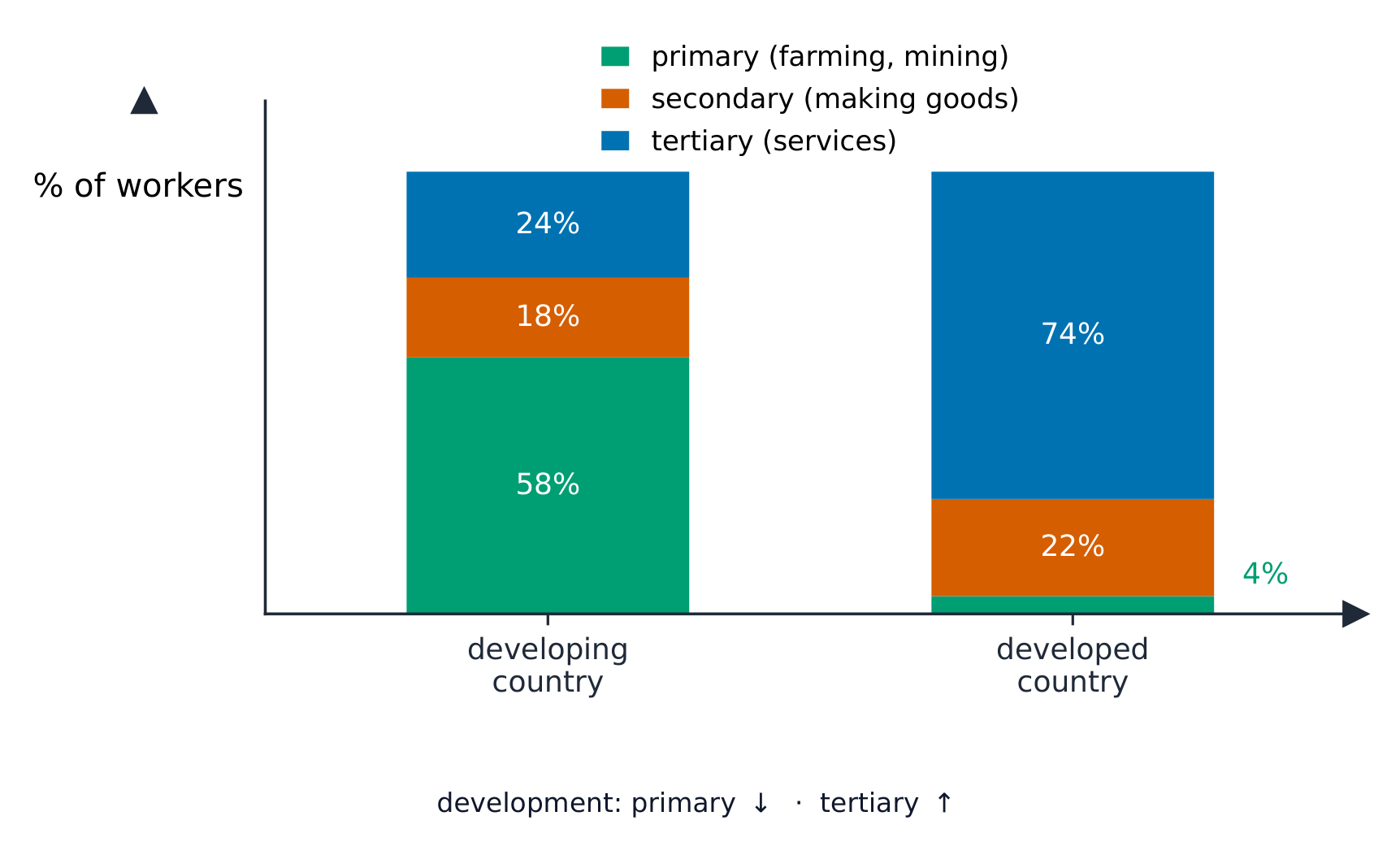
随着一个国家发展,工人从初级部门转移到第三产业
In a poverty trap, low incomes lead to low saving and investment, keeping incomes low. · 在贫困陷阱中,低收入导致低储蓄和投资,从而使收入维持在低位。
The self-reinforcing cycle that makes development hard to start. · 使发展难以启动的自我强化循环。
Match each barrier to development to its description. · 将每个发展障碍与其描述进行匹配。
These barriers reinforce low productivity and slow development. · 这些障碍会强化低生产力并阻碍发展。
The self-reinforcing cycle of low income → low saving → low investment is the poverty . · 低收入 → 低储蓄 → 低投资的自我强化循环即为贫困。
The poverty trap (or cycle). · 贫困陷阱(或循环)。
Barriers to development
- Low savings and investment (the savings gap 储蓄缺口), poor infrastructure 基础设施, weak institutions and education, high debt, and dependence on a few exports.
The poverty trap 贫困陷阱. Low incomes mean low saving, so little investment, so low productivity — keeping incomes low. Breaking the cycle often needs outside help or a big push.
发展的障碍
- 低储蓄和投资(储蓄缺口)、差的基础设施、弱的制度和教育、高债务,以及对少数出口的依赖。
贫困陷阱。 低收入意味着低储蓄,所以很少投资,所以低生产率——使收入保持低。打破这个循环常常需要外部帮助或一个大推动。
Routes forward
- Investment in human and physical capital, diversifying away from primary exports, better institutions, and microfinance 小额信贷 to fund small enterprise.
前进的道路
- 投资于人力和物质资本、从初级出口多样化、更好的制度,以及为小企业提供资金的小额信贷(microfinance)。
You've got it
- common features: primary-sector reliance, low HDI, large informal sector, rapid population growth
- barriers: low saving/investment, weak infrastructure/institutions, debt, export dependence
- the poverty trap: low income → low saving → low investment → low income
你掌握了
- 共同特征:初级部门依赖、低 HDI、大的非正规部门、快速人口增长
- 障碍:低储蓄/投资、弱的基础设施/制度、债务、出口依赖
- 贫困陷阱:低收入 → 低储蓄 → 低投资 → 低收入