Condensation polymerisation · 缩合聚合
| English | 中文 | Pinyin · 拼音 |
|---|---|---|
| condensation polymerisation/kɒndenˈseɪʃn ˌpɒlɪməraɪˈzeɪʃn/ | 缩合聚合 | suō hé jù hé |
| polyester/ˌpɒlɪˈestə/ | 聚酯 | jù zhǐ |
| polyamide/ˌpɒlɪˈeɪmaɪd/ | 聚酰胺 | jù xiān àn |
| diol/dɪˈɒl/ | 二醇 | èr chún |
| dicarboxylic acid/ˌdɪkɑːbəkˈsɪlɪk ˈæsɪd/ | 二羧酸 | èr suō suān |
Joining with loss
- In condensation polymerisation 缩合聚合, monomers join and a small molecule is lost each time.
- Each monomer needs two reactive groups, so the chain grows at both ends.
- The result is a polyester 聚酯 or a polyamide 聚酰胺.
带损失的连接
- 在缩合聚合(condensation polymerisation)中,单体连接,并且每次失去一个小分子。
- 每个单体需要两个反应基团,所以链在两端生长。
- 结果是一个聚酯或一个聚酰胺。
Condensation polymer route · 缩合聚合物途径
Watch monomers join while a small molecule leaves each time. · 看单体连接,同时每次一个小分子离开。
In condensation polymerisation: · 在缩合聚合中:
Each new link releases a small molecule; the monomers need two reactive groups. · 每个新键释放一个小分子;单体需要两个反应基团。
Polymers made by joining monomers with loss of a small molecule (e.g. water) form by ______ polymerisation. · 通过连接单体并失去一个小分子(例如水)制成的聚合物通过 ______ 聚合形成。
Polyesters and polyamides form this way. · 聚酯和聚酰胺以这种方式形成。
Polyesters and polyamides
- a polyester has many ester links. Make it from a diol 二醇 + a dicarboxylic acid 二羧酸 (or dioyl chloride), or from a single hydroxycarboxylic acid.
- a polyamide has many amide links. Make it from a diamine + a dicarboxylic acid, or from amino acids joining (proteins are natural polyamides).
Polyester and polyamide links form by losing a small molecule
聚酯和聚酰胺
- 一个聚酯(polyester)有许多酯键。从一个二醇 + 一个二羧酸(或二酰氯)制造它,或从一个单一的羟基羧酸。
- 一个聚酰胺(polyamide)有许多酰胺键。从一个二胺 + 一个二羧酸制造它,或从氨基酸连接(蛋白质是天然聚酰胺)。
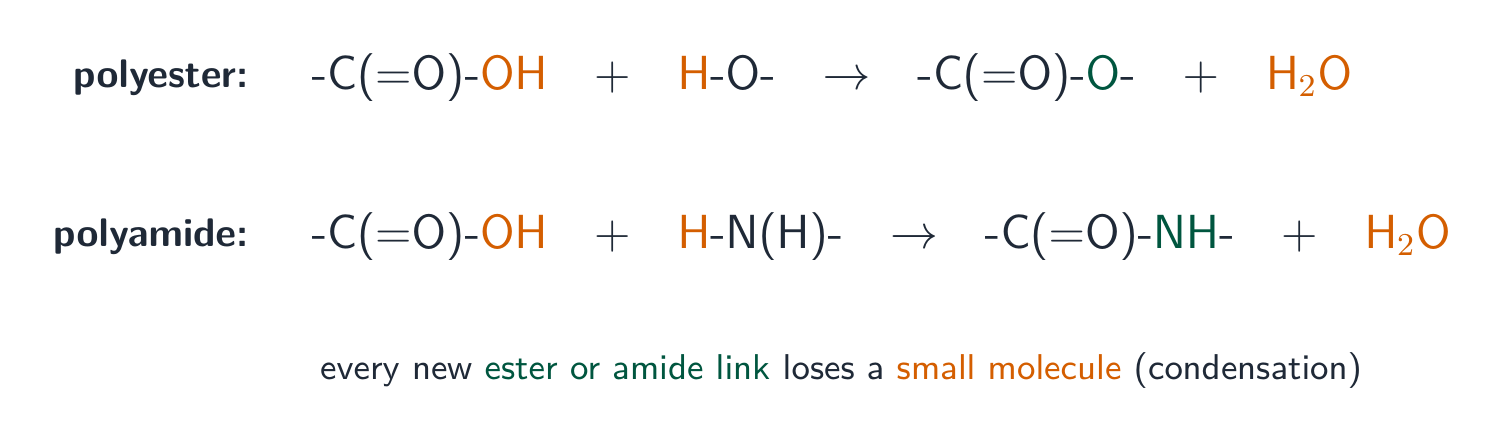
聚酯和聚酰胺键通过失去一个小分子形成
A polyester can be made from: · 一个聚酯可以从以下制造:
A diol (two –OH) and a dicarboxylic acid (two –COOH) form ester links along the chain. · 一个二醇(两个 –OH)和一个二羧酸(两个 –COOH)沿链形成酯键。
Proteins are examples of: · 蛋白质是以下的例子:
Amino acids join by amide (peptide) links, so proteins are polyamides. · 氨基酸通过酰胺(肽)键连接,所以蛋白质是聚酰胺。
Match each term to its meaning. · 匹配每个术语和它的含义。
Each item links the term to its correct meaning. · 每一项把术语链接到它正确的含义。
Repeat units and monomers
- The repeat unit contains parts of both monomers, minus the small molecule lost.
- To find the monomers: break the chain at each ester/amide link, then add back –OH and –H (or –Cl).
Break the chain at each link and add back –OH and –H to recover the two monomers
PET drinks bottles are made of a polyester — a condensation polymer.
重复单元和单体
- 重复单元含有两个单体的部分,减去失去的小分子。
- 要找到单体:在每个酯/酰胺键处断开链,然后加回 –OH 和 –H(或 –Cl)。
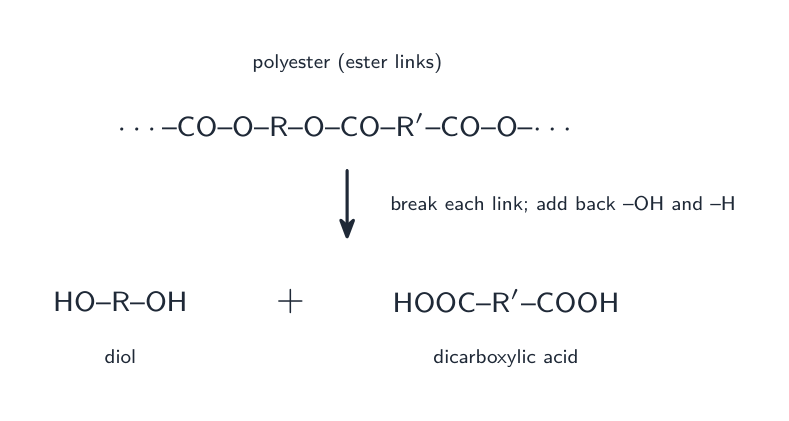
在每个键处断开链,加回 –OH 和 –H,以还原出两个单体
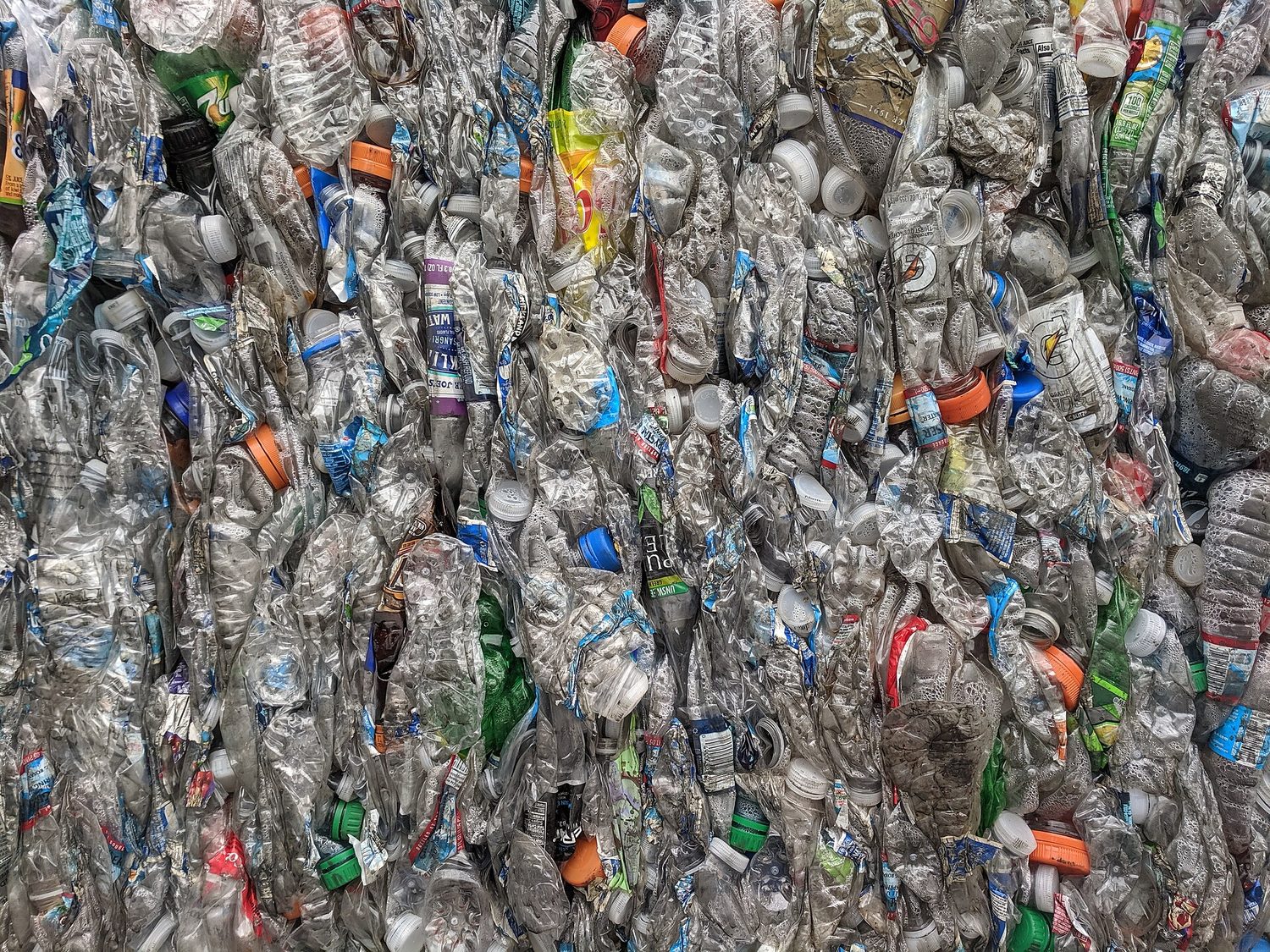
PET 饮料瓶由一个聚酯——一个缩合聚合物制成。
To find the monomers of a condensation polymer, you: · 要找到一个缩合聚合物的单体,你:
Breaking the links and restoring the lost atoms recreates the original monomers. · 断开键并恢复失去的原子重新创造原始的单体。
Condensation vs addition
- Condensation polymers lose a small molecule (water/HCl) at each link; addition polymers lose nothing.
- Polyesters and polyamides are condensation polymers.
缩合 vs 加成
- 缩合聚合物在每个键处失去一个小分子(水/HCl);加成聚合物什么都不失去。
- 聚酯和聚酰胺是缩合聚合物。
You've got it
- condensation polymerisation: monomers join + a small molecule (e.g. water) is lost; each monomer has two groups
- polyester = ester links (diol + dicarboxylic acid); polyamide = amide links (diamine + dicarboxylic acid)
- proteins are natural polyamides; find monomers by breaking links and adding back –OH/–H
你掌握了
- 缩合聚合:单体连接 + 一个小分子(例如水)失去;每个单体有两个基团
- 聚酯 = 酯键(二醇 + 二羧酸);聚酰胺 = 酰胺键(二胺 + 二羧酸)
- 蛋白质是天然聚酰胺;通过断开键并加回 –OH/–H 找到单体