Amides · 酰胺
| English | 中文 | Pinyin · 拼音 |
|---|---|---|
| amide/əˈmaɪd/ | 酰胺 | xiān àn |
| hydrolysed/ˈhaɪdrəlaɪzd/ | 水解 | shuǐ jiě |
| delocalised/dɪˈlɒkəlaɪzd/ | 离域 | lí yù |
| peptide bond/ˈpeptaɪd bɒnd/ | 肽键 | tài jiàn |
| polyamide/ˌpɒlɪˈeɪmaɪd/ | 聚酰胺 | jù xiān àn |
The amide 酰胺 link
- An amide is made from ammonia (or an amine) and an acyl chloride.
- It can be hydrolysed 水解 back apart, or reduced to an amine.
- It is a much weaker base than an amine — and that has a neat explanation.
酰胺键
- 一个酰胺(amide)从氨(或一个胺)和一个酰氯制造。
- 它可以被水解重新分开,或被还原成一个胺。
- 它是一个比胺弱得多的碱——而那有一个巧妙的解释。
Amide formation route · 酰胺形成途径
Follow acyl chloride or acid derivative to an amide. · 跟随酰氯或酸衍生物到一个酰胺。
An amide is made from an acyl chloride and: · 一个酰胺从一个酰氯和以下制造:
Ammonia or a 1°/2° amine reacts with an acyl chloride to give an amide. · 氨或一个 1°/2° 胺与一个酰氯反应给出一个酰胺。
The functional group –CONH₂ is found in an ______. · 官能团 –CONH₂ 在一个 ______ 中找到。
Formed from an acyl chloride and ammonia or an amine. · 从一个酰氯和氨或一个胺形成。
Making and reactions
- Make it: ammonia or a primary amine + an acyl chloride (room temperature).
- Hydrolysis (aqueous acid or alkali) → the carboxylic acid (or its salt) + the amine (or ammonium).
- Reduction of the C=O with $\text{LiAlH}_4$ → an amine.
Hydrolysing ethanamide (CH₃CONH₂):
- with acid: → ethanoic acid (CH₃COOH) + an ammonium salt.
- with alkali (NaOH): → sodium ethanoate (CH₃COO⁻Na⁺) + ammonia.
Same split of the C–N bond; the products just depend on whether acid or base is present.
Paracetamol contains the amide group (-CONH-).
制造和反应
- 制造它:氨或一个伯胺 + 一个酰氯(室温)。
- 水解(水性酸或碱)→ 羧酸(或它的盐)+ 胺(或铵)。
- 用 $\text{LiAlH}_4$ 还原 C=O → 一个胺。
水解乙酰胺(CH₃CONH₂):
- 与酸:→ 乙酸(CH₃COOH)+ 一个铵盐。
- 与碱(NaOH):→ 乙酸钠(CH₃COO⁻Na⁺)+ 氨。
同样的 C–N 键断裂;产物只取决于是否有酸或碱存在。
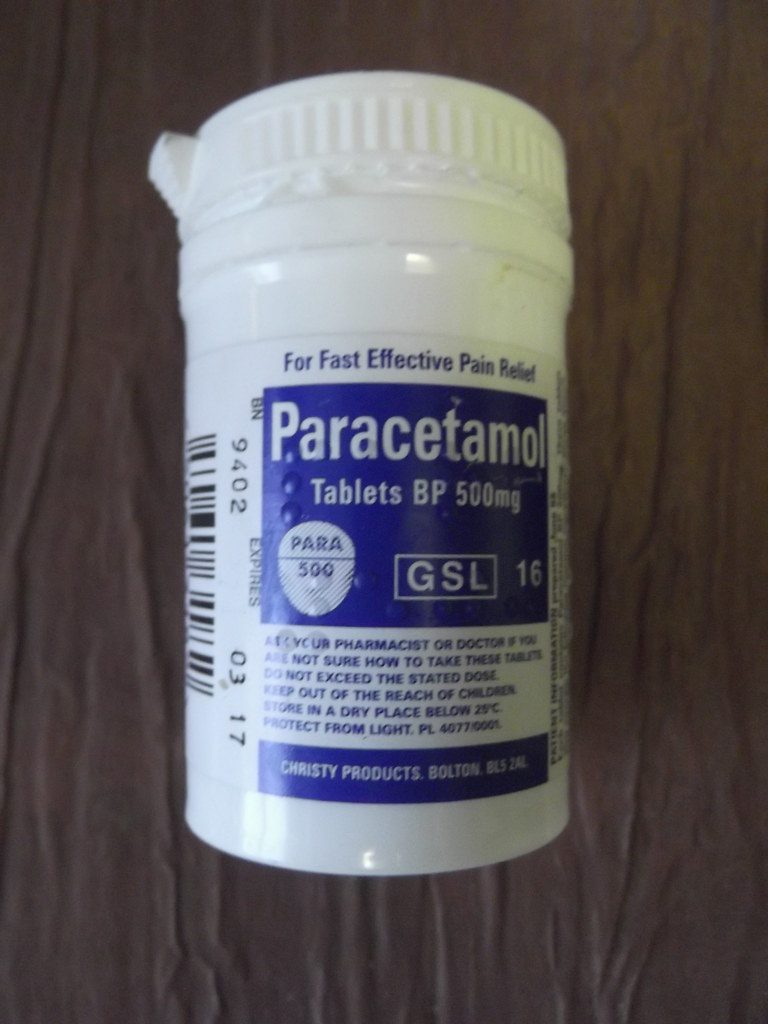
扑热息痛含有酰胺基团(-CONH-)。
Hydrolysing an amide gives: · 水解一个酰胺给出:
Acid or alkali hydrolysis splits the amide into the carboxylic acid and the amine. · 酸或碱水解把酰胺分裂成羧酸和胺。
Reducing an amide with LiAlH₄ gives: · 用 LiAlH₄ 还原一个酰胺给出:
LiAlH₄ reduces the amide C=O to give an amine. · LiAlH₄ 还原酰胺 C=O 给出一个胺。
Match each term to its meaning. · 匹配每个术语和它的含义。
Each item links the term to its correct meaning. · 每一项把术语链接到它正确的含义。
Weakly basic
- An amide is a much weaker base than an amine.
- Its nitrogen lone pair is delocalised 离域 onto the neighbouring C=O group, so it is not available to accept $\text{H}^+$.
- That same delocalisation makes the amide link flat and unusually stable.
弱碱性
- 一个酰胺是一个比胺弱得多的碱。
- 它的氮孤对电子离域到邻近的 C=O 基团上,所以它不可用来接受 $\text{H}^+$。
- 同样的离域使酰胺键平坦且异常稳定。
An amide is a much weaker base than an amine because its nitrogen lone pair is: · 一个酰胺是一个比胺弱得多的碱,因为它的氮孤对电子:
Delocalisation onto the adjacent carbonyl makes the lone pair unavailable, so the amide is barely basic. · 离域到邻近的羰基上使孤对电子不可用,所以酰胺几乎没有碱性。
The amide link in nature and materials
- The –CONH– link is the peptide bond 肽键 that joins amino acids into proteins.
- The very same link joins monomers in nylon and other polyamides 聚酰胺.
- Its stability is why proteins and nylon hold together so well.
自然和材料中的酰胺键
- –CONH– 键是把氨基酸连接成蛋白质的肽键。
- 同样的键在尼龙和其他聚酰胺中连接单体。
- 它的稳定性是为什么蛋白质和尼龙结合得如此好。
You've got it
- an amide forms from ammonia/amine + acyl chloride
- it hydrolyses to a carboxylic acid/salt (+ amine), and reduces ($\text{LiAlH}_4$) to an amine
- it is a much weaker base than an amine (lone pair delocalised onto the C=O)
- the –CONH– link is the peptide bond in proteins and the link in nylon
你掌握了
- 一个酰胺从氨/胺 + 酰氯形成
- 它水解成一个羧酸/盐(+ 胺),并还原($\text{LiAlH}_4$)成一个胺
- 它是一个比胺弱得多的碱(孤对电子离域到 C=O 上)
- –CONH– 键是蛋白质中的肽键和尼龙中的键