Thermal stability of Group 2 compounds · 第 2 族化合物的热稳定性
| English | 中文 | Pinyin · 拼音 |
|---|---|---|
| thermal stability/ˈθɜːml stəˈbɪlɪti/ | 热稳定性 | rè wěn dìng xìng |
| cation/ˈkætaɪən/ | 阳离子 | yáng lí zi |
| anion/ˈænaɪən/ | 阴离子 | yīn lí zi |
| polarisation/ˌpəʊləraɪˈzeɪʃn/ | 极化 | jí huà |
| charge density/tʃɑːdʒ ˈdensɪti/ | 电荷密度 | diàn hè mì dù |
Thermal stability 热稳定性 (Group 2)
- The thermal stability of Group 2 nitrates and carbonates increases down the group.
- The reason is how the cation 阳离子 distorts the anion 阴离子.
- A larger cation distorts less, so the compound is harder to break.
热稳定性(第 2 族)
- 第 2 族硝酸盐和碳酸盐的热稳定性(thermal stability)沿族向下增加。
- 原因是阳离子如何扭曲阴离子。
- 一个更大的阳离子扭曲更少,所以化合物更难断裂。
Group 2 thermal stability ladder · 第 2 族热稳定性阶梯
Move down Group 2 and see why carbonates become harder to decompose. · 沿第 2 族向下,看为什么碳酸盐变得更难分解。
Going down Group 2, the thermal stability of the nitrates and carbonates: · 沿第 2 族向下,硝酸盐和碳酸盐的热稳定性:
A larger cation polarises the anion less, so the compound is harder to decompose — more stable down the group. · 一个更大的阳离子极化阴离子更少,所以化合物更难分解——沿族向下更稳定。
Group 2 carbonates become more stable to heat going down the group. · 第 2 族碳酸盐沿族向下变得对热更稳定。
Larger cations distort the carbonate ion less. · 更大的阳离子更少地扭曲碳酸根离子。
Polarisation 极化
- A small cation has a high charge density 电荷密度. It pulls on the nearby anion's electrons and distorts its shape — polarisation.
- Distorting the large carbonate/nitrate anion weakens a bond inside it, so the compound decomposes more easily.
A small cation distorts the large anion's electron cloud, weakening it — polarisation
Heating limestone (calcium carbonate) in a kiln decomposes it to calcium oxide.
极化
- 一个小阳离子有一个高的电荷密度(charge density)。它拉附近阴离子的电子并扭曲它的形状——极化(polarisation)。
- 扭曲大的碳酸根/硝酸根阴离子削弱它内部的一个键,所以化合物更容易分解。
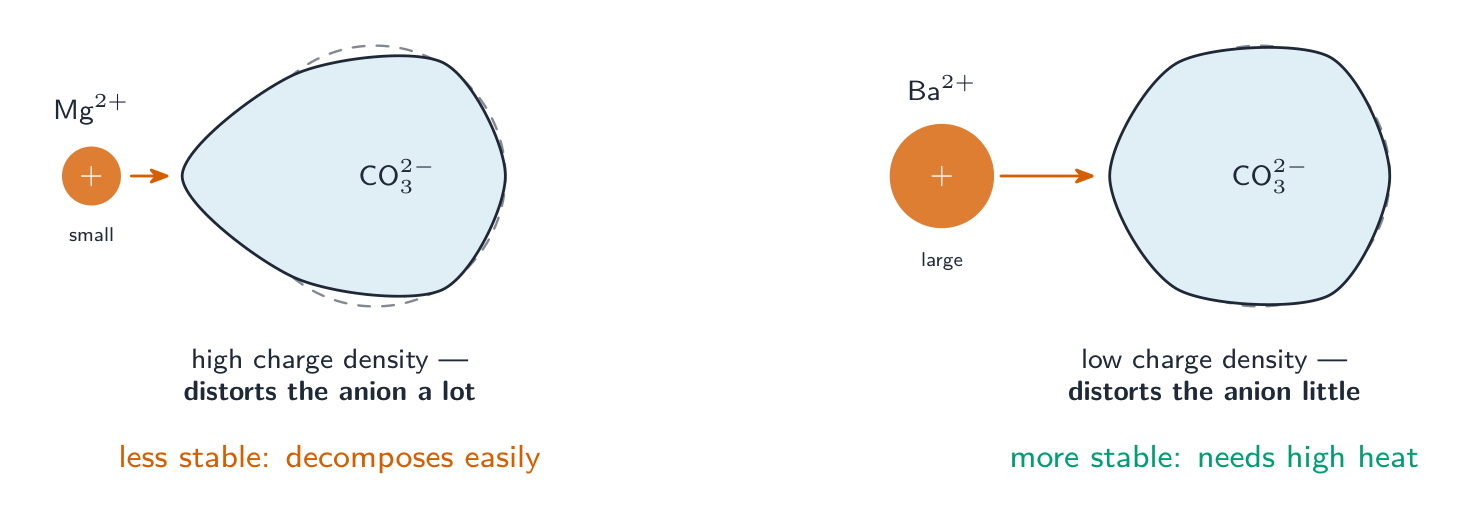
一个小阳离子扭曲大阴离子的电子云,削弱它——极化
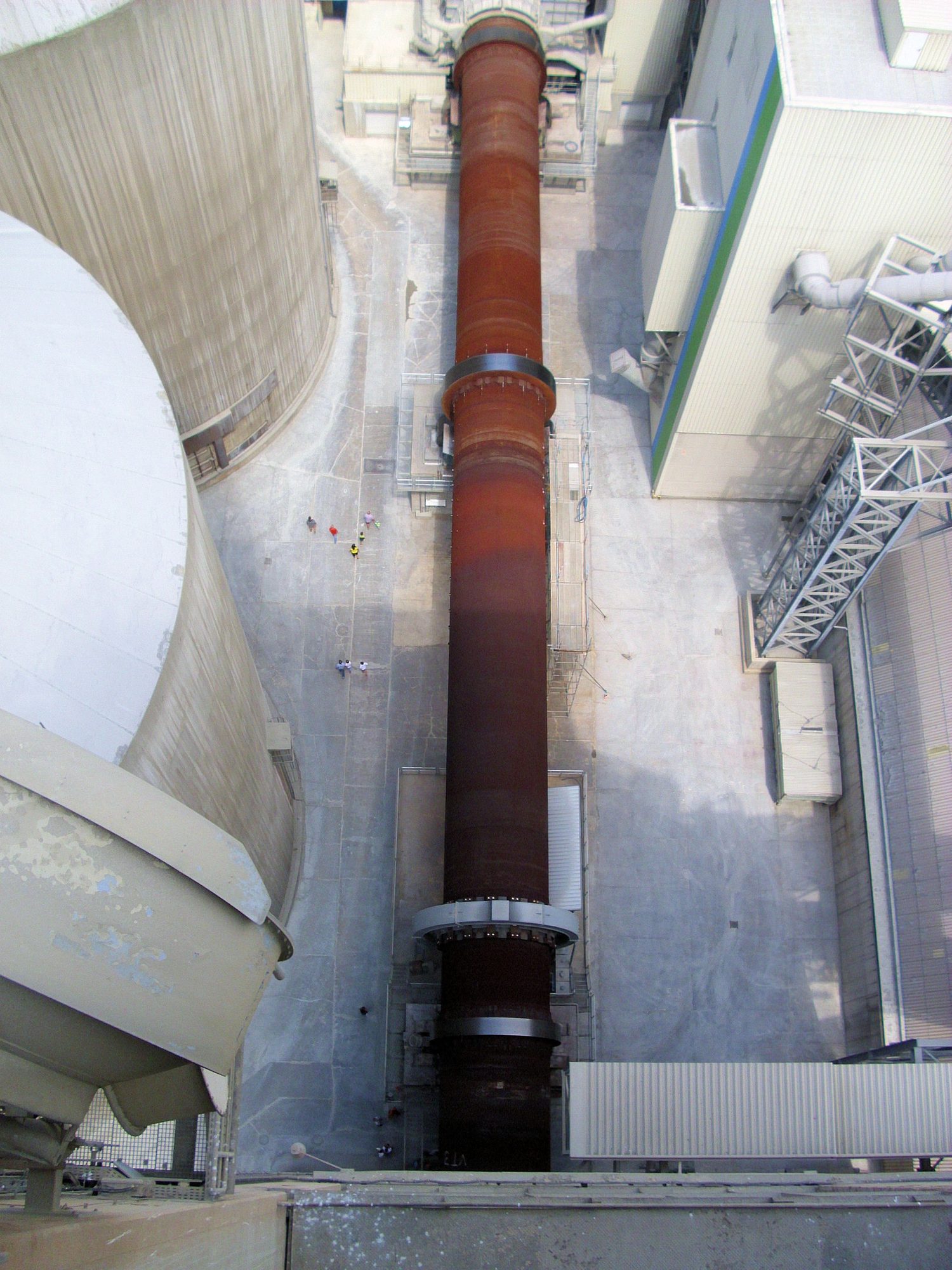
在窑中加热石灰石(碳酸钙)把它分解成氧化钙。
A small cation makes a carbonate decompose more easily because it: · 一个小阳离子使碳酸盐更容易分解,因为它:
High charge density distorts the anion, weakening it so it breaks down at a lower temperature. · 高电荷密度扭曲阴离子,削弱它,所以它在一个更低的温度分解。
Match each thermal-stability idea. · 匹配每个热稳定性概念。
Each item links the term to its correct meaning. · 每一项把术语链接到它正确的含义。
Down the group
- The cation gets larger, so its charge density drops and it polarises the anion less.
- The anion is less distorted → the compound is harder to break down → more thermally stable, needing a higher temperature.
Many metal hydroxides are insoluble and form as a gelatinous precipitate.
沿族向下
- 阳离子变得更大,所以它的电荷密度下降,它极化阴离子更少。
- 阴离子被扭曲更少 → 化合物更难分解 → 热稳定性更强,需要一个更高的温度。
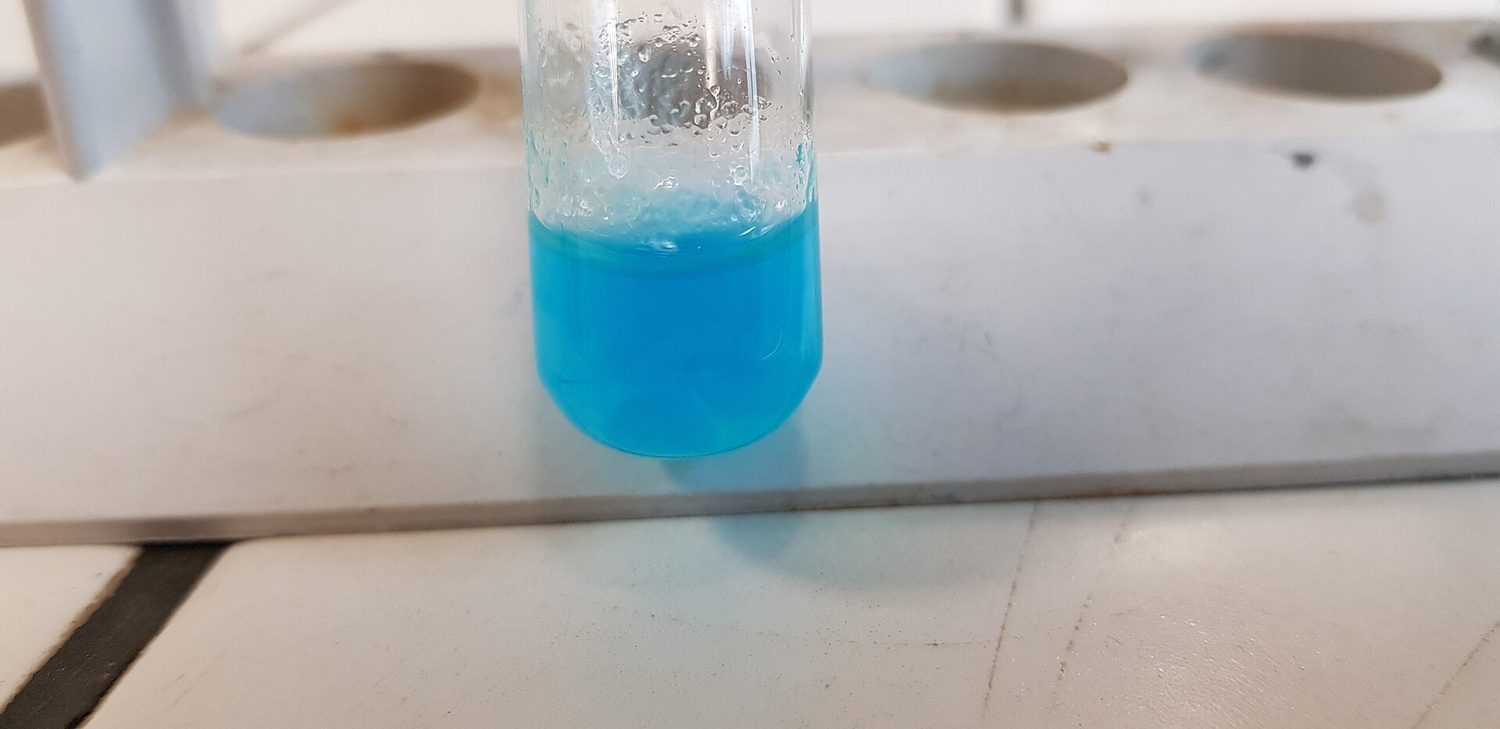
许多金属氢氧化物不溶,作为一个凝胶状沉淀形成。
A larger cation lower in the group: · 一个在族中更低的更大阳离子:
Bigger cation = lower charge density = less polarisation = more thermally stable. · 更大的阳离子 = 更低的电荷密度 = 更少的极化 = 热稳定性更强。
A more thermally stable carbonate needs a higher temperature to decompose. · 一个热稳定性更强的碳酸盐需要一个更高的温度来分解。
Greater stability means more energy is needed to break it down. · 更强的稳定性意味着需要更多能量来分解它。
Polarising power explains it
- A smaller, more charged cation polarises the carbonate ion more, so it decomposes more easily.
- Going down Group 2 the cation gets larger, so the carbonates become more thermally stable.
极化能力解释它
- 一个更小、电荷更多的阳离子更多地极化碳酸根离子,所以它更容易分解。
- 沿第 2 族向下阳离子变得更大,所以碳酸盐变得热稳定性更强。
You've got it
- thermal stability increases down Group 2 (nitrates and carbonates)
- a small cation polarises (distorts) the anion → weakens it → decomposes easily
- a larger cation polarises less → more stable → needs a higher temperature
你掌握了
- 热稳定性沿第 2 族向下增加(硝酸盐和碳酸盐)
- 一个小阳离子极化(扭曲)阴离子 → 削弱它 → 容易分解
- 一个更大的阳离子极化更少 → 更稳定 → 需要一个更高的温度