Rate of reaction · 反应速率
| English | 中文 | Pinyin · 拼音 |
|---|---|---|
| rate of reaction/reɪt ɒv rɪˈækʃn/ | 反应速率 | fǎn yìng sù lǜ |
| effective collision/ɪˈfektɪv kəˈlɪʒn/ | 有效碰撞 | yǒu xiào pèng zhuàng |
| concentration/ˌkɒnsənˈtreɪʃn/ | 浓度 | nóng dù |
| orientation/ˌɔːrɪənˈteɪʃn/ | 取向 | qǔ xiàng |
How fast, and why
- The rate of reaction 反应速率 is how fast reactants turn into products.
- For particles to react, they must collide.
- But not every collision works.
多快,以及为什么
- 反应速率(rate of reaction)是反应物变成产物有多快。
- 为了让颗粒反应,它们必须碰撞(collide)。
- 但不是每次碰撞都起作用。
Rate of reaction is measured as the: · 反应速率测量为:
Rate is how much the concentration (or amount) changes in each unit of time. · 速率是浓度(或量)在每个单位时间中变化多少。
The rate of reaction can be found from the ______ of a concentration-time graph. · 反应速率可以从一个浓度-时间图的______找到。
A steeper gradient means a faster rate. · 一个更陡的斜率意味着一个更快的速率。
Effective collisions 有效碰撞
- An effective collision has enough energy and the correct direction — so a reaction happens.
- A non-effective collision lacks energy or hits at the wrong angle — nothing happens.
- The rate depends on the frequency of effective collisions per second.
At higher temperature the curve spreads to the right, so a larger fraction of molecules can react
有效碰撞
- 一次有效碰撞(effective collision)有足够的能量且正确的方向——所以一个反应发生。
- 一次无效碰撞缺少能量或以错误的角度撞击——什么都不发生。
- 速率取决于每秒有效碰撞的频率。
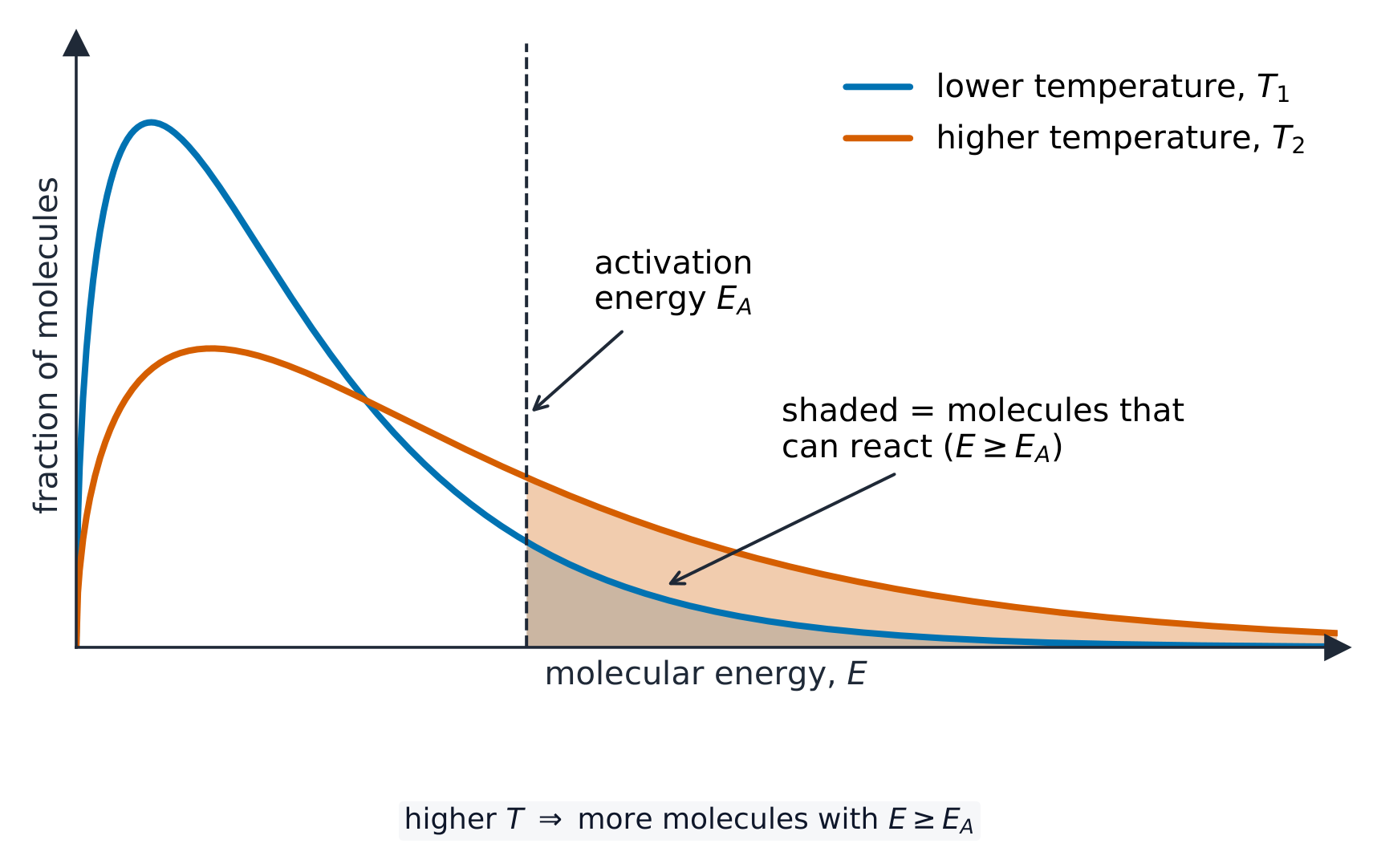
在更高的温度下曲线向右扩展,所以更大比例的分子能反应
Rate of reaction · 反应速率
[A] = [A]₀·bᵗ
Reactant concentration falls over time as it's used up. · 反应物浓度随着它被用掉而随时间下降。
An effective collision is one that: · 一次有效碰撞是这样一次,它:
A collision only reacts with sufficient energy and the right orientation. · 一次碰撞只在足够的能量和正确的取向下反应。
The rate of reaction depends on the: · 反应速率取决于:
More effective collisions per second means a faster rate. · 每秒更多有效碰撞意味着更快的速率。
Match each rate idea to its meaning. · 把每个速率概念匹配到它的含义。
Each item links the term to its correct meaning. · 每一项把术语链接到它正确的含义。
Concentration 浓度 and pressure
- Increasing concentration (or gas pressure) packs particles closer together.
- They collide more often, so there are more effective collisions per second — the rate rises.
A catalytic converter speeds up reactions that clean a car's exhaust gases
浓度和压强
- 增加浓度(或气体压强)把颗粒挤得更近。
- 它们碰撞得更频繁,所以每秒有更多有效碰撞——速率上升。
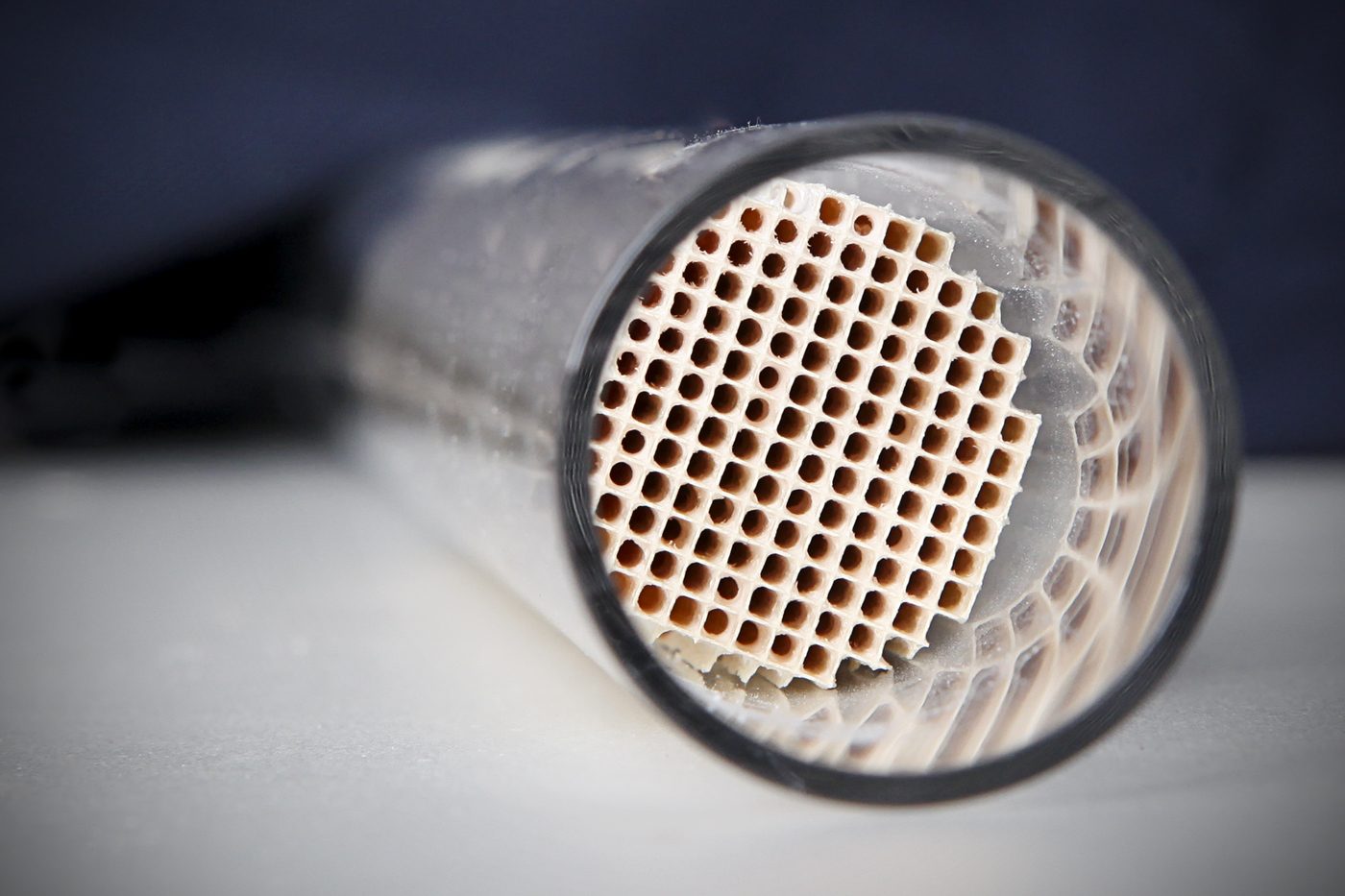
一个催化转化器加速清洁汽车废气的反应
Increasing the concentration of a reactant speeds up the reaction because: · 增加一个反应物的浓度加速反应,因为:
More particles in the same volume collide more frequently, raising the rate. · 同一体积中更多的颗粒碰撞得更频繁,提高速率。
Measuring rate in the lab
- Follow a reaction by gas volume, mass loss, or a colour/conductivity change over time.
- The initial rate is the gradient of the tangent at the start.
More particles in the same volume collide more often, so the rate rises
在实验室测量速率
- 通过气体体积、质量损失或随时间的颜色/电导率变化来跟踪一个反应。
- 初始速率是开始时切线的斜率。
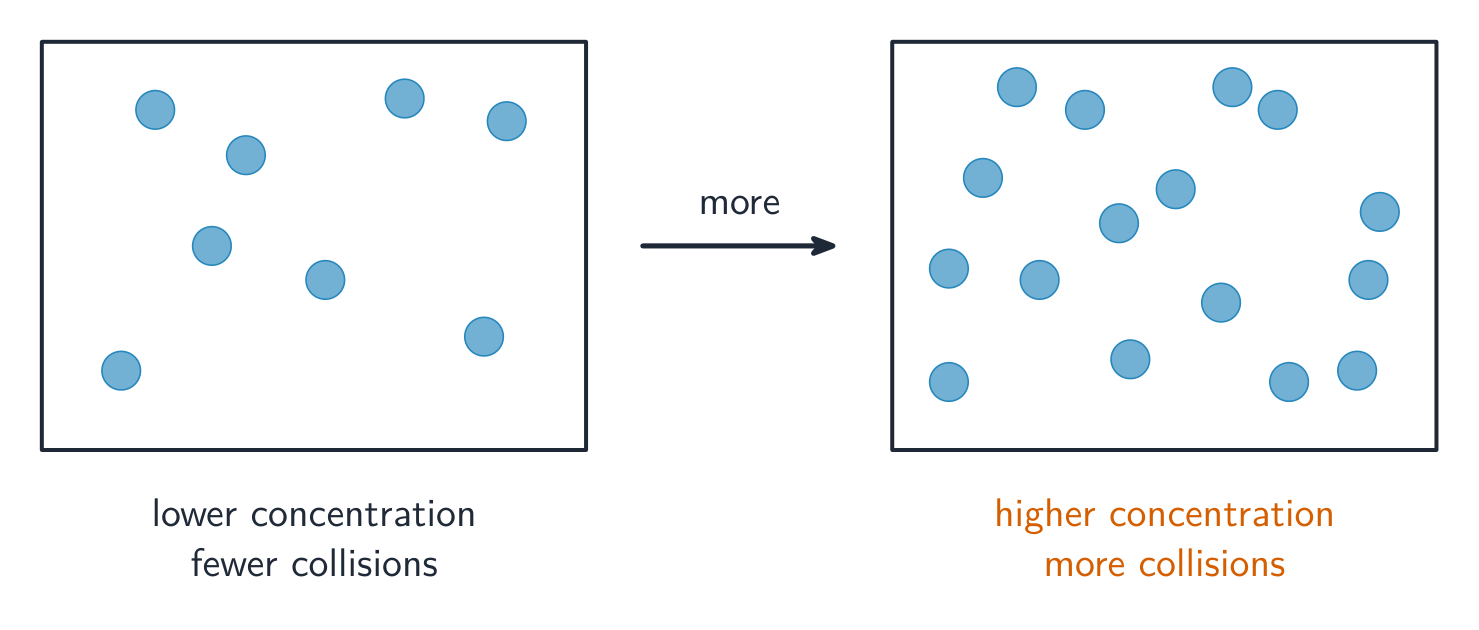
同一体积中更多的颗粒碰撞得更频繁,所以速率上升
You've got it
- rate = change in concentration (or amount) per unit time
- an effective collision needs enough energy + correct orientation 取向
- rate depends on the frequency of effective collisions
- higher concentration/pressure → more frequent collisions → faster rate
你掌握了
- 速率 = 每单位时间浓度(或量)的变化
- 一次有效碰撞需要足够的能量 + 正确的取向
- 速率取决于有效碰撞的频率
- 更高的浓度/压强 → 更频繁的碰撞 → 更快的速率