Enthalpy change and reaction pathways · 焓变和反应途径
| English | 中文 | Pinyin · 拼音 |
|---|---|---|
| enthalpy change/enˈθælpi tʃeɪndʒ/ | 焓变 | hán biàn |
| exothermic/eɡzəˈðɜːmɪk/ | 放热 | fàng rè |
| endothermic/ˌendəʊˈθɜːmɪk/ | 吸热 | xī rè |
| activation energy/ˌæktɪˈveɪʃn ˈenədʒi/ | 活化能 | huó huà néng |
| standard conditions/ˈstændəd kənˈdɪʃnz/ | 标准条件 | biāo zhǔn tiáo jiàn |
| combustion/kəmˈbʌstʃn/ | 燃烧 | rán shāo |
| neutralisation/ˌnjuːtrəlaɪˈzeɪʃn/ | 中和 | zhōng hé |
Enthalpy change 焓变, ΔH
- Every reaction takes in or gives out energy.
- That energy change (at constant pressure) is the enthalpy change, $\Delta H$.
- Its sign tells you the direction of energy flow.
焓变,ΔH
- 每个反应都吸收或放出能量。
- 那个能量变化(在恒定压力下)是焓变(enthalpy change),$\Delta H$。
- 它的符号告诉你能量流动的方向。
A reaction that releases heat to the surroundings has a negative value of . · 一个把热释放给周围环境的反应有一个负值的。
Exothermic reactions have ΔH < 0. · 放热反应有 ΔH < 0。
Exothermic 放热 vs endothermic 吸热
- Exothermic: gives out heat → products lower than reactants → $\Delta H < 0$.
- Endothermic: takes in heat → products higher → $\Delta H > 0$.
- The "hill" between them is the activation energy 活化能 — the least energy needed to react.
放热对比吸热
- 放热(exothermic):放出热 → 产物比反应物低 → $\Delta H < 0$。
- 吸热(endothermic):吸收热 → 产物更高 → $\Delta H > 0$。
- 它们之间的"山"是活化能(activation energy)——反应所需的最少能量。

Reaction energy profiles · 反应能量图
Ea = barrier · ΔH = products − reactants · Ea = 能垒 · ΔH = 生成物 − 反应物
The hump is the activation energy; whether products sit below or above reactants sets ΔH. · 驼峰是活化能;产物坐在反应物下面还是上面决定 ΔH。
In an exothermic reaction: · 在一个放热反应中:
Exothermic reactions release heat; products sit below reactants, so ΔH is negative. · 放热反应释放热;产物坐在反应物下面,所以 ΔH 是负的。
The activation energy is: · 活化能是:
Activation energy is the height of the "hill" — the minimum energy needed to start the reaction. · 活化能是"山"的高度——开始反应所需的最少能量。
Standard conditions 标准条件 and types
- Values are compared under standard conditions ($298\ \text{K}$, $101\ \text{kPa}$), shown by $^{\ominus}$.
| Symbol | Enthalpy change of |
|---|---|
| $\Delta H_f^{\ominus}$ | formation — 1 mole of compound from its elements |
| $\Delta H_c^{\ominus}$ | combustion 燃烧 — 1 mole burns completely in oxygen |
| $\Delta H_{\text{neut}}^{\ominus}$ | neutralisation 中和 — 1 mole of water from acid + alkali |
An instant cold pack uses an endothermic reaction that takes in heat
标准条件和类型
- 数值在标准条件($298\ \text{K}$,$101\ \text{kPa}$)下比较,用 $^{\ominus}$ 表示。
| 符号 | 焓变 |
|---|---|
| $\Delta H_f^{\ominus}$ | 生成(formation)——1 摩尔化合物由其元素生成 |
| $\Delta H_c^{\ominus}$ | 燃烧(combustion)——1 摩尔在氧气中完全燃烧 |
| $\Delta H_{\text{neut}}^{\ominus}$ | 中和(neutralisation)——1 摩尔水由酸 + 碱生成 |
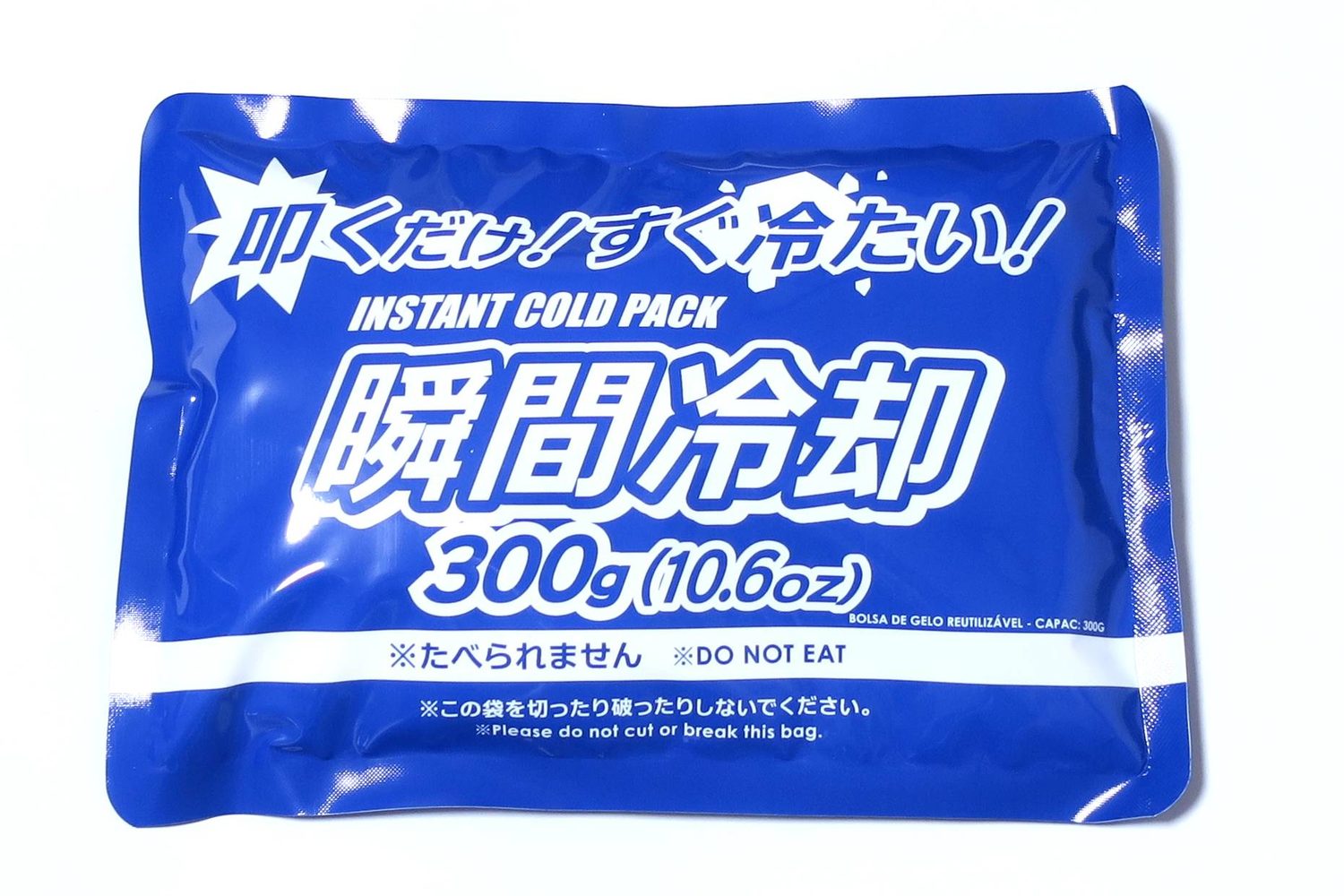
一个速冷袋使用一个吸收热的吸热反应
The standard enthalpy change of combustion is for: · 标准燃烧焓变是针对:
ΔHc is per mole of substance burned completely; ΔHf is formation from elements; ΔH_neut makes one mole of water. · ΔHc 是每摩尔物质完全燃烧;ΔHf 是由元素生成;ΔH_neut 生成一摩尔水。
Standard conditions for enthalpy values are: · 焓值的标准条件是:
Standard conditions are 298 K and 101 kPa, with each substance in its normal state (symbol ⊖). · 标准条件是 298 K 和 101 kPa,每种物质处于它的正常状态(符号 ⊖)。
Mind the sign of ΔH
- Exothermic reactions release heat and have a negative ΔH; endothermic are positive.
- ΔH is measured per mole and quoted under standard conditions.
Exothermic reactions release energy; endothermic reactions take it in
注意 ΔH 的符号
- 放热反应释放热,有一个负的 ΔH;吸热是正的。
- ΔH 按每摩尔测量,在标准条件下给出。

放热反应释放能量;吸热反应吸收它
Match each enthalpy term to its meaning. · 把每个焓术语匹配到它的含义。
Each item links the term to its correct meaning. · 每一项把术语链接到它正确的含义。
You've got it
- exothermic $\Delta H < 0$ (products lower); endothermic $\Delta H > 0$ (products higher)
- activation energy = the energy hill, the least needed to react
- standard conditions: 298 K, 101 kPa ($^{\ominus}$)
- types: formation ($\Delta H_f$), combustion ($\Delta H_c$), neutralisation ($\Delta H_{\text{neut}}$)
你掌握了
- 放热 $\Delta H < 0$(产物更低);吸热 $\Delta H > 0$(产物更高)
- 活化能 = 能量山,反应所需的最少能量
- 标准条件:298 K,101 kPa($^{\ominus}$)
- 类型:生成($\Delta H_f$)、燃烧($\Delta H_c$)、中和($\Delta H_{\text{neut}}$)