Physical properties from structure · 结构决定的物理性质
| English | 中文 | Pinyin · 拼音 |
|---|---|---|
| conductivity/kɒndəkˈtɪvɪti/ | 电导率 | diàn dǎo lǜ |
| solubility/ˌsɒljuːˈbɪlɪti/ | 溶解度 | róng jiě dù |
| molten/ˈməʊltn/ | 熔融 | róng róng |
| soluble/ˈsɒljuːbl/ | 可溶 | kě róng |
| insoluble/ɪnˈsɒljuːbl/ | 不溶 | bù róng |
Structure decides everything
- The structure decides a substance's physical properties.
- Melting point, conductivity 电导率 and solubility 溶解度 all follow from the bonding.
- You can even work backwards to identify an unknown.
结构决定一切
- 结构 决定一种物质的物理性质。
- 熔点、电导率和溶解度都由键合决定。
- 你甚至可以 倒推 来鉴别一个未知物。
Structure-property lab · 结构与性质实验
Link a material property to the structure that causes it. · 将材料性质与其成因结构联系起来。
Simple molecular substances have low melting points because the forces between molecules are weak. · 简单分子物质熔点低是因为分子间作用力弱。
The covalent bonds within molecules are strong. · 分子内部的共价键很强。
Melting and boiling points
- High when strong forces (ionic, covalent or metallic) must be broken.
- Low when only weak intermolecular forces break (simple molecular).
Quartz is a giant covalent structure of silicon and oxygen
熔点和沸点
- 当必须断开强力(离子、共价或金属)时 高。
- 当只有弱的 分子间 力断开时 低(简单分子)。
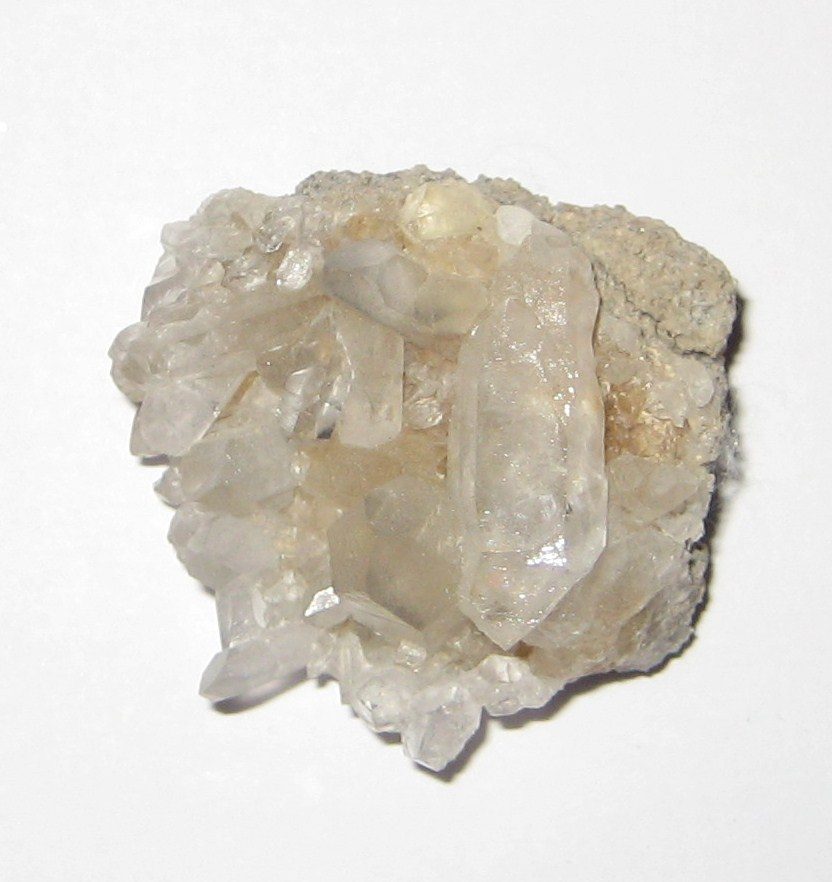
石英是一个硅和氧的巨型共价结构
A substance has a high melting point when: · 当物质具有高熔点时:
Breaking strong bonds needs lots of energy, giving a high melting/boiling point; weak forces give a low one. · 破坏强键需要大量能量,导致高熔/沸点;弱作用力导致低熔/沸点。
Match each structure to its properties. · 将每种结构与其性质匹配。
Properties come from structure: strong giant lattices melt high; simple molecules melt low. · 性质源于结构:强大多原子晶格熔点高;简单分子熔点低。
Conductivity and solubility
- Conductivity needs charged particles that can move:
- ionic solids conduct only when molten 熔融 or dissolved (ions free);
- metals conduct (delocalised electrons); graphite conducts too.
- Solubility: ionic solids are usually soluble 可溶 in water; molecular and giant-covalent solids are usually insoluble 不溶.
电导率和溶解度
- 电导率 需要 能移动的带电粒子:
- 离子固体只在 熔融或溶解 时导电(离子自由);
- 金属导电(离域电子);石墨 也导电。
- 溶解度:离子固体在水中通常 可溶;分子和巨型共价固体通常 不可溶。
An ionic solid conducts electricity: · 离子固体导电的情况是:
The ions are fixed in the solid lattice; only when molten or dissolved can they move and carry charge. · 离子在固态晶格中被固定;只有在熔融或溶解状态下才能移动并传导电荷。
Graphite conducts electricity because: · 石墨能导电是因为:
Graphite has delocalised electrons between its layers, so it conducts even though it is a non-metal. · 石墨层间有离域电子,因此它能导电,尽管它是非金属。
Identifying an unknown
- From a substance's melting point, conductivity and solubility, you can deduce its structure and bonding.
鉴别一个未知物
- 从一种物质的 熔点、电导率 和 溶解度,你可以推断它的结构和键合。
A solid with a very high melting point that does not conduct and is insoluble is most likely: · 一种熔点极高、不导电且不溶于水的固体最可能是:
Very high mp + no conductivity (not graphite) + insoluble points to a giant covalent network like diamond or SiO₂. · 极高熔点 + 不导电(非石墨)+ 不溶指向巨型共价网络,如金刚石或 SiO₂。
You've got it
- high mp/bp = strong forces (ionic/covalent/metallic); low = weak intermolecular (simple molecular)
- conduct: ionic only when molten/dissolved; metals + graphite always
- ionic usually soluble; molecular & giant covalent insoluble
- use mp + conductivity + solubility to identify the structure
你掌握了
- 高熔点/沸点 = 强力(离子/共价/金属);低 = 弱的分子间力(简单分子)
- 导电:离子只在 熔融/溶解 时;金属 + 石墨 总是
- 离子通常 可溶;分子和巨型共价 不可溶
- 用熔点 + 电导率 + 溶解度来 鉴别结构