Marketing strategy and Ansoff · 营销策略和安索夫矩阵
| English | 中文 | Pinyin · 拼音 |
|---|---|---|
| Ansoff matrix/ˈænsɒf ˈmeɪtrɪks/ | 安索夫矩阵 | ān suǒ fū jǔ zhèn |
| diversification/daɪˌvɜːsɪfɪˈkeɪʃn/ | 多元化 | duō yuán huà |
| market penetration/ˈmɑːkɪt ˌpenɪˈtreɪʃn/ | 市场渗透 | shì chǎng shèn tòu |
| product development/ˈprɒdʌkt dɪˈveləpmənt/ | 产品开发 | chǎn pǐn kāi fā |
| market development/ˈmɑːkɪt dɪˈveləpmənt/ | 市场开发 | shì chǎng kāi fā |
| risk appetite/rɪsk ˈæpɪtaɪt/ | 风险偏好 | fēng xiǎn piān hǎo |
Four ways to grow
- A business that wants to grow faces a choice: sell more of what it has, or branch into something new?
- The Ansoff matrix 安索夫矩阵 lays out the four options — and their rising risk.
增长的四种方式
- 一个想要增长的企业面对一个选择:卖更多它已有的,还是分支到新的东西?
- 安索夫矩阵(Ansoff matrix)列出这四个选择——以及它们上升的风险。
Ansoff strategy lab · 安索夫战略实验室
Sort growth choices by product and market risk. · 根据产品和市场风险对增长选择进行分类。
The Ansoff matrix crosses products with ______. · 安索夫矩阵将产品与______交叉。
Products (existing/new) against markets (existing/new). · 产品(现有/新)与市场(现有/新)的对比。
The Ansoff matrix
- It crosses products (existing / new) with markets (existing / new), giving four strategies.
Risk rises as you move away from existing products and markets towards diversification 多元化.
安索夫矩阵
- 它把产品(现有/新)与市场(现有/新)交叉,给出四个战略。
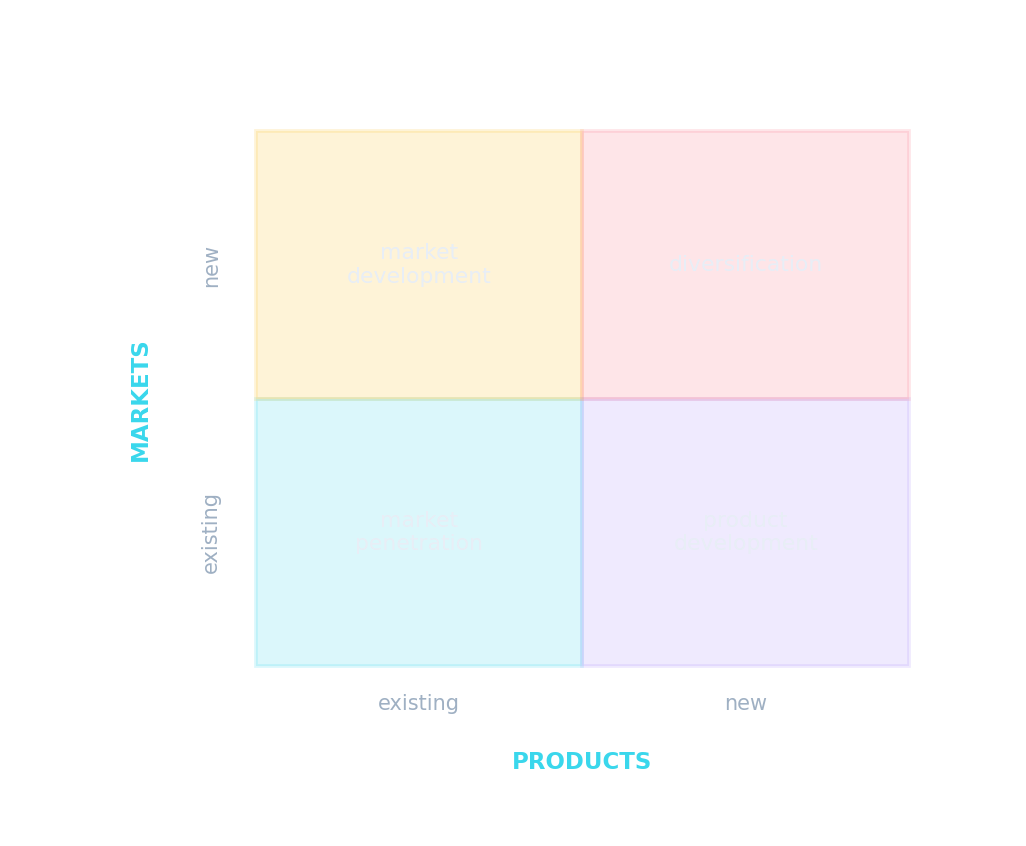
随着你远离现有产品和市场朝向多元化,风险上升。
Selling more of an existing product to its existing market is: · 向现有市场销售更多现有产品是:
Penetration deepens sales in the current market — lowest risk. · 渗透加深当前市场的销售——风险最低。
Launching a new product into a new market is: · 将新产品推向新市场是:
New product + new market = diversification, the highest-risk option. · 新产品 + 新市场 = 多元化,风险最高的选项。
Taking an existing product into a new market is: · 将现有产品引入新市场是:
Existing product + new market = market development. · 现有产品 + 新市场 = 市场发展。
The four strategies
- Market penetration 市场渗透: sell more existing products to existing markets. Lowest risk.
- Product development 产品开发: new products for existing markets.
- Market development 市场开发: existing products into new markets.
- Diversification: new products and new markets. Highest risk.
A supermarket: retailers compete on price, range and customer experience
四个战略
- 市场渗透(market penetration):向现有市场卖更多现有产品。最低风险。
- 产品开发(product development):给现有市场的新产品。
- 市场开发(market development):现有产品进入新市场。
- 多元化(diversification):新产品和新市场。最高风险。

一个超市:零售商在价格、范围和顾客体验上竞争
Diversification is generally the highest-risk Ansoff strategy. · 多元化通常是风险最高的安索夫战略。
It moves the firm into both new products and new markets. · 它使公司同时进入新产品和新市场。
Choosing a strategy
- Lower-risk strategies (penetration) suit cautious firms or tough times.
- Diversification can spread risk across markets, but stretches the firm into the unknown.
Higher reward, higher risk. Diversification offers the biggest growth but the greatest chance of failure — the firm leaves behind everything it already knows. Match the strategy to the firm's risk appetite 风险偏好.
Ansoff's matrix: four growth strategies, with risk rising to the bottom-right
选择一个战略
- 更低风险的战略(渗透)适合谨慎的企业或艰难的时期。
- 多元化能把风险分散到各市场,但把企业拉伸到未知。
更高回报,更高风险。 多元化提供最大的增长但失败的最大机会——企业抛下它已经知道的一切。让战略匹配企业的风险偏好。
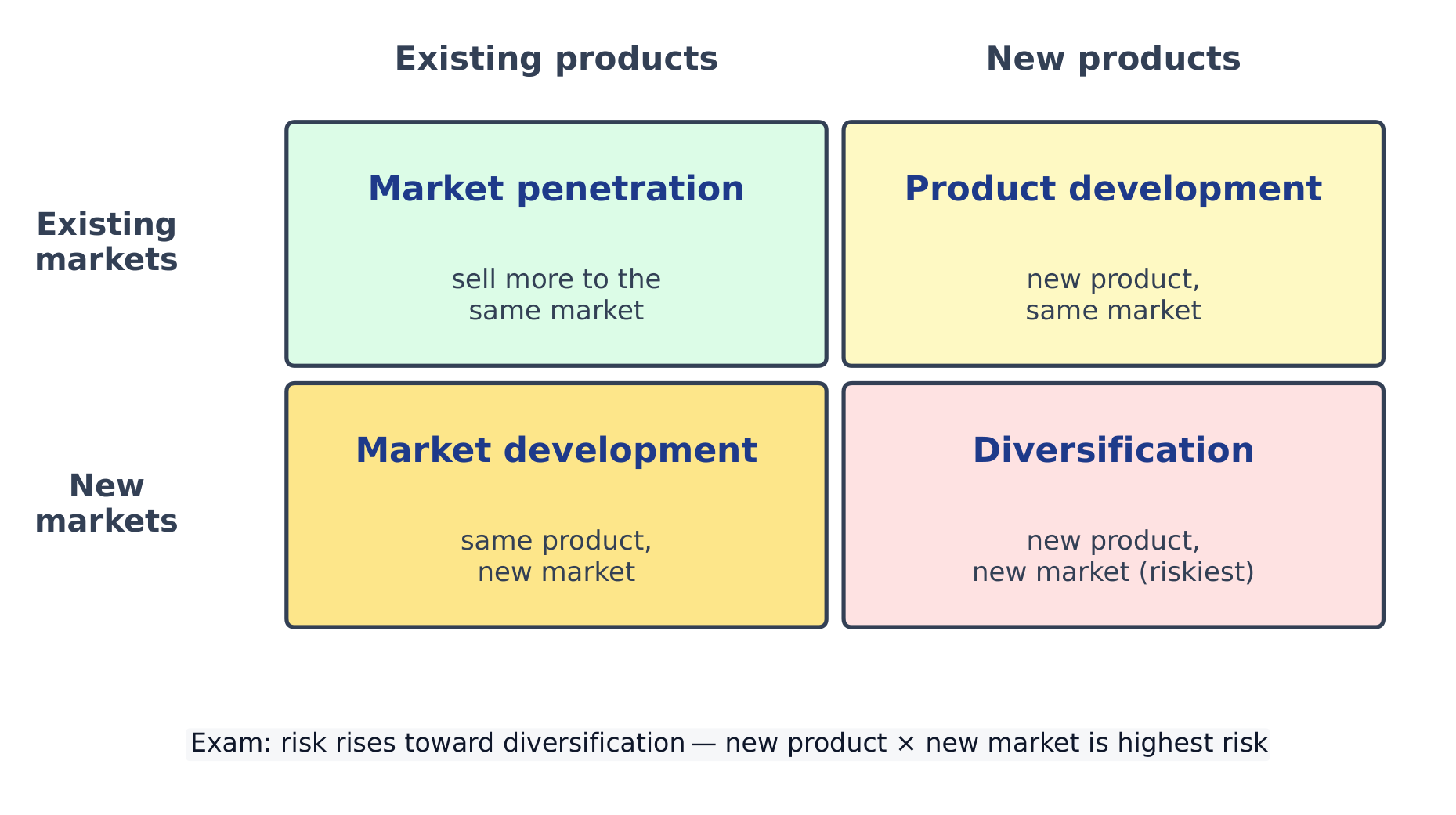
安索夫的矩阵:四个增长战略,风险向右下上升
You've got it
- the Ansoff matrix crosses products (existing/new) with markets (existing/new)
- four strategies: penetration, product development, market development, diversification
- risk rises towards diversification — match strategy to risk appetite
你掌握了
- 安索夫矩阵把产品(现有/新)与市场(现有/新)交叉
- 四个战略:渗透、产品开发、市场开发、多元化
- 风险上升朝向多元化——让战略匹配风险偏好