Budgets · 预算
| English | 中文 | Pinyin · 拼音 |
|---|---|---|
| budget/ˈbʌdʒɪt/ | 预算 | yù suàn |
| income/ˈɪŋkʌm/ | 收入 | shōu rù |
| expenditure/ekˈspendɪtʃə/ | 支出 | zhī chū |
| variance analysis/ˈveərɪəns əˈnæləsɪs/ | 差异分析 | chā yì fēn xī |
| variance/ˈveərɪəns/ | 差异 | chā yì |
| favourable/ˈfeɪvərəbl/ | 有利 | yǒu lì |
| adverse/ædˈvɜːs/ | 不利 | bù lì |
| inflexible/ɪnˈfleksɪbl/ | 缺乏弹性 | quē fá tán xìng |
Planning with numbers
- "Spend sensibly" is useless advice without a target. Businesses plan their finances with budgets 预算.
- A budget turns objectives into concrete financial targets — and a way to check progress.
用数字规划
- 没有一个目标,"明智地花钱"是无用的建议。企业用预算(budgets)规划他们的财务。
- 一个预算把目标变成具体的财务指标——以及一种检查进展的方式。
Budget control cycle · 预算控制周期
Follow how a budget becomes a control system, not just a number. · 了解预算如何成为控制系统,而不仅仅是一个数字。
A budget is: · 预算是:
A budget plans expected income, spending or profit. · 预算规划预期的收入、支出或利润。
What a budget is
- A budget is a financial plan for the future: expected income 收入, spending, or profit.
- Common types: a sales/revenue budget, an expenditure 支出 budget, and a profit budget.
The break-even point is where total revenue equals total cost
一个预算是什么
- 一个预算是一个未来的财务计划:预期的收入、支出或利润。
- 常见类型:一个销售/收入预算、一个支出预算和一个利润预算。
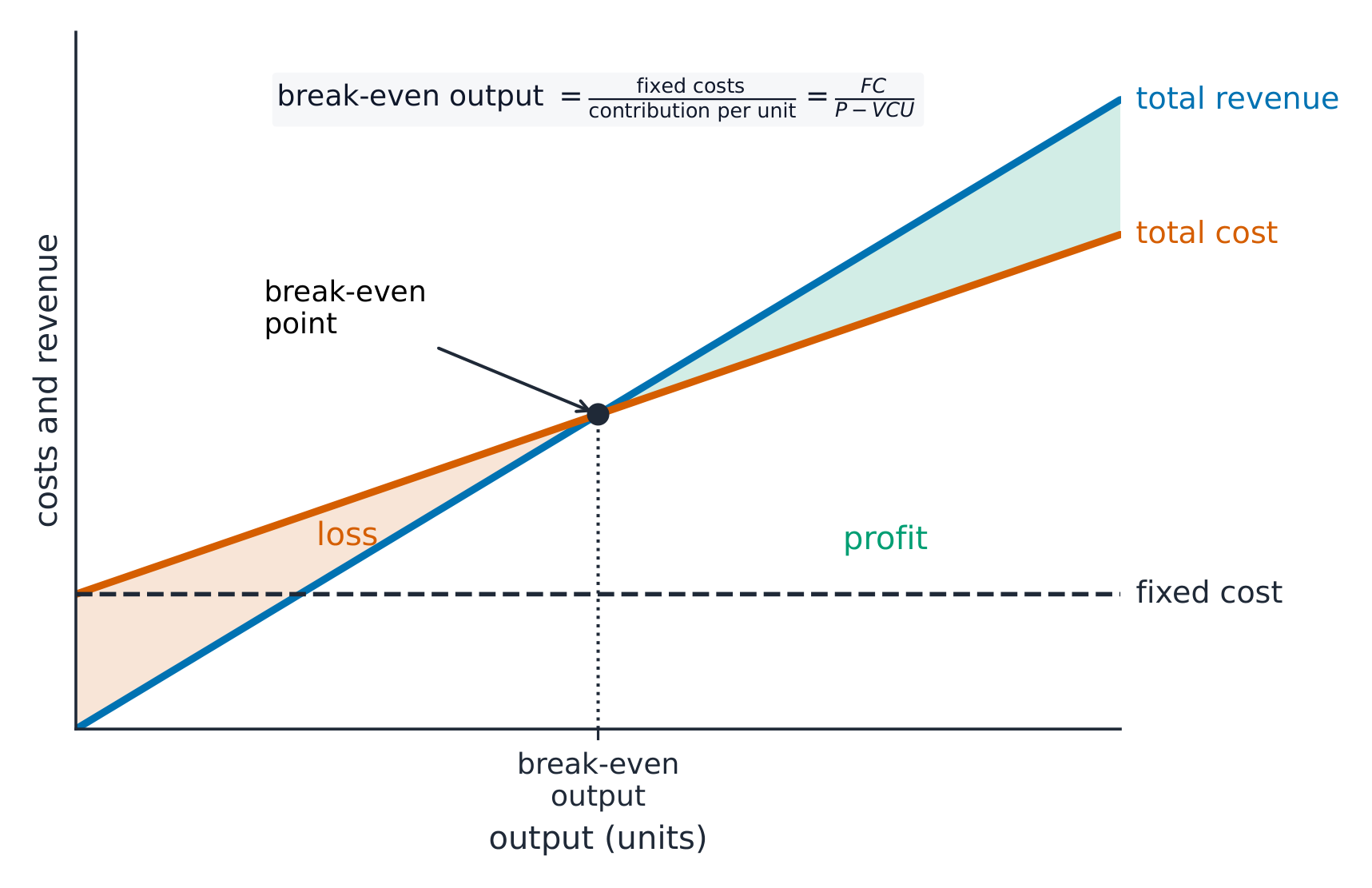
盈亏平衡点是总收入等于总成本之处
Budgeted cost is 4,000 and actual cost is 4,300. What is the size of the variance? · 预算成本为4,000,实际成本为4,300。差异大小是多少?
Variance = |4300 − 4000| = 300 (adverse, as cost rose). · 差异 = |4300 − 4000| = 300(不利,因为成本上升)。
Actual sales above the budgeted figure is a variance that is: · 实际销售额高于预算金额的差异是:
Higher-than-budgeted revenue is a favourable variance. · 高于预算的收入是有利差异。
A variance where the actual result is worse than budgeted is called . · 实际结果比预算差一点的差异称为。
Adverse = worse than budget; favourable = better. · Adverse = 比预算差;favourable = 比预算好。
Variance analysis 差异分析
- A variance 差异 is the difference between the budgeted and the actual figure.
- Favourable 有利: better than budget (higher revenue, lower cost). Adverse 不利: worse than budget.
Worked example. Budgeted cost 5,000; actual cost 5,600. Variance = 600 adverse (costs were higher than planned). Budgeted sales 8,000; actual 8,500 → 500 favourable.
差异分析
- 一个差异(variance)是预算的数字与实际的数字之间的差。
- 有利(favourable):比预算更好(更高的收入、更低的成本)。不利(adverse):比预算更差。
例题。 预算成本 5,000;实际成本 5,600。差异 = 600 不利(成本比计划的高)。预算销售 8,000;实际 8,500 → 500 有利。
Which are benefits of budgeting? (Select all that apply.) · 预算化有哪些好处?(选择所有适用项。)
Budgets aid planning, control and motivation, but cannot guarantee profit. · 预算有助于计划、控制和激励,但不能保证利润。
Why budgets help
- They aid planning, control and motivation (clear targets).
- But they can be inflexible 缺乏弹性 and may demotivate if set unrealistically.
A favourable variance isn't always good news. Spending far below budget might mean under-investment (e.g. skipping maintenance) that causes problems later. Always ask why a variance arose.
为什么预算有帮助
- 它们帮助规划、控制和激励(清晰的目标)。
- 但它们能不灵活,且如果设得不现实可能使人失去动力。
一个有利的差异不总是好消息。 远低于预算的支出可能意味着投资不足(例如跳过维护),后来造成问题。总是问差异为什么产生。
You've got it
- a budget is a financial plan: expected income, spending or profit
- a variance = budgeted − actual; favourable (better) or adverse (worse)
- budgets aid planning, control, motivation — but can be inflexible
你掌握了
- 一个预算是一个财务计划:预期的收入、支出或利润
- 一个差异 = 预算 − 实际;有利(更好)或不利(更差)
- 预算帮助规划、控制、激励——但能不灵活