Training and the workforce · 培训与劳动力
| English | 中文 | Pinyin · 拼音 |
|---|---|---|
| productivity/ˌprɒdəkˈtɪvɪti/ | 生产率 | shēng chǎn lǜ |
| induction/ɪnˈdʌkʃn/ | 入职培训 | rù zhí péi xùn |
| on-the-job/ɒnðə dʒɒb/ | 在岗培训 | zài gǎng péi xùn |
| off-the-job/ɒf ðə dʒɒb/ | 脱岗培训 | tuō gǎng péi xùn |
| motivation/ˌməʊtɪˈveɪʃn/ | 激励 | jī lì |
| labour productivity/ˈleɪbə ˌprɒdəkˈtɪvɪti/ | 劳动生产率 | láo dòng shēng chǎn lǜ |
| labour turnover/ˈleɪbə ˈtɜːnəʊvə/ | 员工流失率 | yuán gōng liú shī lǜ |
| investment/ɪnˈvestmənt/ | 投资 | tóu zī |
Turning recruits into performers
- Hiring someone is only the beginning — a new employee rarely performs at their best on day one.
- Training turns potential into productivity 生产率, and keeps skills sharp as the business changes.
把新招的人变成表现者
- 雇用某人只是开始——一个新员工很少在第一天就发挥到最好。
- 培训(training)把潜力变成生产力,并随着企业变化保持技能锐利。
Human resources decision lab · 人力资源决策实验室
Classify HR actions by the job they do inside the workforce. · 根据其在劳动力中承担的工作对人力资源行动进行分类。
Training that introduces a new employee to the job and workplace is: · 帮助新员工了解工作和工作场所的培训是:
Induction settles a new starter into the role and organisation. · 入职帮助新员工适应角色和组织。
Learning a job while doing it, guided by a colleague, is: · 在同事指导下边做边学工作是:
On-the-job training happens at the workplace during work. · 在职培训在工作期间于工作场所进行。
Types of training
- Induction 入职培训: introduces a new employee to the job, people and procedures.
- On-the-job 在岗培训: learning while working, guided by a colleague.
- Off-the-job 脱岗培训: training away from the workplace (courses, college).
Three kinds of training: induction, on-the-job and off-the-job
培训的类型
- 入职培训(induction):把一个新员工介绍给工作、人员和程序。
- 在职(on-the-job):在工作时学习,由一个同事指导。
- 脱产(off-the-job):在工作场所之外的培训(课程、学院)。
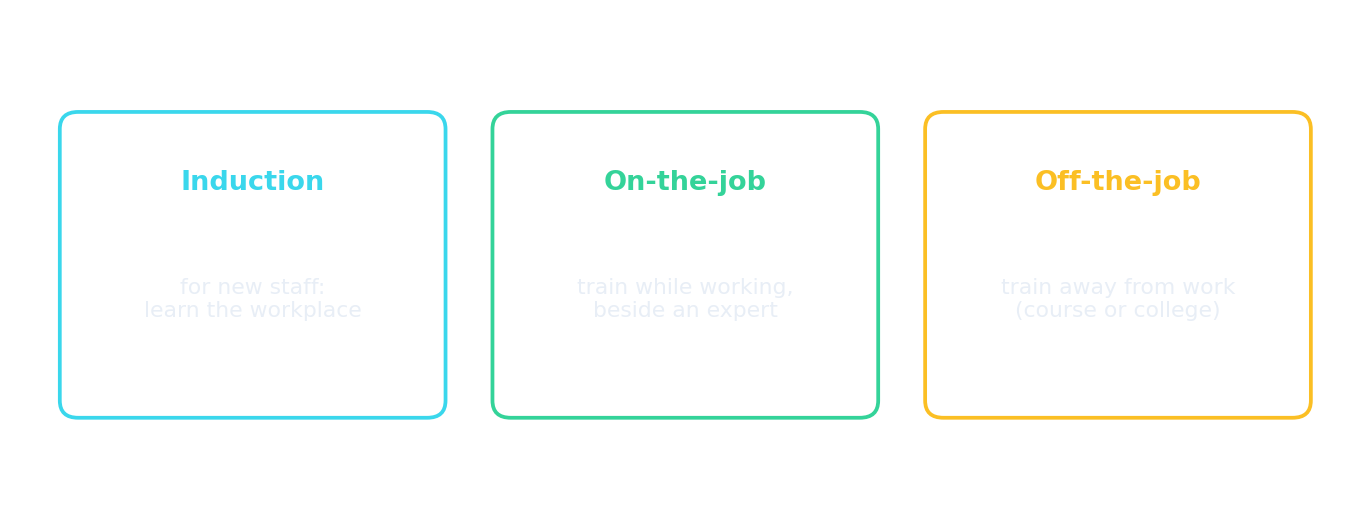
三种培训:入职培训、在职培训和脱产培训
Because it raises future productivity, training is best seen as an , not just a cost. · 因为它提高了未来的生产力,所以培训最好被视为一种,而不仅仅是成本。
Training pays back through productivity and retention. · 培训通过提高生产力和留任率获得回报。
Weighing up training
- Benefits: higher productivity, better quality, more motivation 激励, easier change.
- Costs: money, time away from work, and the risk a trained worker leaves.
Three kinds of training: induction, on-the-job and off-the-job
权衡培训
- 利益:更高的生产力、更好的质量、更多的激励、更容易的变化。
- 成本:钱、离开工作的时间,以及一个受训工人离开的风险。
12 workers produce 360 units a day. What is labour productivity (units per worker)? · 12名工人每天生产360个单位。劳动生产率(每人单位数)是多少?
360 / 12 = 30 units per worker. · 360 / 12 = 每人30个单位。
A high labour turnover can be a warning sign of problems in a business. · 高员工流失率可能是企业出现问题的预警信号。
High turnover suggests poor pay, motivation or management. · 高流失率暗示薪酬、动力或管理存在问题。
Measuring workforce performance
- Labour productivity 劳动生产率 = output ÷ number of workers.
- Labour turnover 员工流失率 = staff leaving ÷ total staff. High turnover signals problems.
Training is an investment 投资, not just a cost. It costs money now but raises productivity and retention later. Firms that cut all training to save money often pay more in low quality and high turnover.
测量劳动力表现
- 劳动生产率(labour productivity)= 产出 ÷ 工人数量。
- 劳动力流动率(labour turnover)= 离开的员工 ÷ 总员工。高流动率发出问题的信号。
培训是一项投资,不只是一个成本。 它现在花钱但以后提高生产力和留任。为省钱削减所有培训的企业常常在低质量和高流动率上付出更多。
You've got it
- training types: induction, on-the-job, off-the-job
- it raises productivity and motivation but costs time and money
- track the workforce with labour productivity and labour turnover
你掌握了
- 培训类型:入职培训、在职、脱产
- 它提高生产力和激励但花费时间和金钱
- 用劳动生产率和劳动力流动率追踪劳动力