Enterprise and adding value · 企业家精神与增加价值
| English | 中文 | Pinyin · 拼音 |
|---|---|---|
| carpenter/ˈkɑːpəntə/ | 木匠 | mù jiàng |
| value added/ˈvæljuː ˈædɪd/ | 附加值 | fù jiā zhí |
| enterprise/ˈentəpraɪz/ | 创业精神 | chuàng yè jīng shén |
| willingness/ˈwɪlɪŋnəs/ | 意愿 | yì yuàn |
| risk/rɪsk/ | 风险 | fēng xiǎn |
| entrepreneur/ˌɒntrɪprəˈnjʊə/ | 企业家 | qǐ yè jiā |
| bear/beə/ | 承担 | chéng dān |
| profit/ˈprɒfɪt/ | 利润 | lì rùn |
| selling price/ˈselɪŋ praɪs/ | 售价 | shòu jià |
| cost of bought-in materials/kɒst ɒv bɔːt ɪn məˈtɪərɪəlz/ | 外购材料成本 | wài gòu cái liào chéng běn |
| branding/ˈbrændɪŋ/ | 品牌 | pǐn pái |
| reputation/ˌrepjuːˈteɪʃn/ | 声誉 | shēng yù |
| convenience/kənˈviːnɪəns/ | 便利 | biàn lì |
| premium/ˈpriːmɪəm/ | 溢价 | yì jià |
| efficiency/ɪˈfɪʃənsi/ | 效率 | xiào lǜ |
Turning 30 into 80
- A carpenter 木匠 buys 30 worth of wood and screws, and a day later sells a chair for 80.
- That extra 50 didn't appear by magic — it's value added 附加值, the whole point of being in business.
把 30 变成 80
- 一个木匠买 30 的木材和螺丝,一天后以 80 卖出一把椅子。
- 那额外的 50 不是凭魔法出现的——它是增加值(value added),做生意的全部意义。
Enterprise is best described as: · 企业家精神最好被描述为:
Enterprise is the risk-taking, organising factor — the entrepreneur. · 企业家精神是承担风险、组织的要素——企业家。
An entrepreneur takes on risk in the hope of profit. · 一个企业家为了利润的希望承担风险。
Risk-bearing for profit is central to enterprise. · 为利润承担风险是企业家精神的核心。
What enterprise 创业精神 is
- Enterprise is the willingness 意愿 to take a risk 风险 and combine resources to make goods or services.
- The person who does it — the entrepreneur 企业家 — spots an opportunity, organises the other factors, and bears 承担 the risk for profit 利润.
Land, labour, capital and enterprise are combined to make goods and services
企业家精神是什么
- 企业家精神(enterprise)是承担一个风险并组合资源以制造商品或服务的意愿。
- 做这件事的人——企业家(entrepreneur)——发现一个机会、组织其他要素,并为利润承担风险。
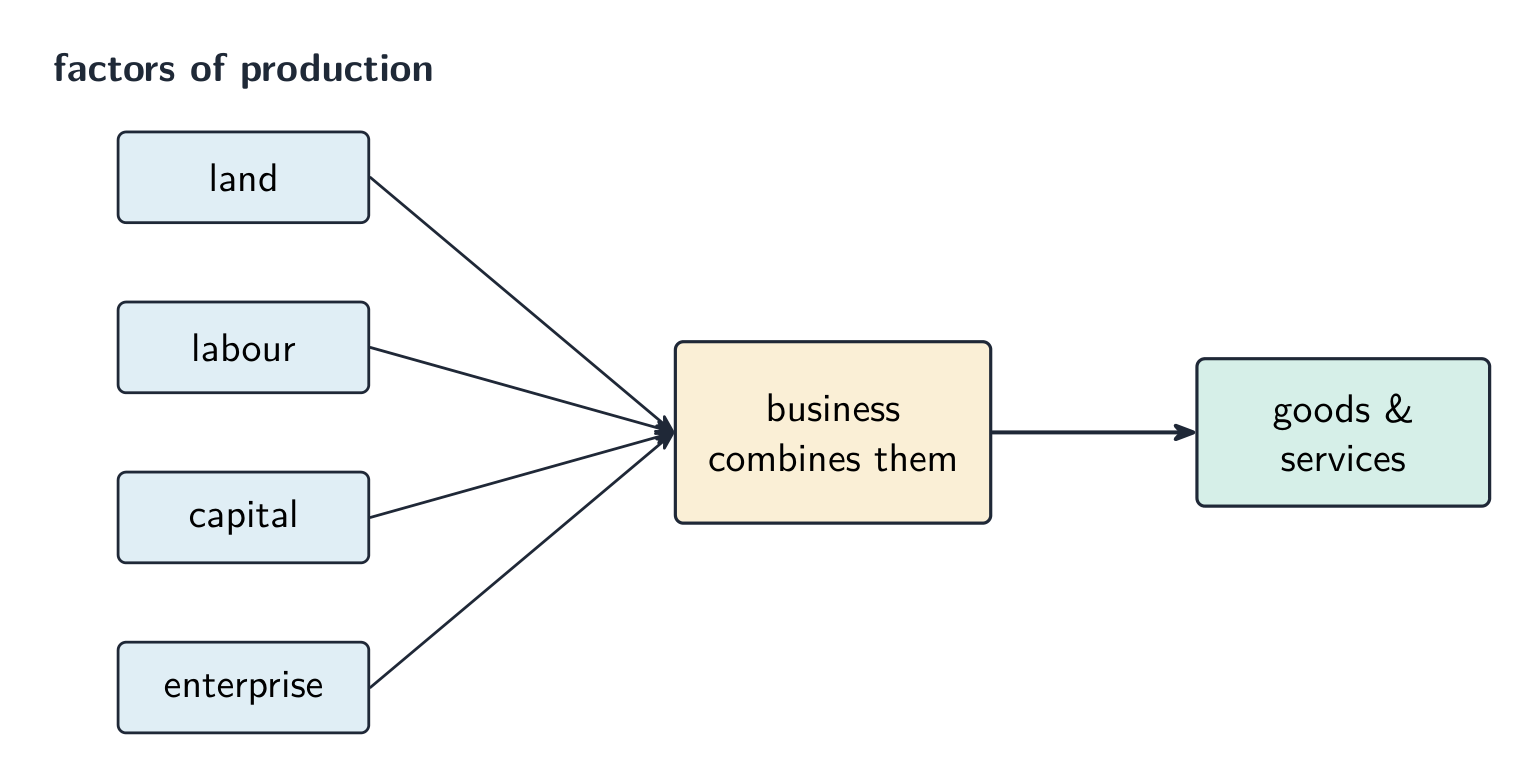
土地、劳动、资本和企业家才能被组合以制造商品和服务
Value added lab · 增加值实验室
Change the bought-in cost, the selling price and other costs to see exactly where value added — and profit — come from. · 改变买入成本、售价和其他成本,看看增加值——以及利润——到底从哪里来。
A firm buys materials for 25 and sells the finished good for 70. What is the value added? · 一个企业以 25 买材料,以 70 卖成品。增加值是多少?
Value added = 70 − 25 = 45. · 增加值 = 70 − 25 = 45。
Value added is: · 增加值是:
It is the difference between output price and input cost. · 它是产出价格与投入成本之间的差。
The difference between the price of the output and the cost of inputs is value . · 产出的价格与投入的成本之间的差是增加。
Value added funds wages, rent and profit. · 增加值为工资、租金和利润提供资金。
Adding value
- Value added = the selling price 售价 minus the cost of bought-in materials 外购材料成本.
- It is how a business covers its other costs (wages, rent) and earns a profit.
Value added is the difference between the cost of inputs and the price of the finished output.
增加值
- 增加值 = 售价减去买入材料的成本。
- 它是一个企业涵盖其他成本(工资、租金)并赚取利润的方式。
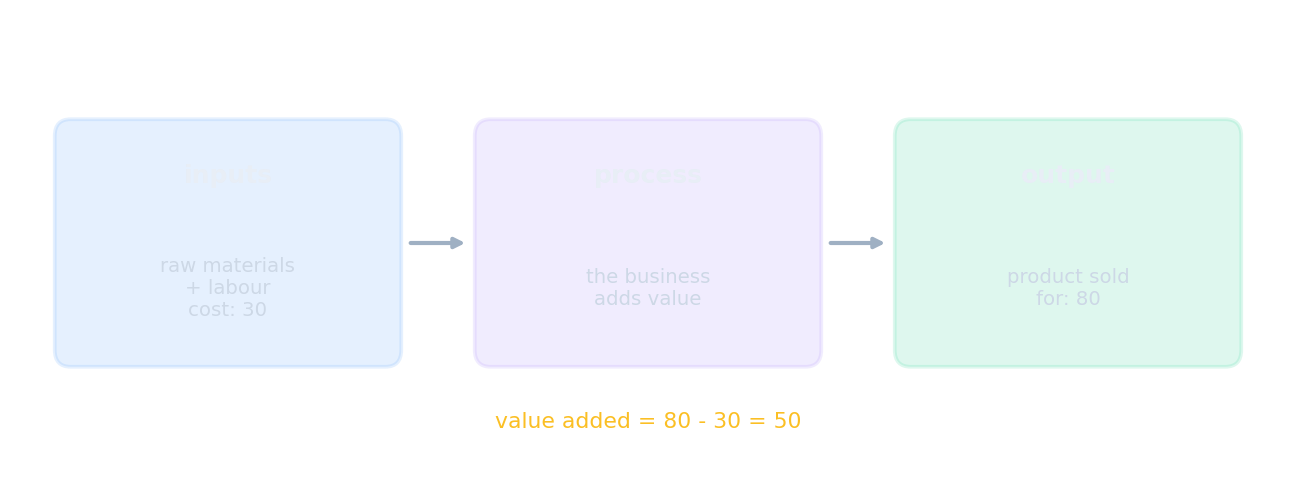
增加值是投入成本与成品产出价格之间的差。
Which can increase value added? (Select all that apply.) · 哪些能增加增加值?(选择所有适用的。)
Branding, quality and lower input costs all widen value added. · 品牌、质量和更低的投入成本都拉大增加值。
How firms add more value
- Branding 品牌 and reputation 声誉 let a firm charge more.
- Quality, design and convenience 便利 make customers willing to pay a premium 溢价.
- Efficiency 效率 (lower input costs) widens the gap from the other side.
Worked example. A coffee shop buys beans, milk and a cup for 0.60 and sells a latte for 3.50. Value added per cup = 3.50 − 0.60 = 2.90 — which must cover staff, rent and profit.
Value added is the selling price minus the cost of bought-in materials
企业如何增加更多价值
- 品牌(branding)和声誉让一个企业收更多。
- 质量、设计和便利使顾客愿意付溢价。
- 效率(更低的投入成本)从另一边拉大差距。
例题。 一家咖啡店买咖啡豆、牛奶和一个杯子花 0.60,以 3.50 卖一杯拿铁。每杯增加值 = 3.50 − 0.60 = 2.90——它必须涵盖员工、租金和利润。
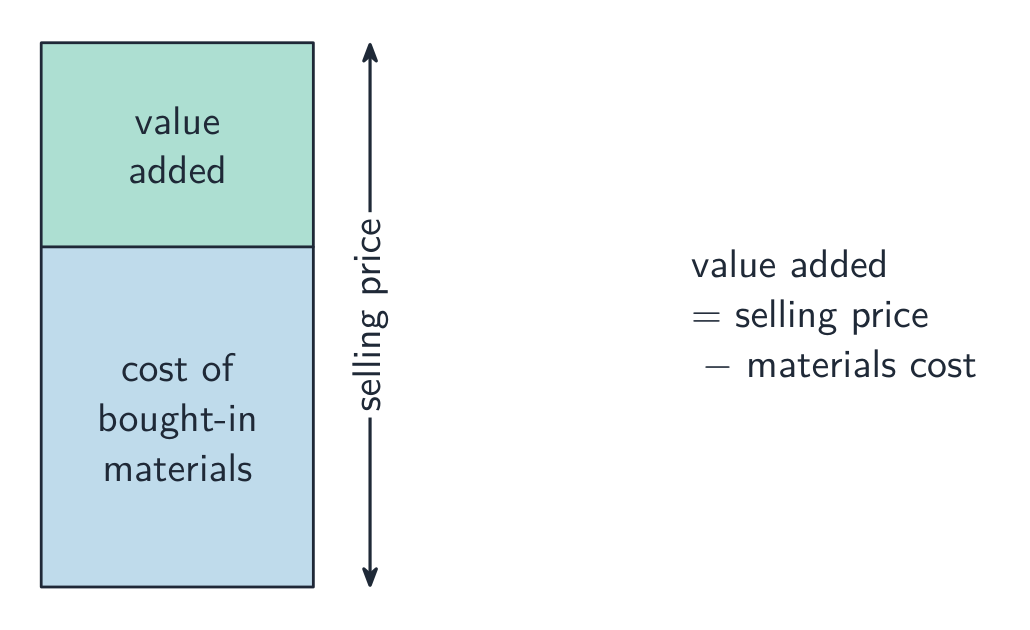
增加值是售价减去买入材料的成本
You've got it
- enterprise = taking a risk to combine resources; the entrepreneur bears it for profit
- value added = selling price − cost of bought-in materials
- firms add value through branding, quality, design and efficiency
你掌握了
- 企业家精神 = 承担一个风险以组合资源;企业家为利润承担它
- 增加值 = 售价 − 买入材料的成本
- 企业通过品牌、质量、设计和效率增加价值