Entrepreneurs, plans and sectors · 企业家、计划与部门
| English | 中文 | Pinyin · 拼音 |
|---|---|---|
| going concern/ˈɡəʊɪŋ kənˈsɜːn/ | 持续经营 | chí xù jīng yíng |
| sector/ˈsektə/ | 部门 | bù mén |
| business plan/ˈbɪznəs plæn/ | 商业计划书 | shāng yè jì huà shū |
| finances/faɪˈnænsɪz/ | 财务 | cái wù |
| raising finance/ˈreɪzɪŋ ˈfaɪnæns/ | 融资 | róng zī |
| investor/ɪnˈvestə/ | 投资者 | tóu zī zhě |
| primary/ˈpraɪməri/ | 第一产业 | dì yī chǎn yè |
| raw materials/rɔː məˈtɪərɪəlz/ | 原材料 | yuán cái liào |
| secondary/ˈsekəndəri/ | 第二产业 | dì èr chǎn yè |
| manufacturing/ˌmænjuːˈfæktʃərɪŋ/ | 制造业 | zhì zào yè |
| construction/kənˈstrʌkʃn/ | 建筑业 | jiàn zhù yè |
| tertiary/ˈtɜːʃjəri/ | 第三产业 | dì sān chǎn yè |
| retail/ˈriːteɪl/ | 零售 | líng shòu |
| forecast/ˈfɔːkæst/ | 预测 | yù cè |
From idea to going concern 持续经营
- A good idea is only the start. Turning it into a working business takes a plan — and a place in the wider economy.
- Every firm also sits in one of three sectors 部门 of production.
从想法到持续经营
- 一个好想法只是开始。把它变成一个运作的企业需要一个计划——以及在更广泛经济中的一个位置。
- 每个企业也坐落在生产的三个部门之一。
Classify business activity · 分类商业活动
Sort real firms by the sector they mainly belong to. · 根据主要所属部门对真实企业进行分类。
A key purpose of a business plan is to: · 商业计划书的一个关键目的是:
Lenders and investors expect a plan; it also clarifies the idea. · 贷款人和投资者期望看到一份计划书;它也能阐明理念。
A document setting out a new business's idea, market and finances is a business . · 阐述新企业理念、市场和财务的文件是一份商业。
The business plan is used to clarify the idea and raise finance. · 商业计划书用于阐明理念和筹集资金。
The business plan 商业计划书
- A business plan sets out the idea, the market, the operations and the finances 财务.
- It helps the entrepreneur think it through and is essential for raising finance 融资 from banks or investors 投资者.
商业计划
- 一个商业计划(business plan)列出想法、市场、运营和财务。
- 它帮助企业家想清楚,且对从银行或投资者那里筹集资金至关重要。
Match each sector to an example activity. · 将每个部门与示例活动进行匹配。
Primary extracts, secondary makes, tertiary serves. · 第一产业提取,第二产业制造,第三产业服务。
A furniture factory operates in which sector? · 家具厂运营于哪个部门?
Manufacturing is the secondary sector. · 制造业属于第二产业。
The three sectors
- Primary 第一产业: extracting raw materials 原材料 (farming, mining, fishing).
- Secondary 第二产业: making and building (manufacturing 制造业, construction 建筑业).
- Tertiary 第三产业: providing services (retail 零售, banking, transport).
Raw materials (primary) are turned into goods (secondary) and sold as services (tertiary).
三个部门
- 初级(primary):提取原材料(农业、采矿、捕鱼)。
- 次级(secondary):制造和建造(制造业、建筑)。
- 第三(tertiary):提供服务(零售、银行业、运输)。
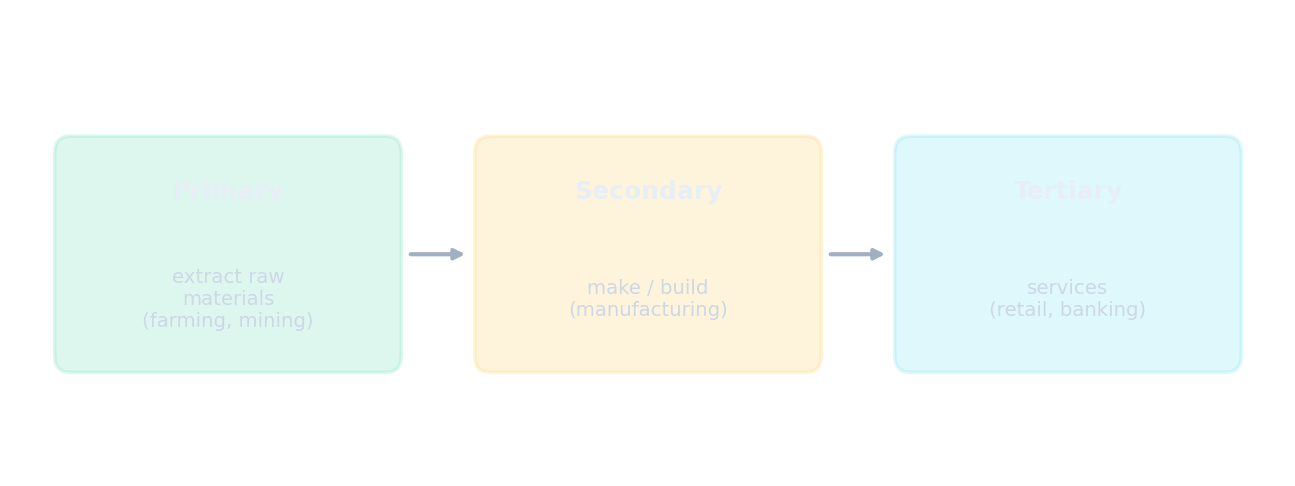
原材料(初级)被变成商品(次级)并作为服务出售(第三)。
As an economy develops, employment tends to shift towards the: · 随着经济发展,就业倾向于向哪个部门转移:
Developed economies are service-dominated. · 发达经济体以服务业为主导。
The changing balance of sectors
- As a country develops, employment shifts from primary → secondary → tertiary.
- Rich economies are dominated by the tertiary (service) sector.
A plan reduces risk, it doesn't remove it. Even a detailed business plan rests on forecasts 预测 that may be wrong. It improves the odds and persuades lenders, but the entrepreneur still bears real risk.
部门变化的平衡
- 随着一个国家发展,就业从初级 → 次级 → 第三转移。
- 富裕的经济体由第三(服务)部门主导。
一个计划减少风险,它不消除风险。 即使一个详细的商业计划也建立在可能错误的预测上。它改善胜算并说服贷款人,但企业家仍然承担真实的风险。
You've got it
- a business plan sets out the idea, market, operations and finances — vital to raise finance
- three sectors: primary (raw materials), secondary (make), tertiary (services)
- development shifts activity toward the tertiary sector
你掌握了
- 一个商业计划列出想法、市场、运营和财务——对筹集资金至关重要
- 三个部门:初级(原材料)、次级(制造)、第三(服务)
- 发展把活动转向第三部门