The chloroplast and pigments · 叶绿体与色素
| English | 中文 | Pinyin · 拼音 |
|---|---|---|
| photosynthesis/ˌfəʊtəʊˈsɪnθəsɪs/ | 光合作用 | guāng hé zuò yòng |
| chloroplast/ˈklɔːrəʊplæst/ | 叶绿体 | yè lǜ tǐ |
| pigment/ˈpɪɡmənt/ | 色素 | sè sù |
| thylakoid/ˈθaɪləkɔɪd/ | 类囊体 | lèi náng tǐ |
| granum/ˈɡrænəm/ | 基粒 | jī lì |
| stroma/ˈstrəʊmə/ | 基质 | jī zhì |
| chlorophyll/ˌklɔːrəʊˈfɪl/ | 叶绿素 | yè lǜ sù |
| Calvin cycle/ˈkælvɪn ˈsaɪkl/ | 卡尔文循环 | kǎ ěr wén xún huán |
| absorption spectrum/əbˈsɔːpʃn ˈspektrəm/ | 吸收光谱 | xī shōu guāng pǔ |
| action spectrum/ˈækʃn ˈspektrəm/ | 作用光谱 | zuò yòng guāng pǔ |
Photosynthesis 光合作用 and the chloroplast 叶绿体
- Photosynthesis happens inside the chloroplast.
- Its structure has two parts for the two stages of the reaction.
- Coloured pigments 色素 trap the light that powers it all.
光合作用和叶绿体
- 光合作用(photosynthesis) 在 叶绿体(chloroplast) 内部发生。
- 它的结构有两部分,对应反应的两个阶段。
- 有色的 色素(pigments) 捕获为这一切提供动力的光。
Inside a chloroplast
- Flat sacs called thylakoids 类囊体 stack into a granum 基粒 (plural grana) — the thylakoid membranes hold the pigments and run the first stage.
- The fluid around them is the stroma 基质 — where the second stage happens.
A chloroplast: stacks of thylakoids form grana, surrounded by the fluid stroma
Leaves are green because their chloroplasts are full of chlorophyll 叶绿素.
叶绿体内部
- 叫 类囊体(thylakoids) 的扁平囊堆叠成一个 基粒(granum,复数 grana)——类囊体膜容纳色素并运行 第一阶段。
- 它们周围的液体是 基质(stroma)——第二阶段 发生的地方。
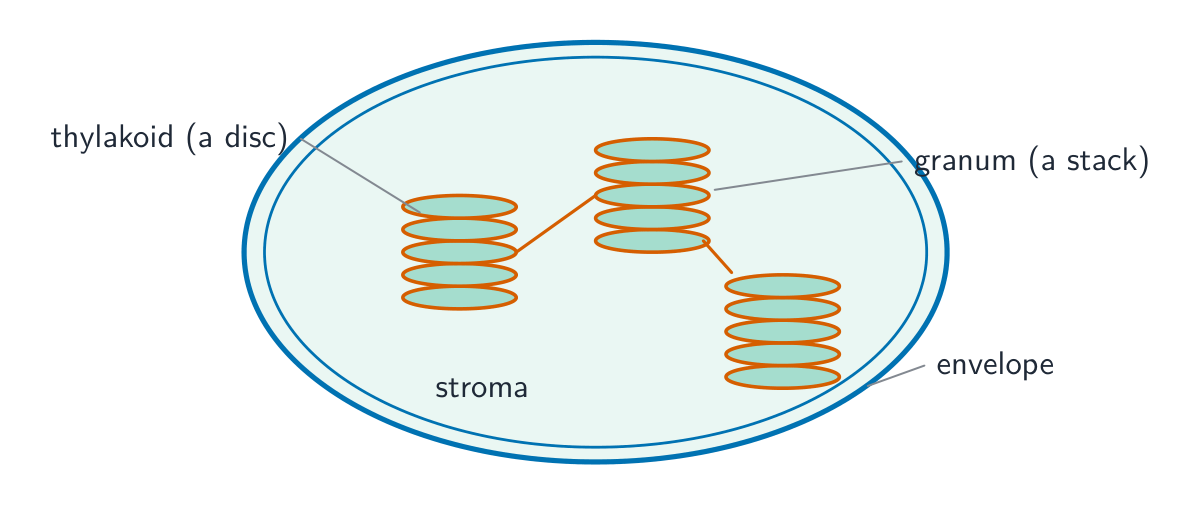
一个叶绿体:类囊体堆叠成基粒,被液态的基质包围
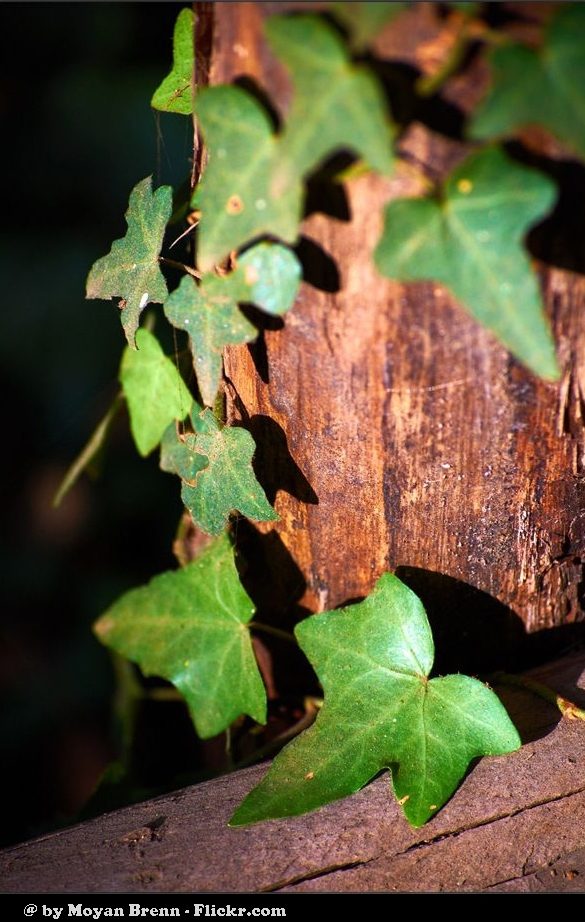
叶子是绿色的,因为它们的叶绿体充满叶绿素。
Explore the chloroplast · 探索叶绿体
Tap each part. The light-dependent stage runs on the thylakoid membranes (grana); the Calvin cycle runs in the stroma around them. · 点击每个部分。光依赖阶段在类囊体膜(基粒)上运行;卡尔文循环在它们周围的基质中运行。
In a chloroplast, the stacks of thylakoids (grana) are where: · 在一个叶绿体中,类囊体的堆(基粒)是以下发生的地方:
The thylakoid membranes hold the pigments and carry out the light-dependent stage; the stroma runs the Calvin cycle. · 类囊体膜容纳色素并执行光依赖阶段;基质运行卡尔文循环。
Match each chloroplast part to its job. · 把每个叶绿体部分与它的工作配对。
Light reactions happen on the thylakoid membranes; the Calvin cycle in the stroma; chlorophyll captures the light. · 光反应在类囊体膜上发生;卡尔文循环在基质中;叶绿素捕获光。
The two stages
- light-dependent stage (in the thylakoids): uses light energy to make ATP and reduced NADP.
- light-independent stage / Calvin cycle 卡尔文循环 (in the stroma): uses that ATP and reduced NADP to build organic molecules from carbon dioxide.
The light-dependent stage makes ATP and reduced NADP, which power the light-independent Calvin cycle
Chloroplasts (small green discs) inside the cells of an Elodea leaf.
两个阶段
- 光依赖阶段(light-dependent stage)(在类囊体中):用光能制造 ATP 和 还原型 NADP。
- 光非依赖阶段 / 卡尔文循环(Calvin cycle)(在基质中):用那些 ATP 和还原型 NADP 从 二氧化碳 建造有机分子。
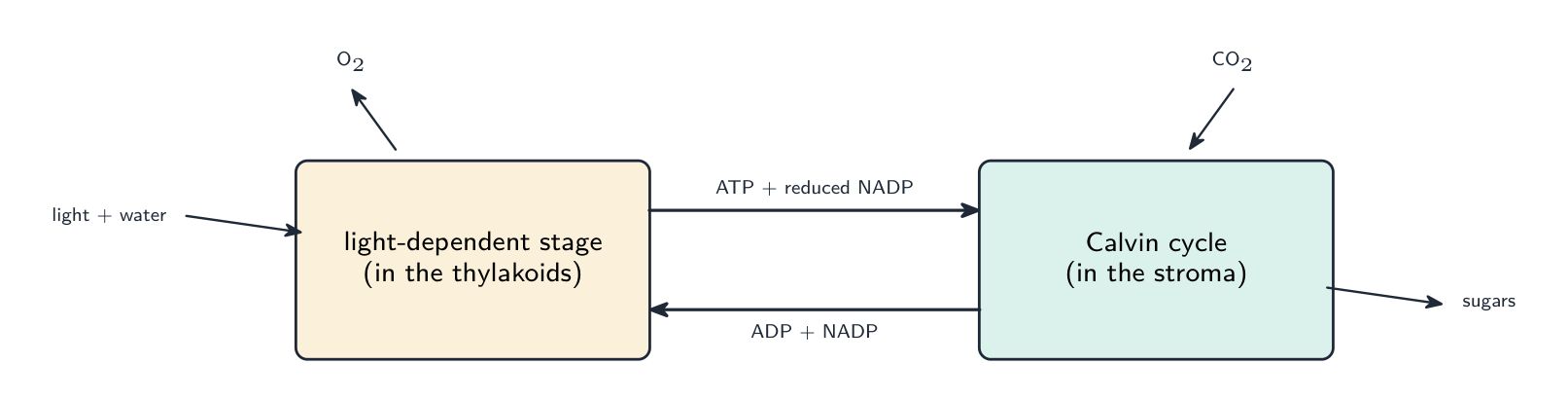
光依赖阶段制造 ATP 和还原型 NADP,为光非依赖的卡尔文循环提供动力
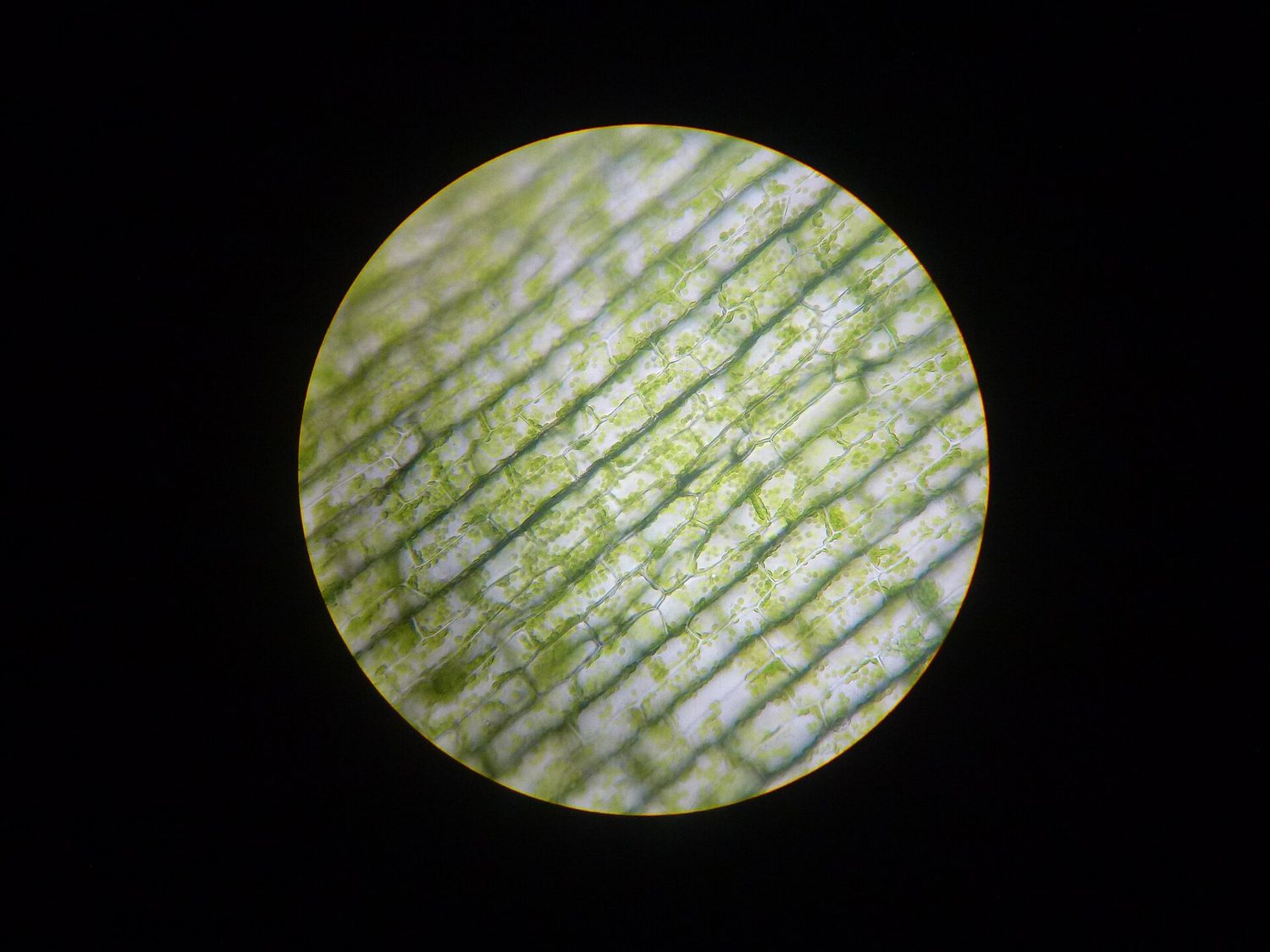
伊乐藻叶细胞内部的叶绿体(小绿盘)。
The light-dependent stage produces: · 光依赖阶段产生:
It uses light to make ATP and reduced NADP, which power the Calvin cycle. · 它用光制造 ATP 和还原型 NADP,它们为卡尔文循环提供动力。
The light-dependent stage happens in the thylakoid membranes, and the Calvin cycle in the stroma. · 光依赖阶段在类囊体膜中发生,卡尔文循环在基质中。
Light reactions need the membranes (pigments); the Calvin cycle uses the enzymes dissolved in the stroma. · 光反应需要膜(色素);卡尔文循环使用溶解在基质中的酶。
Pigments and their spectra
- Pigments: chlorophyll a and b (absorb red and blue), plus carotene and xanthophyll (absorb other colours).
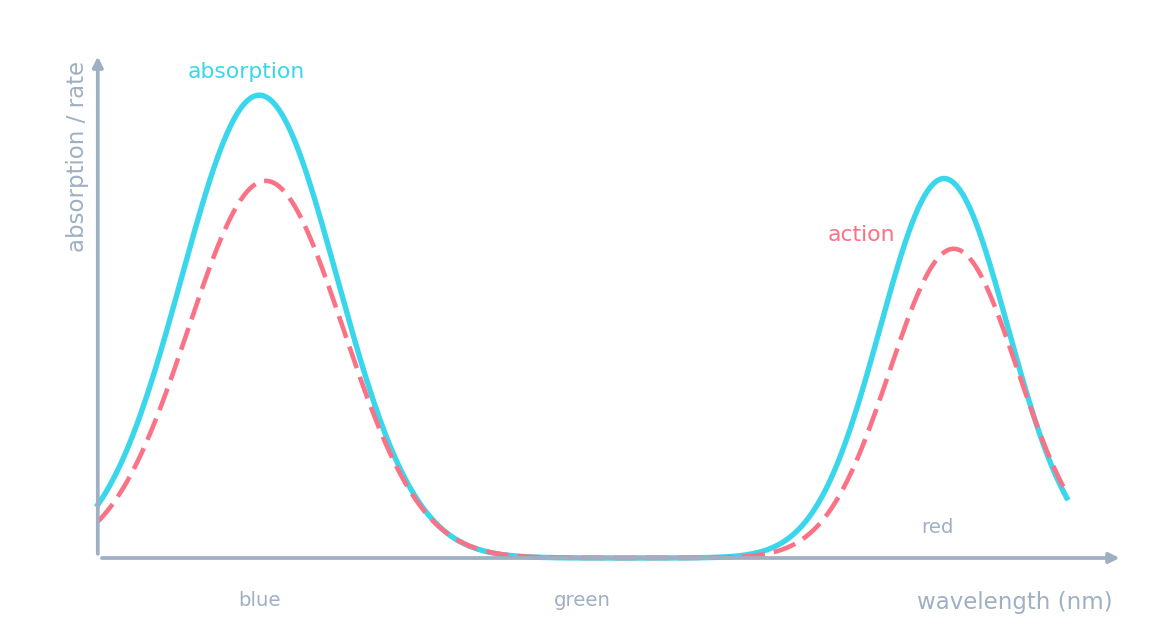
- An absorption spectrum 吸收光谱 shows how much light each pigment absorbs; an action spectrum 作用光谱 shows how fast photosynthesis goes. They match — proof the pigments drive it.
- Chromatography separates pigments; each has an Rf value = distance pigment moved ÷ distance solvent moved.
Chromatography spreads the leaf pigments into spots; each pigment's Rf is its distance over the solvent's
色素和它们的光谱
- 色素:叶绿素 a 和 b(吸收红光和蓝光),加上 胡萝卜素(carotene) 和 叶黄素(xanthophyll)(吸收其他颜色)。
- 吸收光谱(absorption spectrum) 显示每种色素吸收多少光;作用光谱(action spectrum) 显示光合作用进行得多快。它们 匹配——色素驱动它的证据。
- 色谱法(chromatography) 分离色素;每种有一个 Rf 值 = 色素移动的距离 ÷ 溶剂移动的距离。
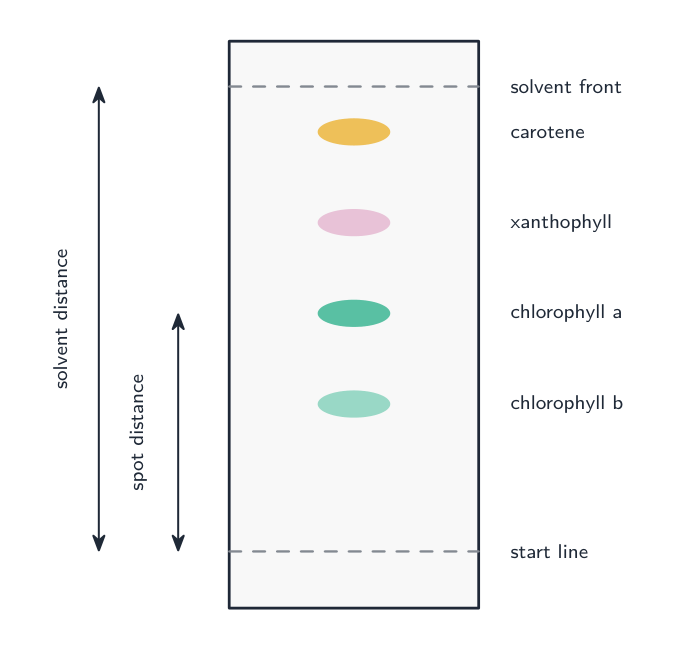
色谱法把叶片色素分散成斑点;每种色素的 Rf 是它的距离除以溶剂的距离
The absorption spectrum and action spectrum match closely. This shows that: · 吸收光谱和作用光谱密切匹配。这表明:
Where pigments absorb most (blue/red), photosynthesis is fastest — so those pigments drive the reaction. · 色素吸收最多的地方(蓝/红),光合作用最快——所以那些色素驱动反应。
In chromatography a pigment moves 4 cm while the solvent front moves 8 cm. What is its Rf value? · 在色谱法中一种色素移动 4 cm,而溶剂前沿移动 8 cm。它的 Rf 值是多少?
Rf = distance moved by the pigment ÷ distance moved by the solvent = 4 ÷ 8 = 0.5. · Rf = 色素移动的距离 ÷ 溶剂移动的距离 = 4 ÷ 8 = 0.5。
You've got it
- thylakoids stack into grana (light-dependent stage); the stroma runs the Calvin cycle
- light-dependent → ATP + reduced NADP; light-independent → builds molecules from CO₂
- pigments: chlorophyll a/b + carotene/xanthophyll; absorption & action spectra match
- chromatography + Rf value (pigment distance ÷ solvent distance) identify pigments
你掌握了
- 类囊体 堆叠成 基粒(光依赖阶段);基质 运行 卡尔文循环
- 光依赖 → ATP + 还原型 NADP;光非依赖 → 从 CO₂ 建造分子
- 色素:叶绿素 a/b + 胡萝卜素/叶黄素;吸收 与 作用 光谱匹配
- 色谱法 + Rf 值(色素距离 ÷ 溶剂距离)鉴别色素