Scope and prerequisites
Digital SAT framework; original paper practice is nonadaptive and gives no scaled-score prediction.
- Identify central ideas and supporting details
- Make inferences warranted by the text
- Select textual evidence 证据 and interpret quantitative evidence
Prerequisites: Identify a paragraph's subject; distinguish stated fact from inference 推断.
Explain and choose the method
A central idea 中心思想 includes the author’s main point, not just a vivid detail 细节. Summarise each sentence before choosing.
An inference joins stated information without adding a new cause. Check every word of an answer against the passage.
For evidence questions, identify the claim first. A result can be real but irrelevant to that claim.
For a table or graph, read labels, units and groups before values. Compare the requested groups; never infer a trend outside the data.
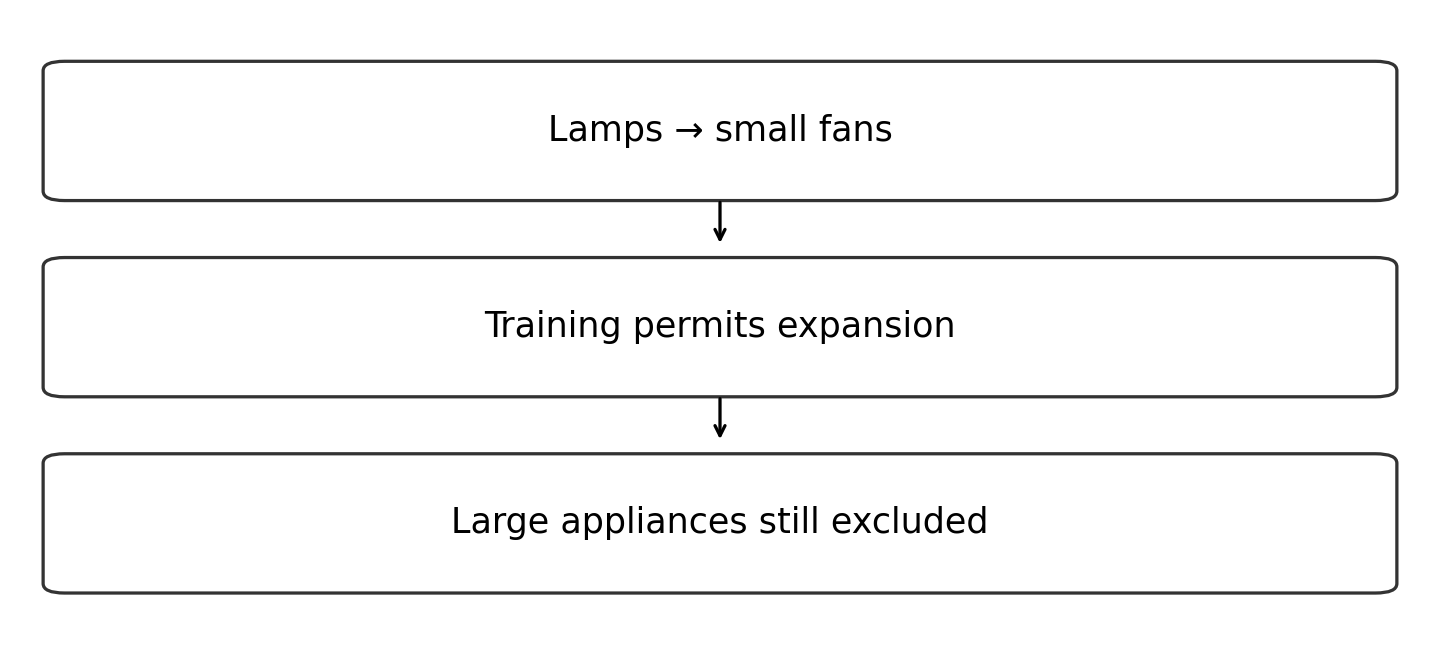
The central idea is the relationship that holds the passage together. Read: “The repair café first accepted only lamps. It later added small fans after volunteers received training. Large appliances still went to specialist shops.” A sound summary is: the café expanded its repairs within limits. “It repaired everything” ignores the last sentence. “It repaired lamps” omits the change.
Existing worked example: A study measured two streets at noon. The shaded street was 29°C; the unshaded street was 33°C. This supports a difference of 4°C at those sites and time. It cannot establish city-wide cooling or causation because the streets may differ in other ways.
Complete original context
Original passage: The city archive began a trial in which readers could search handwritten shipping registers using an online index. Volunteers entered names and dates, while staff checked entries that were difficult to read. The index often helped researchers locate a likely page before travelling to the archive. It did not replace the register images: two people with the same name could still be distinguished only by reading nearby entries. Staff therefore described the index as a route into the records rather than a final answer to every question. They also kept a public list of corrected entries so that researchers could see how the index changed.
Independent practice and checked reasoning
This overview is completed through the detailed skill sequence: 20, 21, 22. Work those references and sheets in order; this orientation does not replace them.
Transfer 1
State the central idea in one sentence, preserving both benefit and limit.
Reasoning: The checked index helps researchers find relevant records, but consulting the underlying register remains necessary for some distinctions. This covers the search benefit and same-name limitation without claiming complete accuracy.
Transfer 2
Which detail explains why register images remain necessary? Distinguish that from the purpose of the corrections list.
Reasoning: People with the same name may require nearby register entries to distinguish them. The corrections list instead makes revisions visible; it does not itself identify every person.
Transfer 3
Reject each proposed summary with specific evidence — A “Volunteers replaced staff”; B “The index made all archive visits unnecessary”; C “The archive hid changes to the index”.
Reasoning: A contradicts staff checking difficult entries. B overstates “often” and the need to consult underlying records; the passage does not say every visit is replaced. C contradicts the public corrections list. None preserves the stated scope.
Limits and next use
An answer that sounds scientifically plausible may add information absent from the passage.
All tasks here are public original practice with authored guidance. They are not official questions or fresh diagnostics. Existing protected tests and mocks remain separate.