- describe the features of the endocrine system with reference to the hormones ADH, glucagon and insulin (see 14.1.8, 14.1.9 and 14.1.10)
- compare the features of the nervous system and the endocrine system
- describe the structure and function of a sensory neurone and a motor neurone and state that intermediate neurones connect sensory neurones and motor neurones
- outline the role of sensory receptor cells in detecting stimuli and stimulating the transmission of impulses in sensory neurones
- describe the sequence of events that results in an action potential in a sensory neurone, using a chemoreceptor cell in a human taste bud as an example
- describe and explain changes to the membrane potential of neurones, including: • how the resting potential is maintained • the events that occur during an action potential • how the resting potential is restored during the refractory period
- describe and explain the rapid transmission of an impulse in a myelinated neurone with reference to saltatory conduction
- explain the importance of the refractory period in determining the frequency of impulses
- describe the structure of a cholinergic synapse and explain how it functions, including the role of calcium ions
- describe the roles of neuromuscular junctions, the T-tubule system and sarcoplasmic reticulum in stimulating contraction in striated muscle
- describe the ultrastructure of striated muscle with reference to sarcomere structure using electron micrographs and diagrams
- explain the sliding filament model of muscular contraction including the roles of troponin, tropomyosin, calcium ions and ATP
调节与协调
A-Level 生物 · 第 15 主题
 9:38
9:38
Nerves and Muscles
Touch something hot and your hand is already moving before you feel the pain. The signal never went to your brain to ask permission. It ran into the spinal…
英文讲解 · 内嵌中英文字幕
15.1
哺乳动物的调节与协调

大纲
来源:剑桥国际大纲
身体有两个协调系统。内分泌系统(endocrine system)在血液中发送化学激素(hormones,如 ADH、胰高血糖素和胰岛素)。神经系统(nervous system)沿神经细胞发送快速的电信号。
| 特征 | 神经系统 | 内分泌系统 |
|---|---|---|
| 信号 | 电冲动(impulse) | 化学激素 |
| 运输 | 沿神经细胞 | 在血液中 |
| 速度 | 非常快 | 较慢 |
| 它持续多久 | 短 | 较长 |
词汇表
训练
| 英文 | 中文 | 拼音 |
|---|---|---|
| endocrine system | 内分泌系统 | nèi fēn mì xì tǒng |
| hormone | 激素 | jī sù |
| nervous system | 神经系统 | shén jīng xì tǒng |
| impulse | 冲动 | chōng dòng |
15.1
神经元
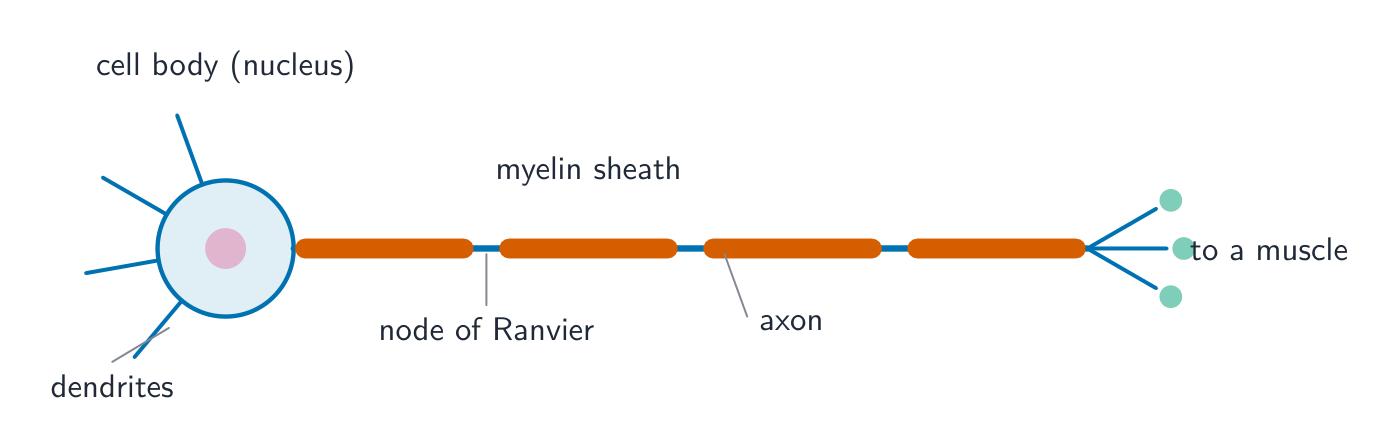
一个神经元(neurone)是一个神经细胞。有三种:
- 一个感觉神经元(sensory neurone)把冲动从一个受体运向大脑或脊髓。
- 一个运动神经元(motor neurone)把冲动运出到一个效应器,如一块肌肉(muscle)。
- 中间神经元(intermediate neurones)把感觉神经元连到运动神经元。
一个神经元有一根长纤维(轴突),冲动沿它行进。
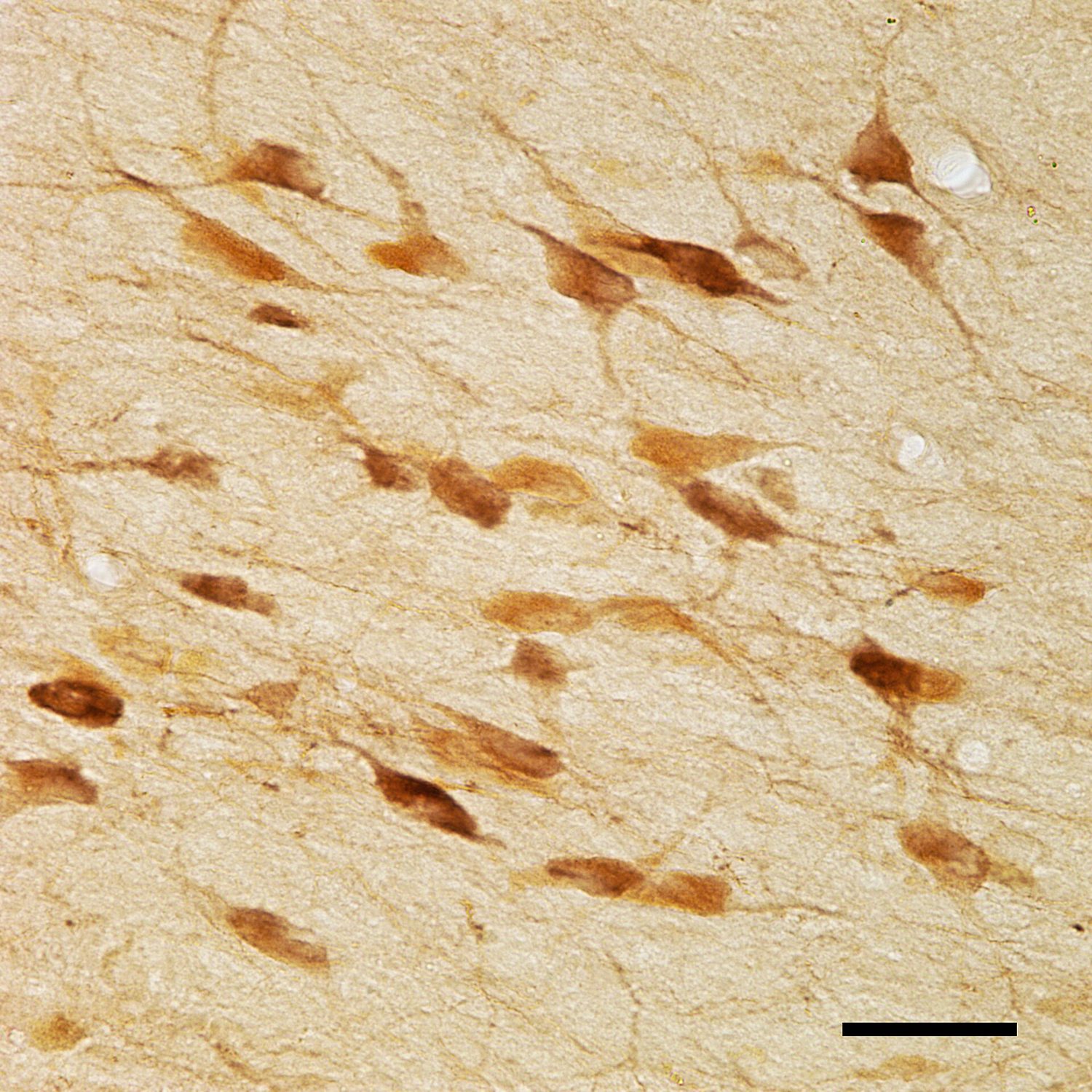
这是真实的神经元在一个染色的脑组织切片中的样子:
探索
Explore a motor neurone
Tap each part. The impulse travels from the cell body down the long axon to the terminals, jumping between the myelin gaps.
词汇表
训练
| 英文 | 中文 | 拼音 |
|---|---|---|
| neurone | 神经元 | shén jīng yuán |
| sensory neurone | 感觉神经元 | gǎn jué shén jīng yuán |
| motor neurone | 运动神经元 | yùn dòng shén jīng yuán |
| muscle | 肌肉 | jī ròu |
| intermediate neurone | 中间神经元 | zhōng jiān shén jīng yuán |
15.1
感受刺激
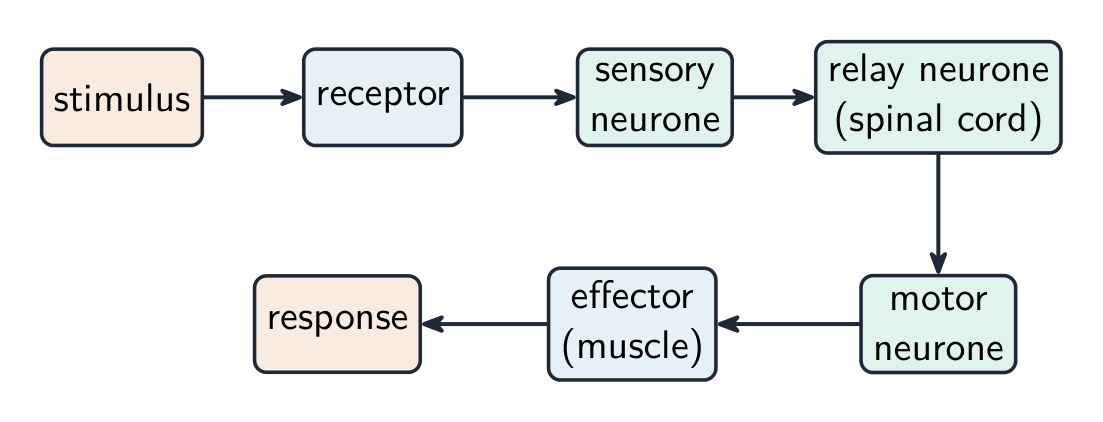
一个感受器(sensory receptor)细胞检测一个刺激(stimulus)并在一个感觉神经元中启动一个冲动。例如,一个味蕾(taste bud)中的一个化学感受器(chemoreceptor)细胞检测食物中的化学物,而这在感觉神经元中触发一个动作电位(action potential)。
词汇表
训练
| 英文 | 中文 | 拼音 |
|---|---|---|
| sensory receptor | 感受器 | gǎn shòu qì |
| stimulus | 刺激 | cì jī |
| chemoreceptor | 化学感受器 | huà xué gǎn shòu qì |
| taste bud | 味蕾 | wèi lěi |
| action potential | 动作电位 | dòng zuò diàn wèi |
15.1
神经冲动
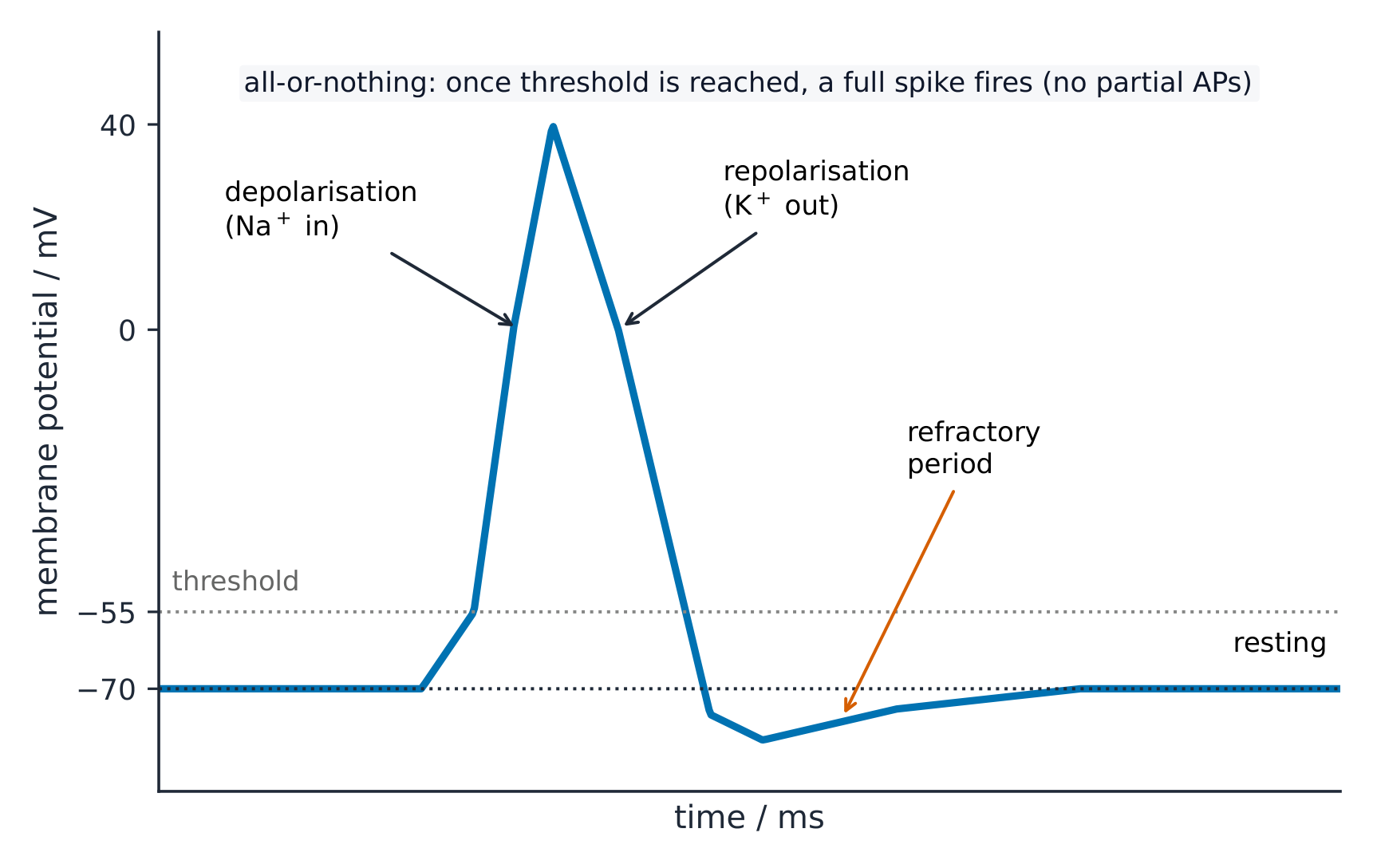
冲动是跨神经元膜的电压的一个改变。
- 静息电位(resting potential)——当没有冲动通过时,内部相对于外部是负的。这由一个把钠离子移出、钾离子移入的泵,以及膜对钾更通透来维持。
- 动作电位(action potential)——一个刺激使钠通道打开,所以钠离子涌入,内部短暂地变成正的(去极化)。然后钾通道打开,钾离子离开,而膜电位(membrane potential)返回负的(复极化)。
- 不应期(refractory period)——就在一个动作电位之后,钠通道在一小段时间内不能再次打开。这恢复静息电位并对冲动能被发送的频率设一个限制。
Faster impulses: myelin
一些神经元被包在一层脂肪性的髓鞘(myelin sheath)中。冲动不能穿过髓鞘,所以它从一个间隙跳到下一个。这种跳跃,叫跳跃式传导(saltatory conduction),使冲动行进得快得多。

探索
The action potential
Step through one nerve impulse: a rapid depolarisation as Na⁺ enters, then repolarisation as K⁺ leaves, then recovery.
词汇表
训练
| 英文 | 中文 | 拼音 |
|---|---|---|
| resting potential | 静息电位 | jìng xī diàn wèi |
| membrane potential | 膜电位 | mó diàn wèi |
| refractory period | 不应期 | bù yīng qī |
| myelin sheath | 髓鞘 | suǐ qiào |
| saltatory conduction | 跳跃式传导 | tiào yuè shì chuán dǎo |
15.1
突触
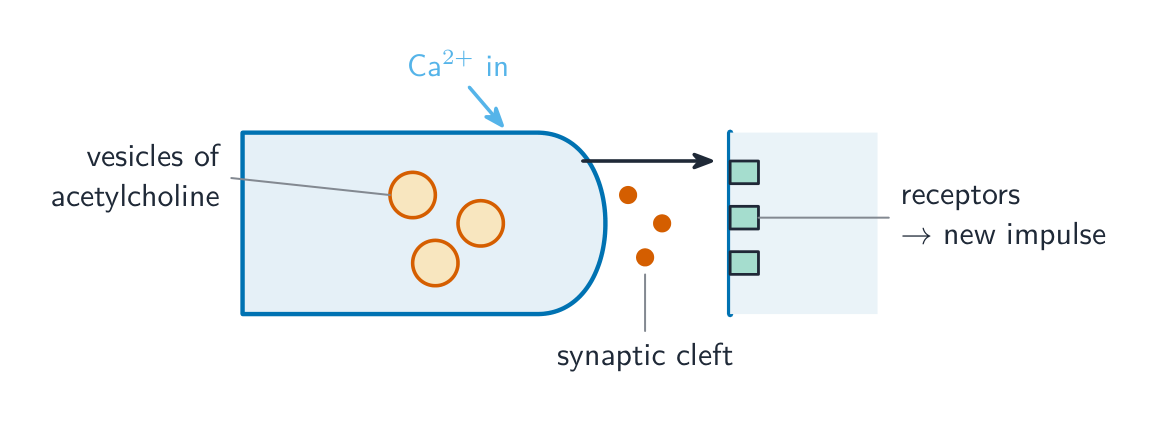
一个突触(synapse)是两个神经元之间的一个微小间隙。一个胆碱能突触(cholinergic synapse)像这样传递信号:
- 冲动到达并使钙离子(calcium ions)进入第一个神经元。
- 这使囊泡释放一个叫乙酰胆碱(acetylcholine)的神经递质(neurotransmitter)。
- 乙酰胆碱扩散过间隙并结合到下一个神经元上的受体。
- 这在下一个神经元中启动一个新冲动。
探索
Across a synapse
Step through it. The electrical impulse becomes a chemical one — neurotransmitter carries the signal across the gap.
词汇表
训练
| 英文 | 中文 | 拼音 |
|---|---|---|
| synapse | 突触 | tū chù |
| cholinergic synapse | 胆碱能突触 | dǎn jiǎn néng tū chù |
| calcium ion | 钙离子 | gài lí zi |
| neurotransmitter | 神经递质 | shén jīng dì zhì |
| acetylcholine | 乙酰胆碱 | yǐ xiān dǎn jiǎn |
15.1
肌肉及其收缩方式
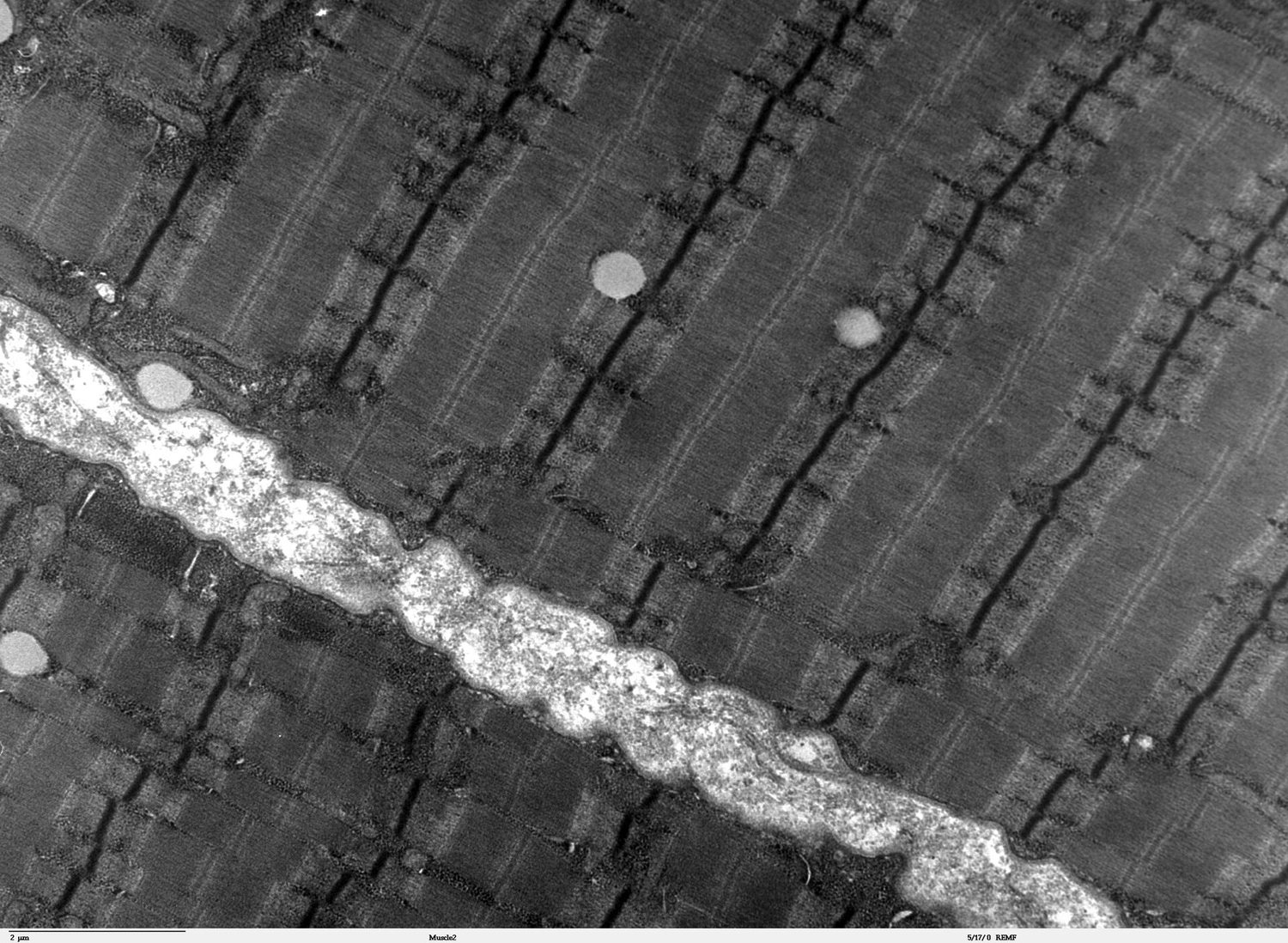
一个神经肌肉接头(neuromuscular junction)像一个突触,但在一个运动神经元和一块肌肉之间。
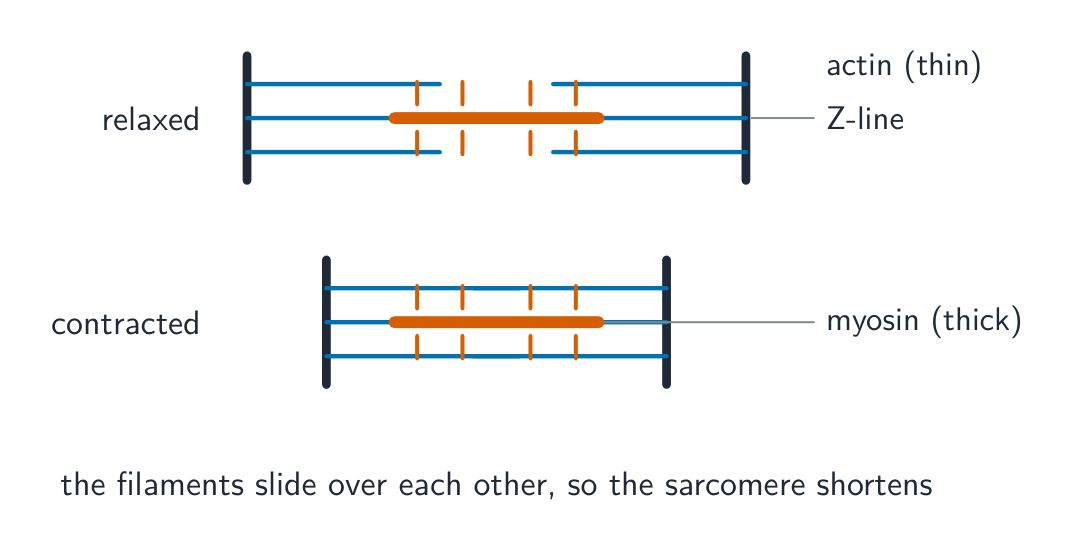
横纹肌(striated muscle)由长纤维构成。每根纤维被分成叫肌节(sarcomeres)的重复单元。里面是两种肌丝(filament):粗的(肌球蛋白)和细的(肌动蛋白)。T小管(T-tubule)系统把冲动带进纤维深处,而肌质网(sarcoplasmic reticulum)储存和释放钙离子。
肌丝滑动模型(sliding filament model)解释收缩:
- 一个冲动使肌质网释放钙离子。
- 钙离子结合到肌钙蛋白(troponin),它使原肌球蛋白(tropomyosin)移动并露出肌动蛋白上的结合位点。
- 肌球蛋白头附着到肌动蛋白并把它向内拉,用来自 ATP 的能量。
- 细肌丝滑过粗的,所以每个肌节变短,肌肉收缩。
探索
How a muscle contracts
Step through the sliding filament model — calcium uncovers the binding sites, then myosin pulls the actin inwards.
词汇表
训练
| 英文 | 中文 | 拼音 |
|---|---|---|
| neuromuscular junction | 神经肌肉接头 | shén jīng jī ròu jiē tóu |
| striated muscle | 横纹肌 | héng wén jī |
| sarcomere | 肌节 | jī jié |
| filament | 肌丝 | jī sī |
| T-tubule | T小管 | T xiǎo guǎn |
| sarcoplasmic reticulum | 肌质网 | jī zhì wǎng |
| sliding filament model | 肌丝滑动模型 | jī sī huá dòng mó xíng |
| troponin | 肌钙蛋白 | jī gài dàn bái |
| tropomyosin | 原肌球蛋白 | yuán jī qiú dàn bái |
15.2
植物的调节与协调
大纲
- describe the rapid response of the Venus fly trap to stimulation of hairs on the lobes of modified leaves and explain how the closure of the trap is achieved
- explain the role of auxin in elongation growth by stimulating proton pumping to acidify cell walls
- describe the role of gibberellin in the germination of barley (see 16.3.4)
来源:剑桥国际大纲
The Venus fly trap
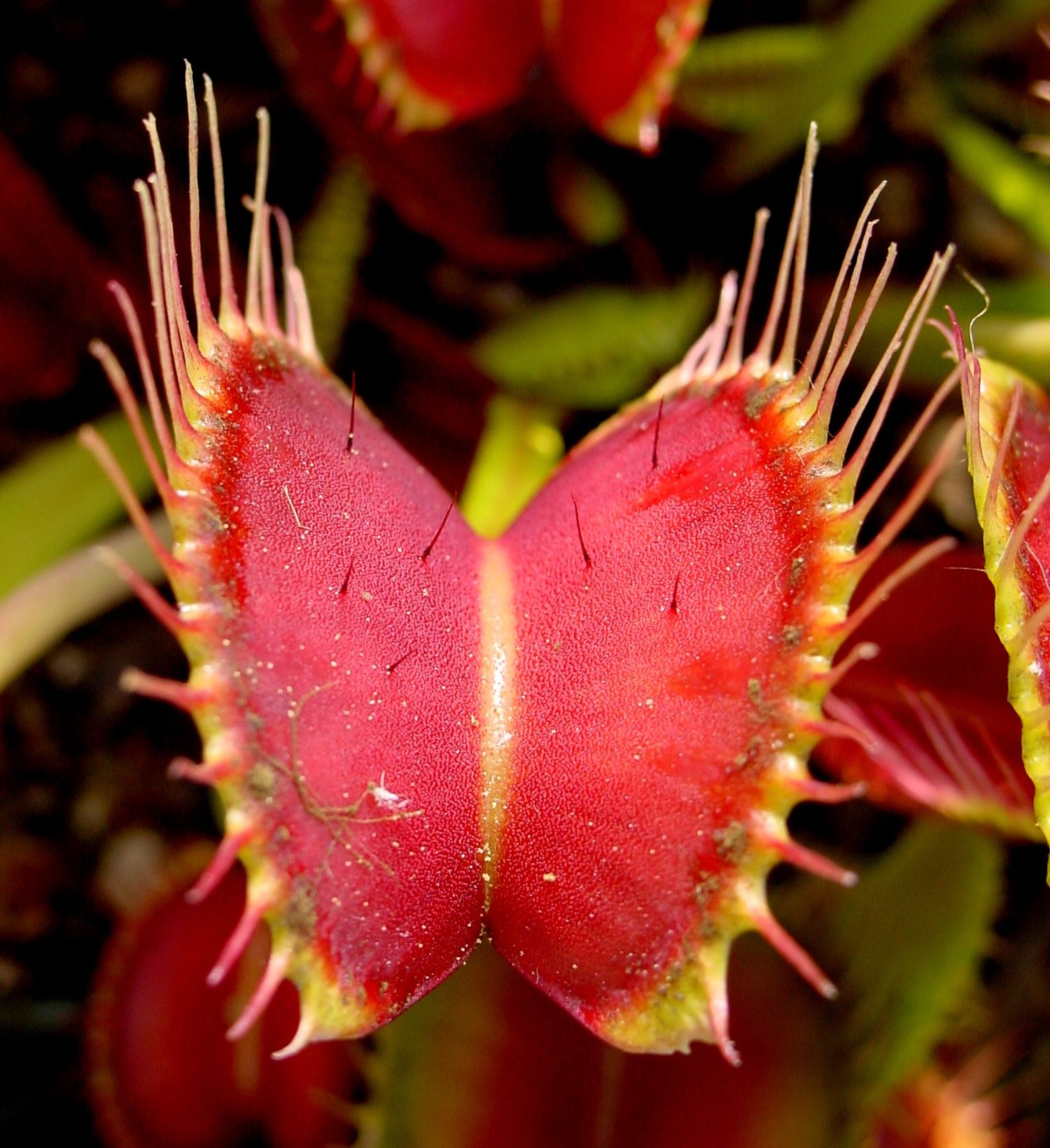
捕蝇草(Venus fly trap)在它陷阱状的叶子上有微小的毛。当一只昆虫触碰这些毛时,一个快速的电信号铺开,细胞快速失去水并改变形状,而陷阱猛地关闭以捕捉昆虫。
Auxin and growth
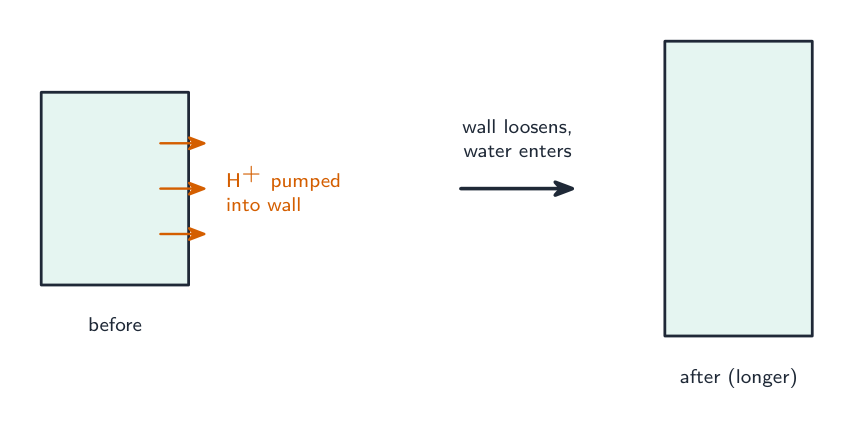
生长素(auxin)是一种使细胞长得更长(伸长(elongation)生长)的植物激素。它通过使细胞把质子(protons,氢离子)泵入细胞壁(cell wall)来做这个。这酸化(acidifies)细胞壁,它使细胞壁松弛,所以细胞能在水进入时伸展。
Gibberellin and germination
赤霉素(gibberellin)控制大麦(barley)种子的萌发(germination)。它开启制造淀粉酶的基因,淀粉酶随即把储存的淀粉分解成糖以喂养生长的幼苗。
例题。 解释为什么神经冲动只能单向通过突触,以及为什么髓鞘化能加快它沿轴突的传导。在突触处,装着神经递质的囊泡只存在于突触前神经元中,而受体只在突触后膜上 - 所以递质只能朝一个方向通过,这使突触成为一个单向阀。沿着有髓轴突,髓鞘绝缘了细胞膜,所以离子只能在郎飞结处通过;因此冲动是从一个结跳到下一个结(跳跃式传导),而不是依次让膜的每一部分去极化,这样快得多,消耗的 ATP 也更少。要找出造成每种效应的那个结构:囊泡和受体决定方向,绝缘和郎飞结决定速度。
探索
Phototropism: bending to the light
Step through it. Auxin gathers on the shaded side, makes those cells grow longer, and the shoot bends towards the light.
词汇表
训练
| 英文 | 中文 | 拼音 |
|---|---|---|
| Venus fly trap | 捕蝇草 | bǔ yíng cǎo |
| auxin | 生长素 | shēng zhǎng sù |
| elongation | 伸长 | shēn cháng |
| proton | 质子 | zhì zi |
| cell wall | 细胞壁 | xì bāo bì |
| acidify | 酸化 | suān huà |
| gibberellin | 赤霉素 | chì méi sù |
| germination | 萌发 | méng fā |
| barley | 大麦 | dà mài |
15.2
考试技巧
- 解释静息电位(Na+/K+ 泵;内部更负),然后把动作电位(去极化 → 复极化)解释为全或无。
- 跳跃式传导(髓鞘、郎飞结)加速冲动;不应期使它单向和离散。
- 按顺序描述突触:Ca2+ 进入 → 囊泡融合 → 神经递质 → 受体 → 新冲动。
- 肌肉收缩遵循肌丝滑动模型(肌动蛋白、肌球蛋白、ATP、Ca2+)。
本主题的互动课程
逐步学习,并即时检测练习。