Nhìn vào một ly nước và không khí trong phòng này. Cả hai đều trông sạch sẽ và đơn giản. Nhưng nước tự nhiên mang theo oxy hòa tan, khoáng chất, và đôi khi là nước thải và…
English narration · English + 中文 subtitles burned in · Giọng đọc tiếng Anh · phụ đề tiếng Anh + 中文 được ghi trực tiếp
10.1
Water · Nước
Syllabus · Chương trình
English
Core
Supplement
1 Describe chemical tests for the presence of water using anhydrous cobalt(II) chloride and anhydrous copper(II) sulfate
2 Describe how to test for the purity of water using melting point and boiling point
3 Explain that distilled water is used in practical chemistry rather than tap water because it contains fewer chemical impurities
4 State that water from natural sources may contain substances, including: (a) dissolved oxygen (b) metal compounds (c) plastics (d) sewage (e) harmful microbes (f) nitrates from fertilisers (g) phosphates from fertilisers and detergents
5 State that some of these substances are beneficial, including: (a) dissolved oxygen for aquatic life (b) some metal compounds provide essential minerals for life
6 State that some of these substances are potentially harmful, including: (a) some metal compounds are toxic (b) some plastics harm aquatic life (c) sewage contains harmful microbes which cause disease (d) nitrates and phosphates lead to deoxygenation of water and damage to aquatic life Details of the eutrophication process are not required
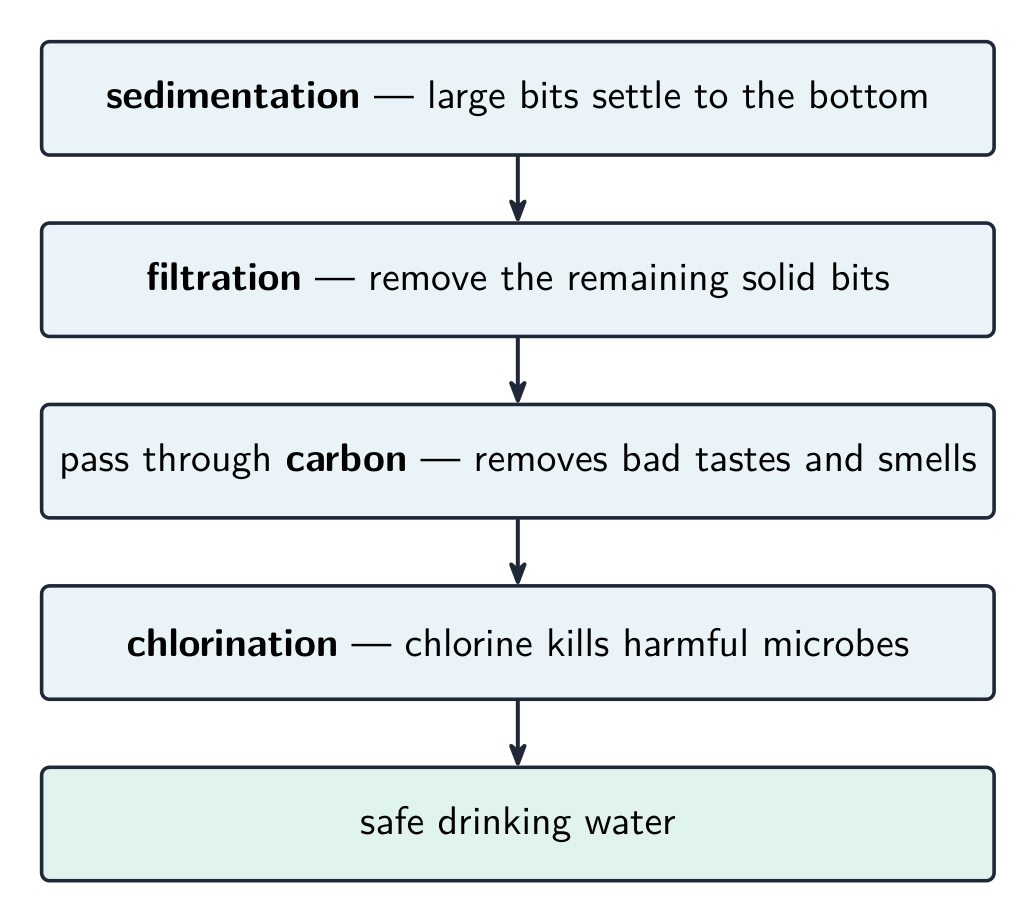
7 Describe the treatment of the domestic water supply in terms of: (a) sedimentation and filtration to remove solids (b) use of carbon to remove tastes and odours (c) chlorination to kill microbes
Tiếng Việt
Cốt lõi
Bổ sung
1 Mô tả các xét nghiệm hóa học để phát hiện sự có mặt của nước bằng coban(II) clorua không nước và đồng(II) sunfat không nước
2 Mô tả cách kiểm tra độ tinh khiết của nước thông qua nhiệt độ nóng chảy và nhiệt độ sôi
3 Giải thích rằng nước cất được sử dụng trong thực hành hóa học thay vì nước máy vì nó chứa ít tạp chất hóa học hơn
4 Nêu rằng nước từ nguồn tự nhiên có thể chứa các chất, bao gồm: (a) oxy hòa tan (b) hợp chất kim loại (c) nhựa (d) nước thải (e) vi sinh vật có hại (f) nitrat từ phân bón (g) photphat từ phân bón và chất tẩy rửa
5 Nêu rằng một số chất này có lợi, bao gồm: (a) oxy hòa tan cho đời sống thủy sinh (b) một số hợp chất kim loại cung cấp khoáng chất thiết yếu cho sự sống
6 Nêu rằng một số chất này có khả năng gây hại, bao gồm: (a) một số hợp chất kim loại độc hại (b) một số nhựa gây hại cho đời sống thủy sinh (c) nước thải chứa vi sinh vật có hại gây bệnh (d) nitrat và photphat dẫn đến thiếu oxy trong nước và gây hư hại cho đời sống thủy sinh. Chi tiết về quá trình phú dưỡng không yêu cầu
7 Mô tả quá trình xử lý nguồn nước sinh hoạt dựa trên: (a) lắng cặn và lọc để loại bỏ chất rắn (b) sử dụng than để loại bỏ mùi vị (c) khử trùng bằng clo để diệt vi sinh vật
Source: Cambridge International syllabus · Nguồn: Chương trình Cambridge International
English
Testing for water
Two chemical tests show that water is present:
Anhydrous 无水 cobalt(II) chloride turns from blue to pink when water is added.
Anhydrous copper(II) sulfate turns from white to blue when water is added.
These tests only show that water is there. To show that water is pure, you test its melting point 熔点 and boiling point 沸点: pure water melts at exactly $0\,{}^{\circ}\text{C}$ and boils at exactly $100\,{}^{\circ}\text{C}$. Any dissolved substance changes these values.
This is why distilled water 蒸馏水 is used in chemistry instead of tap water — it has far fewer chemical impurities 杂质.
What is in natural water
Water from rivers, lakes and the sea is not pure. It may contain dissolved oxygen 氧气, metal compounds, plastics, sewage 污水, harmful microbes 微生物, and nitrates 硝酸盐 and phosphates 磷酸盐 (which come from fertilisers and detergents).
Some of these are helpful:
dissolved oxygen lets aquatic life 水生生物 (fish and plants) breathe;
some metal compounds give essential minerals 矿物质.
Others are harmful:
some metal compounds are toxic 有毒 (poisonous);
some plastics harm aquatic life;
sewage carries microbes that cause disease;
nitrates and phosphates cause deoxygenation 缺氧 (loss of oxygen) in the water, which harms aquatic life.
Treating drinking water
To make water safe to drink, the water supply is treated in steps:
sedimentation 沉降 and filtration 过滤 remove solid bits;
passing it through carbon 碳 removes bad tastes and smells;
Cobalt(II) clorua vô nước chuyển từ màu xanh sang màu hồng khi thêm nước.
Đồng(II) sunfat vô nước chuyển từ màu trắng sang màu xanh khi thêm nước.
Những bài kiểm tra này chỉ cho thấy nước có mặt. Để chứng minh nước là tinh khiết, bạn phải kiểm tra nhiệt độ nóng chảy và nhiệt độ sôi: nước tinh khiết nóng chảy đúng ở $0\,{}^{\circ}\text{C}$ và sôi đúng ở $100\,{}^{\circ}\text{C}$. Bất kỳ chất tan nào cũng làm thay đổi các giá trị này.
Các bài kiểm tra chuyển màu cho thấy nước có mặt; nhiệt độ nóng chảy và sôi cố định cho thấy nước tinh khiết
Đây là lý do nước cất được sử dụng trong hóa học thay vì nước máy — nó có ít tạp chất hóa học hơn nhiều.
Thành phần của nước tự nhiên
Nước từ sông, hồ và biển không tinh khiết. Nó có thể chứa oxytan hòa tan, hợp chất kim loại, nhựa, nước thải, vi sinh vật gây hại, và nitrat cùng phosphat (xuất phát từ phân bón và chất tẩy rửa).
Một số trong đó có lợi:
oxytan hòa tan giúp sinh vật thủy sinh (cá và thực vật) hô hấp;
một số hợp chất kim loại cung cấp khoáng chất thiết yếu.
Số khác có hại:
một số hợp chất kim loại là độc hại (ngộ độc);
một số loại nhựa gây hại cho sinh vật thủy sinh;
nước thải mang theo vi sinh vật gây bệnh;
nitrat và phosphat gây giảm oxytan (mất oxy) trong nước, làm tổn hại đến sinh vật thủy sinh.
Xử lý nước uống
Để làm cho nước an toàn để uống, nguồn cung cấp nước được xử lý qua các bước:
lắng cặn và lọc loại bỏ các mảnh rắn;
đi qua than hoạt tính loại bỏ vị và mùi khó chịu;
clo hóa (thêm clo) tiêu diệt các vi sinh vật gây hại.
Nước được làm an toàn để uống qua các bước: lắng các mảnh lớn, lọc, loại bỏ vị bằng than hoạt tính, sau đó clo hóa
Explore · Khám phá
Water treatment lab · Phòng thí nghiệm xử lý nước
Classify water processes by what they remove or change. · Phân loại các quy trình xử lý nước dựa trên những gì chúng loại bỏ hoặc thay đổi.
10.2
Fertilisers · Phân bón
Syllabus · Chương trình
English
Core
Supplement
1 State that ammonium salts and nitrates are used as fertilisers
2 Describe the use of NPK fertilisers to provide the elements nitrogen, phosphorus and potassium for improved plant growth
Tiếng Việt
Cốt lõi
Bổ sung
1 Nêu rằng muối amoni và nitrat được sử dụng làm phân bón
2 Mô tả việc sử dụng phân bón NPK để cung cấp các nguyên tố nitơ, phốt pho và kali nhằm cải thiện sự phát triển của cây trồng
Source: Cambridge International syllabus · Nguồn: Chương trình Cambridge International
English
Fertilisers 肥料 are added to soil to help plants grow. Ammonium salts and nitrates are common fertilisers.
NPK fertilisers contain the three elements plants need most: nitrogen 氮气, phosphorus 磷 and potassium 钾.
Tiếng Việt
Phân bón được thêm vào đất để giúp cây trồng phát triển. Muối amoni và nitrat là các loại phân bón phổ biến.
Phân bón NPK chứa ba nguyên tố mà cây cần nhiều nhất: nitơ, phốt pho và kali.
Phân bón NPK cung cấp ba nguyên tố cây cần nhiều nhất: nitơ, phốt pho và kali
Explore · Khám phá
Fertiliser route lab · Quỹ đạo phòng thí nghiệm phân bón
Follow nitrogen from raw materials to crop growth. · Theo dõi đường đi của nitơ từ nguyên liệu thô đến sự phát triển của cây trồng.
Air quality and climate · Chất lượng không khí và khí hậu
Syllabus · Chương trình
English
Core
Supplement
1 State the composition of clean, dry air as approximately 78% nitrogen, $\text{N}_2$, 21% oxygen, $\text{O}_2$ and the remainder as a mixture of noble gases and carbon dioxide, $\text{CO}_2$
2 State the source of each of these air pollutants, limited to: (a) carbon dioxide from the complete combustion of carbon-containing fuels (b) carbon monoxide and particulates from the incomplete combustion of carbon-containing fuels (c) methane from the decomposition of vegetation and waste gases from digestion in animals (d) oxides of nitrogen from car engines (e) sulfur dioxide from the combustion of fossil fuels which contain sulfur compounds
3 State the adverse effect of these air pollutants, limited to: (a) carbon dioxide: higher levels of carbon dioxide leading to increased global warming, which leads to climate change (b) carbon monoxide: toxic gas (c) particulates: increased risk of respiratory problems and cancer (d) methane: higher levels of methane leading to increased global warming, which leads to climate change (e) oxides of nitrogen: acid rain, photochemical smog and respiratory problems (f) sulfur dioxide: acid rain
7 Describe how the greenhouse gases carbon dioxide and methane cause global warming, limited to: (a) the absorption, reflection and emission of thermal energy (b) reducing thermal energy loss to space
4 State and explain strategies to reduce the effects of these environmental issues, limited to: (a) climate change: planting trees, reduction in livestock farming, decreasing use of fossil fuels, increasing use of hydrogen and renewable energy, e.g. wind, solar (b) acid rain: use of catalytic converters in vehicles, reducing emissions of sulfur dioxide by using low-sulfur fuels and flue gas desulfurisation with calcium oxide
8 Explain how oxides of nitrogen form in car engines and describe their removal by catalytic converters, e.g. $2\text{CO} + 2\text{NO} \rightarrow 2\text{CO}_2 + \text{N}_2$
5 Describe photosynthesis as the reaction between carbon dioxide and water to produce glucose and oxygen in the presence of chlorophyll and using energy from light
6 State the word equation for photosynthesis, carbon dioxide + water $\rightarrow$ glucose + oxygen
9 State the symbol equation for photosynthesis, $6\text{CO}_2 + 6\text{H}_2\text{O} \rightarrow \text{C}_6\text{H}_{12}\text{O}_6 + 6\text{O}_2$
Tiếng Việt
Cốt lõi
Bổ sung
1 Nêu thành phần của không khí sạch và khô xấp xỉ 78% nitơ, $\text{N}_2$, 21% oxy, $\text{O}_2$ và phần còn lại là hỗn hợp khí hiếm và carbon dioxide, $\text{CO}_2$
2 Nêu nguồn gốc của từng loại chất ô nhiễm không khí, giới hạn ở: (a) carbon dioxide từ sự đốt cháy hoàn toàn nhiên liệu chứa carbon (b) carbon monoxide và hạt bụi từ sự đốt cháy không hoàn toàn nhiên liệu chứa carbon (c) methane từ sự phân hủy của thực vật và khí thải từ quá trình tiêu hóa ở động vật (d) oxit nitơ từ động cơ ô tô (e) sulfur dioxide từ sự đốt cháy nhiên liệu hóa thạch chứa hợp chất lưu huỳnh
3 Nêu tác động xấu của các chất ô nhiễm không khí này, giới hạn ở: (a) carbon dioxide: nồng độ cao hơn dẫn đến biến đổi khí hậu toàn cầu, gây ra biến đổi khí hậu (b) carbon monoxide: khí độc (c) hạt bụi: tăng nguy cơ mắc các vấn đề hô hấp và ung thư (d) methane: nồng độ cao hơn dẫn đến biến đổi khí hậu toàn cầu, gây ra biến đổi khí hậu (e) oxit nitơ: mưa axit, khói quang hóa và các vấn đề hô hấp (f) sulfur dioxide: mưa axit
7 Giải thích cách các khí nhà kính carbon dioxide và methane gây ra sự nóng lên toàn cầu, giới hạn ở: (a) sự hấp thụ, phản xạ và phát xạ nhiệt năng (b) làm giảm sự mất mát nhiệt năng vào vũ trụ
4 Nêu và giải thích các chiến lược để giảm thiểu tác động của các vấn đề môi trường này, chỉ giới hạn trong: (a) biến đổi khí hậu: trồng cây, giảm chăn nuôi gia súc, giảm sử dụng nhiên liệu hóa thạch, tăng cường sử dụng hydro và năng lượng tái tạo, ví dụ: gió, mặt trời (b) mưa axit: sử dụng bộ chuyển đổi xúc tác trong phương tiện giao thông, giảm phát thải sulfur dioxide bằng cách dùng nhiên liệu ít lưu huỳnh và khử lưu huỳnh khí khói thông qua canxi oxit
8 Giải thích cách nitơ oxit hình thành trong động cơ ô tô và mô tả quá trình loại bỏ chúng bằng bộ chuyển đổi xúc tác, ví dụ $2\text{CO} + 2\text{NO} \rightarrow 2\text{CO}_2 + \text{N}_2$
5 Mô tả quang hợp là phản ứng giữa carbon dioxide và nước để tạo ra glucose và oxy trong sự có mặt của diệp lục và sử dụng năng lượng từ ánh sáng
6 Nêu phương trình chữ của quá trình quang hợp, carbon dioxide + nước $\rightarrow$ glucose + oxygen
9 Nêu phương trình ký hiệu của quá trình quang hợp, $6\text{CO}_2 + 6\text{H}_2\text{O} \rightarrow \text{C}_6\text{H}_{12}\text{O}_6 + 6\text{O}_2$
Source: Cambridge International syllabus · Nguồn: Chương trình Cambridge International
English
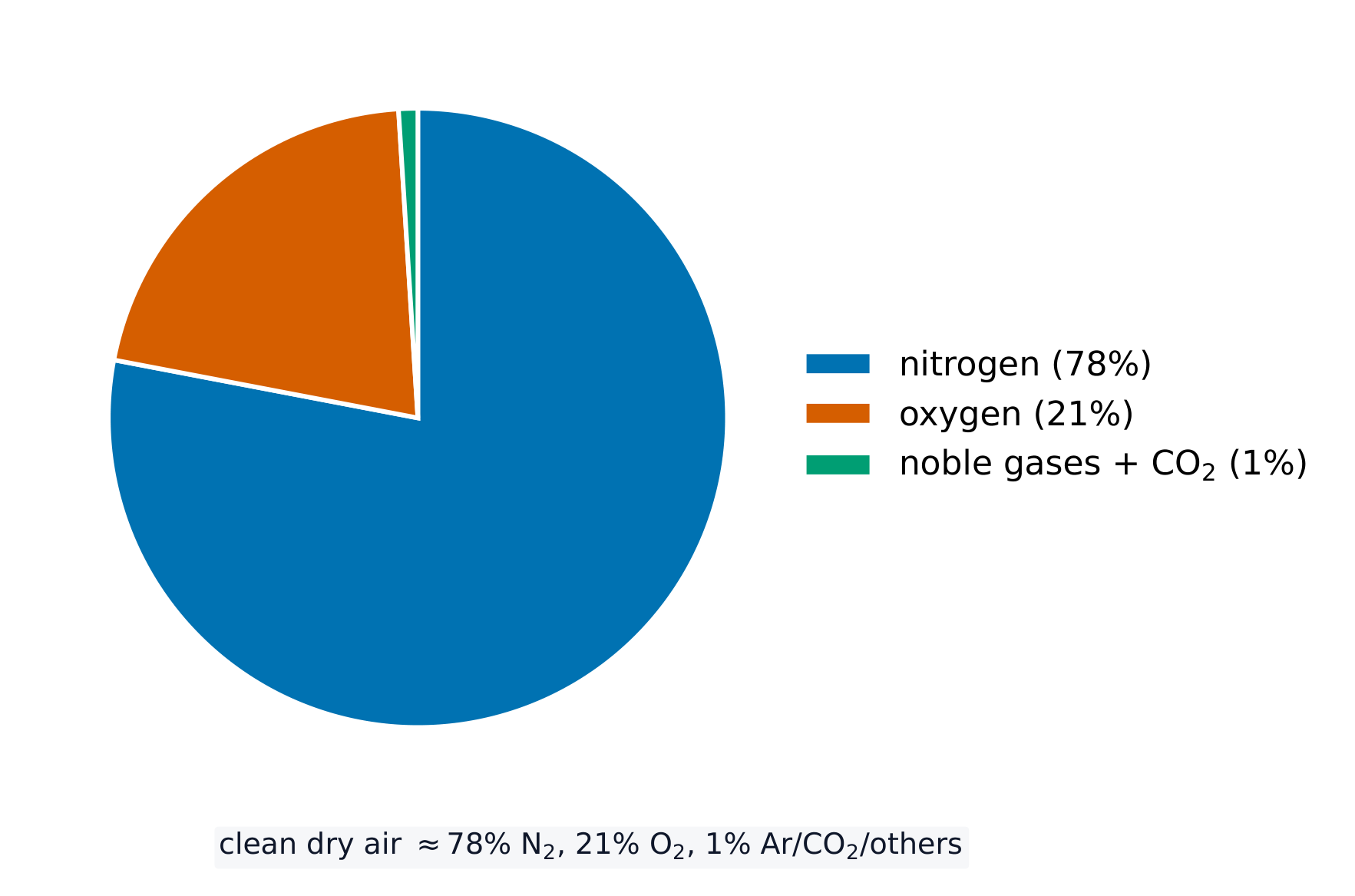
Clean, dry air is approximately:
78% nitrogen ($\text{N}_2$)
21% oxygen ($\text{O}_2$)
the rest is a mixture of noble gases 稀有气体 and carbon dioxide ($\text{CO}_2$).
Air pollutants and their sources
Pollutant
Main source
carbon dioxide ($\text{CO}_2$)
complete combustion 完全燃烧 of carbon-containing fuels
carbon monoxide 一氧化碳 and particulates 颗粒物
incomplete combustion 不完全燃烧 of carbon-containing fuels
methane 甲烷
rotting plants and waste gases from animal digestion
oxides of nitrogen 氮氧化物
car engines
sulfur dioxide
burning fossil fuels 化石燃料 that contain sulfur 硫
Effects of these pollutants
Carbon dioxide 二氧化碳 and methane are greenhouse gases 温室气体: more of them causes global warming 全球变暖, which leads to climate change 气候变化.
Carbon monoxide is a toxic gas.
Particulates increase the risk of respiratory 呼吸 (breathing) problems and cancer 癌症.
Oxides of nitrogen cause acid rain 酸雨, photochemical smog 光化学烟雾 and breathing problems.
Sulfur dioxide causes acid rain.
Worked example. A power station burns coal containing sulfur, and a lake downwind slowly turns acidic. Name the pollutant, explain the link, and give one way to stop it. Burning a fossil fuel that contains sulfur releases sulfur dioxide, which causes acid rain, so the rain falling on the lake is acidic. To stop it at the source, use flue gas desulfurisation, where calcium oxide removes the sulfur dioxide from the waste gases before they leave the chimney, or switch to a low-sulfur fuel. Match the fix to the pollutant: a catalytic converter treats a car's oxides of nitrogen and would do nothing about a coal-fired power station's sulfur dioxide.
Reducing these problems
To slow climate change: plant trees, farm fewer animals, burn fewer fossil fuels, and use more hydrogen and renewable energy 可再生能源 such as wind and solar power.
To reduce acid rain: fit catalytic converters 催化转化器 in cars, use low-sulfur fuels, and use flue gas desulfurisation 烟气脱硫 with calcium oxide 氧化钙 to remove sulfur dioxide from waste gases.
How greenhouse gases warm the Earth
Greenhouse gases such as carbon dioxide and methane let sunlight through, but they absorb the thermal energy 热能 given off by the warm Earth, and send some of it back down. This reduces the thermal energy lost to space, so the Earth gets warmer.
In a car engine, the high temperature makes nitrogen and oxygen from the air react to form oxides of nitrogen. A catalytic converter removes them, for example:
Photosynthesis 光合作用 is the opposite of combustion — it removes carbon dioxide from the air. Plants use light energy and chlorophyll 叶绿素 to turn carbon dioxide and water into glucose 葡萄糖 and oxygen:
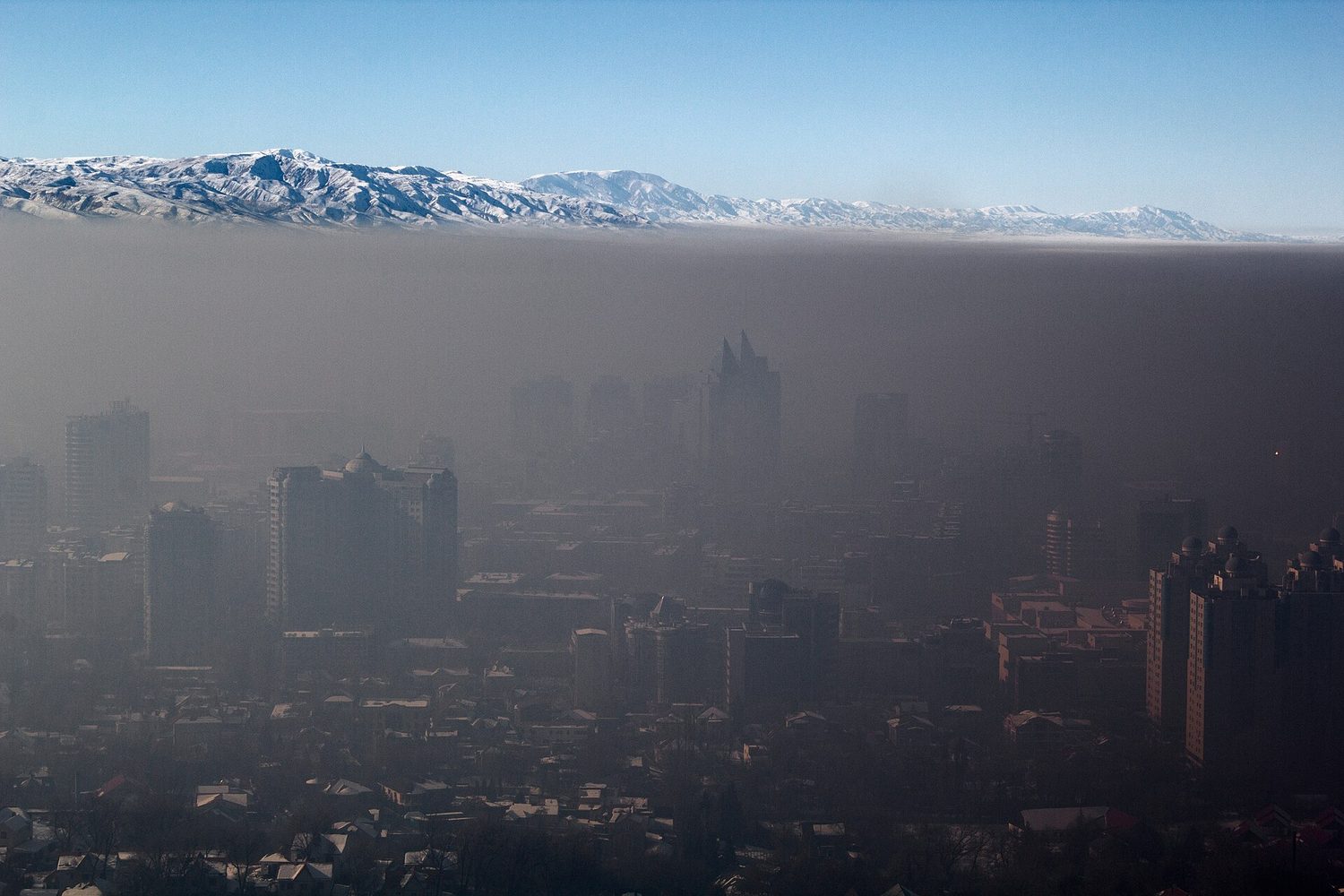
Đốt nhiên liệu hóa thạch gây ô nhiễm không khí và thay đổi khí hậu.
Không khí sạch, khô bao gồm khoảng:
78% nitơ ($\text{N}_2$)
21% oxi ($\text{O}_2$)
phần còn lại là hỗn hợp các khí trơ và carbon dioxide ($\text{CO}_2$).
Không khí sạch, khô gồm khoảng 78% nitơ, 21% oxi, và 1% các khí khác (khí trơ và carbon dioxide)
Các chất ô nhiễm không khí và nguồn gốc của chúng
Chất ô nhiễm
Nguồn chính
carbon dioxide ($\text{CO}_2$)
cháy hoàn toàn các nhiên liệu chứa carbon
carbon monoxide và hạt bụi
cháy không hoàn toàn các nhiên liệu chứa carbon
methane
thực vật thối rữa và khí thải từ quá trình tiêu hóa của động vật
oxit nitơ
động cơ xe hơi
sulfur dioxide
đốt nhiên liệu hóa thạch chứa lưu huỳnh
Tác hại của các chất ô nhiễm này
Carbon dioxide và methane là khí nhà kính: lượng tăng cao dẫn đến bão hòa toàn cầu, gây ra biến đổi khí hậu.
Carbon monoxide là một loại khí độc hại.
Hạt bụi làm tăng nguy cơ hô hấp (hít thở) và ung thư.
Oxit nitơ gây mưa axit, smog quang hóa và các vấn đề về hô hấp.
Sulfur dioxide gây mưa axit.
Ví dụ minh họa. Một nhà máy điện đốt than chứa lưu huỳnh, và một hồ nước ở phía dưới gió dần trở nên có tính axit. Hãy nêu tên chất ô nhiễm, giải thích mối liên hệ, và đưa ra một cách để ngăn chặn nó. Đốt nhiên liệu hóa thạch chứa lưu huỳnh sẽ phát thải sulfur dioxide (SO₂), gây ra mưa axit, do đó lượng mưa rơi xuống hồ sẽ có tính axit. Để ngăn chặn tại nguồn, hãy sử dụng hệ thống khử lưu huỳnh trong khí thải, nơi canxi oxide loại bỏ sulfur dioxide khỏi các khí thải trước khi chúng thoát qua khói ống, hoặc chuyển sang sử dụng nhiên liệu ít lưu huỳnh. Nối biện pháp khắc phục với chất ô nhiễm: bộ xúc tác xử lý oxit nitơ của xe hơi nhưng sẽ không có tác dụng gì đối với sulfur dioxide từ nhà máy điện đốt than.
Giảm thiểu các vấn đề này
Để làm chậm biến đổi khí hậu: trồng cây, giảm chăn nuôi gia súc, đốt ít nhiên liệu hóa thạch hơn, và sử dụng nhiều hydro cùng năng lượng tái tạo như năng lượng gió và năng lượng mặt trời.
Để giảm mưa axit: lắp đặt bộ xúc tác trong xe hơi, sử dụng nhiên liệu ít lưu huỳnh, và áp dụng hệ thống khử lưu huỳnh trong khí thải với canxi oxide để loại bỏ sulfur dioxide khỏi khí thải.
Bên trong bộ xúc tác là mạng tổ ong được phủ kim loại xúc tác; nhiều kênh nhỏ mang lại diện tích bề mặt rất lớn
Khí nhà kính làm nóng Trái Đất như thế nào
Các khí nhà kính như carbon dioxide và methane cho ánh sáng mặt trời đi qua, nhưng chúng hấp thụnhiệt năng do Trái Đất ấm phát ra, và phản xạ một phần nhiệt lượng này quay trở lại. Điều này làm giảm nhiệt năng mất vào vũ trụ, khiến Trái Đất trở nên ấm hơn.
Khí nhà kính cho ánh sáng mặt trời đi qua nhưng giữ lại một phần nhiệt do Trái Đất phát ra, khiến Trái Đất ấm lên
Trong động cơ xe hơi, nhiệt độ cao làm cho nitơ và oxy trong không khí phản ứng tạo thành oxit nitơ. Bộ xúc tác giúp loại bỏ chúng, ví dụ:
Quang hợp là quá trình ngược lại với sự cháy — nó loại bỏ carbon dioxide khỏi không khí. Thực vật sử dụng năng lượng ánh sáng và diệp lục để biến đổi carbon dioxide và nước thành glucose và oxy:
Two tests show water is present (cobalt(II) chloride blue → pink; copper(II) sulfate white → blue), but only fixed melting and boiling points (0 °C and 100 °C) show it is pure.
Clean, dry air is about 78% nitrogen, 21% oxygen and 1% other gases (mostly noble gases and carbon dioxide).
Match each pollutant to its source and effect: carbon monoxide (incomplete combustion; toxic); sulfur dioxide and oxides of nitrogen (acid rain); carbon dioxide and methane (greenhouse gases → global warming).
Greenhouse gases let sunlight through but absorb the heat the warm Earth gives off and send some back down, so the Earth warms up.
Tiếng Việt
Hai phép thử chứng minh nước có mặt (cobalt(II) chloride màu xanh lam → hồng; copper(II) sulfate màu trắng → xanh lam), nhưng chỉ có điểm nóng chảy và điểm sôi cố định (0 °C và 100 °C) mới chứng minh nước tinh khiết.
Không khí sạch, khô bao gồm khoảng 78% nitơ, 21% oxy và 1% các khí khác (chủ yếu là khí hiếm và carbon dioxide).
Nối mỗi chất ô nhiễm với nguồn gốc và tác hại của nó: carbon monoxide (cháy không hoàn toàn; độc hại); sulfur dioxide và oxit nitơ (gây mưa axit); carbon dioxide và methane (khí nhà kính →变暖 toàn cầu).
Khí nhà kính cho ánh sáng mặt trời đi qua nhưng hấp thụ nhiệt do Trái Đất ấm phát ra và phản xạ một phần quay trở lại, khiến Trái Đất ấm lên.
Interactive lessons on this topic · Bài học tương tác về chủ đề này
Work through it step by step, with instant-check exercises. · Làm theo từng bước, kèm theo bài tập kiểm tra ngay lập tức.
Pick one and the site follows you — notes, papers, videos and practice all open on it. · Chọn một môn và trang sẽ điều hướng theo — ghi chú, tài liệu, video và bài tập đều mở ở đó.
Type to search notes, lessons, code, vocabulary and past-paper questions across every subject. · Nhập để tìm ghi chú, bài học, mã, từ vựng và câu hỏi đề thi cũ trên mọi môn học.