Skip to content · ⁨Bỏ qua nội dung⁩

Excretion in humans · ⁨Thải chất ở người⁩

IGCSE Biology · ⁨Sinh học IGCSE⁩ · Topic 13 · ⁨Chủ đề 13⁩

Video lesson for this topic · ⁨Bài học video cho chủ đề này⁩ Open the video page · ⁨Mở trang video⁩
4:50

Sự bài tiết ở người

Thận của bạn lọc toàn bộ lượng máu khoảng ba mươi lần mỗi ngày. Nhưng điều thông minh ở đây là: chúng không chọn lấy những chất thải. Thay vào đó, chúng loại bỏ gần như…

English narration · English + 中文 subtitles burned in · ⁨Giọng đọc tiếng Anh · phụ đề tiếng Anh + 中文 được ghi trực tiếp⁩

13.1

Excretion

Syllabus · ⁨Chương trình⁩
English
Core Supplement
1 State that carbon dioxide is excreted through the lungs
2 State that the kidneys excrete urea and excess water and ions
3 Identify in diagrams and images the kidneys, ureters, bladder and urethra 4 Identify in diagrams and images the structure of the kidney, limited to the cortex and medulla
5 Outline the structure and function of a nephron and its associated blood vessels, limited to: (a) the role of the glomerulus in the filtration from the blood of water, glucose, urea and ions (b) the role of the nephron in the reabsorption of all of the glucose, some of the ions and most of the water back into the blood (c) the formation of urine containing urea, excess water and excess ions (details of these processes are not required)
6 Describe the role of the liver in the assimilation of amino acids by converting them to proteins
7 State that urea is formed in the liver from excess amino acids
8 Describe deamination as the removal of the nitrogen-containing part of amino acids to form urea
9 Explain the importance of excretion, limited to toxicity of urea
Tiếng Việt
Cốt lõi Bổ sung
1 Nêu rằng carbon dioxide được thải ra qua phổi
2 Nêu rằng thận thải trừ urea, nước và ion dư thừa
3 Xác định trên sơ đồ và hình ảnh thận, ống dẫn niệu, bàng quang và ống niệu đạo 4 Xác định trên sơ đồ và hình ảnh cấu trúc của thận, giới hạn ở vỏ thận và tủy thận
5 Trình bày cấu trúc và chức năng của nephron và các mạch máu đi kèm, giới hạn ở: (a) vai trò của cầu thận trong lọc từ máu nước, glucose, urea và ion (b) vai trò của nephron trong tái hấp thu toàn bộ glucose, một phần ion và hầu hết nước trở lại máu (c) sự hình thành nước tiểu chứa urea, nước và ion dư thừa (chi tiết các quá trình này không yêu cầu)
6 Mô tả vai trò của gan trong việc đồng hóa axit amin bằng cách chuyển chúng thành protein
7 Nêu rằng urea được tạo thành trong gan từ axit amin dư thừa
8 Mô tả quá trình khử amin là việc loại bỏ phần chứa nitơ của axit amin để tạo thành urea
9 Giải thích tầm quan trọng của bài tiết, giới hạn ở độc tính của urea

Source: Cambridge International syllabus · ⁨Nguồn: Chương trình Cambridge International⁩

English

Excretion 排泄 is the removal of the waste products of metabolism, and of substances the body has in excess. Two main wastes are removed:

  • carbon dioxide 二氧化碳 — made during respiration, and breathed out through the lungs.
  • urea 尿素 — made in the liver 肝脏, and removed by the kidneys together with excess water and ions 离子.
Tiếng Việt

Excretion là quá trình loại bỏ các sản phẩm thải của quá trình trao đổi chất, cũng như các chất mà cơ thể có dư thừa. Hai loại chất thải chính được loại bỏ:

  • carbon dioxide — được tạo ra trong quá trình hô hấp, và được thốt ra ngoài qua phổi.
  • urea — được tạo ra ở gan, và được loại bỏ bởi thận cùng với lượng nước và ion dư thừa.
Explore · ⁨Khám phá⁩

Excretion and the kidneys · ⁨Thải trừ và thận⁩

The kidneys clean the blood, removing urea and adjusting water, and make urine. · ⁨Thận lọc máu, loại bỏ urea và điều chỉnh nước, tạo ra nước tiểu.⁩

Vocabulary · ⁨Từ vựng⁩ Train · ⁨Luyện tập⁩
English Tiếng Việt
excretion/ekˈskreʃn/ sự bài tiết
carbon dioxide/ˈkɑːbən daɪˈɒksaɪd/ carbon dioxide
urea/juːˈrɪə/ urea
liver/ˈlɪvə/ gan
ions/ˈaɪɒnz/ ions
kidneys/ˈkɪdniz/ thận
urine/ˈjʊərɪn/ nước tiểu
ureters/ˈjʊəretəz/ niêm quang
bladder/ˈblædə/ bàng quang
urethra/jʊəˈriːθrə/ niệu đạo (urethra)
13.1

The urinary system

English

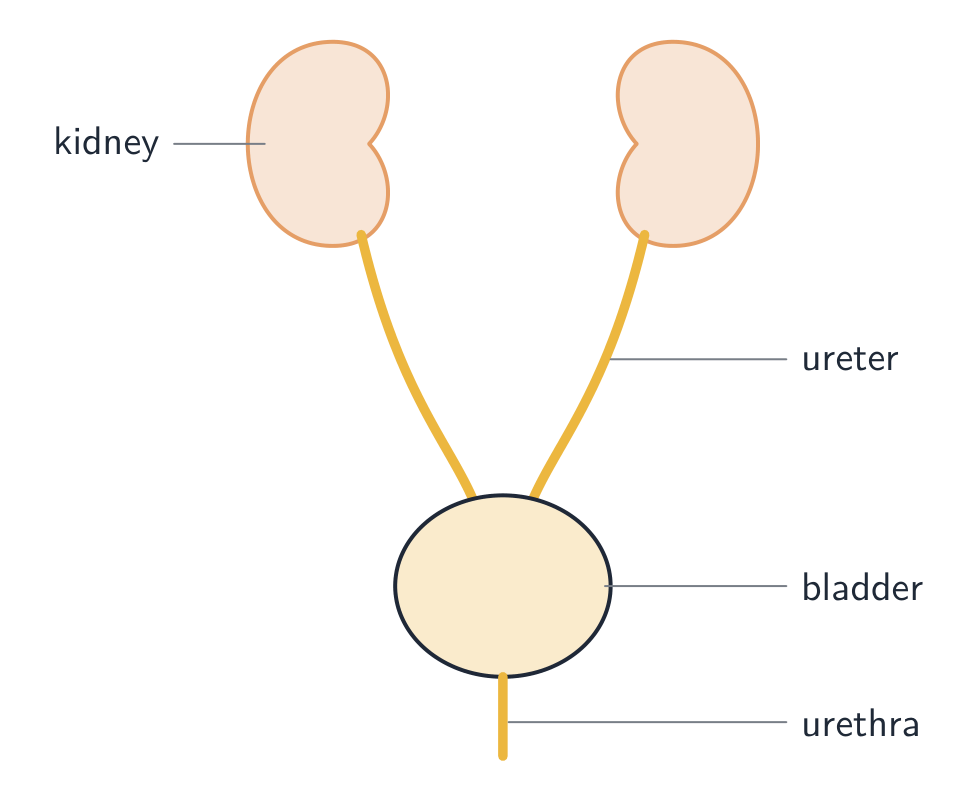
The kidneys 肾脏 clean the blood and make urine 尿液. The urine then passes through:

  • the ureters 输尿管 — tubes from the kidneys to the bladder.
  • the bladder 膀胱 — stores the urine.
  • the urethra 尿道 — carries the urine out of the body.

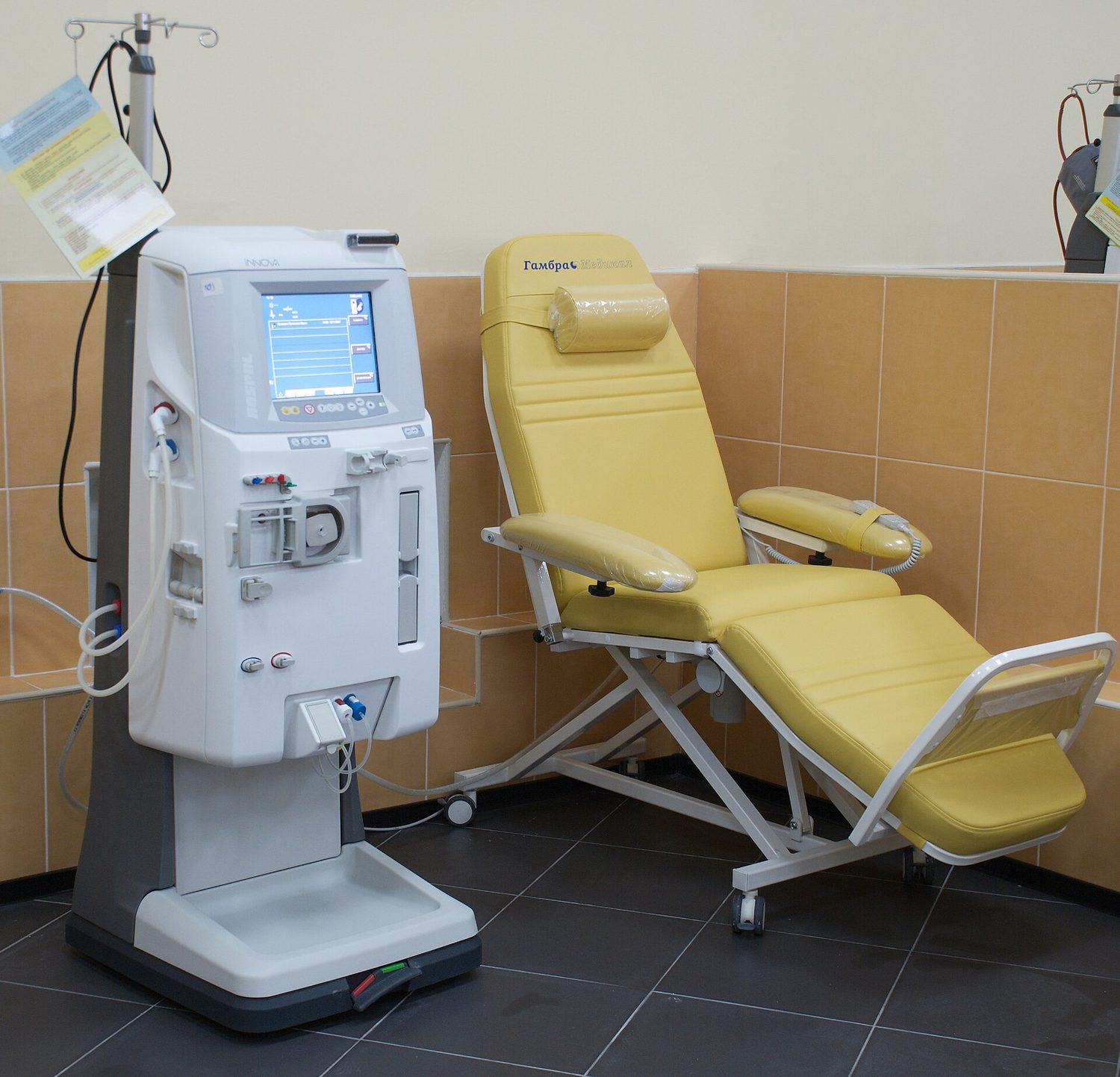
If the kidneys stop working, a dialysis 透析 machine can do their job. The patient's blood flows through the machine, where waste and excess water pass out across a thin membrane, and the clean blood returns to the body.

Tiếng Việt
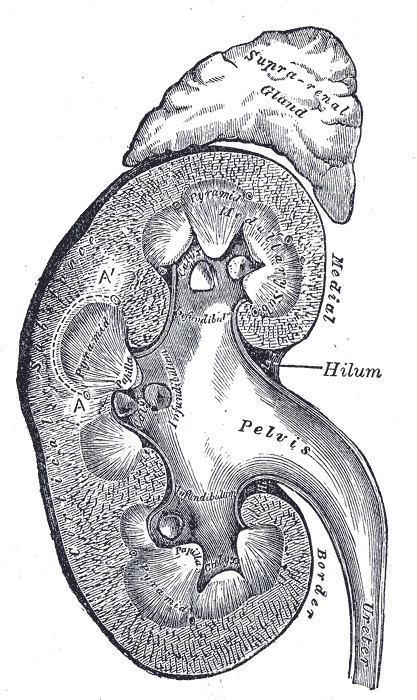
Mặt cắt ngang của thận người
Thận lọc máu và tạo ra nước tiểu.

Các thận làm sạch máu và tạo ra nước tiểu. Nước tiểu sau đó đi qua:

  • niệu quản — ống dẫn từ thận đến bàng quang.
  • bàng quang — chứa nước tiểu.
  • niệu đạo — dẫn nước tiểu ra khỏi cơ thể.
Hệ tiết niệu: hai thận nối với bàng quang duy nhất qua niệu quản, với niệu đạo dẫn ra bên dưới
Thận tạo ra nước tiểu, chảy xuống niệu quản vào bàng quang và ra ngoài qua niệu đạo

Nếu thận ngừng hoạt động, một máy dialysis (lọc máu nhân tạo) có thể thay thế công việc của chúng. Máu bệnh nhân chảy qua máy, nơi chất thải và nước dư thừa đi ra qua màng mỏng, và máu sạch trở về cơ thể.

Một máy dialysis hiện đại đứng cạnh ghế của bệnh nhân trong phòng khám; các ống dẫn máu bệnh nhân qua máy, nơi loại bỏ chất thải và nước dư thừa rồi trả lại máu sạch
Máy thẩm tách làm sạch máu khi thận ngừng hoạt động
Vocabulary · ⁨Từ vựng⁩ Train · ⁨Luyện tập⁩
English Tiếng Việt
dialysis/daɪˈæləsɪs/ lọc máu nhân tạo
renal cortex/ˈriːnl ˈkɔːteks/ vỏ thận
medulla/ˈmedʌlə/ tủy
nephrons/ˈnefrɒnz/ đơn vị thận
filtration/fɪlˈtreɪʃn/ lọc
13.1

Inside the kidney (Supplement)

English

A kidney has two regions: an outer cortex 皮质 and an inner medulla 髓质.

The nephron

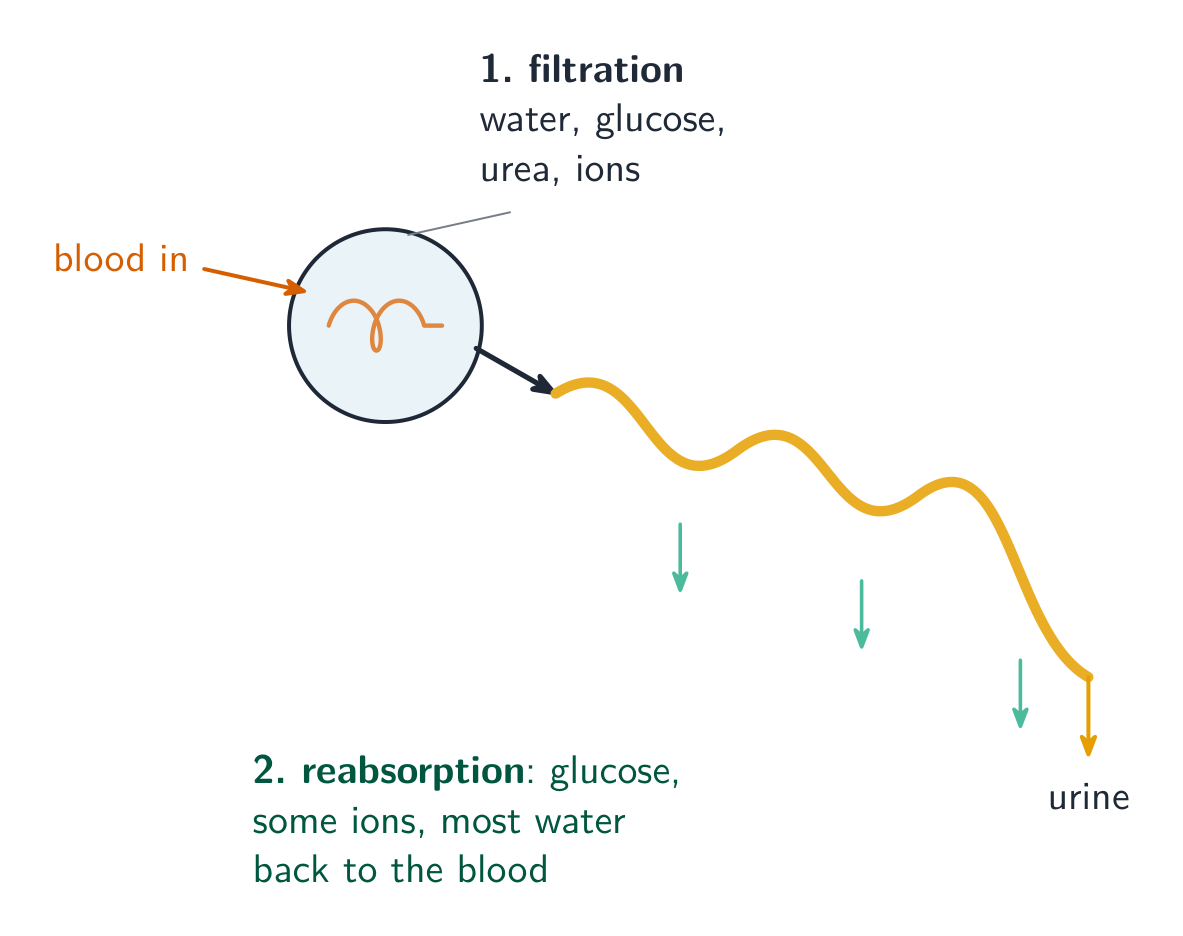
Each kidney holds millions of tiny tubes called nephrons 肾单位. A nephron cleans the blood in two steps:

  1. Filtration 过滤: at the glomerulus 肾小球 (a knot of capillaries), high pressure forces water, glucose 葡萄糖, urea and ions out of the blood and into the nephron.
  2. Reabsorption 重吸收: as the liquid flows along the nephron, the blood takes back all of the glucose, some of the ions, and most of the water.

What is left behind — urea, excess water and excess ions — becomes the urine.

Worked example. A healthy person's urine contains urea and ions but no glucose, even though glucose is forced out of the blood at the glomerulus. Explain. Filtration does not choose: high pressure pushes water, glucose, urea and ions into the nephron together. The choosing happens at the next step - during reabsorption the blood takes back all of the glucose, so none is left to reach the urine. Glucose does appear in the urine of someone with untreated diabetes, because there is more of it than the nephron can reabsorb. Filtration removes; reabsorption selects.

Tiếng Việt

Thận có hai vùng: vùng ngoài vỏ thận và vùng trong tủy thận.

Nephron

Mỗi thận chứa hàng triệu ống nhỏ gọi là cầu thận (nephron). Một nephron làm sạch máu theo hai bước:

  1. Lọc: tại glomerulus (một bó mao mạch), áp suất cao đẩy nước, glucose, urea và ion ra khỏi máu và vào nephron.
  2. Hấp thu lại: khi chất lỏng chảy dọc theo nephron, máu hấp thu lại tất cả glucose, một số ion và hầu hết nước.

Những gì còn lại — urea, nước dư thừa và ion dư thừa — trở thành nước tiểu.

Nephron: máu đi vào glomerulus nơi lọc đẩy nước, glucose, urea và ion vào ống; khi chất lỏng chảy dọc ống, glucose, một số ion và hầu hết nước được hấp thu lại vào máu, để lại nước tiểu
A nephron lọc máu, sau đó tái hấp thu các chất có lợi; phần còn lại là nước tiểu

Ví dụ minh họa. Nước tiểu của một người khỏe mạnh chứa urea và ion nhưng không có glucose, mặc dù glucose bị đẩy ra khỏi máu tại glomerulus. Giải thích. Quá trình lọc không chọn lọc: áp suất cao đẩy nước, glucose, urea và ion vào nephron cùng lúc. Sự lựa chọn diễn ra ở bước tiếp theo - trong quá trình hấp thu lại, máu lấy lại tất cả glucose, nên không có gì còn sót lại để đi vào nước tiểu. Glucose xuất hiện trong nước tiểu của người mắc đái tháo đường chưa điều trị, vì lượng glucose nhiều hơn khả năng hấp thu lại của nephron. Lọc thì loại bỏ; hấp thu lại thì chọn lọc.

Vocabulary · ⁨Từ vựng⁩ Train · ⁨Luyện tập⁩
English Tiếng Việt
glomerulus/ˈɡlɒmərjʊləs/ glomerulus
glucose/ˈɡluːkəʊs/ glucose
reabsorption/riːbˈsɔːpʃn/ tái hấp thu
assimilation/əˌsɪmɪˈleɪʃn/ đồng hóa
13.1

The liver, amino acids and urea (Supplement)

English

The liver carries out the assimilation 同化 of amino acids 氨基酸: it joins them together into the proteins 蛋白质 that the body needs.

The body cannot store extra amino acids. The liver breaks the excess down by deamination 脱氨基作用 — it removes the nitrogen 氮-containing part of each amino acid. This part is then turned into urea.

Urea must be excreted because it is toxic 有毒 (poisonous) if it is allowed to build up in the blood.

Tiếng Việt

Gan thực hiện quá trình tích hợp các axit amin: nó liên kết chúng lại thành protein mà cơ thể cần.

Cơ thể không thể lưu trữ lượng axit amin dư thừa. Gan phân hủy phần dư thừa bằng deamination — nó loại bỏ phần chứa nitơ của mỗi axit amin. Phần này sau đó được chuyển hóa thành urea.

Sơ đồ dòng chảy: axit amin dư thừa đi đến gan, nơi deamination loại bỏ phần nitơ để tạo ra urea độc hại, sau đó thận loại bỏ trong nước tiểu
Gan tạo ra urea từ excess amino acids; thận bài tiết nó

Urea phải được bài tiết vì nó độc hại (nguy hiểm) nếu để tích tụ trong máu.

Vocabulary · ⁨Từ vựng⁩ Train · ⁨Luyện tập⁩
English Tiếng Việt
amino acids/əˈmiːnəʊ ˈæsɪdz/ axit amin
proteins/ˈprəʊtiːnz/ protein
deamination/ˌdiːmɪˈneɪʃn/ deamination (khử amin)
nitrogen/ˈnaɪtrədʒn/ nitơ
toxic/ˈtɒksɪk/ độc hại
13.1

Exam tips · ⁨Mẹo làm bài thi⁩

English
  • Excretion removes metabolic wastes. Carbon dioxide leaves through the lungs; urea, excess water and excess ions leave through the kidneys.
  • Urine path: kidney → ureter → bladder → urethra.
  • Nephron: the glomerulus filters the blood; the nephron reabsorbs all the glucose, some ions and most of the water. What is left is urine.
  • Urea is made in the liver from excess amino acids by deamination.
  • We must excrete urea because it is toxic to the body.
Tiếng Việt
  • Excretion loại bỏ chất thải trao đổi chất. Carbon dioxide thoát qua phổi; urea, nước dư thừa và ion dư thừa thoát qua thận.
  • Đường đi nước tiểu: thận → niệu quản → bàng quang → niệu đạo.
  • Nephron: glomerulus lọc máu; nephron hấp thu lại tất cả glucose, một số ion và hầu hết nước. Những gì còn lại là nước tiểu.
  • Urea được tạo ra ở gan từ axit amin dư thừa thông qua deamination.
  • Chúng ta phải bài tiết urea vì nó độc hại đối với cơ thể.

Interactive lessons on this topic · ⁨Bài học tương tác về chủ đề này⁩

Work through it step by step, with instant-check exercises. · ⁨Làm theo từng bước, kèm theo bài tập kiểm tra ngay lập tức.⁩

Past Papers · ⁨Đề thi cũ⁩

More topics in IGCSE Biology · ⁨Sinh học IGCSE⁩ · ⁨Nhiều chủ đề hơn trong IGCSE Biology · ⁨Sinh học IGCSE⁩⁩

Log in or create account · ⁨Đăng nhập hoặc tạo tài khoản⁩

IGCSE, A-Level & AP