English
- describe the features of the endocrine system with reference to the hormones ADH, glucagon and insulin (see 14.1.8, 14.1.9 and 14.1.10)
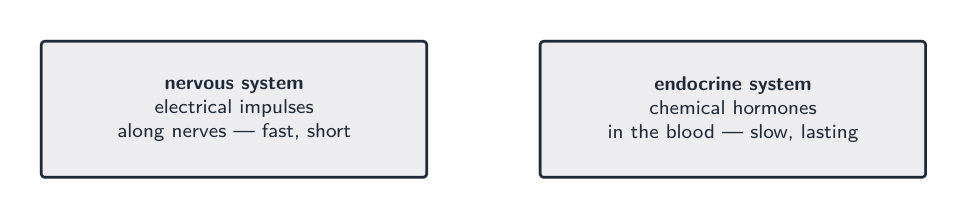
- compare the features of the nervous system and the endocrine system
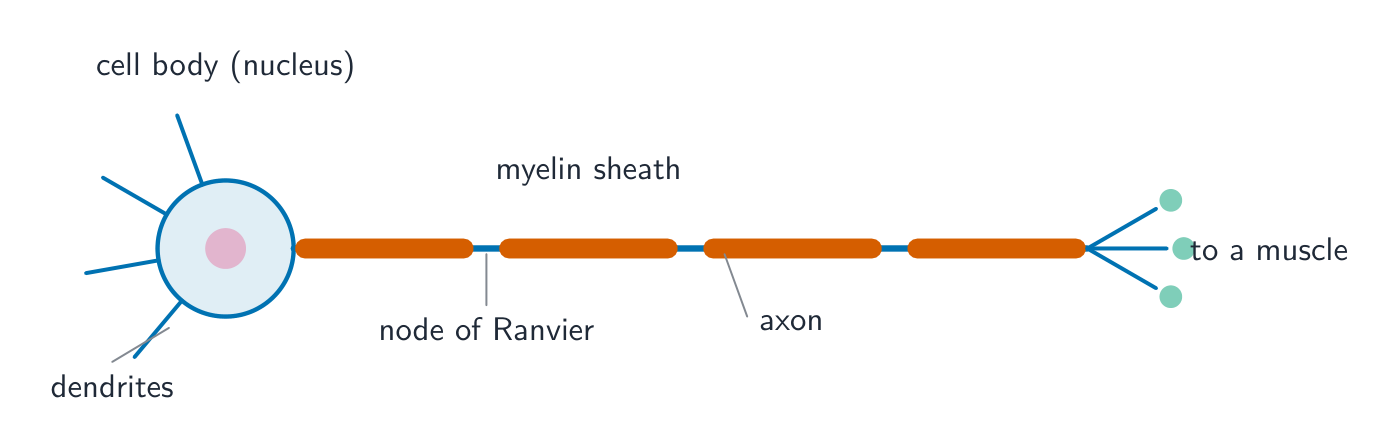
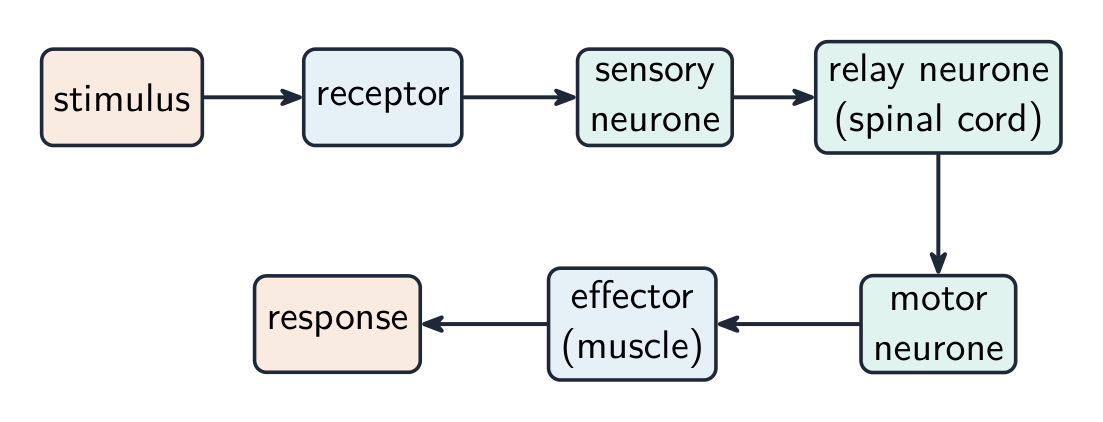
- describe the structure and function of a sensory neurone and a motor neurone and state that intermediate neurones connect sensory neurones and motor neurones
- outline the role of sensory receptor cells in detecting stimuli and stimulating the transmission of impulses in sensory neurones
- describe the sequence of events that results in an action potential in a sensory neurone, using a chemoreceptor cell in a human taste bud as an example
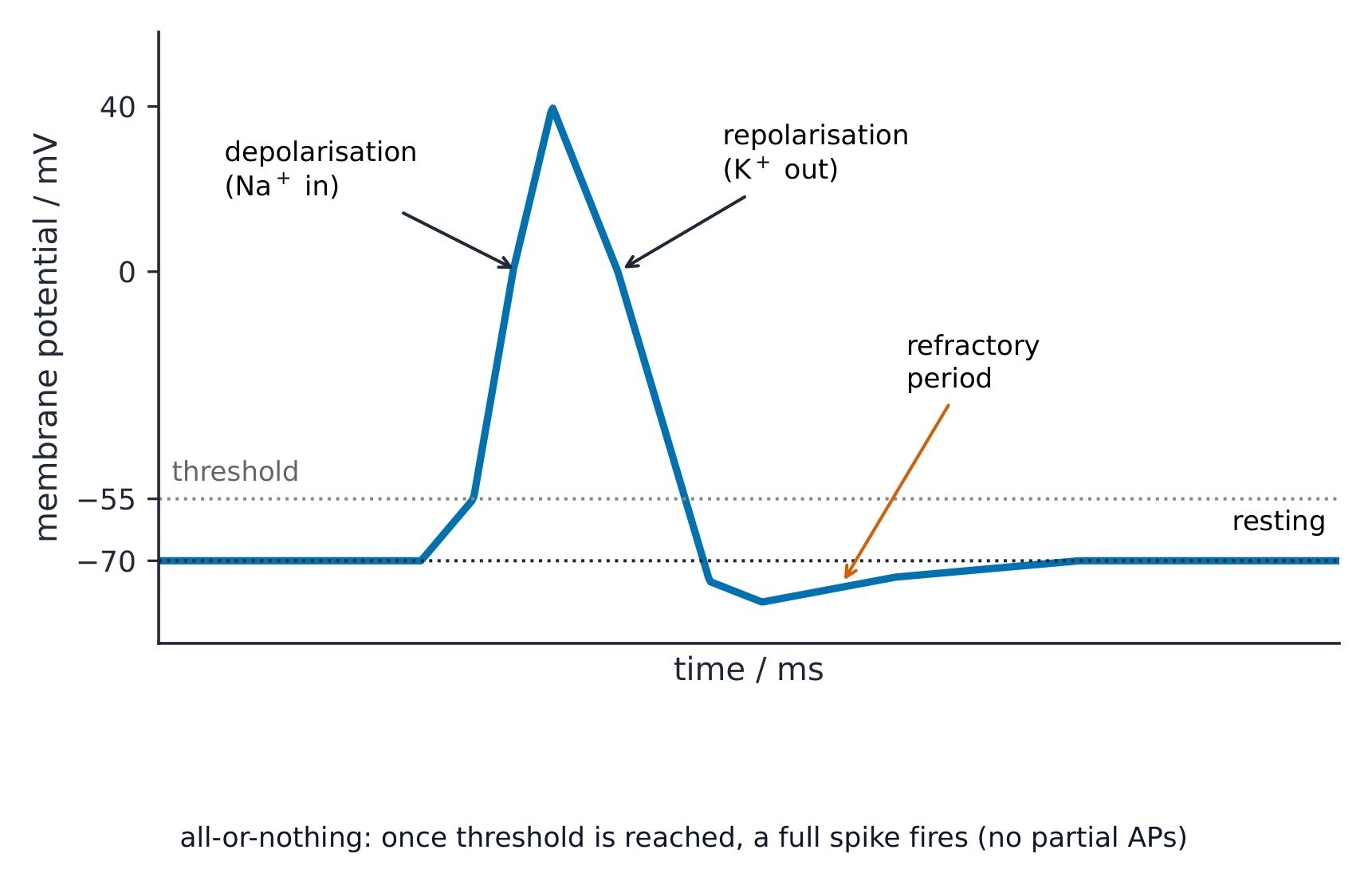
- describe and explain changes to the membrane potential of neurones, including: • how the resting potential is maintained • the events that occur during an action potential • how the resting potential is restored during the refractory period
- describe and explain the rapid transmission of an impulse in a myelinated neurone with reference to saltatory conduction
- explain the importance of the refractory period in determining the frequency of impulses
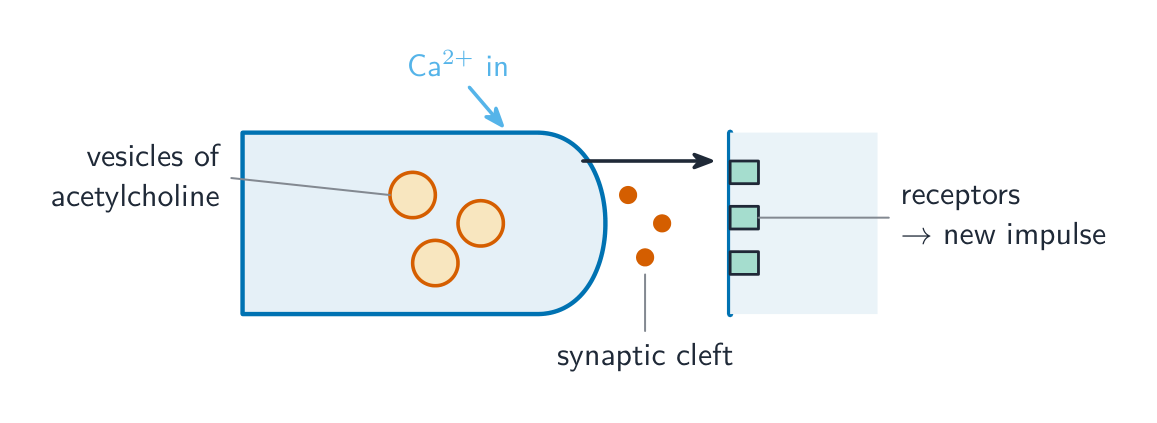
- describe the structure of a cholinergic synapse and explain how it functions, including the role of calcium ions
- describe the roles of neuromuscular junctions, the T-tubule system and sarcoplasmic reticulum in stimulating contraction in striated muscle
- describe the ultrastructure of striated muscle with reference to sarcomere structure using electron micrographs and diagrams
- explain the sliding filament model of muscular contraction including the roles of troponin, tropomyosin, calcium ions and ATP
Tiếng Việt
- Mô tả các đặc điểm của hệ nội tiết tham chiếu đến các hormone ADH, glucagon và insulin (xem 14.1.8, 14.1.9 và 14.1.10)
- So sánh các đặc điểm của hệ thần kinh và hệ nội tiết
- Mô tả cấu trúc và chức năng của neuron cảm giác và neuron vận động và nêu rõ rằng neuron trung gian kết nối neuron cảm giác và neuron vận động
- Nêu vai trò của tế bào thụ cảm trong việc phát hiện tác nhân kích thích và kích thích truyền xung thần kinh trong neuron cảm giác
- Mô tả trình tự các sự kiện dẫn đến xung động action trong một neuron cảm giác, sử dụng tế bào thụ cảm hóa học trong nhú vị giác người làm ví dụ
- Mô tả và giải thích các thay đổi đối với thế màng của neuron, bao gồm: • cách thế nghỉ được duy trì • các sự kiện xảy ra trong xung động action • cách thế nghỉ được phục hồi trong giai đoạn không đáp ứng
- Mô tả và giải thích sự truyền dẫn nhanh chóng của xung thần kinh trong một neuron có vỏ myelin tham chiếu đến dẫn truyền saltatory
- Giải thích tầm quan trọng của giai đoạn không đáp ứng trong việc xác định tần suất xung thần kinh
- Mô tả cấu trúc của kết nối cholinergic và giải thích cách nó hoạt động, bao gồm vai trò của ion canxi
- Mô tả vai trò của giao tiếp thần kinh-cơ, hệ thống T-tubule và màng lưới cơ tương trong việc kích thích co cơ ở cơ sọc
- Mô tả siêu cấu trúc của cơ sọc tham chiếu đến cấu trúc sarcomere sử dụng ảnh chụp điện tử và sơ đồ
- Giải thích mô hình sợi trượt của sự co cơ bao gồm vai trò của troponin, tropomyosin, ion canxi và ATP