Skip to content · ⁨ข้ามไปยังเนื้อหา⁩

Reproduction · ⁨การทำซ้ำ (Reproduction)⁩

IGCSE Biology · ⁨Biology IGCSE⁩ · Topic 16 · ⁨หัวข้อ 16⁩

Video lesson for this topic · ⁨บทเรียนวิดีโอสำหรับหัวข้อนี้⁩ Open the video page · ⁨เปิดหน้าวิดีโอ⁩
10:42

การทำซ้ำ (Reproduction)

มีเพียงสองวิธีในการสร้างสิ่งมีชีวิตใหม่ และทั้งสองวิธีมีการแลกเปลี่ยนกัน วิธีแรกเร็ว, ต้องการผู้ปกครองเพียงคนเดียว, และสร้างสำเนาที่สมบูรณ์แบบ วิธีที่สอง…

English narration · English + 中文 subtitles burned in · ⁨การบรรยายภาษาอังกฤษ · คำบรรยายภาษาอังกฤษ + 中文 ลอยตัวบนภาพ⁩

16.1 16.2

Two kinds of reproduction · ⁨รูปแบบการสืบพันธุ์สองแบบ⁩

Syllabus · ⁨หลักสูตร⁩
English
Core Supplement
1 Describe asexual reproduction as a process resulting in the production of genetically identical offspring from one parent
2 Identify examples of asexual reproduction in diagrams, images and information provided 3 Discuss the advantages and disadvantages of asexual reproduction: (a) to a population of a species in the wild (b) to crop production
ไทย
แก่น เพิ่มเติม
1 อธิบาย asexual reproduction ว่าเป็นกระบวนการที่ส่งผลให้เกิดลูกหลานที่มีพันธุกรรมเหมือนกันทั้งหมดจากพ่อแม่เพียงตัวเดียว
2 ชี้ระบุตัวอย่างของ asexual reproduction จากแผนภาพ รูปภาพ และข้อมูลที่ให้มา 3 อภิปรายข้อดีและข้อเสียของ asexual reproduction: (ก) ต่อประชากรของสายพันธุ์ในธรรมชาติ (ข) ต่อการผลิตพืชผลทางการเกษตร
English
Core Supplement
1 Describe sexual reproduction as a process involving the fusion of the nuclei of two gametes to form a zygote and the production of offspring that are genetically different from each other 3 State that nuclei of gametes are haploid and that the nucleus of a zygote is diploid
2 Describe fertilisation as the fusion of the nuclei of gametes
4 Discuss the advantages and disadvantages of sexual reproduction: (a) to a population of a species in the wild (b) to crop production
ไทย
แก่น เพิ่มเติม
1 อธิบาย sexual reproduction ว่าเป็นกระบวนการที่เกี่ยวข้องกับการรวมกันของนิวเคลียสของ gamete สองตัวเพื่อสร้าง zygote และการผลิตลูกหลานที่มีพันธุกรรมแตกต่างกัน 3 ระบุว่านิวเคลียสของ gamete เป็น haploid และนิวเคลียสของ zygote เป็น diploid
2 อธิบายการปฏิสนธิ (fertilisation) ว่าเป็นการรวมกันของนิวเคลียสของ gamete
4 อภิปรายข้อดีและข้อเสียของ sexual reproduction: (ก) ต่อประชากรของสายพันธุ์ในธรรมชาติ (ข) ต่อการผลิตพืชผลทางการเกษตร

Source: Cambridge International syllabus · ⁨แหล่งที่มา: หลักสูตร Cambridge International⁩

English

Reproduction 生殖 makes new organisms of the same kind. There are two types.

Asexual reproduction

Asexual reproduction 无性生殖 needs only one parent 亲本. The offspring 后代 have exactly the same genes 基因 as the parent — they are genetically identical (clones).

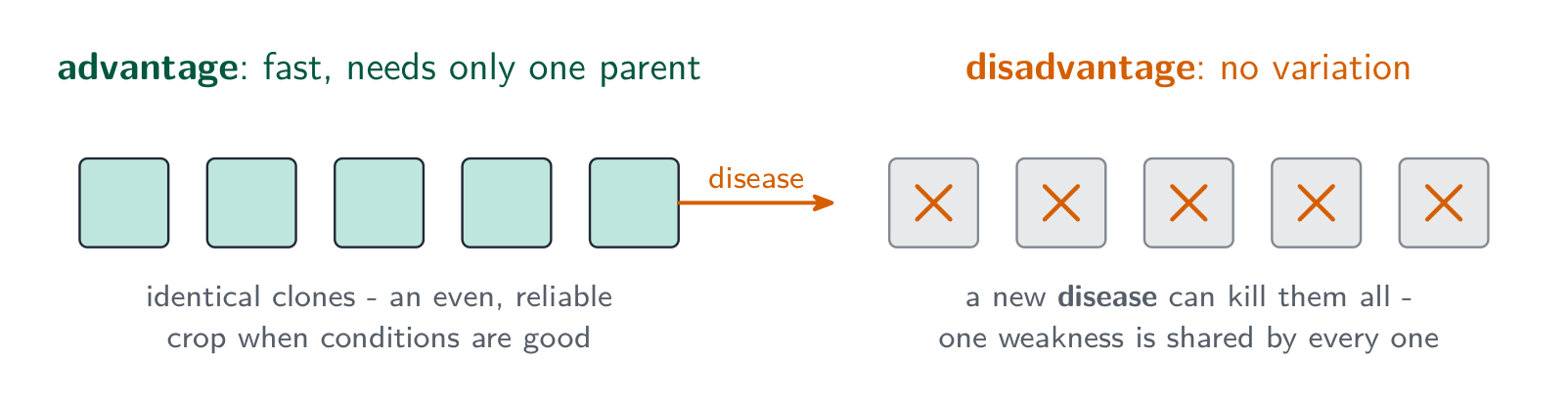
  • Advantage: it is fast and needs only one parent — useful when conditions are good and stable.
  • Disadvantage: all the offspring are identical, so if the environment 环境 changes (for example a new disease) they may all die. (In crops, identical plants give an even harvest, but one disease can wipe out the whole crop.)

Sexual reproduction

Sexual reproduction 有性生殖 needs two parents. It involves the fusion 融合 (joining) of the nuclei 细胞核 of two gametes 配子 (sex cells) to make a zygote 合子. This joining is called fertilisation 受精. The offspring get a mix of genes from both parents, so they show variation 变异 (they are genetically different).

  • Advantage: variation means some offspring may survive if the environment changes.
  • Disadvantage: it is slower and needs two parents.

(Supplement) The nuclei of gametes are haploid 单倍体 (one set of chromosomes 染色体); the nucleus of the zygote is diploid 二倍体 (two sets).

ไทย

การสืบพันธุ์ สร้างสิ่งมีชีวิตใหม่ชนิดเดียวกัน出来 There are two types.

การสืบพันธุ์แบบไม่อาศัยเพศมี parent เดียวที่สร้าง offspring identical clones; การสืบพันธุ์แบบอาศัยเพศมี parents สองตัว whose gametes รวมกันเพื่อให้ได้ offspring ที่หลากหลาย
การสืบพันธุ์แบบไม่อาศัยเพศต้องการ parent เดียวและให้ offspring identical clones; การสืบพันธุ์แบบอาศัยเพศต้องการสอง parent และให้ offspring ที่หลากหลาย

การสืบพันธุ์แบบไม่อาศัยเพศ

การสืบพันธุ์แบบไม่อาศัยเพศ ต้องการ parent เพียง หนึ่ง ตัว offspring มี genes เหมือนกับ parent พอดี ——they are genetically identical (clones).

  • ข้อดี: รวดเร็วและต้องการ parent เพียงตัวเดียว — เป็นประโยชน์เมื่อสภาพแวดล้อมเหมาะสมและคงที่
  • ข้อเสีย: offspring ทั้งหมด identical ดังนั้นหาก environment เปลี่ยนแปลง (เช่นโรคใหม่) พวกมันอาจตายทั้งหมด (ในพืชผลพืช identical ให้ harvest ที่สม่ำเสมอ แต่โรคหนึ่งสามารถทำลายทั้ง crop ได้)
การสืบพันธุ์แบบไม่อาศัยเพศรวดเร็วและให้ harvest ที่สม่ำเสมอและเชื่อถือได้ของ identical clones แต่เนื่องจากพวกมัน sharing every weakness โรคใหม่สามารถฆ่าพวกมันทั้งหมดได้
การสืบพันธุ์แบบไม่อาศัยเพศรวดเร็วแต่ไม่ให้ variation ดังนั้นโรคหนึ่งสามารถฆ่า offspring identical ทั้งหมดได้

การสืบพันธุ์แบบอาศัยเพศ

การสืบพันธุ์แบบอาศัยเพศ ต้องใช้ parents สอง ตัว涉及到 fusion (joining) ของ nuclei ของ gametes (sex cells) สองตัวเพื่อสร้าง zygote. การรวมนี้เรียกว่า fertilisation. Offspring ได้รับ genes mixture จากทั้งสอง parent ดังนั้นพวกเขาแสดงออกถึง variation (they are genetically different).

  • ข้อดี: variation หมายถึง offspring บางตัวอาจรอดชีวิตได้หาก environment เปลี่ยนแปลง
  • ข้อเสีย: ช้ากว่าและต้องการ parents สองตัว

(ส่วนเสริม) Nuclei ของ gametes เป็น haploid (one set of chromosomes); nucleus ของ zygote เป็น diploid (two sets).

Explore · ⁨สำรวจ⁩

Asexual reproduction · ⁨การสืบพันธุ์แบบไม่อาศัยเพศ⁩

One parent makes genetically identical offspring (clones) by mitosis — no gametes needed. · ⁨ผู้ปกครองหนึ่งคนสร้างลูกหลานที่เหมือนกันทางพันธุกรรม (คลोन) ผ่านการแบ่งเซลล์แบบไมโทซิส — ไม่ต้องการเซลล์สืบพันธุ์⁩

Vocabulary · ⁨คำศัพท์⁩ Train · ⁨ฝึกฝน⁩
English ไทย
reproduction/rɪprəˈdʌkʃn/ การสืบพันธุ์ (reproduction)
asexual reproduction/eɪˈsekʃuːəl rɪprəˈdʌkʃn/ การสืบพันธุ์แบบไม่อาศัยเพศ
parent/ˈpeərənt/ parent
offspring/ˈɒfsprɪŋ/ ลูกหลาน (offspring)
genes/dʒiːnz/ ยีนส์
environment/enˈvaɪrənmənt/ สิ่งแวดล้อม
sexual reproduction/ˈsekʃuːəl rɪprəˈdʌkʃn/ การสืบพันธุ์แบบอาศัยเพศ
fusion/ˈfjuːʒn/ การหลอมรวม
nuclei/ˈnjuːklɪi/ นิวเคลียส
gametes/ˈɡæmiːts/ 配子
zygote/ˈzaɪɡəʊt/ 合子
fertilisation/ˌfɜːtɪlaɪˈzeɪʃn/ fertilisation
variation/ˌveərɪˈeɪʃn/ ความหลากหลาย (Variation)
haploid/ˈhæplɔɪd/ haploid
chromosomes/ˈkrəʊməsəʊmz/ โครโมโซม
diploid/ˈdɪplɔɪd/ ไดพลอยด์
16.3

Sexual reproduction in plants · ⁨การสืบพันธุ์แบบอาศัยเพศในพืช⁩

Syllabus · ⁨หลักสูตร⁩
English
Core Supplement
1 Identify in diagrams and images and draw the following parts of an insect-pollinated flower: sepals, petals, stamens, filaments, anthers, carpels, style, stigma, ovary and ovules
2 State the functions of the structures listed in 16.3.1
3 Identify in diagrams and images and describe the anthers and stigmas of a wind-pollinated flower
4 Distinguish between the pollen grains of insect-pollinated and wind-pollinated flowers
5 Describe pollination as the transfer of pollen grains from an anther to a stigma
9 Describe self-pollination as the transfer of pollen grains from the anther of a flower to the stigma of the same flower or a different flower on the same plant
10 Describe cross-pollination as the transfer of pollen grains from the anther of a flower to the stigma of a flower on a different plant of the same species
11 Discuss the potential effects of self-pollination and cross-pollination on a population, in terms of variation, capacity to respond to changes in the environment and reliance on pollinators
6 State that fertilisation occurs when a pollen nucleus fuses with a nucleus in an ovule 12 Describe the growth of the pollen tube and its entry into the ovule followed by fertilisation (details of production of endosperm and development are not required)
7 Describe the structural adaptations of insect-pollinated and wind-pollinated flowers
8 Investigate and describe the environmental conditions that affect germination of seeds, limited to the requirement for: water, oxygen and a suitable temperature
ไทย
แก่น เพิ่มเติม
1 ชี้ระบุในแผนภาพและรูปภาพและวาดองค์ประกอบต่อไปนี้ของดอกไม้ที่ผสมเกสรโดยแมลง: กลีบเลี้ยง, กลีบดอก, เกสรเพศผู้, ก้านเกสร, ถุงเรณู, เกสรเพศเมีย, ก้านเกสรเพศเมีย, หัวเกสร, รังไข่ และ Ovules
2 ระบุหน้าที่ของโครงสร้างที่กล่าวถึงใน 16.3.1
3 ชี้ระบุในแผนภาพและรูปภาพและอธิบายถุงเรณูและหัวเกสรของดอกไม้ที่ผสมเกสรโดยลม
4 แยกแยะระหว่างเรณูของดอกไม้ที่ผสมเกสรโดยแมลงและดอกไม้ที่ผสมเกสรโดยลม
5 อธิบายการผสมเกสร (pollination) ว่าเป็นการถ่ายโอนเรณูจากถุงเรณูไปยังหัวเกสร
9 อธิบายการผสมเกสรแบบเดียวกัน (self-pollination) ว่าเป็นการถ่ายโอนเรณูจากถุงเรณูของดอกไม้ไปยังหัวเกสรของดอกไม้เดียวกันหรือดอกไม้อื่นบนต้นเดียวกัน
10 อธิบายการผสมเกสรข้าม (cross-pollination) ว่าเป็นการถ่ายโอนเรณูจากถุงเรณูของดอกไม้ไปยังหัวเกสรของดอกไม้บนต้นอื่นของสายพันธุ์เดียวกัน
11 อภิปรายผลกระทบที่เป็นไปได้ของการผสมเกสรแบบเดียวกันและการผสมเกสรข้ามต่อประชากร ในแง่ของความหลากหลาย, ความสามารถในการปรับตัวต่อการเปลี่ยนแปลงของสิ่งแวดล้อม และความขึ้นอยู่กับสัตว์ผสมเกสร
6 ระบุว่า fertilisation เกิดขึ้นเมื่อนิวเคลียสของเรณูรวมกับนิวเคลียสภายใน Ovule 12 อธิบายการเจริญเติบโตของท่อเรณูและการเข้าไปใน Ovule ตามด้วยการปฏิสนธิ (รายละเอียด关于การเกิด endosperm และการพัฒนาไม่จำเป็นต้องระบุ)
7 อธิบายการปรับตัวทางโครงสร้างของดอกไม้ที่ผสมเกสรโดยแมลงและดอกไม้ที่ผสมเกสรโดยลม
8 ตรวจสอบและอธิบายสภาพแวดล้อมที่มีผลต่อการงอกของเมล็ด โดยจำกัดเฉพาะความต้องการของ: น้ำ, ออกซิเจน และอุณหภูมิที่เหมาะสม

Source: Cambridge International syllabus · ⁨แหล่งที่มา: หลักสูตร Cambridge International⁩

English

Parts of an insect-pollinated flower

Part Function
sepals 萼片 protect the flower bud before it opens
petals 花瓣 large and colourful, to attract insects 昆虫
stamens 雄蕊 the male parts; each is a filament 花丝 holding up an anther 花药
anther makes pollen grains 花粉粒
carpel 雌蕊 the female part; made of a stigma 柱头, a style 花柱 and an ovary 子房
stigma catches pollen grains
ovary holds the ovules 胚珠, which become seeds

Pollination

Pollination 传粉 is the transfer of pollen grains from an anther to a stigma.

  • insect-pollinated flowers have bright petals, scent and nectar, and sticky or spiky pollen, to attract insects and stick to them.
  • wind-pollinated flowers have small dull petals, anthers and stigmas that hang outside, and light, smooth pollen that blows in the wind.

(Supplement) Self-pollination 自花传粉 is pollen landing on the stigma of the same flower (or another flower on the same plant). Cross-pollination 异花传粉 is pollen carried to a flower on a different plant of the same species. Cross-pollination gives more variation, helping the population cope with change, but it relies on pollinators 传粉者 or wind. Self-pollination is more reliable but gives less variation.

Fertilisation and germination

Fertilisation happens when a pollen nucleus fuses with a nucleus in an ovule. (Supplement) First a pollen tube 花粉管 grows down the style into the ovary, carrying the pollen nucleus to the ovule.

A seed 种子 will only germinate 萌发 (begin to grow) when it has water, oxygen 氧气 and a suitable temperature 温度.

ไทย

ส่วนประกอบของดอกไม้ที่ผสมโดยแมลง

ส่วนประกอบ หน้าที่
sepals ปกป้อง flower bud ก่อนที่จะบาน
petals ใหญ่และมีสีสัน เพื่อดึงดูด insects
stamens ส่วนเพศผู้; แต่ละอันเป็น filament รองรับ anther
anther ผลิต pollen grains
carpel ส่วนเพศเมีย; ประกอบด้วย stigma, style และ ovary
stigma ดักจับ pollen grains
ovary Holder of ovules, which become seeds
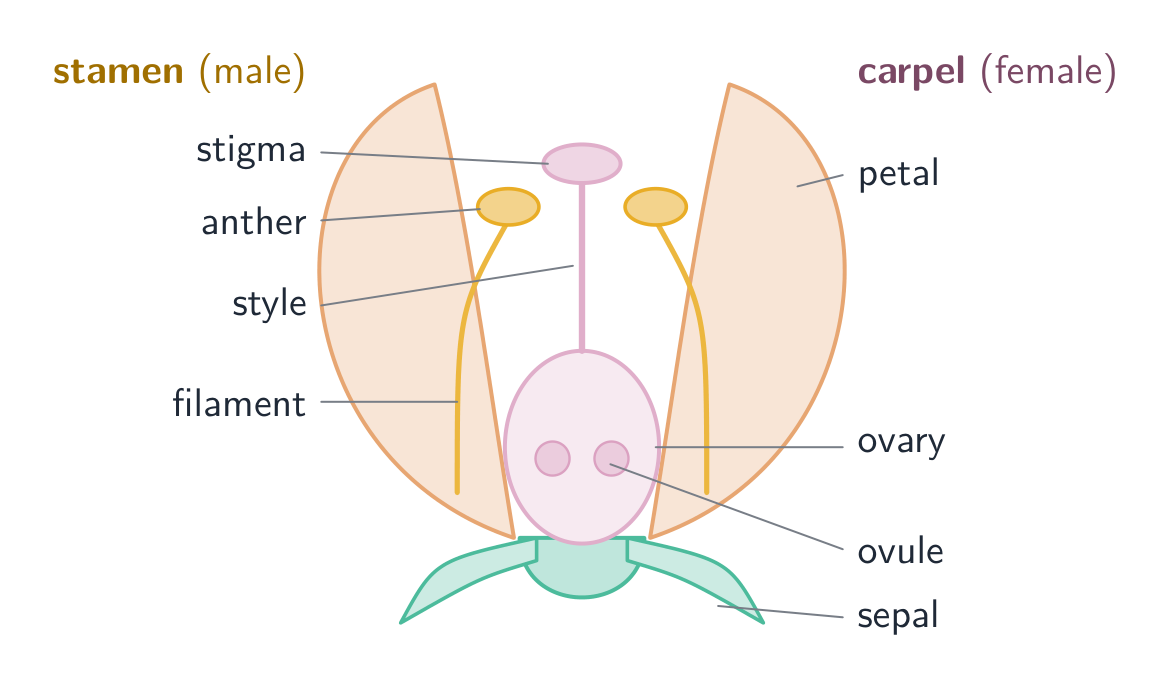
ส่วนขวางของดอกไม้ที่ผสมโดยแมลง: sepals และ petals อยู่ด้านนอก, stamens เพศผู้ (filament และ anther) และ carpel เพศเมีย (stigma, style และ ovary ที่มี ovules) อยู่ตรงกลาง
ดอกไม้ที่ถูกผสมโดยแมลง: ส่วนเพศผู้เป็น stamen และส่วนเพศเมียเป็น carpel
ภาพใกล้ของดอกลิลลี่จริง: มีเกสรเพศผู้ 6 อัน แต่ละอันเป็นก้านยาวที่ยึดหัวเกสรสีแดงเข้มซึ่งปกคลุมด้วยละอองเรณู ไว้รอบๆ ก้านเกสรเพศหญิงตรงกลางซึ่งมีปลายกาวเหนียว
ดอกลิลลี่จริง: ก้านเกสรที่ยาวสร้างละอองเรณู และกลีบเลี้ยงตรงกลางรับละอองเรณู

การผสมเกสร

การผสมเกสร คือการถ่ายโอน pollen grains จาก anther ไปยัง stigma

  • ดอกไม้ที่ผสมโดย insect มี petals สีสันสดใส กลิ่นหอม และน้ำหวาน และมี pollen ที่เหนียวหรือมีหนาม เพื่อดึงดูดแมลงและติดกับตัวมัน
  • ดอกไม้ที่ผสมโดย ลม มี petals เล็กสีทึบ anther และ stigmas ที่ห้อยออกมา และ pollen เบาเรียบที่พัดไปตามลม

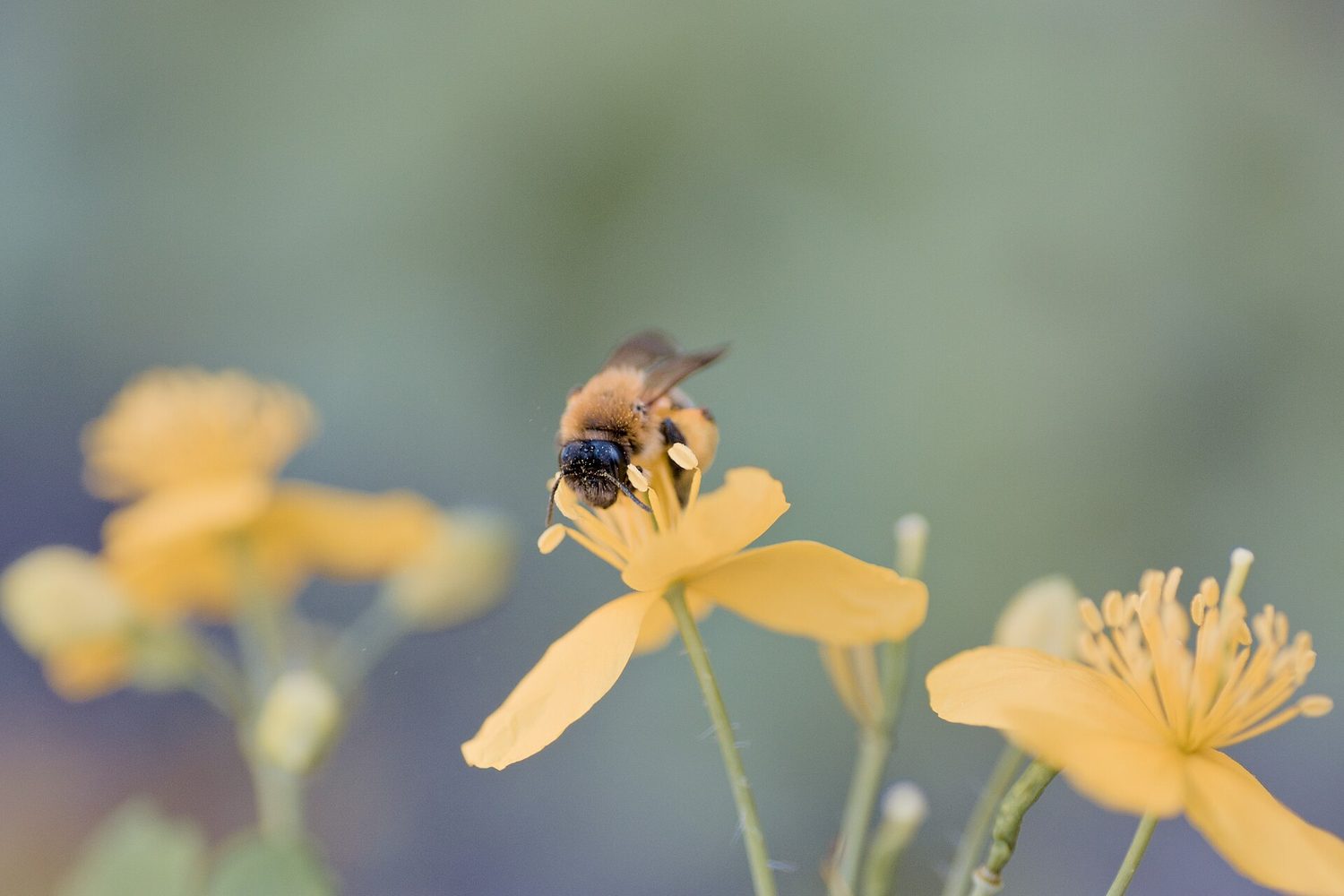
ผึ้งบนดอกไม้สีเหลือง ร่างกายของมันเคลือบด้วย pollen จาก anthers *ผึ้งพา pollen จากดอกไม้หนึ่งไปยังอีกดอกไม้หนึ่ง — การผสมเกสรโดยแมลงกำลังทำงาน
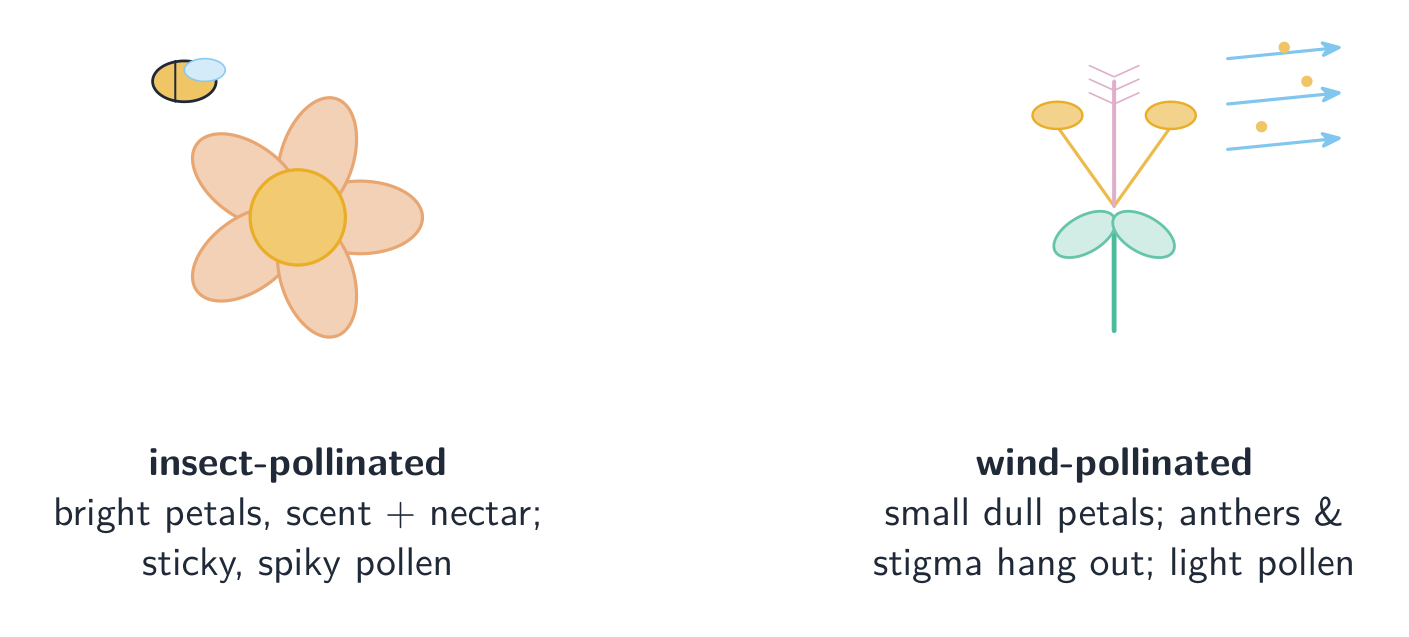
เปรียบเทียบดอกไม้สองชนิด: ดอกไม้ที่ผสมโดยแมลงที่มี petals ใหญ่สดใสที่ถูกผึ้งเยี่ยมชม และดอกไม้ที่ผสมโดยลมที่มี petals เล็กสีทึบ anther และ stigma แบบขนนกที่ห้อยออกมาในลม *ดอกไม้ที่ผสมโดยแมลงดูสวยงาม; ดอกไม้ที่ผสมโดยลมมีขนาดเล็กและมีส่วนห้อยออกมา
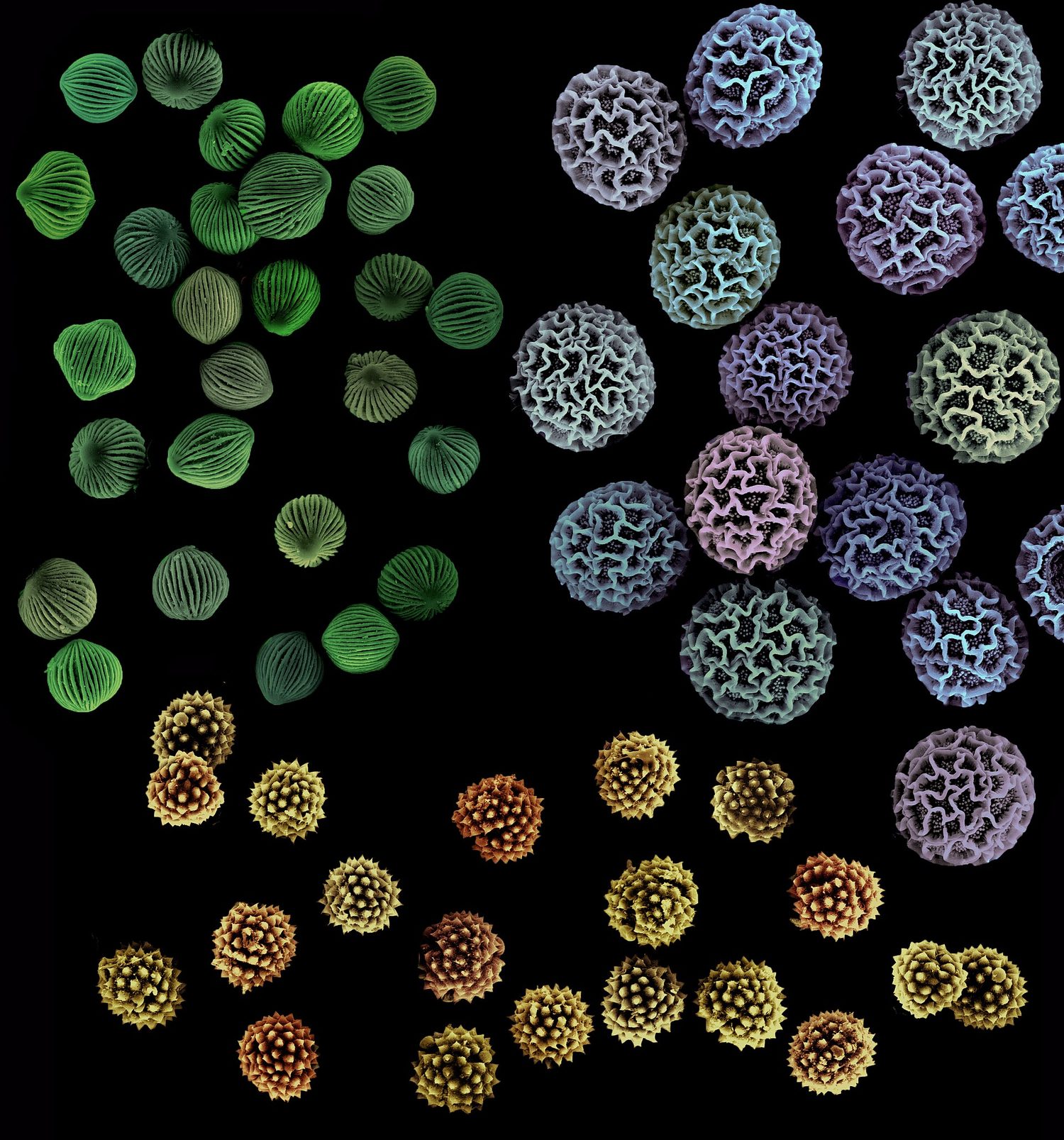
ภาพจุลทรรศน์อิเล็กตรอนแบบสแกนของ pollen grains จากพืชสามชนิดต่าง nhau ซึ่งมีการใส่สีเทียม; แต่ละชนิดมี surface pattern ของ ridges และ spikes ของตัวเอง
ละอองเกสรที่เห็นภายใต้กล้องจุลทรรศน์อิเล็กตรอน (เพิ่มสี); แต่ละพืชมีลวดลายเฉพาะตัว

(ส่วนเสริม) การผสมเกสรแบบเดียวกัน คือละอองเกสรตกลงบนเกสรเพศเมียของดอกไม้งานเดียวกัน (หรือดอกไม้อื่นบนต้นพืชเดียวกัน) การผสมเกสรข้ามต้น คือละอองเกสรถูกพาไปยังดอกไม้บน ต้นพืชอื่น ของชนิดเดียวกัน การผสมเกสรข้ามต้นให้ ความหลากหลาย มากขึ้น ช่วยให้ประชากรปรับตัวต่อการเปลี่ยนแปลงได้ แต่ต้องพึ่งพา ผู้ผสมเกสร หรือลม การผสมเกสรแบบเดียวกันเชื่อถือได้มากกว่าแต่ให้ความหลากหลายน้อยกว่า

การปฏิสนธิและการงอกของเมล็ด

การปฏิสนธิเกิดขึ้นเมื่อนิวเคลียสของละอองเกสรรวมกับนิวเคลียสภายในไข่ในผลึก ส่วนเสริม ก่อนอื่น ท่อละอองเกสร จะเจริญเติบโตผ่านก้านเกสรเพศเมียเข้าสู่รังไข่ พานิวเคลียสของละอองเกสรไปยังผลึก

เมล็ดจะ งอก (เริ่มเจริญเติบโต) เมื่อได้รับน้ำ ออกซิเจน และ อุณหภูมิ ที่เหมาะสมเท่านั้น

Explore · ⁨สำรวจ⁩

Sexual reproduction

Two parents each contribute a gamete; fertilisation combines them, creating variation. · ⁨พ่อแม่ทั้งสองฝ่ายมีส่วนร่วมให้.Authentication gamete การปฏิสนธิจะรวมกัน สร้างความหลากหลาย⁩

Vocabulary · ⁨คำศัพท์⁩ Train · ⁨ฝึกฝน⁩
English ไทย
sepals/ˈseplz/ กลีบเขียว
petals/ˈpetlz/ กลีบดอกไม้
insects/ˈɪnsekts/ แมลง
stamens/ˈsteɪmenz/ เกสรเพศผู้
filament/ˈfɪləmənt/ เส้นใย
anther/ˈænθə/ anther
pollen grains/ˈpɒlən ɡreɪnz/ เม็ดละออง pollen
carpel/ˈkɑːpl/ carpel
stigma/ˈstɪɡmə/ stigma
style/staɪl/ style
ovary/ˈəʊvəri/ ovary
ovules/ˈɒvjuːlz/ Ovule
pollination/ˌpɒlɪˈneɪʃn/ การผสมเกสร
self-pollination/self ˌpɒlɪˈneɪʃn/ การผสมเอง
cross-pollination/krɒs ˌpɒlɪˈneɪʃn/ การผสมข้าม
pollinators/ˈpɒlɪneɪtəz/ ผู้ผสมเกสร
pollen tube/ˈpɒlən tjuːb/ tubo gametophyte (pollen tube)
seed/siːd/ seed
germinate/ˈdʒɜːmɪneɪt/ งอก
oxygen/ˈɒksɪdʒn/ ออกซิเจน
temperature/ˈtemprɪtʃə/ อุณหภูมิ
testes/ˈtestiːz/ 睾丸
16.4

Sexual reproduction in humans · ⁨การสืบพันธุ์ทางเพศในมนุษย์⁩

Syllabus · ⁨หลักสูตร⁩
English
Core Supplement
1 Identify on diagrams and state the functions of the following parts of the male reproductive system: testes, scrotum, sperm ducts, prostate gland, urethra and penis
2 Identify on diagrams and state the functions of the following parts of the female reproductive system: ovaries, oviducts, uterus, cervix and vagina
3 Describe fertilisation as the fusion of the nuclei from a male gamete (sperm) and a female gamete (egg cell)
4 Explain the adaptive features of sperm, limited to: flagellum, mitochondria and enzymes in the acrosome
5 Explain the adaptive features of egg cells, limited to: energy stores and the jelly coat that changes at fertilisation
6 Compare male and female gametes in terms of: size, structure, motility and numbers
7 State that in early development, the zygote forms an embryo which is a ball of cells that implants into the lining of the uterus
8 Identify on diagrams and state the functions of the following in the development of the fetus: umbilical cord, placenta, amniotic sac and amniotic fluid 9 Describe the function of the placenta and umbilical cord in relation to the exchange of dissolved nutrients, gases and excretory products between the blood of the mother and the blood of the fetus
10 State that some pathogens and toxins can pass across the placenta and affect the fetus
ไทย
แก่น เพิ่มเติม
1 ชี้ระบุในแผนภาพและระบุหน้าที่ขององค์ประกอบต่อไปนี้ของระบบสืบพันธุ์ชาย: อัณฑะ, ถุงอัณฑะ, ท่อส่งอสุจิ, ต่อมโพรสตา, ท่อปัสสาวะและอวัยวะเพศชาย
2 ชี้ระบุในแผนภาพและระบุหน้าที่ขององค์ประกอบต่อไปนี้ของระบบสืบพันธุ์หญิง: มดลูก, ท่อนำไข่, มดลูก, ปากมดลูกและช่องคลอด
3 อธิบายการปฏิสนธิ (fertilisation) ว่าเป็นการรวมกันของนิวเคลียสจาก gamete เพศชาย (sperm) และ gamete เพศหญิง (ovum)
4 อธิบายลักษณะปรับตัวของอสุจิ โดยจำกัดอยู่ที่: ไflagellum, ไมโทคอนเดรีย และเอนไซม์ในอะโครโซม
5 อธิบายลักษณะปรับตัวของเซลล์ไข่ โดยจำกัดอยู่ที่: แหล่งพลังงานและเยื่อเจลที่เปลี่ยนแปลงเมื่อเกิดการปฏิสนธิ
6 เปรียบเทียบอสุจิและไข่ในแง่ของ: ขนาด โครงสร้าง ความสามารถในการเคลื่อนที่ และจำนวน
7 ระบุว่าในช่วงพัฒนาการต้นๆ เซลล์ไข่ที่ถูก_CUSTOMIZE จะกลายเป็นเอมบริโอซึ่งเป็นก้อนเซลล์ที่ฝังตัวเข้า lining ของมดลูก
8 ชี้ตำแหน่งและอธิบายหน้าที่ของสิ่งต่อไปนี้ในการพัฒนาทารก: สายสะดือ, รก, กระเพาะน้ำคร่ำ และน้ำคร่ำ 9 อธิบายหน้าที่ของรกและสายสะดือเกี่ยวข้องกับการแลกเปลี่ยนสารอาหารที่ละลายน้ำ ก๊าซ และผลิตภัณฑ์เสีย ระหว่างเลือดของแม่กับเลือดของทารก
10 ระบุว่าเชื้อโรคและสารพิษบางชนิดสามารถผ่านรกได้และส่งผลกระทบต่อทารกในครรภ์

Source: Cambridge International syllabus · ⁨แหล่งที่มา: หลักสูตร Cambridge International⁩

English

The male reproductive system

Part Function
testes 睾丸 make sperm 精子 and testosterone 睾酮
scrotum 阴囊 holds the testes outside the body, kept slightly cool
sperm ducts 输精管 carry sperm away from the testes
prostate gland 前列腺 adds fluid to make semen
urethra 尿道 carries semen (and urine) out through the penis
penis 阴茎 passes sperm into the female

The female reproductive system

Part Function
ovaries 卵巢 make egg cells 卵细胞 and oestrogen 雌激素
oviducts 输卵管 carry the egg towards the uterus; fertilisation happens here
uterus 子宫 where the baby develops
cervix 子宫颈 the ring of muscle at the base of the uterus
vagina 阴道 receives the penis; also the birth canal

Gametes and fertilisation

Fertilisation is the fusion of the nuclei of a male gamete (sperm) and a female gamete (egg cell). The two gametes are adapted to their jobs:

Sperm Egg cell
size very small large
number millions few (about one a month)
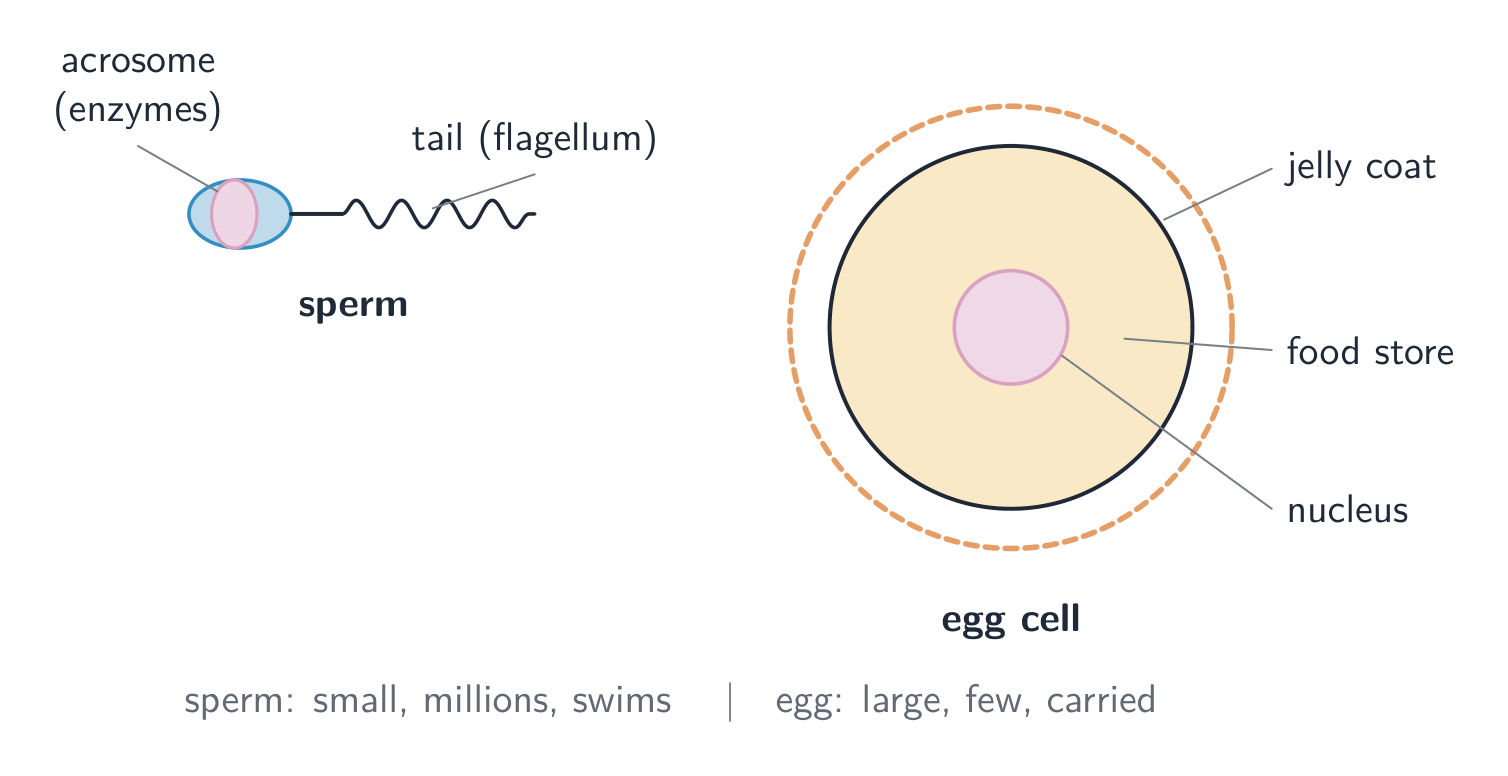
can it move? yes — swims with a flagellum 鞭毛 no — it is carried along
special features many mitochondria 线粒体 for energy; enzymes 酶 in the acrosome 顶体 to break into the egg a store of food; a jelly coat 胶质层 that changes after fertilisation to keep other sperm out

Pregnancy and the fetus

After fertilisation the zygote divides to form an embryo 胚胎 — a ball of cells that implants 植入 into the lining of the uterus. As it grows it becomes a fetus 胎儿. These structures support it:

  • the placenta 胎盘 — where dissolved nutrients, gases and wastes are exchanged between the mother's blood and the fetus's blood (the two never mix).
  • the umbilical cord 脐带 — joins the fetus to the placenta.
  • the amniotic sac 羊膜囊 — a bag around the fetus, filled with amniotic fluid 羊水 that cushions it.

(Supplement) Some pathogens 病原体 and toxins 毒素 can cross the placenta and harm the fetus.

ไทย

ระบบสืบพันธุ์ชาย

ส่วนประกอบ หน้าที่
ท่อนำอสุจิ สร้าง อสุจิ และ เทสโทสเตอโรน
ถุงอัณฑะ เก็บท่อนำอสุจิไว้ภายนอกร่างกาย ให้คงอุณหภูมิเย็นเล็กน้อย
ท่อนำอสุจิ อพยพอสุจิออกจากท่อนำอสุจิ
ต่อมลูกหมาก เพิ่มของเหลวเพื่อสร้างน้ำอสุจิ
ท่อปัสสาวะ นำน้ำอสุจิ (และปัสสาวะ) ออกผ่านอวัยวะเพศ
อวัยวะเพศ ส่งอสุจิเข้า體內หญิง

ระบบสืบพันธุ์หญิง

ส่วนประกอบ หน้าที่
รังไข่ สร้าง เซลล์ไข่ และ เอสโตรเจน
ท่อนำไข่ พาเซลล์ไข่เข้าสู่egra;เกิดการปฏิสนธิที่นี่
egra สถานที่ที่ทารกพัฒนา
ปากegra วงแหวนกล้ามเนื้อที่ฐานของegra
ช่องคลอด รับอวัยวะเพศชาย; ยังเป็นทางคลอด

เซลล์สืบพันธุ์และการปฏิสนธิ

การปฏิสนธิคือการรวมกันของนิวเคลียสจากเซลล์สืบพันธุ์เพศชาย (อสุจิ) และเซลล์สืบพันธุ์เพศหญิง (เซลล์ไข่) เซลล์ทั้งสองชนิดมีการปรับตัวให้เหมาะกับหน้าที่:

อสุจิ เซลล์ไข่
ขนาด เล็กมาก ใหญ่
จำนวน ล้านๆ น้อย (ประมาณหนึ่งต่อเดือน)
เคลื่อนไหวได้ไหม? ได้ — เต้นด้วย ฟลาเจลลา ไม่ได้ — ถูกพาไปตามกระแสน้ำ
คุณสมบัติพิเศษ มี ไมโตคอนเดรีย จำนวนมากเพื่อพลังงาน; เอนไซม์ ใน อะโครโซม เพื่อเจาะเข้าเซลล์ไข่ เป็นแหล่งอาหาร; เปลือกเจลลี่ ที่เปลี่ยนหลังการปฏิสนธิเพื่อป้องกันไม่ให้อสุจิอื่นเข้า
เซลล์อสุจิขนาดเล็กที่มีหัว อะครोโซม และหางยาว ถัดจากเซลล์ไข่กลมขนาดใหญ่กว่ามากซึ่งมีแหล่งอาหาร นิวเคลียส และเปลือกเจลลี่
sperma มีขนาดเล็กและว่ายน้ำได้; ไข่มีขนาดใหญ่และเก็บอาหารไว้

การตั้งครรภ์และทารกในครรภ์

หลังจากการปฏิสนธิ เซลล์ไข่ที่ปฏิสนธิแล้วแบ่งตัวกลายเป็น เอ็มบริโอ — กลุ่มเซลล์ที่ ฝังตัว เข้ากับผนังegra เมื่อเจริญเติบโตจะกลายเป็น ทารกในครรภ์ โครงสร้างเหล่านี้ช่วยสนับสนุน:

  • เยื่อพลacenta — สถานที่แลกเปลี่ยนสารอาหาร ก๊าซ และของเสียที่ละลายในเลือดระหว่างแม่กับทารกในครรภ์ (เลือดทั้งสองneverผสมกัน).
  • สายสะดือ — เชื่อมโยงทารกในครรภ์เข้ากับเยื่อplacenta.
  • ถุงน้ำamnion — กระเป๋าห่อหุ้มทารกในครรภ์ เต็มไปด้วย น้ำamnion ที่ช่วยรองรับ

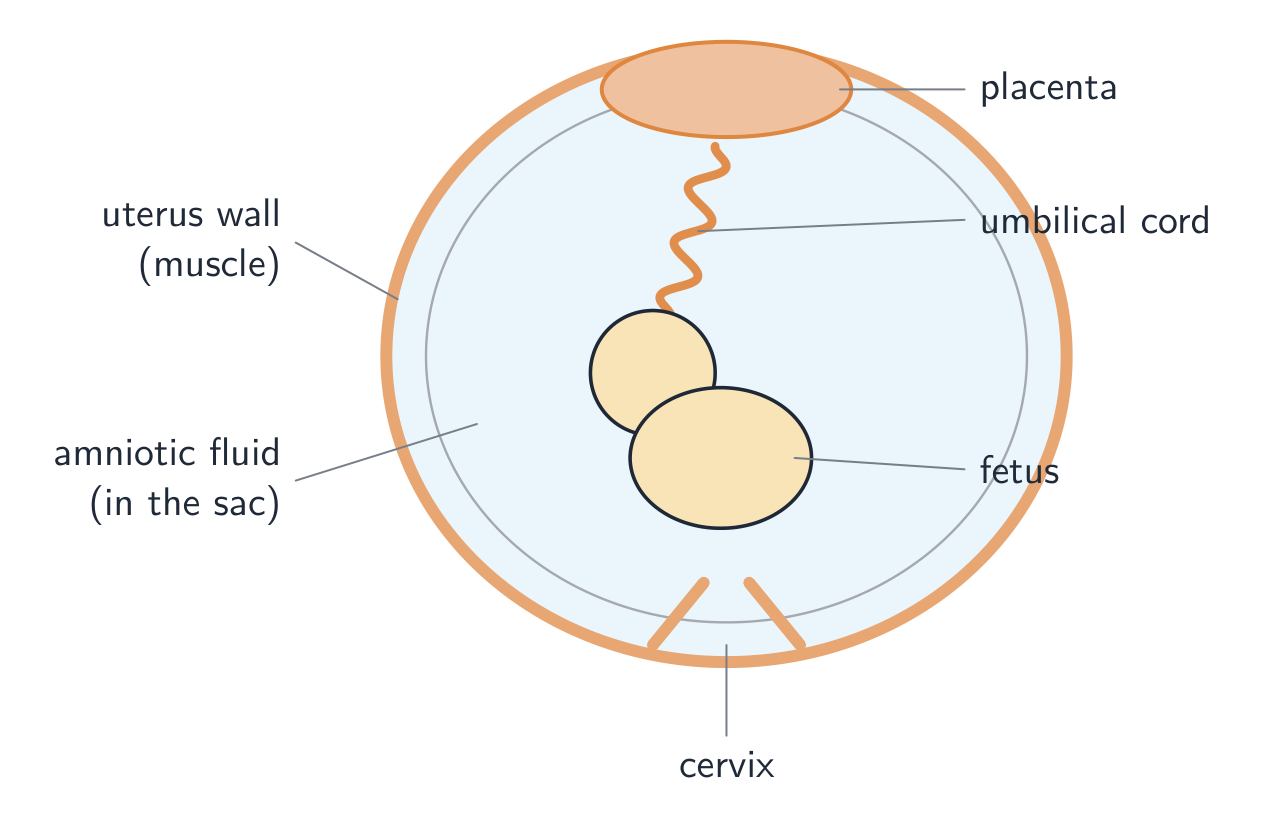
ทารกในครรภ์ callee Within the uterus: the placenta on the uterine wall is joined to the fetus by the umbilical cord, and the fetus floats in amniotic fluid inside the amniotic sac, with the cervix below *ทารกในครรภ์พัฒนาภายในegra รองรับโดยเยื่อplacenta สายสะดือ และถุงน้ำamnion
(ส่วนเสริม) บาง เชื้อโรค และ พิษ สามารถทะลุผ่านเยื่อplacenta และทำลายทารกในครรภ์ได้

Explore · ⁨สำรวจ⁩

Reproductive organ lab · ⁨生殖器官实验⁩

Match each organ to its role in human reproduction. · ⁨将每个器官与其在人类生殖中的作用相匹配。⁩

Explore · ⁨สำรวจ⁩

Fertilisation to pregnancy · ⁨从受精到妊娠⁩

Follow the route from gametes to implantation. · ⁨追踪从配子到植入的路径。⁩

Vocabulary · ⁨คำศัพท์⁩ Train · ⁨ฝึกฝน⁩
English ไทย
sperm/spɜːm/ อสุจิ
testosterone/teˈstɒstərəʊn/ เทสโทสเตอโรน
scrotum/ˈskrəʊtəm/ scrotum
sperm ducts/spɜːm dʌkts/ tube อสุจิ
prostate gland/ˈprɒsteɪt ɡlænd/ ต่อมประจุ
urethra/jʊəˈriːθrə/ ท่อปัสสาวะ
penis/ˈpiːnɪs/ อวัยวะเพศชาย
ovaries/ˈəʊvəriz/ 卵巢
egg cells/eɡ selz/ เซลล์ไข่
uterus/ˈjuːtərəs/ 子宫
cervix/ˈsɜːvɪks/ cervix
vagina/vəˈdʒaɪnə/ 阴道
fetus/ˈfiːtəs/ 胎儿
placenta/pləˈsentə/ 胎盘
umbilical cord/ʌmˈbɪlɪkl kɔːd/ สายสะดือ
amniotic sac/ˌæmnɪˈɒtɪk sæk/ 囊 amniotic
amniotic fluid/ˌæmnɪˈɒtɪk ˈfluːɪd/ amniotic fluid
pathogens/ˈpæθədʒnz/ เชื้อโรค
toxins/ˈtɒksɪnz/ toxins
puberty/ˈpjuːbəti/ 青春期 (Puberty)
hormones/ˈhɔːməʊnz/ ฮอร์โมน (hormones)
secondary sexual characteristics/ˈsekəndəri ˈsekʃuːəl ˌkærɪktəˈrɪstɪks/ ลักษณะทางเพศทุติยภูมิ
16.5

Sex hormones · ⁨ฮอร์โมนเพศ⁩

Syllabus · ⁨หลักสูตร⁩
English
Core Supplement
1 Describe the roles of testosterone and oestrogen in the development and regulation of secondary sexual characteristics during puberty
2 Describe the menstrual cycle in terms of changes in the ovaries and in the lining of the uterus 3 Describe the sites of production of oestrogen and progesterone in the menstrual cycle and in pregnancy
4 Explain the role of hormones in controlling the menstrual cycle and pregnancy, limited to FSH, LH, progesterone and oestrogen
ไทย
แก่น เพิ่มเติม
1 อธิบายบทบาทของเทสโทสเตอโรนและเอสโตรเจนในการพัฒนาและควบคุมลักษณะทางเพศทุติยภูมิในช่วงวัยรุ่น
2 อธิบายรอบเดือนในแง่ของการเปลี่ยนแปลงที่รังไข่และผนังมดลูก 3 อธิบายแหล่งการผลิตของเอสโทรเจนและโปรเจสเตอโรนในรอบเดือนและระหว่างตั้งครรภ์
4 อธิบายบทบาทของฮอร์โมนในการควบคุมรอบเดือนและการตั้งครรภ์ โดยจำกัดเฉพาะ FSH, LH, โปรเจสเตอร์โอน และเอสโตรเจน

Source: Cambridge International syllabus · ⁨แหล่งที่มา: หลักสูตร Cambridge International⁩

English

Puberty

At puberty 青春期, sex hormones 激素 make the body develop secondary sexual characteristics 第二性征 — such as body hair, a deeper voice in boys, and breasts in girls. Testosterone does this in boys; oestrogen does it in girls.

The menstrual cycle

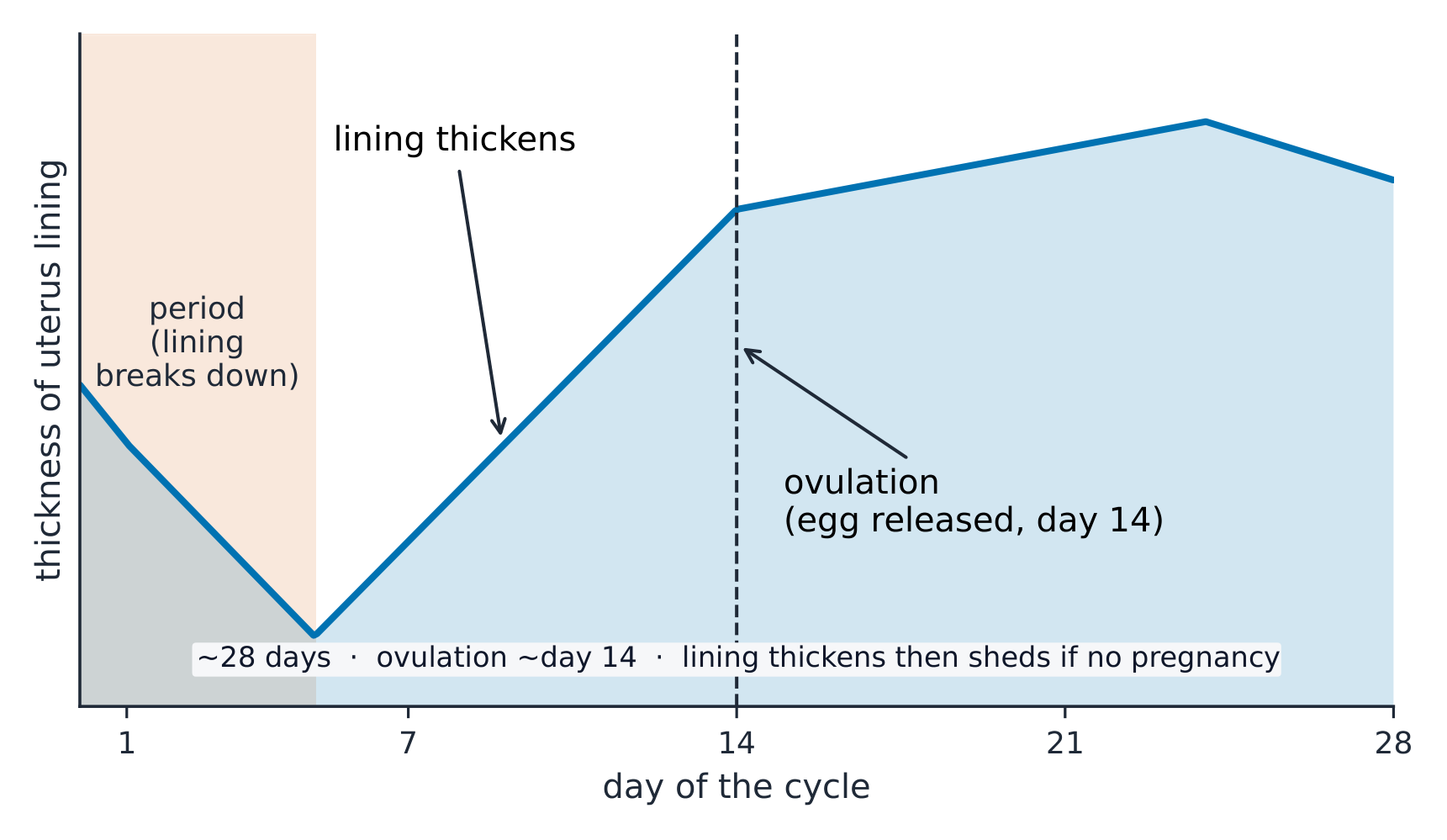
The menstrual cycle 月经周期 (about 28 days) prepares the uterus for a possible pregnancy:

  • the lining of the uterus thickens.
  • around day 14 an ovary releases an egg (ovulation 排卵).
  • if the egg is not fertilised, the lining breaks down and leaves the body (a period), and the cycle starts again.

(Supplement) Four hormones control the cycle: FSH (makes an egg mature and the ovary release oestrogen), LH (triggers ovulation), oestrogen (repairs and thickens the lining), and progesterone 孕酮 (keeps the lining thick). Oestrogen and progesterone are made in the ovaries; during pregnancy 怀孕, progesterone keeps the lining in place.

Worked example. A woman has a regular 28-day cycle, and her period starts on the 1st of the month. On roughly which date is she most likely to conceive? Ovulation happens about day 14, so counting 14 days on from the start of the period points to about the 14th, and the days either side of it are the most fertile. Day 1 is the day the period starts, not the day it ends - counting from the wrong day is what makes most cycle questions go wrong.

ไทย

วัยรุ่น

ในช่วง วัยรุ่น ฮอร์โมนเพศทำให้ร่างกายพัฒนา ลักษณะทางเพศทุติยภูมิ — เช่น ขนตามลำตัว เสียงลึกในผู้ชาย และหน้าอกในผู้หญิง เทสโทสเตอโรน ทำสิ่งนี้ในผู้ชาย; เอสโตรเจน ทำในผู้หญิง

รอบเดือน

รอบเดือน (ประมาณ 28 วัน) เตรียมegraสำหรับการตั้งครรภ์ที่เป็นไปได้:

  • ผนังegraหนาขึ้น
  • ประมาณวันที่ 14 รังไข่ปล่อยเซลล์ไข่ (การตกไข่)
  • หากเซลล์ไข่ไม่ได้รับการปฏิสนธิ ผนังegraจะสลายตัวและออกจากร่างกาย (ประจำเดือน) และรอบเดือนจะเริ่มใหม่

กราฟเหนือรอบ 28 วัน: ผนังegraจะถูกทิ้งช่วงประจำเดือนในวันที่ 1–5 จากนั้นหนาขึ้น เซลล์ไข่จะถูกปล่อยที่การตกไข่ในวันที่ 14 และผนังจะคงความหนาจนสลายตัวอีกครั้ง *ผนังหนาขึ้น เซลล์ไข่ถูกปล่อยในวันที่ 14 และมีประจำเดือนหากไม่มีการตั้งครรภ์

(ส่วนเสริม) ฮอร์โมนสี่ชนิดควบคุมรอบ: FSH (ทำให้เซลล์ไข่สุกและรังไข่ปล่อยเอสโตรเจน), LH (กระตุ้นการตกไข่), เอสโตรเจน (ซ่อมแซมและทำให้ผนังหนา), และ โปรเจสเตอโรน (รักษาความหนาของผนัง) เอสโตรเจนและโปรเจสเตอโรนผลิตในรังไข่; ระหว่าง การตั้งครรภ์ โปรเจสเตอโรนจะรักษาผนังไว้ในที่

ตัวอย่างวิธีทำ หญิงคนหนึ่งมีรอบ 28 วันสม่ำเสมอ และประจำเดือนเริ่มวันที่ 1 ของเดือน เธอมีแนวโน้มที่จะตั้งครรภ์ได้มากที่สุดประมาณวันใด? การตกไข่เกิดประมาณ วันที่ 14 ดังนั้นนับ 14 วันตั้งแต่เริ่มประจำเดือนจะชี้ไปที่ประมาณ วันที่ 14 และวันก่อนและหลังวันนั้นเป็นช่วงที่มีความอุดมสมบูรณ์สูงสุด วันที่ 1 คือวันที่ประจำเดือน เริ่ม ไม่ใช่วันที่จบ - การนับจากวันที่ผิดคือสิ่งที่ทำให้คำถามเกี่ยวกับรอบเดือนส่วนใหญ่出错

Explore · ⁨สำรวจ⁩

The menstrual cycle · ⁨月经周期⁩

Hormones control a roughly monthly cycle that prepares the uterus for a possible pregnancy. · ⁨激素控制一个大致每月一次的周期,为可能的妊娠做准备。⁩

Vocabulary · ⁨คำศัพท์⁩ Train · ⁨ฝึกฝน⁩
English ไทย
menstrual cycle/ˈmenstruːəl ˈsaɪkl/ รอบเดือน
ovulation/ˌɒvjʊˈleɪʃn/ 排卵
16.6

Sexually transmitted infections · ⁨การติดเชื้อทางเพศสัมพันธ์⁩

Syllabus · ⁨หลักสูตร⁩
English
Core Supplement
1 Describe a sexually transmitted infection (STI) as an infection that is transmitted through sexual contact
2 State that human immunodeficiency virus (HIV) is a pathogen that causes an STI
3 State that HIV infection may lead to AIDS
4 Describe the methods of transmission of HIV
5 Explain how the spread of STIs is controlled
ไทย
แก่น เพิ่มเติม
1 อธิบายการติดเชื้อทางเพศ (STI) ว่าเป็นการติดเชื้อที่แพร่กระจายผ่านการสัมผัสทางเพศ
2 ระบุว่าไวรัสภูมิคุ้มกันบกพร่องของมนุษย์ (HIV) เป็นเชื้อโรคที่ทำให้เกิด STI
3 ระบุว่า การติดเชื้อ HIV อาจนำไปสู่ภาวะorderIdS
4 อธิบายวิธีการแพร่ระบาดของ HIV
5 อธิบายวิธีการควบคุมการแพร่ระบาดของ STI

Source: Cambridge International syllabus · ⁨แหล่งที่มา: หลักสูตร Cambridge International⁩

English

A sexually transmitted infection 性传播感染 (STI) is an infection 感染 spread through sexual contact.

HIV is a virus 病毒 that causes an STI, and it can lead to AIDS, in which the immune system stops working properly. HIV is passed on in infected body fluids — for example by sharing needles, during sex, or from mother to baby (across the placenta or in breast milk).

The spread of STIs is controlled by using condoms, having fewer partners, testing and treating infected people, and not sharing needles.

ไทย

การติดเชื้อทางเพศสัมพันธ์ (STI) คือ การติดเชื้อ ที่แพร่กระจายผ่านการสัมผัสทางเพศ

HIV เป็น ไวรัส ที่ทำให้เกิด STI และอาจนำไปสู่ AIDS ซึ่งระบบภูมิคุ้มกันหยุดทำงานอย่างถูกต้อง HIV被传播在感染的体液—例如通过共用针头,性行为,或从母亲到婴儿(穿过胎盘或在母乳中)。

การแพร่กระจายของ STIs被控制通过使用安全套,减少伴侣数量,检测和治疗的感染者,不共用针头。

Explore · ⁨สำรวจ⁩

STI prevention chain · ⁨STI预防链⁩

See where prevention breaks transmission. · ⁨查看预防如何阻断传播途径。⁩

16.6

Exam tips · ⁨ข้อแนะนำสำหรับการสอบ⁩

English
  • Asexual: one parent, identical offspring (no variation). Sexual: two parents, gametes fuse, offspring show variation.
  • Fertilisation = fusion of two gamete nuclei → zygote. (Supplement: gametes haploid, zygote diploid.)
  • Learn the flower parts and which are male (stamen) and female (carpel). Compare insect- and wind-pollinated flowers.
  • Sperm: small, many, moving (flagellum). Egg: large, few, with a food store.
  • Menstrual cycle: lining thickens → ovulation (day 14) → period if no fertilisation. (Supplement: FSH, LH, oestrogen, progesterone.)
  • HIV is a virus that causes an STI and can lead to AIDS; it spreads through body fluids.
ไทย
  • การสืบพันธุ์แบบไม่อาศัยเพศ: มีพ่อแม่เพียงหนึ่งตัว ลูกหลานเหมือนกันทุกประการ (ไม่มีความหลากหลาย) การสืบพันธุ์แบบอาศัยเพศ: มีพ่อแม่สองตัว เซลล์สืบพันธุ์รวมกัน ลูกหลานแสดงความหลากหลาย
  • การปฏิสนธิ = การรวมกันของนิวเคลียสเซลล์สืบพันธุ์สองชนิด → ซิกอต (ส่วนเสริม: เซลล์สืบพันธุ์เป็น haploid, ซิกอตเป็น diploid)
  • จำส่วนประกอบของดอกไม้และส่วนใดเป็นเพศผู้ (,stamen,) และเพศเมีย (carpel) เปรียบเทียบดอกไม้ที่ผสมเกสรโดยแมลงและลม
  • อสุจิ: ขนาดเล็ก数量มาก เคลื่อนไหวได้ (มี flagellum) ไข่: ขนาดใหญ่数量น้อย มีแหล่งเก็บอาหาร
  • รอบเดือน: เยื่อบุหนาขึ้น → การตกไข่ (วันที่ 14) → มีประจำเดือนหากไม่มีการปฏิสนธิ (ส่วนเสริม: FSH, LH, oestrogen, progesterone)
  • HIV เป็นไวรัสที่ทำให้เกิดโรคติดต่อทางเพศสัมพันธ์และอาจนำไปสู่ AIDS; แพร่กระจายผ่านน้ำในร่างกาย
Vocabulary · ⁨คำศัพท์⁩ Train · ⁨ฝึกฝน⁩
English ไทย
oestrogen/ˈiːstrədʒn/ เอสโตรเจน
oviducts/ˈəʊvɪdʌkts/ tube ไข่
flagellum/fləˈdʒeləm/ flagellum
mitochondria/ˌmaɪtəˈkɒndrɪə/ ไมโทคอนเดรีย
enzymes/ˈenzaɪmz/ เอนไซม์
acrosome/ˈækrəʊsəʊm/ acrosome
jelly coat/ˈdʒelɪ kəʊt/ jelly coat
embryo/ˈembrɪəʊ/ 胚胎
implants/ˈɪmplænts/ การฝังตัว
progesterone/prəʊˈdʒestərəʊn/ โพรเจสเตอโรน
pregnancy/ˈpreɡnənsi/ การตั้งครรภ์
sexually transmitted infection/ˈsekʃuːəli trænˈsmɪtɪd ɪnˈfekʃn/ การติดเชื้อทางเพศสัมพันธ์
infection/ɪnˈfekʃn/ การติดเชื้อ
virus/ˈvaɪrəs/ virus

Interactive lessons on this topic · ⁨บทเรียนเชิงโต้ตอบสำหรับหัวข้อนี้⁩

Work through it step by step, with instant-check exercises. · ⁨ทำทีละขั้นตอน พร้อมแบบฝึกหัดตรวจสอบผลทันที⁩

Past Papers · ⁨ข้อสอบย้อนหลัง⁩

More topics in IGCSE Biology · ⁨Biology IGCSE⁩ · ⁨หัวข้อเพิ่มเติมใน IGCSE Biology · ⁨Biology IGCSE⁩⁩

Log in or create account · ⁨เข้าสู่ระบบหรือสร้างบัญชี⁩

IGCSE, A-Level & AP