English
| Core | Supplement |
|---|---|
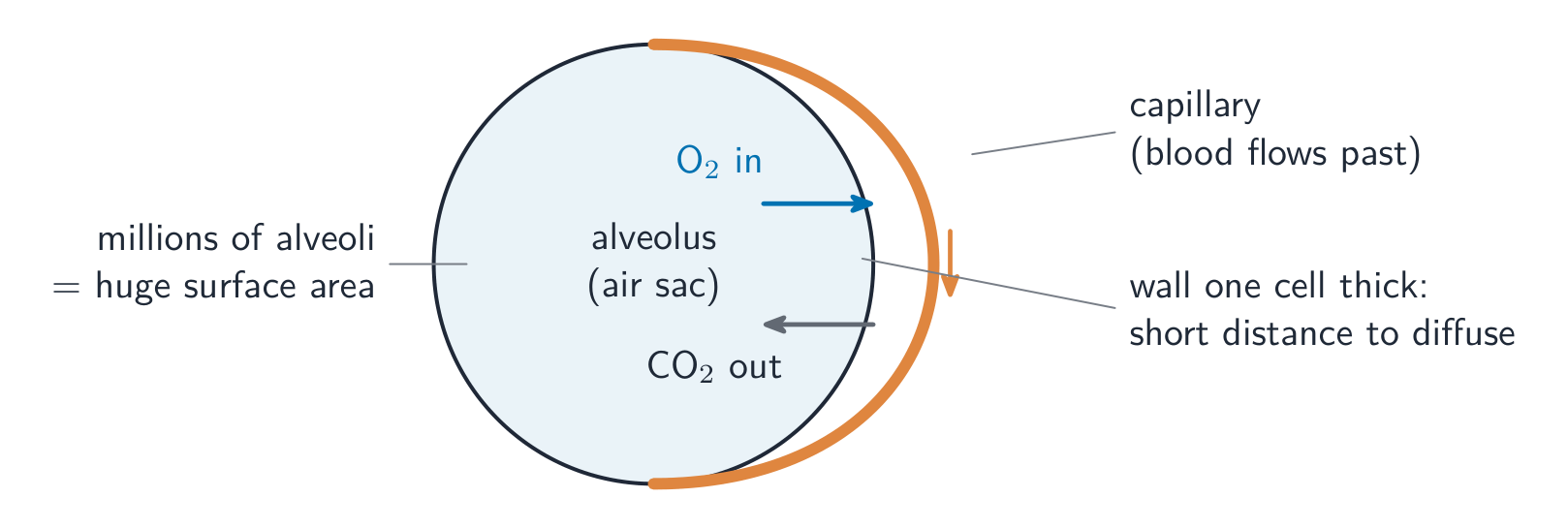
| 1 Describe the features of gas exchange surfaces in humans, limited to: large surface area, thin surface, good blood supply and good ventilation with air | |
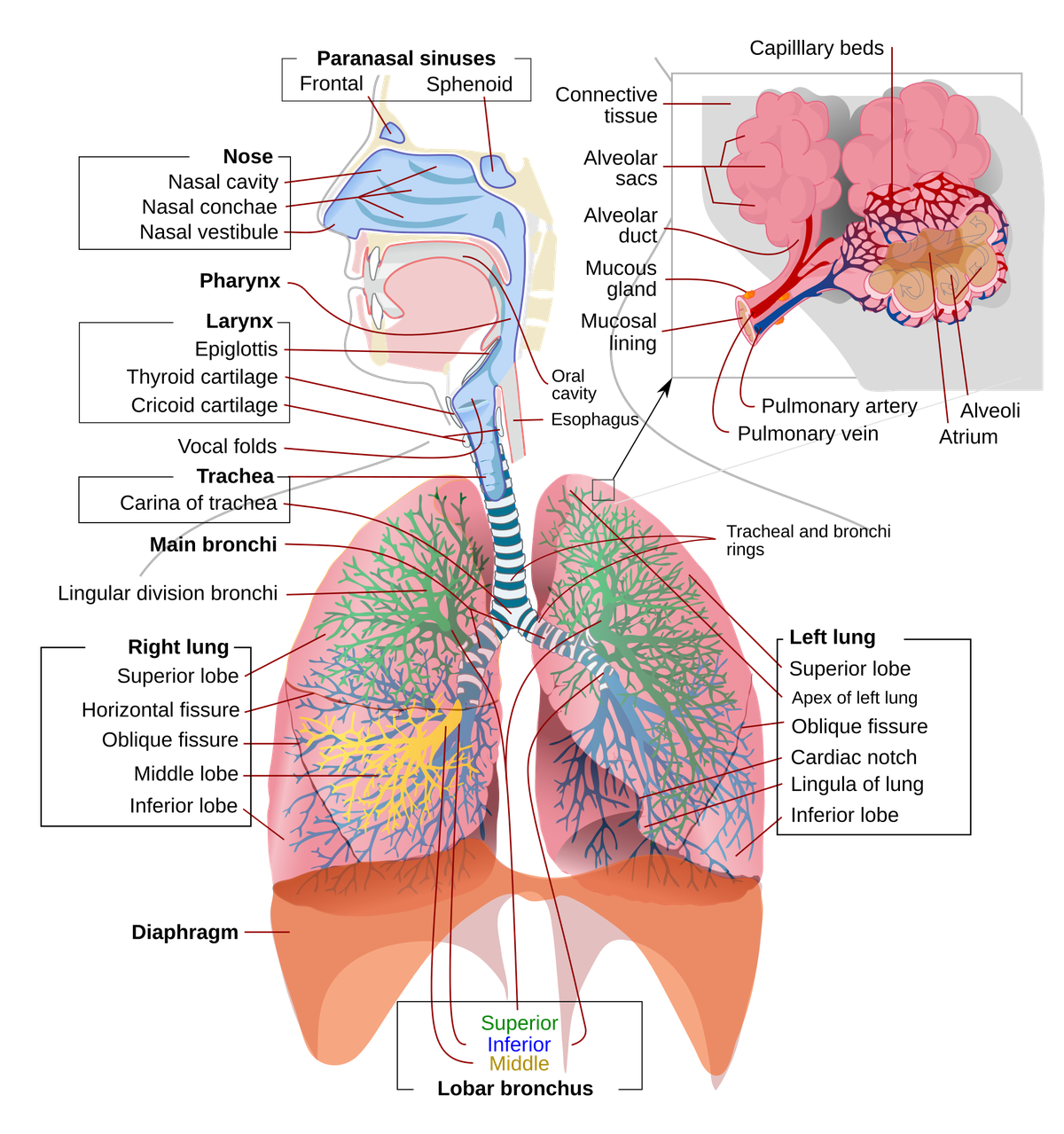
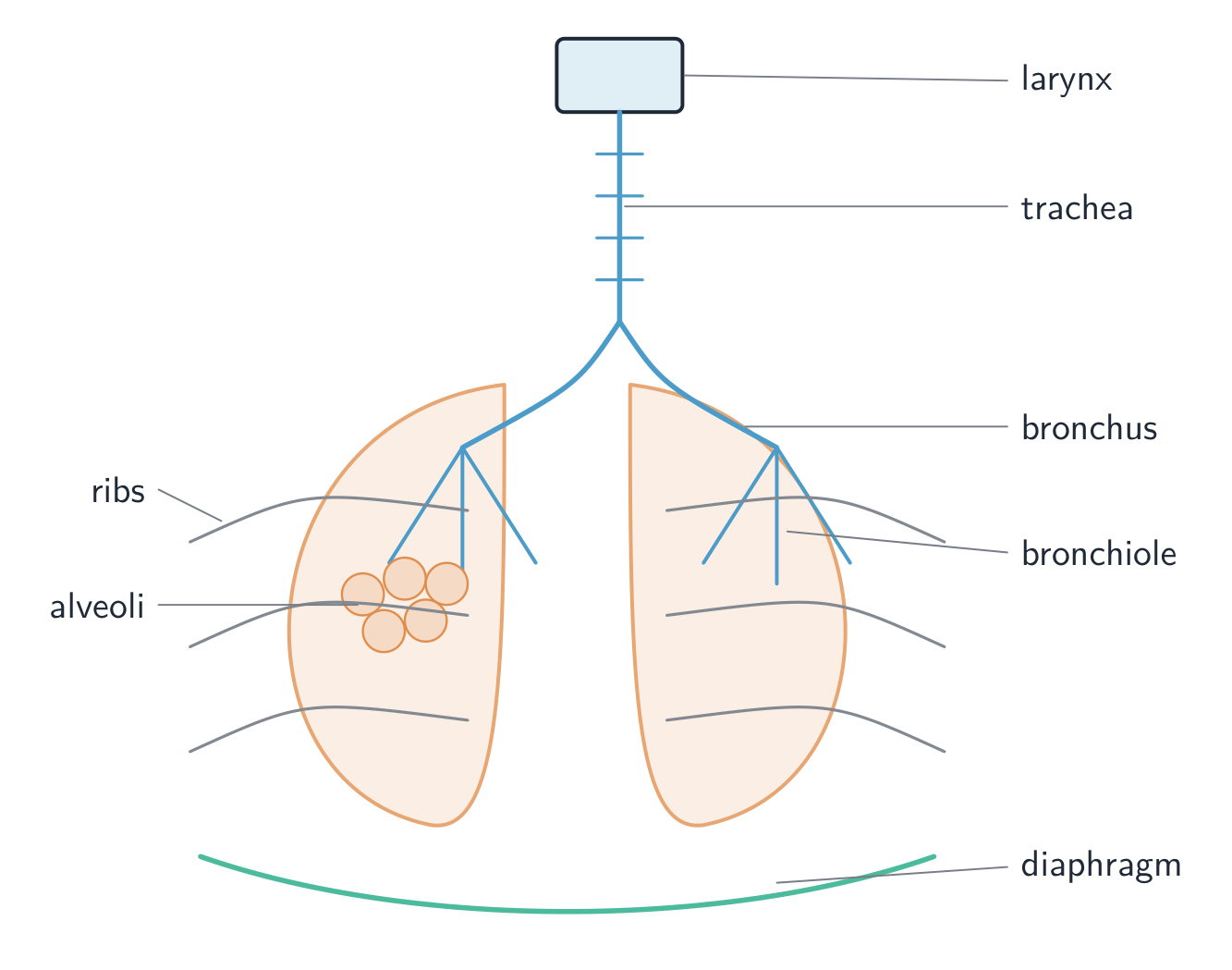
| 2 Identify in diagrams and images the following parts of the breathing system: lungs, diaphragm, ribs, intercostal muscles, larynx, trachea, bronchi, bronchioles, alveoli and associated capillaries | 6 Identify in diagrams and images the internal and external intercostal muscles |
| 7 State the function of cartilage in the trachea | |
| 8 Explain the role of the ribs, the internal and external intercostal muscles and the diaphragm in producing volume and pressure changes in the thorax leading to the ventilation of the lungs | |
| 3 Investigate the differences in composition between inspired and expired air using limewater as a test for carbon dioxide | 9 Explain the differences in composition between inspired and expired air |
| 4 Describe the differences in composition between inspired and expired air, limited to: oxygen, carbon dioxide and water vapour | |
| 5 Investigate and describe the effects of physical activity on the rate and depth of breathing | 10 Explain the link between physical activity and the rate and depth of breathing in terms of: an increased carbon dioxide concentration in the blood, which is detected by the brain, leading to an increased rate and greater depth of breathing |
| 11 Explain the role of goblet cells, mucus and ciliated cells in protecting the breathing system from pathogens and particles |
Русский
| Базовый | Дополнительно |
|---|---|
| 1 Описать особенности газообменных поверхностей у людей, ограничено: большая площадь поверхности, тонкая поверхность, хорошее кровоснабжение и хорошая вентиляция воздухом | |
| 2 Определять на схемах и изображениях следующие части дыхательной системы: легкие, диафрагму, ребра, межреберные мышцы, гортань, трахею, бронхи, бронхиолы, альвеолы и связанные с ними капилляры | 6 Определять на схемах и изображениях внутренние и наружные межреберные мышцы |
| 7 Указать функцию хряща в трахее | |
| 8 Объяснить роль ребер, внутренних и наружных межреберных мышц и диафрагмы в изменении объема и давления в грудной клетке, что приводит к вентиляции легких | |
| 3 Исследовать различия в составе вдыхаемого и выдыхаемого воздуха, используя известковую воду как тест на углекислый газ | 9 Объяснить различия в составе вдыхаемого и выдыхаемого воздуха |
| 4 Описать различия в составе вдыхаемого и выдыхаемого воздуха, ограничено: кислород, углекислый газ и водяной пар | |
| 5 Исследовать и описать влияние физической активности на частоту и глубину дыхания | 10 Объяснить связь между физической активностью и частотой и глубиной дыхания с точки зрения: увеличения концентрации углекислого газа в крови, который обнаруживается мозгом, что приводит к увеличению частоты и глубины дыхания |
| 11 Объяснить роль бокаловидных клеток, слизи и реснитчатых клеток в защите дыхательной системы от патогенов и частиц |