Enterprise, business growth and size
Introduced| English | Meaning |
|---|---|
| risk/rɪsk/ | The possibility of an adverse outcome, often assessed using its likelihood and consequences. |
| entrepreneur/ˌɒntrɪprəˈnjʊə/ | A person who organises a business, takes risks and seeks opportunities to create value. |
| capital/ˈkæpɪtl/ | Produced assets used to make other goods and services. |
| revenue/ˈrevənjuː/ | Income received by a business from selling goods or services before costs are deducted. |
| average cost/ˈævrɪdʒ kɒst/ | Total production cost divided by the quantity produced. |
| economies of scale/ɪˈkɒnəmiz ɒv skeɪl/ | Falls in average production cost as the scale of output increases. |
| diseconomies/ˌdɪsɪˈkɒnəmiz/ | Increases in average production cost associated with a larger scale of operation. |
| niche/niːʃ/ | A narrowly defined part of a market with particular customer needs. |
Starting up and growing
- Behind every business is someone who took a risk 风险 to start it — an entrepreneur 企业家.
- Once running, a big question is whether, and how, to grow.
Business case lab
Classify real decisions so the main business concept becomes concrete.
An entrepreneur is someone who:
Difficulty 1/5 · 100 coins + a small bonus on first completion today
Entrepreneurs bear risk to start a business for profit.
Enterprise and entrepreneurs
- An entrepreneur spots an opportunity, takes the risk, and organises resources to start a business.
- They need finance, a business plan, and the willingness to bear the risk for profit.
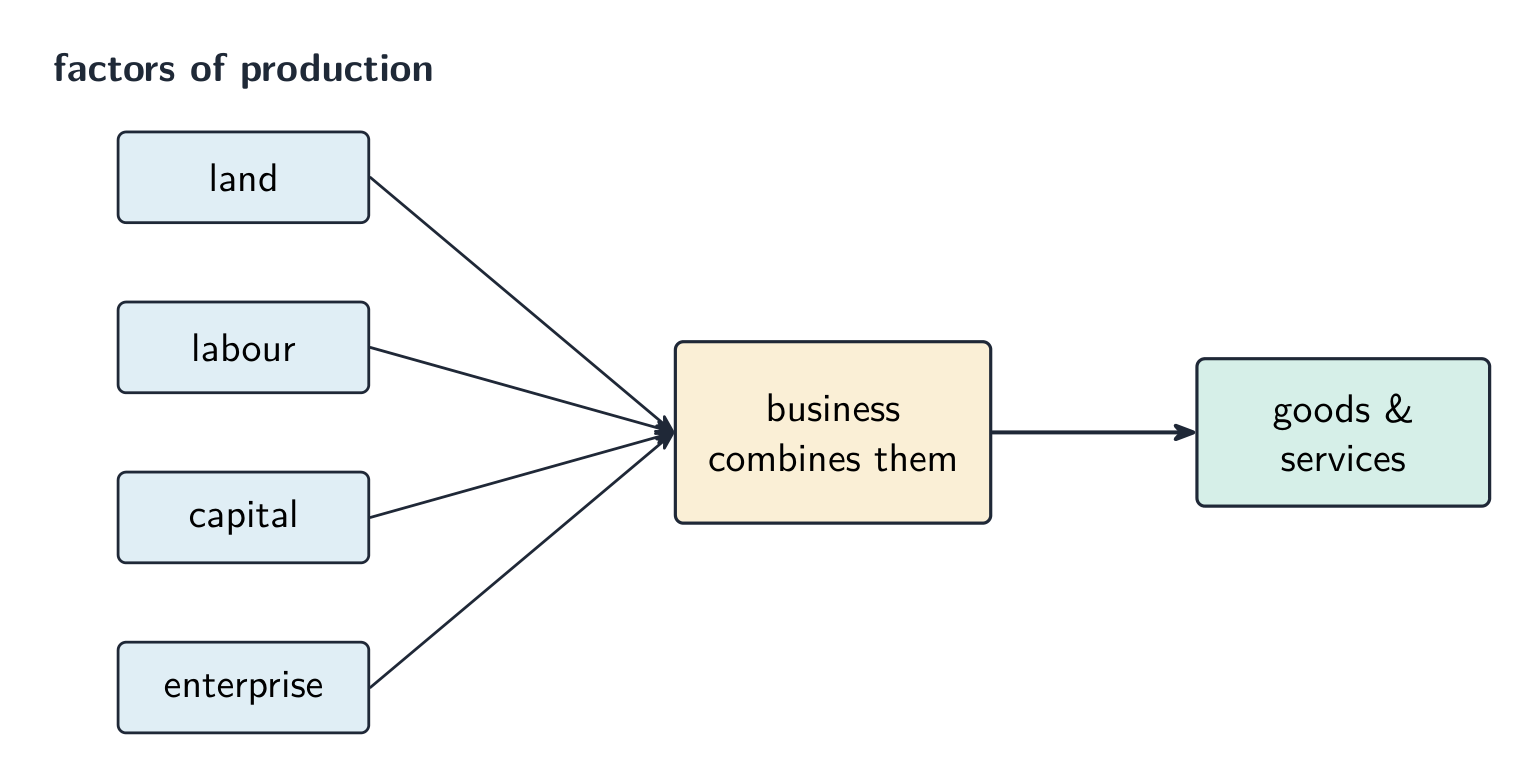
Land, labour, capital 资本 and enterprise are combined to make goods and services
Which can measure the size of a business? (Select all that apply.)
Difficulty 2/5 · 140 coins + a small bonus on first completion today
Employees, revenue and capital are standard measures.
Opening a new branch with the firm's own money is a form of external growth.
Difficulty 1/5 · 100 coins + a small bonus on first completion today
False. That is internal (organic) growth. External growth means joining with other firms through mergers or takeovers.
Measuring and growing a business
- Size is measured by number of employees, revenue 收入, or capital employed.
- Firms grow internally (more outlets/products) or externally (merging with or taking over another firm).
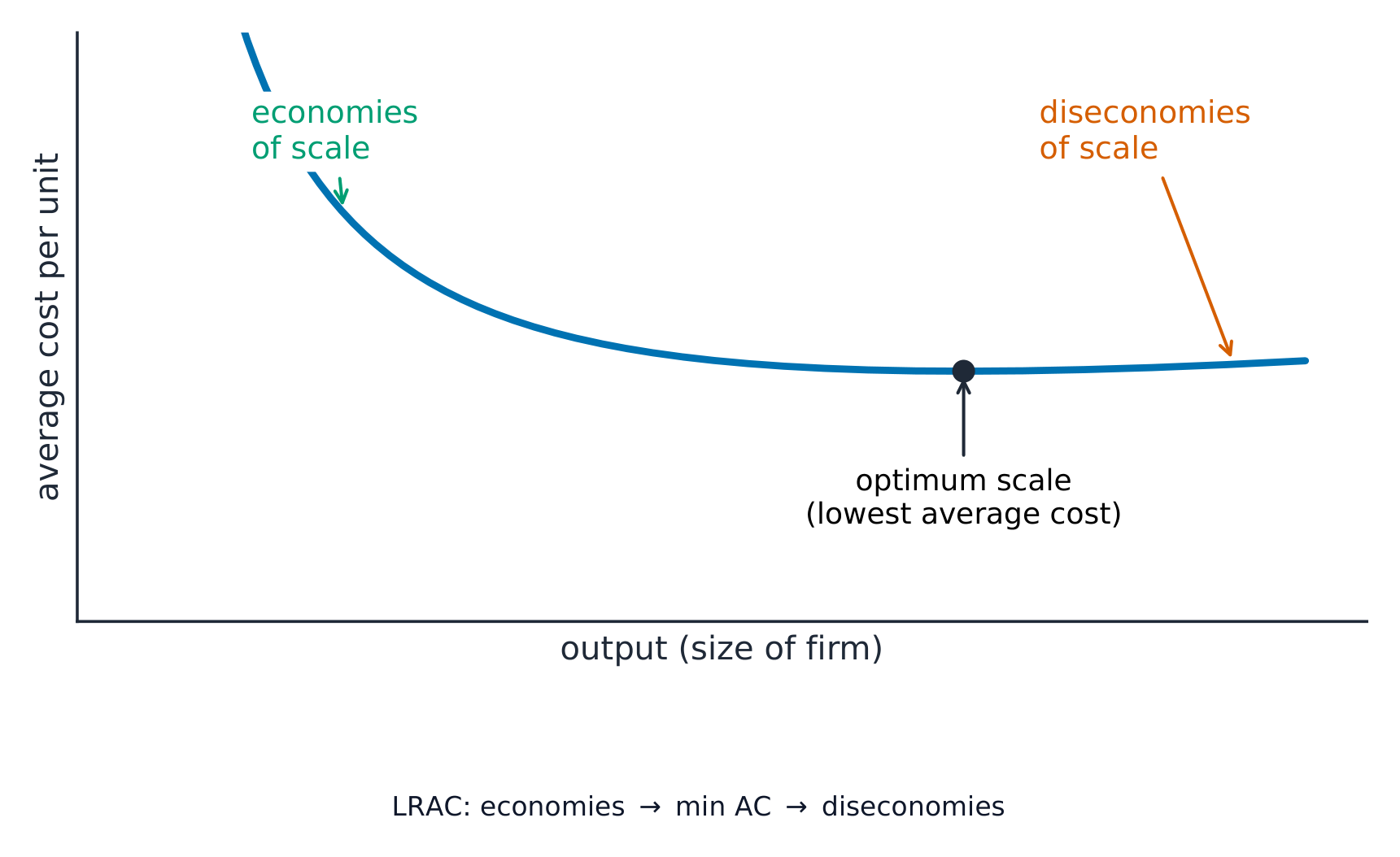
Average cost 平均成本 per unit falls then rises as a firm grows
Economies of scale mean that, as a firm grows, its:
Difficulty 1/5 · 100 coins + a small bonus on first completion today
Average cost per unit falls with greater scale.
When a firm grows so large that average cost rises, it suffers ______ of scale.
Difficulty 1/5 · 100 coins + a small bonus on first completion today
Communication and coordination problems drive diseconomies.
Economies of scale 规模经济
- As a business grows, its average cost per unit can fall — economies of scale.
- Grow too large and diseconomies 规模不经济 (poor communication, low morale) can push average cost back up.
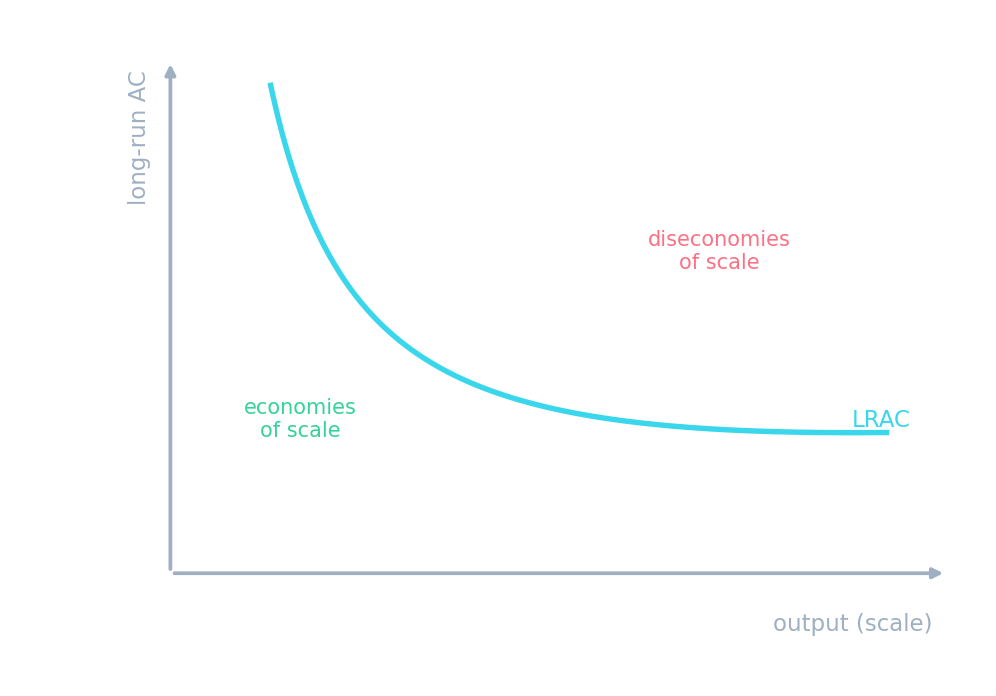
Average cost falls as the firm grows, then rises if it becomes too large.
Bigger isn't always better. Past a certain size, diseconomies of scale raise average costs. Some firms stay small on purpose to keep control and serve a niche 利基市场.
You've got it
- an entrepreneur takes the risk and organises resources to start a business
- size is measured by employees, revenue or capital; growth is internal or external
- economies of scale lower average cost; diseconomies raise it if too big
Write from a rise in average cost of 3
- Average cost was 8. After the firm grew further it became 11.
- Buying a rival is external growth. A rise in average cost is a diseconomy of scale.
A firm takes over a rival. Its average cost then rises from 8 to 11. What kind of growth is the takeover, and what is the rise in average cost called?
External growth uses another existing business. Diseconomies appear when a firm becomes so large that average cost rises.
What is the rise in average cost an example of?
Difficulty 1/5 · 100 coins + a small bonus on first completion today
Average cost rose by 3, so this is a diseconomy of scale. The takeover itself is external growth. Other options — An economy of scale (because the firm grew); Internal growth (because costs changed).