Blood vessels
Introduced| English | Meaning |
|---|---|
| arteries/ˈɑːtəriz/ | Thick-walled vessels carrying blood away from the heart under high pressure. |
| veins/veɪnz/ | A blood vessel that carries blood towards the heart. |
| capillaries/ˈkæpɪləriz/ | The smallest blood vessels, whose thin walls permit exchange between blood and surrounding tissues. |
Three kinds of pipe
- Blood travels in vessels — but not all vessels are the same.
- Arteries 动脉, veins 静脉 and capillaries 毛细血管 each have a structure that fits their job.
Arteries carry blood:
Difficulty 1/5 · 100 coins + a small bonus on first completion today
Arteries carry blood away from the heart.
The pulmonary artery carries deoxygenated blood, showing "artery = away from heart", not "artery = oxygen-rich".
Difficulty 1/5 · 100 coins + a small bonus on first completion today
Arteries are defined by direction, not oxygen content.
Arteries
- Arteries carry blood away from the heart, usually at high pressure.
- They have thick, muscular, elastic walls to withstand and smooth the pressure.
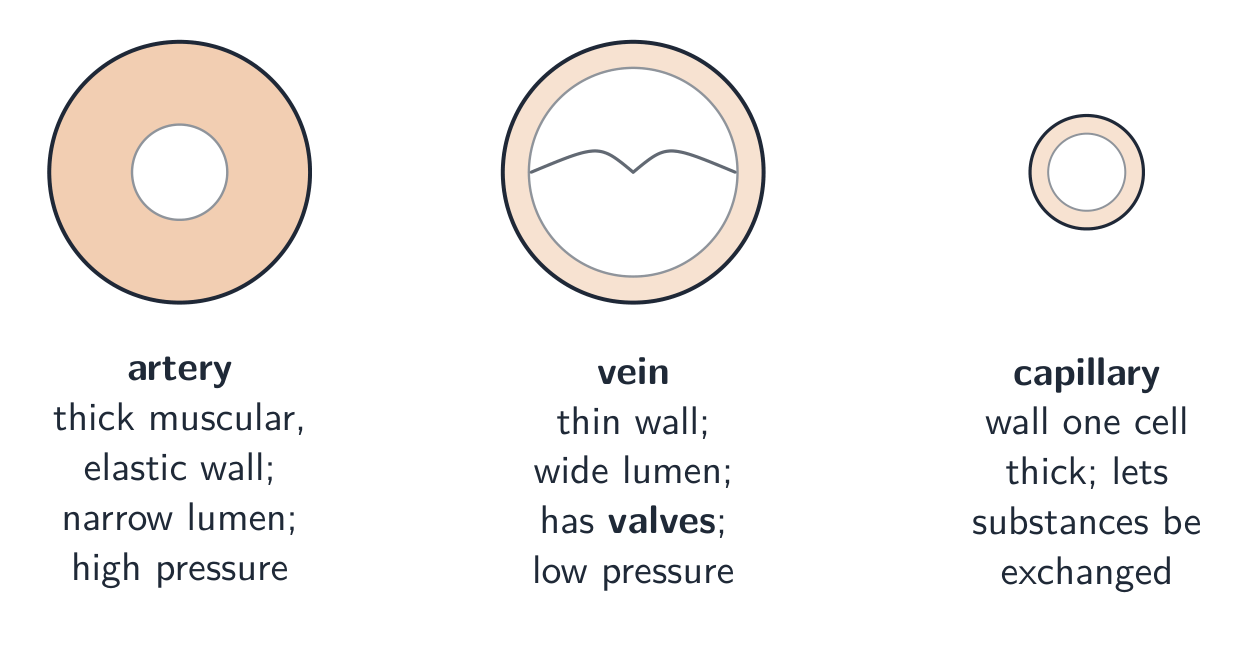
Arteries, veins and capillaries are each built for their job
The three blood vessels
Compare an artery, a vein and a capillary — their walls and lumens suit the pressure and job of each.
Veins contain valves to:
Difficulty 1/5 · 100 coins + a small bonus on first completion today
Valves keep low-pressure blood moving one way.
Veins
- Veins carry blood back to the heart, at low pressure.
- They have thinner walls and valves to stop blood flowing backwards.
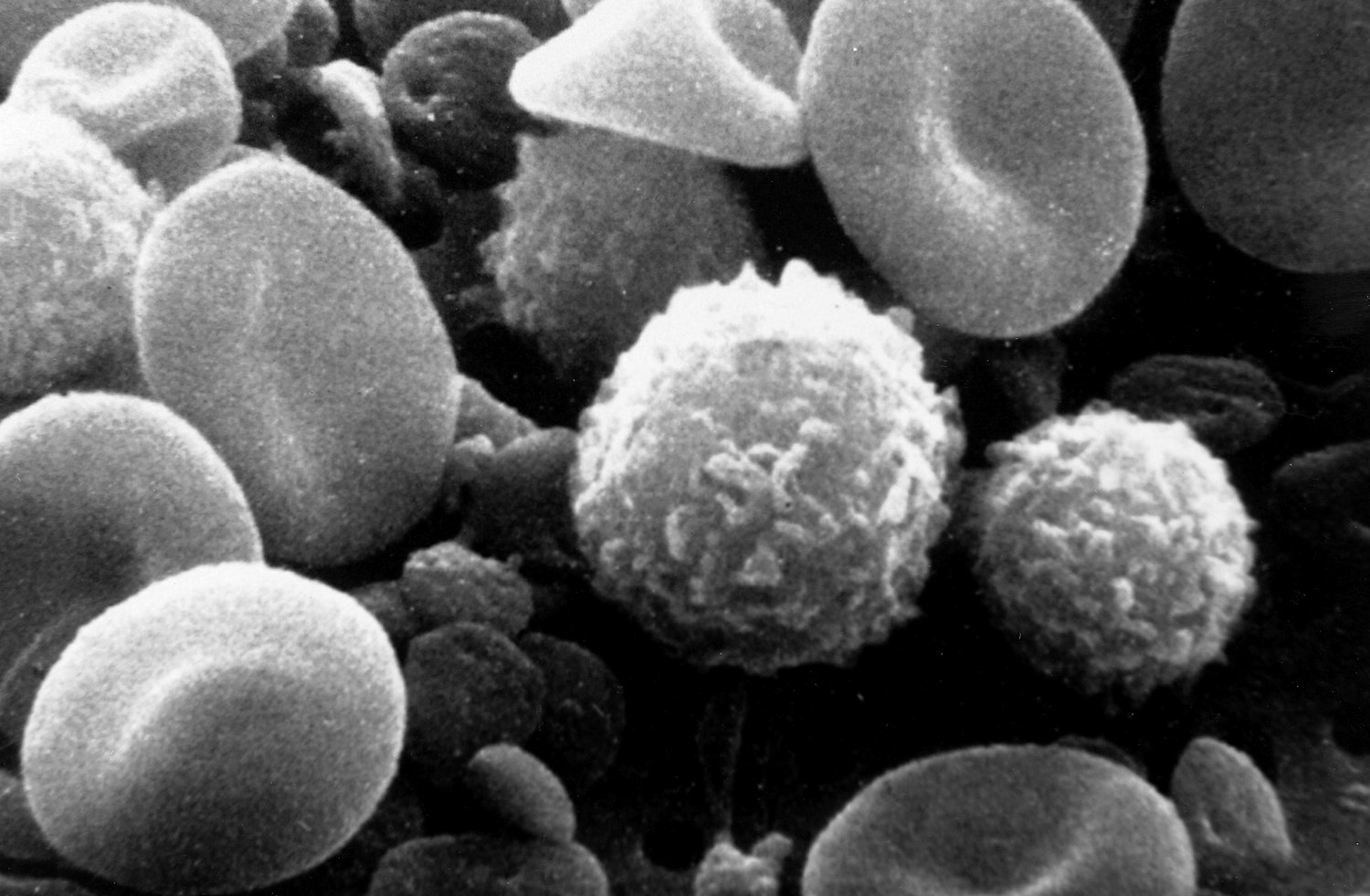
A scanning electron micrograph of blood: biconcave red cells, two rounded white cells and small platelets
Capillary walls are one cell thick so that:
Difficulty 1/5 · 100 coins + a small bonus on first completion today
Thin walls allow exchange of oxygen, glucose and waste.
The smallest blood vessels, where exchange happens, are the ______.
Difficulty 1/5 · 100 coins + a small bonus on first completion today
Capillaries have walls one cell thick.
Capillaries
- Capillaries are tiny vessels with walls one cell thick.
- This lets substances (oxygen, glucose, waste) exchange between blood and cells.
Arteries carry blood away; veins carry it back — regardless of oxygen. The pulmonary artery carries deoxygenated blood (to the lungs), and the pulmonary vein carries oxygenated blood. "Artery = away" is the rule, not "artery = oxygen-rich".
You've got it
- arteries: away from heart, high pressure, thick muscular walls
- veins: back to heart, low pressure, thin walls + valves
- capillaries: one cell thick, for exchange of substances
Write from a vessel leaving the heart
- One vessel leaves the heart under high pressure.
- Another vessel is one cell thick.
What is each vessel, and which way does an artery carry blood?
Direction from the heart names the artery.
Which vessels carry blood away from the heart?
Difficulty 1/5 · 100 coins + a small bonus on first completion today
Arteries leave the heart.