Your learning plan · Continue · Review →
几乎 (nearly, almost)
IntroducedYour saved position stays in this browser. Resuming does not complete the lesson or answer its questions.
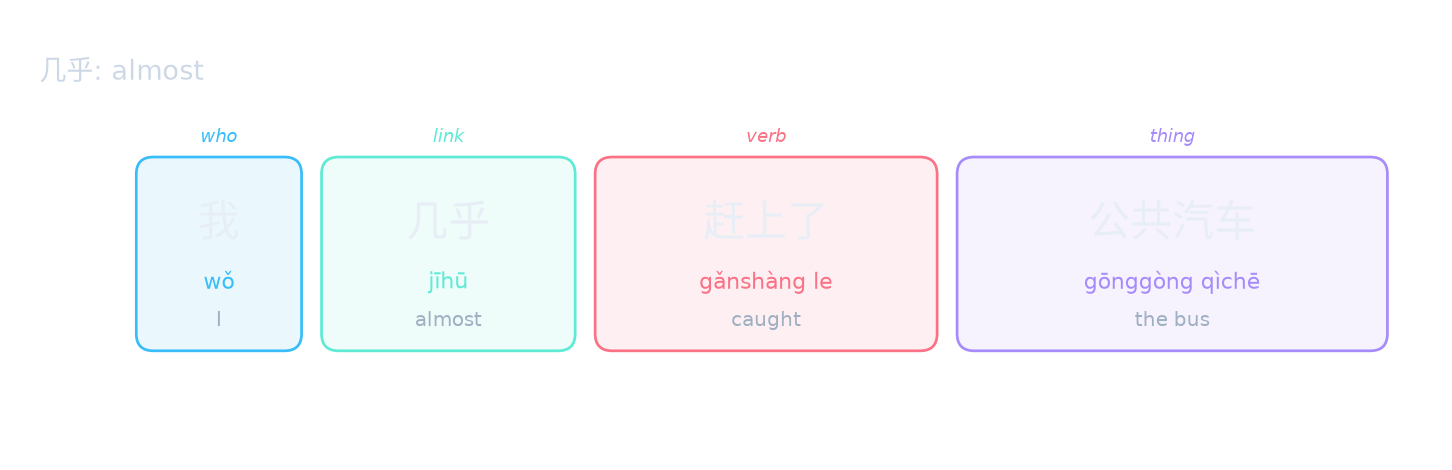
So close
- You stayed up late and only remembered the test at breakfast.
- I / me我almost几乎to forget忘(completed / change)了today今天to have / there is有to take an exam考试。 — "I almost forgot there was a test today." It came very close but did not happen.
almost几乎 + Verb or Adjective
- almost几乎 = "almost, nearly": it goes before the verb, adjective or number phrase it limits.
- It often goes with (all)都 or each每: he他almost几乎every day每天(all)都run跑步 — "He runs almost every day."
he他almost几乎every day每天(all)都run跑步。
Complete: “She goes to the library almost every day.” 她____每天都去图书馆。
Difficulty 1/5 · 100 coins + a small bonus on first completion today
几乎 + 每天都 = almost every day.
Almost all, almost none
- With all所有 or (all)都: almost几乎all所有(modifier / structural particle)的students学生(all)都come来(completed / change)了。 — "Almost all the students came."
- With not / haven't没 or not不: I / me我almost几乎not / haven't没to go to bed睡觉。 — "I hardly slept at all."
almost几乎all所有的students学生(all)都come来了。
我几乎没睡觉 means “I hardly slept at all.”
Difficulty 1/5 · 100 coins + a small bonus on first completion today
几乎 + 没 = almost not, i.e. hardly.
Build: “Almost all the students came.”
Difficulty 3/5 · 200 coins + a small bonus on first completion today
几乎 + 所有的 + noun + 都 + verb.
Where almost几乎 goes
- Put almost几乎 before the part that is "almost": almost几乎every day每天, almost几乎not have / haven't没有, almost几乎(all)都. Not after the verb.
- With (all)都, almost几乎 comes first: we / us我们almost几乎(all)都去过, not we / us我们(all)都almost几乎去过.
Which says “We have almost all been there.”?
Difficulty 1/5 · 100 coins + a small bonus on first completion today
几乎 comes before 都.
almost几乎 versus about the same差不多
- about the same差不多 also means "about, almost", and is more common in speech: about the same差不多十点(completed / change)了.
- almost几乎 stresses how close something came, and suits not / haven't没 / not不: he他almost几乎not不speak说话 — "He hardly says a word."
he他almost几乎not不speak说话。
Recap
- almost几乎 + Verb / Adj / number phrase = almost, nearly.
- almost几乎(all)都 / almost几乎all所有 = almost all; almost几乎not / haven't没 / almost几乎not不 = hardly at all.
Read the full reference: HSK 3 grammar — Adverbs.
You stayed up late and only remembered the test at breakfast. Close the examples. Say a Mandarin response, then write it in Chinese. Explain briefly in English what the lesson’s pattern adds. Compare with the model, then change one detail and try again.
This is supported productive practice. Compare meaning and structure; your answer need not copy the model. A partner or teacher must hear the spoken response to comment on pronunciation.