Why Industry Began Where It Did
IntroducedA list of preconditions, not a single cause
- A variety of factors contributed to the growth of industrial production and eventually resulted in the Industrial Revolution.
- The CED's seven: proximity to waterways; the geographical distribution of coal, iron and timber; urbanisation; improved agricultural productivity; legal protection of private property; access to foreign resources; and the accumulation of capital.
- A variety is the point — no single one of these explains industrialisation on its own.
Select all the CED's industrialisation factors.
Difficulty 2/5 · 140 coins + a small bonus on first completion today
Coal/iron/timber distribution, urbanisation, foreign resources and capital complete the seven.
Geography and energy
- Waterways move heavy goods cheaply; coal, iron and timber are what an early industry consumes and builds with.
- Where these sit close together, the cost of moving them nearly disappears.
- So the CED's first two factors are really one argument: industry starts where its inputs are already next to each other.

Industrialisation needed several conditions at once- which is why the question is always 'why here, and why then'
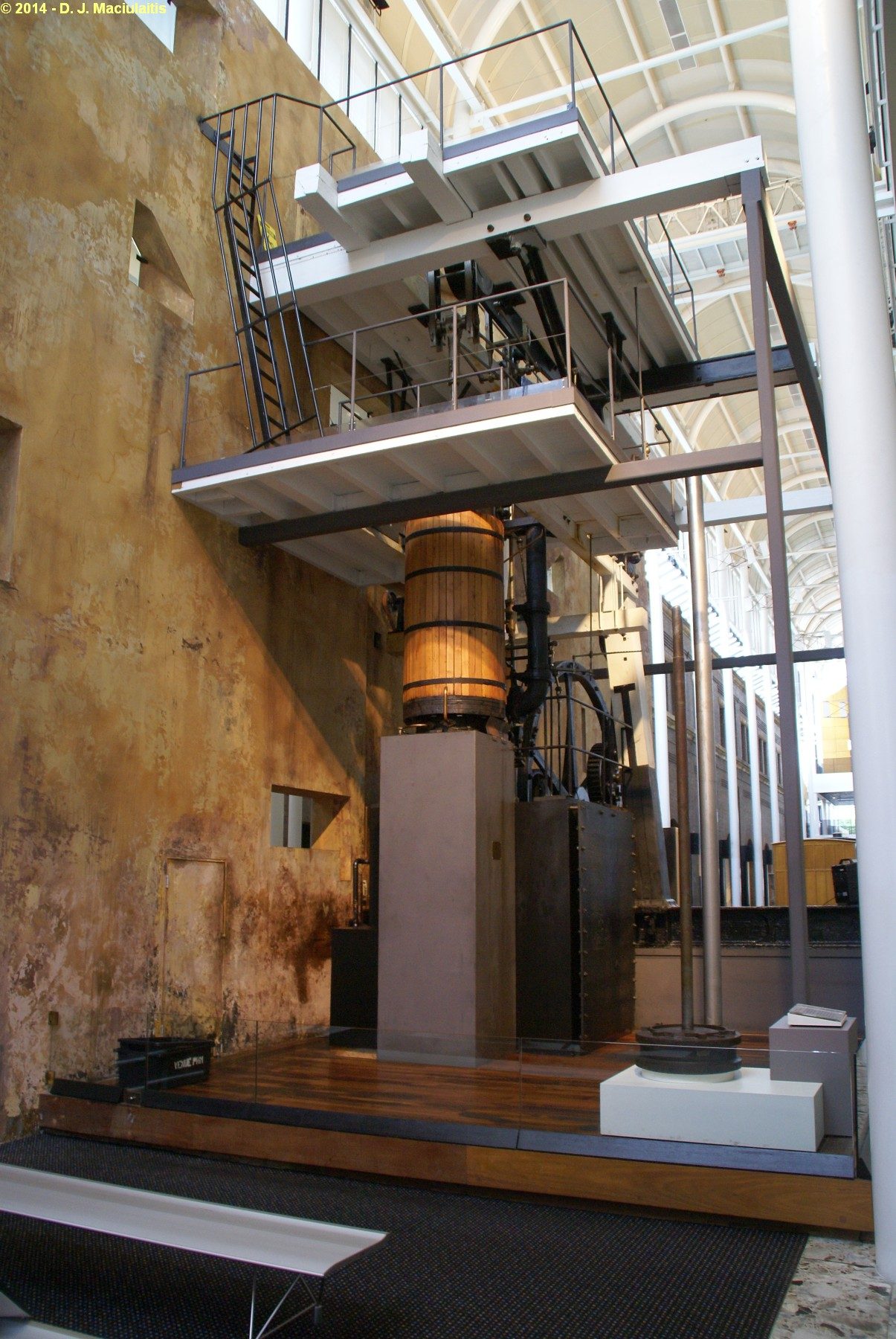
A Boulton and Watt steam engine- power that does not depend on a river, a wind or an animal
Improved agricultural productivity mattered because it...
Difficulty 1/5 · 100 coins + a small bonus on first completion today
A factory needs workers who are no longer needed in a field.
Farming had to improve first
- Improved agricultural productivity and urbanisation are linked: fewer farmers feeding more people is what frees labour for cities.
- A factory needs workers who are not needed in a field, and that only happens after yields rise.
- This is the same Champa-rice logic from unit 1, arriving at a different destination.
Assemble the conditions for industry
The CED names a variety of factors, and no single one is sufficient.
Select all the changes the factory system brought, per the CED.
Difficulty 2/5 · 140 coins + a small bonus on first completion today
Two changes: where work happens and how finely divided it is.
No single factor explains industrialisation. The CED lists seven and calls them a variety of factors — coal alone, or capital alone, explains nothing, since many regions had one without the others. An answer that names one cause has answered a different question.
One factor, such as coal, is enough to explain industrialisation.
Difficulty 1/5 · 100 coins + a small bonus on first completion today
The CED's phrase is a variety of factors; many regions had one without the others.
Law and capital
- Legal protection of private property makes long investments safe enough to make.
- Accumulation of capital supplies the money, and access to foreign resources supplies raw materials the home country lacks.
- The last of these connects unit 5 to unit 4: the Atlantic system is where much of that capital and those resources came from.
"Access to foreign resources" links unit 5 back to the ____ system of unit 4.
Difficulty 1/5 · 100 coins + a small bonus on first completion today
Much of the capital and raw material came from there.
The factory concentrated everything
- The development of the factory system concentrated production in a single location and led to an increasing degree of specialisation of labour.
- Two changes in one sentence: where work happens, and how finely divided it is.
- Specialisation raises output per worker and lowers the skill each task requires — which 5.9 will read as a social consequence.
Coal and iron close to navigable water, in a country whose farms already fed its towns, whose law made an investment recoverable, and whose overseas trade supplied both cotton and profits. Remove any one and the sequence stalls — which is why the CED's word is variety and not cause.
A variety of factors produced industrialisation: waterways; coal, iron and timber; urbanisation; improved agricultural productivity; legal protection of private property; access to foreign resources; accumulation of capital. The factory system concentrated production in a single location and increased specialisation of labour.
Write from coal as the energy
- British factories needed more energy than local wood and muscle could supply.
- Coal deposits lay near iron and navigable water.
What energy source let the factories scale up?
Fossil carbon replaced scarce wood as the fuel of industry.
What supplied the extra energy for British factories?
Difficulty 1/5 · 100 coins + a small bonus on first completion today
Coal was the concentrated fuel.