The Industrial Revolution
Introduced| English | Meaning |
|---|---|
| Industrial Revolution/ɪnˈdʌstrɪəl ˌrevəˈluːʃn/ | The historical shift toward mechanised production, factory organisation and new energy sources that transformed work, settlement and economic activity. |
| break-of-bulk points/breɪk ɒv bʌlk pɔɪnts/ | Locations where cargo is transferred between transport modes or handling systems, often encouraging storage and related businesses. |
| urbanization/ˌɜːbənaɪˈzeɪʃn/ | An increase in the share of a population living in urban areas, often accompanied by changes in settlements and economic activity. |
Machines change everything
- The Industrial Revolution 工业革命 (from the 1700s) moved production from homes to factories.
- It began in Britain and spread across the world.
- It transformed where and how people lived and worked.
Where industry located
- Industry clustered where resources (coal, iron) and transport met.
- Break-of-bulk points 转运点 (ports, rail hubs where cargo changes transport) became key sites.
- Rivers, canals, and railways carried raw materials and goods.
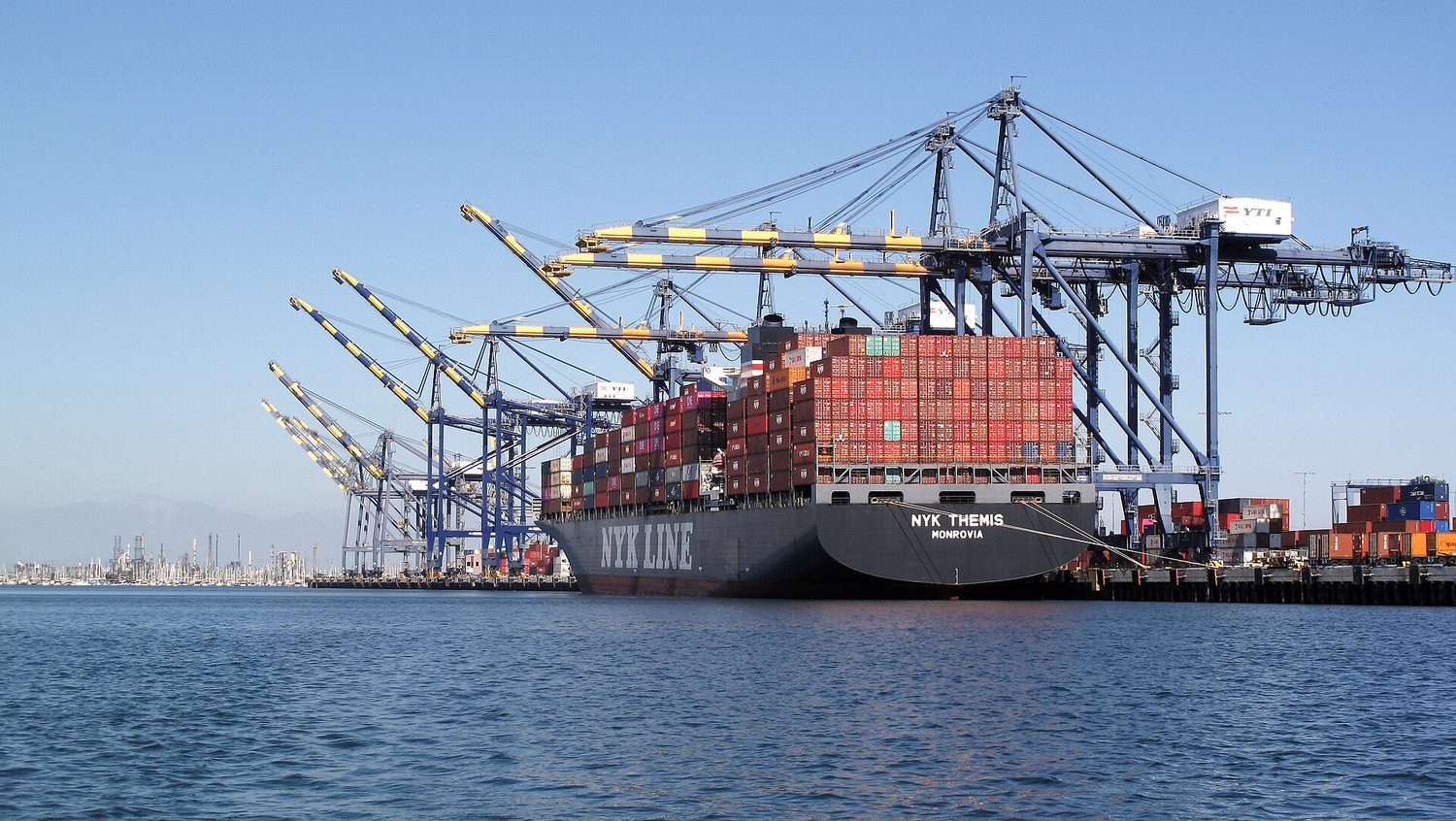
A container port: the modern break-of-bulk point, where cargo moves from ship to rail and road
Cause or effect of the Industrial Revolution?
Sort each item as a cause/condition or an effect of the Industrial Revolution.
A port or rail hub where cargo changes from one transport mode to another is a...
Difficulty 1/5 · 100 coins + a small bonus on first completion today
A break-of-bulk point is a key industrial location.
Select all factors that attracted early industry.
Difficulty 2/5 · 140 coins + a small bonus on first completion today
Resources, transport, and break-of-bulk points attracted industry; a beach did not.
Match each term to its meaning.
Difficulty 2/5 · 140 coins + a small bonus on first completion today
Industrial Revolution = factories; break-of-bulk = transfer point; urbanization = move to cities.
Powering urbanization
- Factories pulled workers into cities, driving urbanization.
- It began the huge, uneven spread of wealth between world regions.
- The regions that industrialised first became the world's richest.
The Industrial Revolution spread wealth evenly across all world regions.
Difficulty 1/5 · 100 coins + a small bonus on first completion today
It spread wealth unevenly — early industrialisers pulled far ahead.
Factories pulling workers into cities helped drive ____.
Difficulty 1/5 · 100 coins + a small bonus on first completion today
Industry powered urbanization as workers moved to cities.
The Industrial Revolution did not spread evenly. The regions that industrialised first (Western Europe, then North America) pulled far ahead, while others supplied raw materials. Much of today's global wealth gap traces back to who industrialised and when.
An 1800s industrial city grew where coal and iron lay near a river port — a break-of-bulk point where goods shifted from ship to rail. Factories drew workers from the countryside, and the city boomed — a direct link between resources, transport, and urbanization.
The Industrial Revolution moved production to factories, located where resources and transport met (break-of-bulk points). It powered urbanization and began the uneven spread of wealth — the regions that industrialised first became the richest.
Write from coal and a canal explaining a mill site
- An early mill stands beside a coalfield.
- A canal runs past the door and carries the coal and the cloth.
Why did this mill locate here in the early industrial period?
Early factories clustered where power and bulk transport met.
Why is the mill beside the coalfield and the canal?
Difficulty 1/5 · 100 coins + a small bonus on first completion today
Power and heavy transport fixed early industrial sites.