Human-Environmental Interaction
Introduced| English | Meaning |
|---|---|
| environmental determinism/enˌvaɪrənˈmentl dɪˈtɜːmɪnɪzəm/ | The rejected view that physical environments largely determine societies' cultures and development, overlooking human agency and other influences. |
| possibilism/ˈpɒsɪbɪlɪzəm/ | The accepted view: the environment sets limits, but people choose how to respond. |
| cultural landscape/ˈkʌltʃərəl ˈlændskeɪp/ | The visible and material imprint of human activities, beliefs and institutions on an area. |
People and place shape each other
- Humans depend on the environment, and change it, everywhere they live.
- How much the environment controls people has been argued for a century.
- Two big ideas answer this: environmental determinism and possibilism.
Environmental determinism
- Environmental determinism 环境决定论 claimed the physical environment decides how a culture develops.
- For example, it wrongly said hot climates make people less productive.
- This idea is now rejected — it was used to justify unfair prejudice.
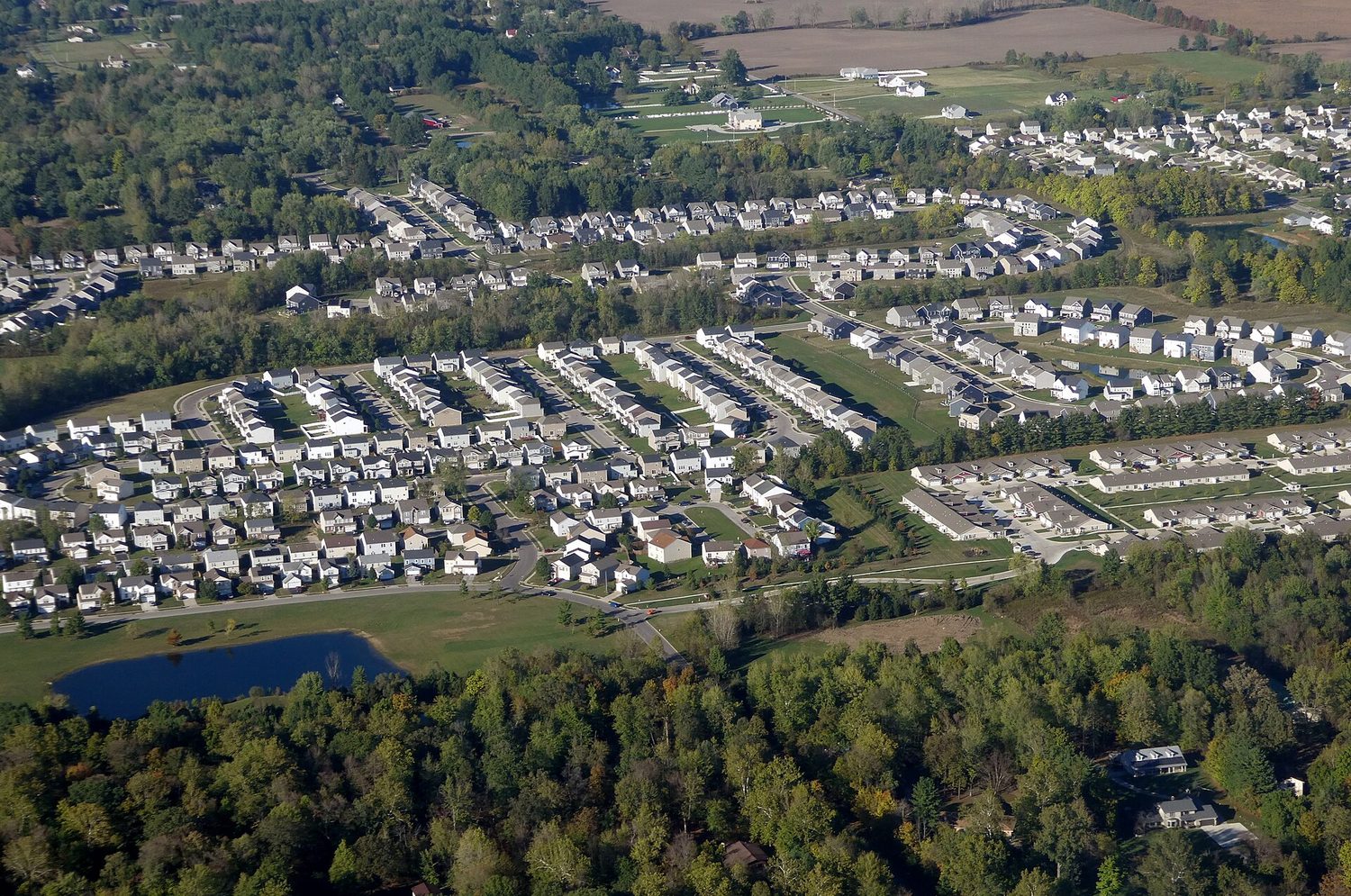
Urban sprawl at the city edge: human–environment interaction reshapes landscapes
Possibilism
- Possibilism 可能论 is the accepted view: the environment sets limits, but people choose how to respond.
- Technology and culture let people overcome many environmental limits.
- Deserts get irrigation; cold places get heating; rivers get bridges.
Determinism or possibilism?
Sort each statement as environmental determinism (rejected) or possibilism (accepted).
Possibilism argues that the environment...
Difficulty 1/5 · 100 coins + a small bonus on first completion today
Possibilism: the environment limits options, but human choice and technology decide the outcome.
Environmental determinism is rejected today, not just old-fashioned. It ignored human choice and was used to excuse racism and colonialism. On the exam, treat it as a discredited idea and contrast it with possibilism.
Environmental determinism is the modern, accepted view in geography.
Difficulty 1/5 · 100 coins + a small bonus on first completion today
It is rejected; possibilism is the accepted view.
The visible human mark on the land — farms, cities, roads — is the cultural ____.
Difficulty 1/5 · 100 coins + a small bonus on first completion today
The cultural landscape records a culture's values on the land.
Select all examples of possibilism.
Difficulty 2/5 · 140 coins + a small bonus on first completion today
The first three show people choosing within limits; the last is determinism.
Match each idea to its status/meaning.
Difficulty 2/5 · 140 coins + a small bonus on first completion today
Determinism is rejected; possibilism accepted; the cultural landscape is the visible result.
The cultural landscape
- The cultural landscape 文化景观 is the visible mark humans leave on the land.
- Farms, cities, roads, and signs all record a culture's values.
- Sustainability asks how to use resources without using them up.
The Netherlands sits partly below sea level. Environmental determinism would predict no one could live there. Possibilism explains what really happened: the Dutch built dikes and pumps and chose to reclaim the land — human choice overcoming an environmental limit.
Environmental determinism (environment decides culture) is rejected; possibilism (environment sets limits, people choose) is accepted. The cultural landscape is the visible result of this interaction, and sustainability is about using resources wisely.
Write from irrigation as possibilism
- A dry valley has little rain.
- Farmers build canals and grow crops there anyway.
Which human-environment idea does the canal project show?
People found a way to farm despite the dry climate.
What idea do the canals illustrate?
Difficulty 1/5 · 100 coins + a small bonus on first completion today
Adaptation shows that the environment limits but does not dictate.