Ocean Warming
Introduced| English | Meaning |
|---|---|
| ocean warming/ˈəʊʃn ˈwɔːmɪŋ/ | ocean warming |
| oxygen/ˈɒksɪdʒn/ | The gaseous element whose usual molecules contain two atoms and which supports combustion. |
| Coral/ˈkɒrəl/ | Coral |
| algae/ˈælɡiː/ | A diverse group of mainly aquatic photosynthetic organisms that lack the true roots, stems and leaves of plants. |
| coral bleaching/ˈkɒrəl ˈbliːtʃɪŋ/ | The loss of corals’ symbiotic algae or their pigments under stress, leaving corals pale; prolonged bleaching can lead to death. |
The ocean takes the heat
- The oceans have absorbed most of global warming's extra heat.
- Water can store a huge amount of heat, so it warms slowly.
- But ocean warming 海洋变暖 is now clearly happening.
- It changes life throughout the sea.
Warmer water, less oxygen
- Like any warm water, a warm ocean holds less oxygen 氧气.
- Fish and other animals struggle to breathe.
- Many species move toward the cooler poles.
- Whole food webs shift as the water heats.
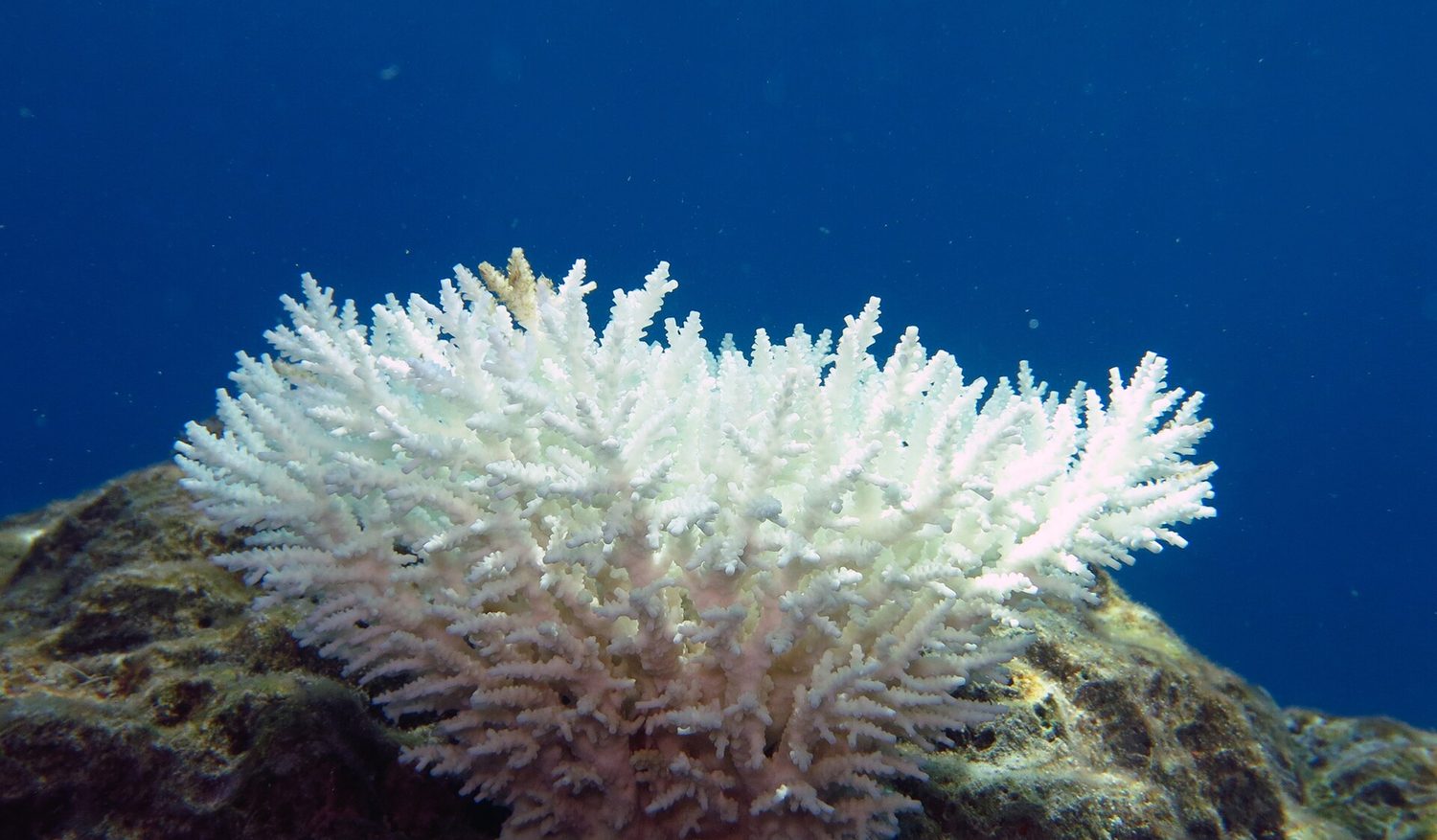
A bleached coral 珊瑚 colony: warmer water made it expel its colourful algae 藻类, leaving the bare white skeleton. If the heat lasts, the coral dies
The oceans have absorbed most of the extra heat from global warming because water…
Difficulty 1/5 · 100 coins + a small bonus on first completion today
Water stores enormous amounts of heat, so the oceans have soaked up most of the warming so far.
Coral bleaching
- Coral lives with tiny algae inside it.
- The algae give the coral colour and most of its food.
- When the water gets too hot, the stressed coral expels the algae.
- The coral turns white — this is coral bleaching 珊瑚白化.
How warming bleaches a coral reef
Follow rising ocean heat as it stresses coral and turns a reef white.
Coral bleaching happens when heat-stressed coral…
Difficulty 1/5 · 100 coins + a small bonus on first completion today
Stressed coral expels its algae, losing both its colour and its main food source — it bleaches white.
Like any warm water, a warmer ocean holds less dissolved ____.
Difficulty 1/5 · 100 coins + a small bonus on first completion today
Warmer water holds less oxygen, making life harder for fish and other sea animals.
When reefs die
- A bleached coral is not yet dead, but it is starving.
- If the heat passes, the algae can return and it recovers.
- If the heat lasts, the coral dies.
- Reefs shelter a quarter of all sea life, so their loss is huge.
As oceans warm, most fish move toward the equator.
Difficulty 1/5 · 100 coins + a small bonus on first completion today
False. Species follow the temperatures they need, so warming pushes many toward the cooler poles or into deeper water.
Select all effects of a warming ocean.
Difficulty 2/5 · 140 coins + a small bonus on first completion today
Warming bleaches coral, lowers oxygen, and shifts species poleward. It melts sea ice, not strengthens it.
Coral bleaching is a striking example of a symbiosis breaking down. The coral and its algae normally help each other — the algae make food, the coral gives them a home. Heat stress breaks that partnership: the coral ejects the algae, loses its colour and its food supply, and slowly starves. Bleached isn't dead yet, but without cooler water, death follows.
A reef through a heatwave:
- A marine heatwave pushes the water a few degrees too warm.
- The stressed coral expels its algae, and the reef turns ghostly white — coral bleaching.
- If the water cools within weeks, the algae return and the coral recovers.
- If the heat drags on, the coral starves and dies, and the fish that depended on the reef vanish with it.
Ocean warming stores most of global warming's heat. Warmer water holds less oxygen and pushes species toward the poles. Its most visible effect is coral bleaching: heat-stressed coral expels the algae it lives with, turning white and starving. If the heat lasts, the coral dies — and reefs shelter a quarter of all marine life.