Solid Waste Disposal
Introduced| English | Meaning |
|---|---|
| landfill/ˈlændfɪl/ | landfill |
| methane/ˈmiːθeɪn/ | The simplest alkane, with molecular formula CH₄. |
| leachate/ˈliːtʃeɪt/ | leachate |
| Incineration/ɪnˌsɪnəˈreɪʃn/ | Incineration |
What to do with our garbage
- Every city produces mountains of solid waste.
- It has to go somewhere.
- The two main methods are burying it and burning it.
- Each has real benefits and real costs.
Landfills: burying waste
- A landfill 垃圾填埋场 buries waste in a lined pit.
- The liner is meant to stop pollution leaking out.
- It is cheap and simple, so most waste ends up here.
- But it takes huge areas of land.
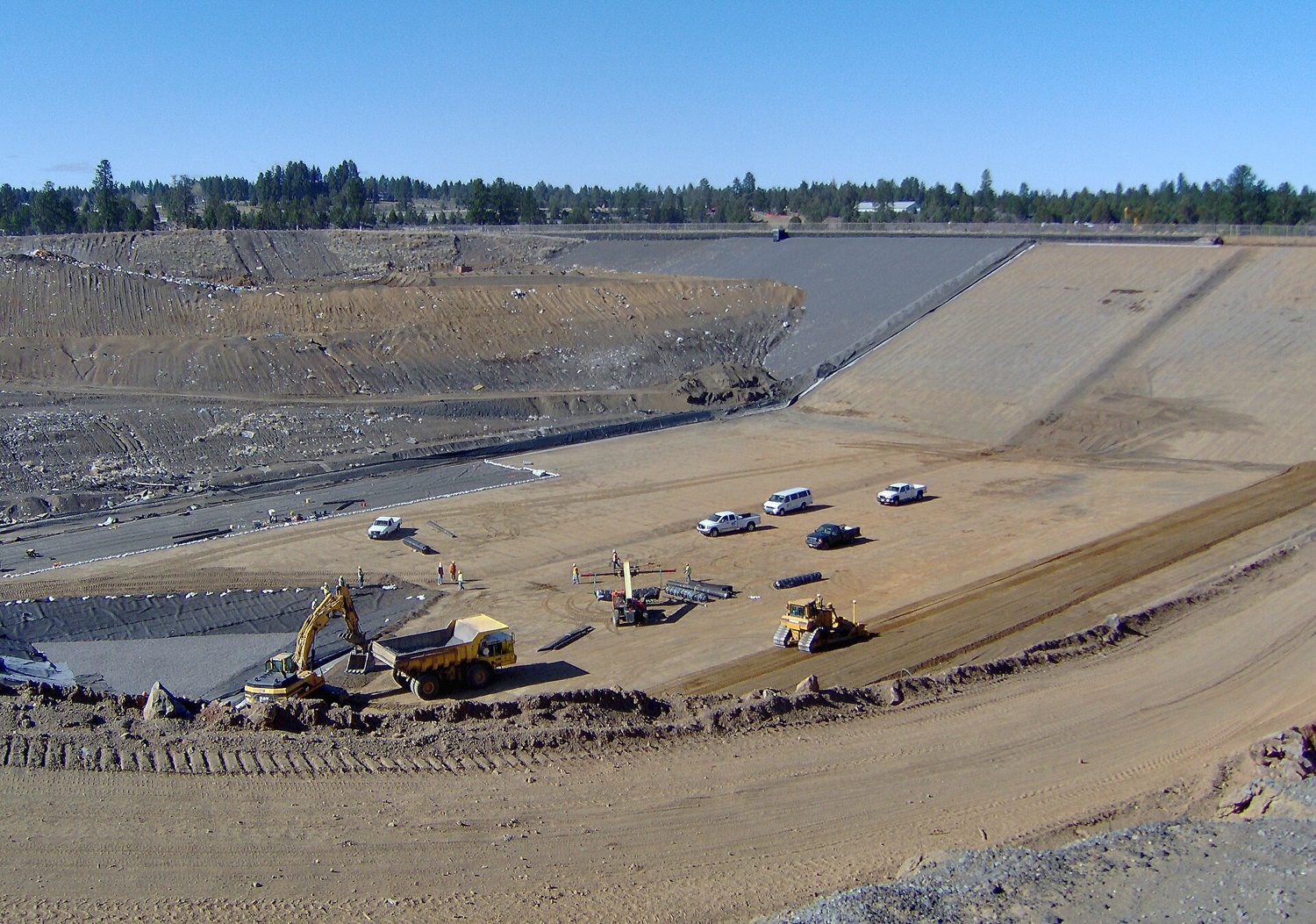
A landfill: solid waste is buried here in lined cells. It takes up land and can leak, which is why reducing waste comes first
A landfill disposes of waste by…
Difficulty 1/5 · 100 coins + a small bonus on first completion today
A landfill buries waste in a lined pit designed to hold it and limit leaks.
Landfill problems
- Rotting waste releases methane 甲烷, a greenhouse gas.
- Rain trickling through waste forms toxic leachate 渗滤液.
- Leachate can seep down and pollute groundwater.
- And once full, the land is hard to use again.
Landfill or incineration?
Sort each feature under the disposal method it describes.
A key danger from landfills is leachate, which is…
Difficulty 1/5 · 100 coins + a small bonus on first completion today
Leachate is toxic liquid that forms as water trickles through waste; it can pollute groundwater.
Rotting waste in a landfill releases ____, a powerful greenhouse gas.
Difficulty 1/5 · 100 coins + a small bonus on first completion today
As waste rots without oxygen, it gives off methane — a greenhouse gas that can also be captured for fuel.
Incineration: burning waste
- Incineration 焚烧 burns waste at high heat.
- It cuts the volume of waste by about 90%.
- The heat can even generate electricity.
- But it pollutes the air and leaves behind toxic ash.
Incineration greatly reduces the volume of waste but can pollute the air.
Difficulty 1/5 · 100 coins + a small bonus on first completion today
Burning cuts waste volume by about 90%, but releases smoke and leaves toxic ash.
Select all drawbacks of landfills.
Difficulty 2/5 · 140 coins + a small bonus on first completion today
Landfills release methane, risk leachate leaks, and use lots of land. They are far from problem-free.
Neither method is clean — they just move the problem. Landfills trade land and risk groundwater pollution (leachate) plus methane. Incineration saves space and can make power, but sends pollution up the smokestack and concentrates toxins in the ash. That's why the best answer isn't a better disposal method — it's making less waste in the first place (next lesson).
A city's two options:
- Bury the waste: cheap, but the landfill swallows land, seeps leachate toward the water table, and vents methane.
- Burn it: the incinerator shrinks the pile by 90% and powers some homes, but its smoke needs heavy filtering and its ash is toxic.
- Both work, both pollute — which is why cities push hard to reduce and recycle instead.
Solid waste is mostly disposed of by landfill (burying) or incineration (burning). Landfills are cheap but take land, release methane, and risk leachate polluting groundwater. Incineration cuts waste volume ~90% and can make electricity, but pollutes the air and leaves toxic ash. Both move the problem rather than solve it.