Eutrophication
Introduced| English | Meaning |
|---|---|
| nutrients/ˈnjuːtrɪənts/ | nutrients |
| eutrophication/ˌjuːtrəfɪˈkeɪʃn/ | Nutrient enrichment of water that can cause excessive plant or algal growth and oxygen depletion as organic matter decomposes. |
| algal bloom/ˈælɡl bluːm/ | A rapid increase in the abundance of algae or similar photosynthetic microorganisms in a body of water. |
| oxygen/ˈɒksɪdʒn/ | The gaseous element whose usual molecules contain two atoms and which supports combustion. |
| Decomposers/ˌdiːkəmˈpəʊzəz/ | Organisms that break down dead organic matter and waste, recycling nutrients. |
When a lake gets too rich
- Adding nutrients to a lake sounds good for life.
- But too much triggers a deadly chain of events.
- This is eutrophication 富营养化.
- It can turn a clear, living lake into a dead zone.
Step 1: nutrients wash in
- Fertilizer from farms is rich in nitrogen and phosphorus.
- Rain washes these nutrients 养分 into rivers and lakes.
- Sewage and detergents add even more.
- The water suddenly has far more nutrients than normal.
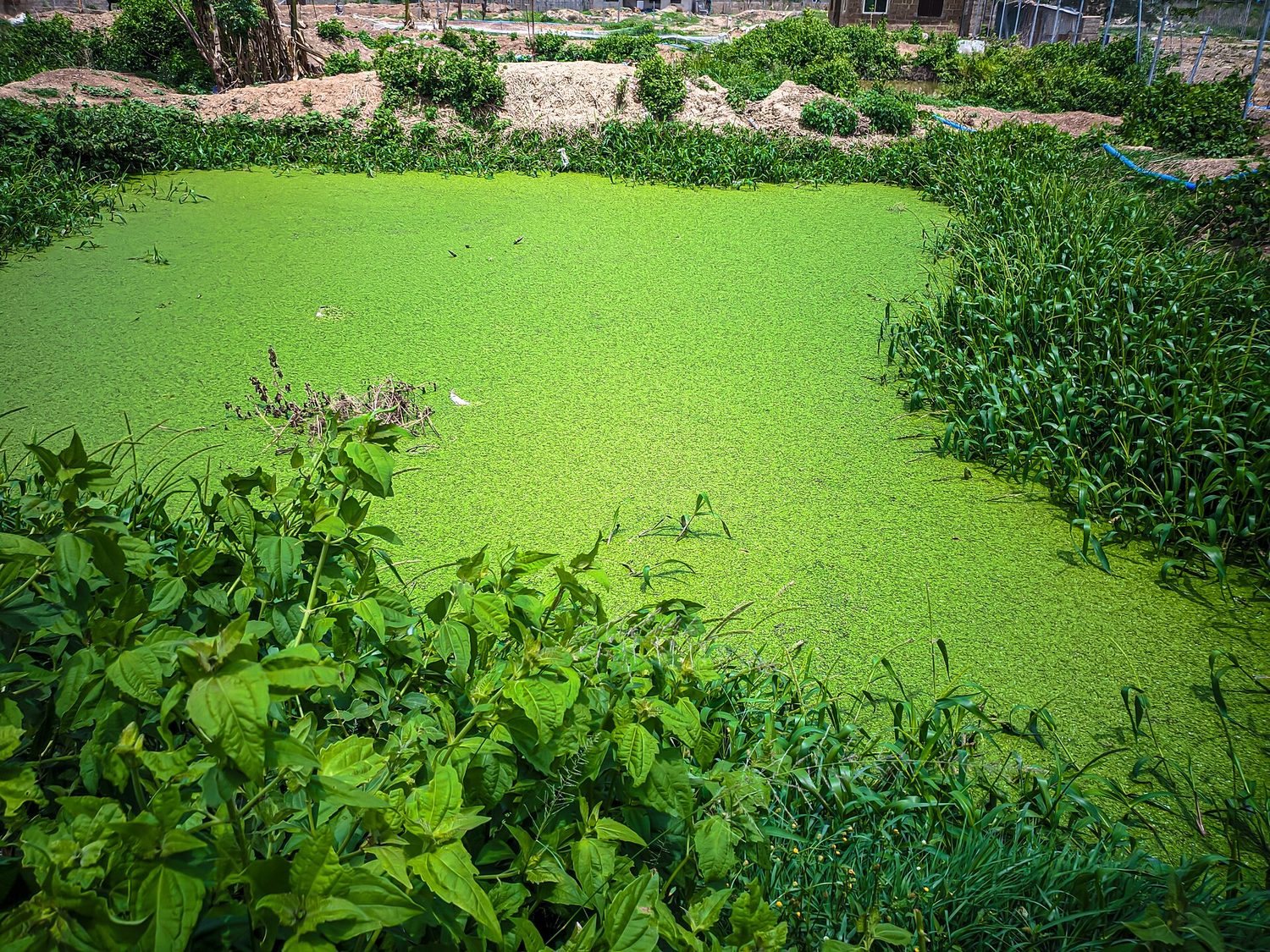
A pond choked by an algal bloom 藻华: extra nutrients let algae cover the whole surface. When they die and rot, the water loses its oxygen 氧气
Eutrophication usually starts with…
Difficulty 1/5 · 100 coins + a small bonus on first completion today
Extra nutrients — nitrogen and phosphorus from fertilizer — trigger the whole process.
Step 2: algae explode
- The extra nutrients feed a huge algal bloom.
- Algae grow fast, covering the surface in green.
- The bloom blocks sunlight from plants below.
- Soon the algae use up the nutrients and die in huge numbers.
How eutrophication kills a lake
Follow fertilizer runoff through an algal bloom to a dead, oxygen-starved lake.
The extra nutrients cause a sudden…
Difficulty 1/5 · 100 coins + a small bonus on first completion today
Nutrients feed an algal bloom — a thick green layer of algae covering the water.
When the algae die, decomposers use up the dissolved ____ in the water.
Difficulty 1/5 · 100 coins + a small bonus on first completion today
Bacteria decomposing the dead algae consume the oxygen fish need, so fish suffocate.
Step 3: oxygen runs out
- Decomposers 分解者 (bacteria) break down the dead algae.
- Doing so, they use up the dissolved oxygen in the water.
- Fish and other animals suffocate and die.
- The lake becomes a low-oxygen "dead zone".
Eutrophication can create a "dead zone" where little can survive.
Difficulty 1/5 · 100 coins + a small bonus on first completion today
With the oxygen gone, fish and other animals die, leaving a low-oxygen dead zone.
Put the steps of eutrophication in order — select the first three to happen.
Difficulty 2/5 · 140 coins + a small bonus on first completion today
Nutrients in → algae bloom → algae die and decay → oxygen runs out. Sunlight is not a step.
The deadly twist is that eutrophication kills by removing oxygen, not by direct poisoning. The nutrients themselves aren't toxic — they just feed too much algae. It's the decomposers eating the dead algae that strip the water of oxygen. So the fish don't die from the fertilizer; they suffocate. Follow the chain: nutrients → bloom → die-off → decay → no oxygen → dead fish.
A farm pond in summer:
- Spring fertilizer washes off the fields into the pond, loading it with nutrients.
- By July a thick green algal bloom covers the surface.
- The algae die, bacteria swarm to decompose them, and the oxygen vanishes from the water — leaving dead fish floating belly-up in a pond that was clear a season ago.
Eutrophication is a chain reaction: extra nutrients (nitrogen and phosphorus from fertilizer runoff) feed a huge algal bloom; the algae die; decomposers break them down and use up the dissolved oxygen; fish suffocate, leaving a dead zone. The nutrients aren't toxic — the fish die from lost oxygen.