Hydroelectric Power
Introduced| English | Meaning |
|---|---|
| hydroelectric/ˌhaɪdrəʊɪˈlektrɪk/ | electricity made by flowing or falling water spinning turbines, usually at a dam |
| reservoir/ˈrezəvwɑː/ | A body of water stored for use or management, commonly an artificial lake formed by a dam. |
| turbines/ˈtɜːbaɪnz/ | A machine in which moving fluid, such as water, steam or air, turns a rotor to produce mechanical work. |
| renewable/rɪˈnjuːəbl/ | Describing a resource that can be replenished naturally on a timescale relevant to its use. |
| floods/flʌdz/ | floods |
Power from falling water
- A hydroelectric 水电 dam turns flowing water into electricity.
- A dam holds a river back, forming a lake called a reservoir 水库.
- When water is let through, it falls with great force.
- That falling water spins turbines to make power.
How it works
- Water high behind the dam holds stored energy.
- Open the gates and it rushes down through turbines 涡轮机.
- The spinning turbines drive generators.
- Close the gates to save the water for later.
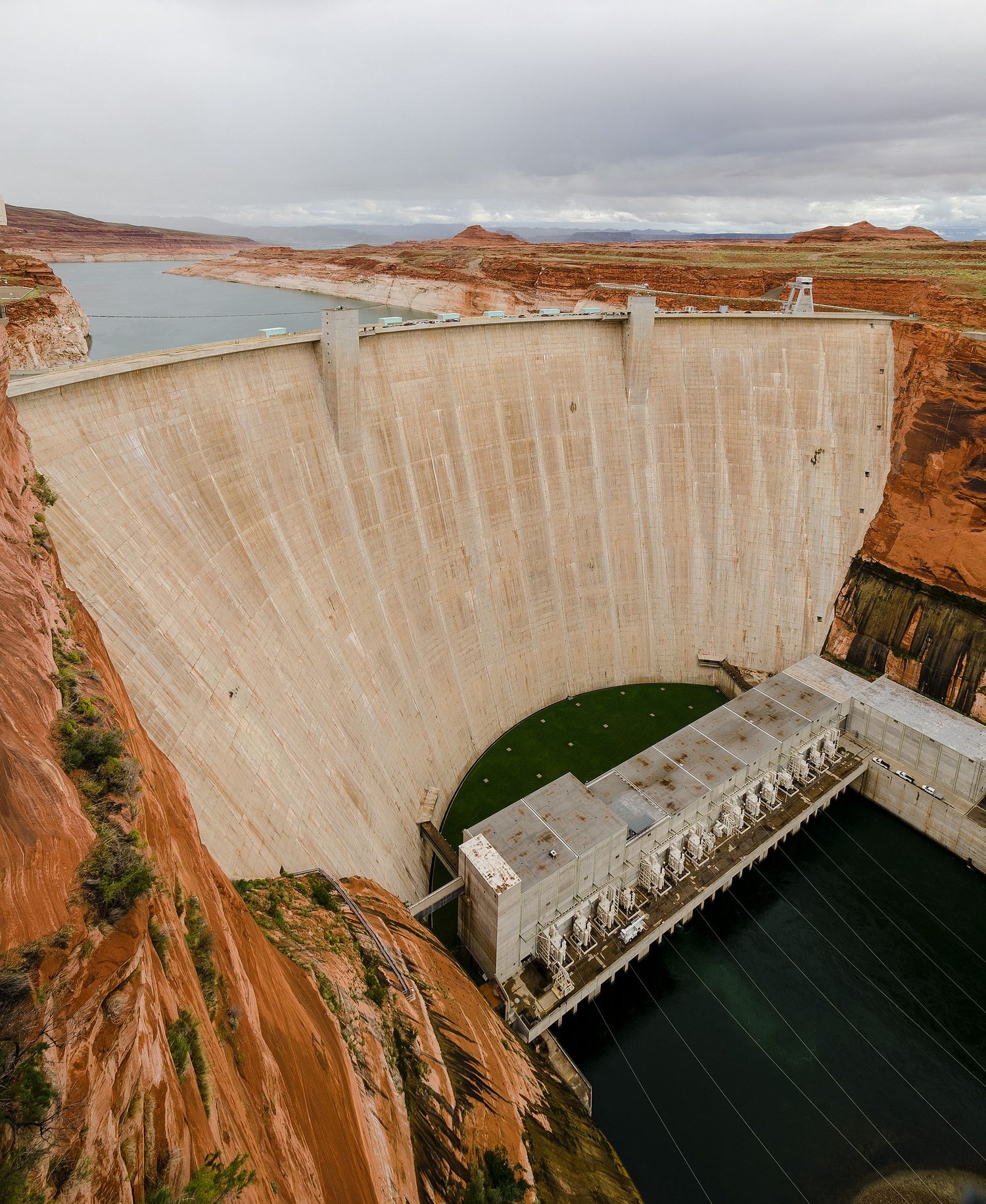
A hydroelectric dam. The reservoir is held back at the top, and water falls through the dam to spin turbines in the power house at its base
A hydroelectric dam makes electricity from…
Difficulty 1/5 · 100 coins + a small bonus on first completion today
Water held high behind the dam falls through turbines, spinning generators to make electricity.
The benefits
- It is renewable 可再生 — the water cycle refills the river.
- It releases almost no CO2 while running.
- It is reliable: open the gates when power is needed.
- So it can back up intermittent solar and wind.
One advantage of hydropower over solar and wind is that it…
Difficulty 1/5 · 100 coins + a small bonus on first completion today
Operators release stored water when power is needed, so hydro is reliable and controllable — unlike intermittent solar and wind.
The lake of water held behind a dam is called a ____.
Difficulty 1/5 · 100 coins + a small bonus on first completion today
The reservoir stores water — and energy — until it is released through the turbines.
The costs
- The reservoir floods 淹没 land, drowning valleys and habitat.
- The dam blocks fish swimming upstream to breed.
- People living in the valley must be moved away.
- It also traps sediment that rivers normally carry downstream.
Benefit or cost of a dam?
Sort each effect of a hydroelectric dam into a benefit or a cost.
Dams help migrating fish swim upstream to breed.
Difficulty 1/5 · 100 coins + a small bonus on first completion today
False. A dam is a wall across the river that blocks migrating fish unless a fish ladder or bypass is built.
Select all costs of a hydroelectric dam.
Difficulty 2/5 · 140 coins + a small bonus on first completion today
Dams flood land, block fish, and displace people. But they release almost no CO2 while running.
Hydropower's great strength is control: unlike solar and wind, you can turn it up or down on demand by releasing more or less water. But that dam is also its great cost — it drowns land, walls off fish, and displaces people. It is renewable and low-carbon, yet far from harmless to the river.
Building a dam:
- Engineers wall off a river valley; water backs up into a huge reservoir, flooding farms and forest.
- Now the town downstream gets reliable, carbon-free electricity — turned up each evening as demand rises.
- But the salmon that once swam upstream to spawn hit a concrete wall, and the families whose valley is now underwater had to leave.
Hydroelectric power spins turbines with water falling from a reservoir behind a dam. Benefits: renewable, low-CO2, and reliable — controllable on demand, unlike solar and wind. Costs: the reservoir floods land and habitat, the dam blocks fish migration, and it can displace people.