Fuel Types and Uses
Introduced| English | Meaning |
|---|---|
| crude oil/kruːd ɔɪl/ | A naturally occurring liquid mixture containing many hydrocarbons and smaller amounts of other substances. |
| Gasoline/ˈɡæsəliːn/ | Gasoline |
| Diesel/ˈdiːzl/ | Diesel |
| Coal/kəʊl/ | Coal |
| Natural gas/ˈnætʃərəl ɡæs/ | Natural gas |
| refinery/rɪˈfaɪnəri/ | refinery |
Different fuels, different jobs
- Not every fuel is used the same way.
- Some move our cars; some light our homes.
- The fuel we pick depends on the job.
- Let's match each fuel to what it does best.
Fuels for transport
- Most vehicles run on fuels refined from crude oil 原油.
- Gasoline 汽油 (petrol) powers most cars.
- Diesel 柴油 powers trucks, buses, and trains.
- Jet fuel powers airplanes — all come from the same crude oil.
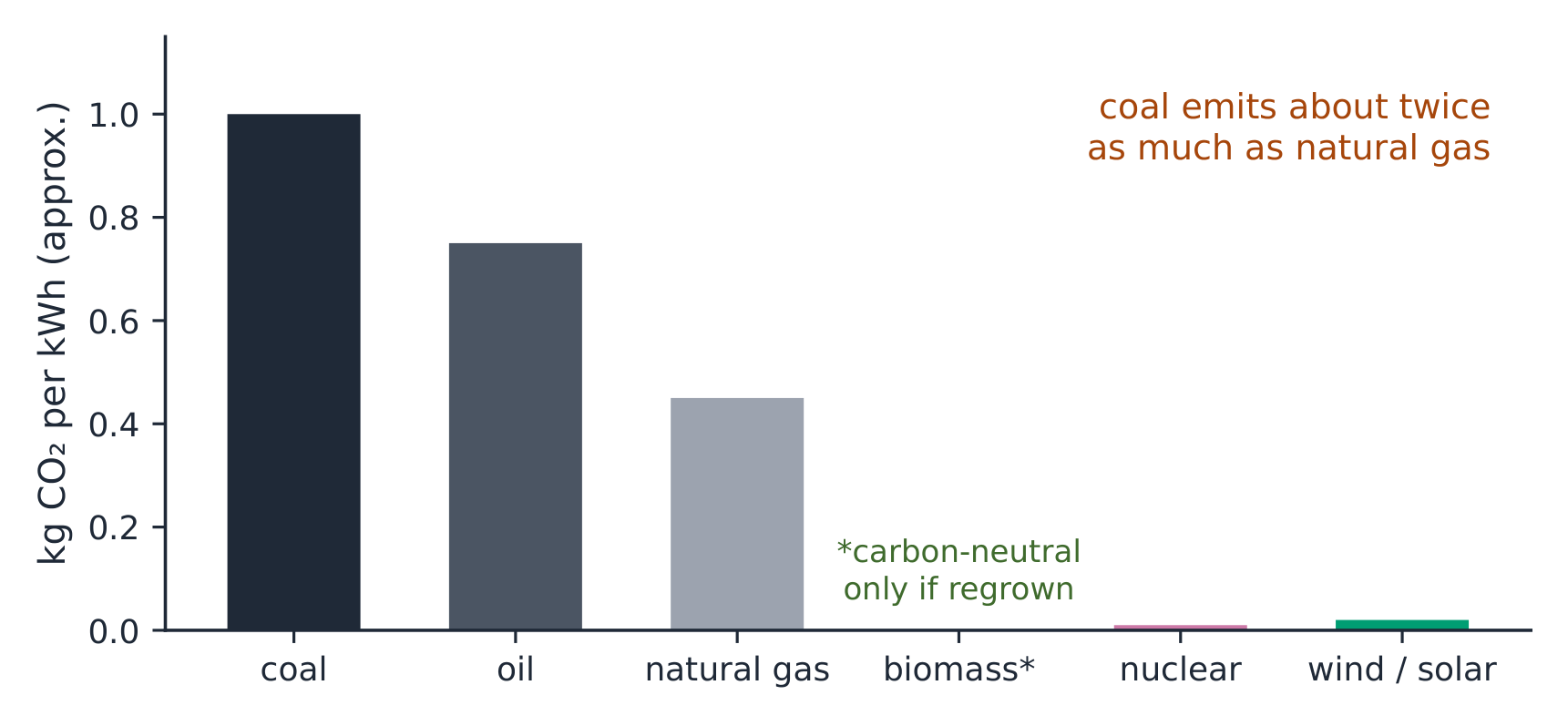
Approximate CO₂ released per unit of electricity by fuel type
Which fuel powers most cars?
Difficulty 1/5 · 100 coins + a small bonus on first completion today
Gasoline, refined from oil, is the main transport fuel. Coal and uranium make electricity, not car fuel.
Fuels for electricity and heat
- Coal 煤炭 is burned in power stations to make electricity.
- Natural gas 天然气 heats homes, cooks food, and also makes electricity.
- Wood and charcoal are burned for cooking and heat, especially in poorer areas.
- Uranium fuels nuclear power stations that make electricity.
What is each fuel mainly used for?
Sort each fuel by its main use - moving vehicles or making electricity and heat.
Coal is mainly used to…
Difficulty 1/5 · 100 coins + a small bonus on first completion today
Coal is burned in power stations to boil water and spin turbines that generate electricity.
Many homes burn natural ____ to heat rooms and cook food.
Difficulty 1/5 · 100 coins + a small bonus on first completion today
Natural gas is a common heating and cooking fuel, and also generates electricity.
From crude oil to many fuels
- Crude oil out of the ground is a mixture, not one fuel.
- A refinery 炼油厂 heats it and splits it into parts.
- Light parts become gasoline; heavier parts become diesel and jet fuel.
- One raw material becomes many fuels for many uses.
Crude oil is burned directly in car engines without refining.
Difficulty 1/5 · 100 coins + a small bonus on first completion today
False. A refinery separates crude oil by fractional distillation into fuels such as gasoline, diesel and jet fuel, each suited to a different engine.
Select all fuels made from crude oil.
Difficulty 2/5 · 140 coins + a small bonus on first completion today
Gasoline, diesel, and jet fuel are all refined from crude oil. Uranium is a mined nuclear fuel.
Match the fuel to the use. Cars and planes need a liquid fuel that packs a lot of energy into a small tank — that is why oil products dominate transport. Power stations can use bulky solid coal or piped gas because they don't move. Don't say "cars run on coal" — the form of the fuel matters.
Following the oil:
- Crude oil is pumped up and sent to a refinery.
- There it is split: the light fraction fills a car's gasoline tank, the middle fraction becomes diesel for a truck, and some becomes jet fuel for a plane.
- Meanwhile, next door, a power station burns coal to keep the lights on.
Fuels are matched to their use. Transport runs on liquid fuels refined from crude oil — gasoline for cars, diesel for trucks, jet fuel for planes. Electricity and heat come from coal, natural gas, wood, and uranium. A refinery splits crude oil into many different fuels for many different jobs.